 |
|
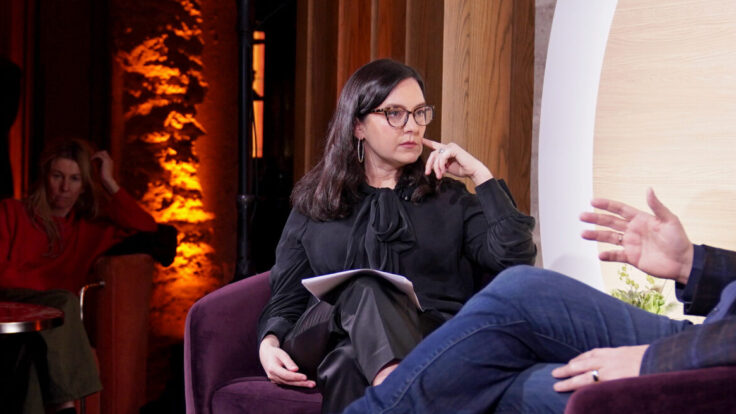
Welcome back to In The Room. I’m currently en route to Los Angeles from New York, where, last night, I had the pleasure of sharing the mic at an event with a handful of my Puck partners—namely Bill Cohan, Abby Livingston, and Jon Kelly—while mingling with many of the smart folks at Bully Pulpit Interactive, such as Andrew Bleeker and Scott Mulhauser, who were marvelous co-hosts. Thanks to everyone who made an appearance.
In tonight’s email, some fresh reporting on the Washington Post C.E.O. bakeoff, Mark Thompson’s efforts to wrangle a G.O.P. debate for CNN, and Barak Ravid’s scoop streak.
|
 |
| The Bezos-WaPo Plot Thickens |
| News and notes on the rag trade during an astonishing week: The Washington Post winnows its search, Mark Thompson makes CNN’s debate case, and an Axios reporter laps the field. |
|
|
|
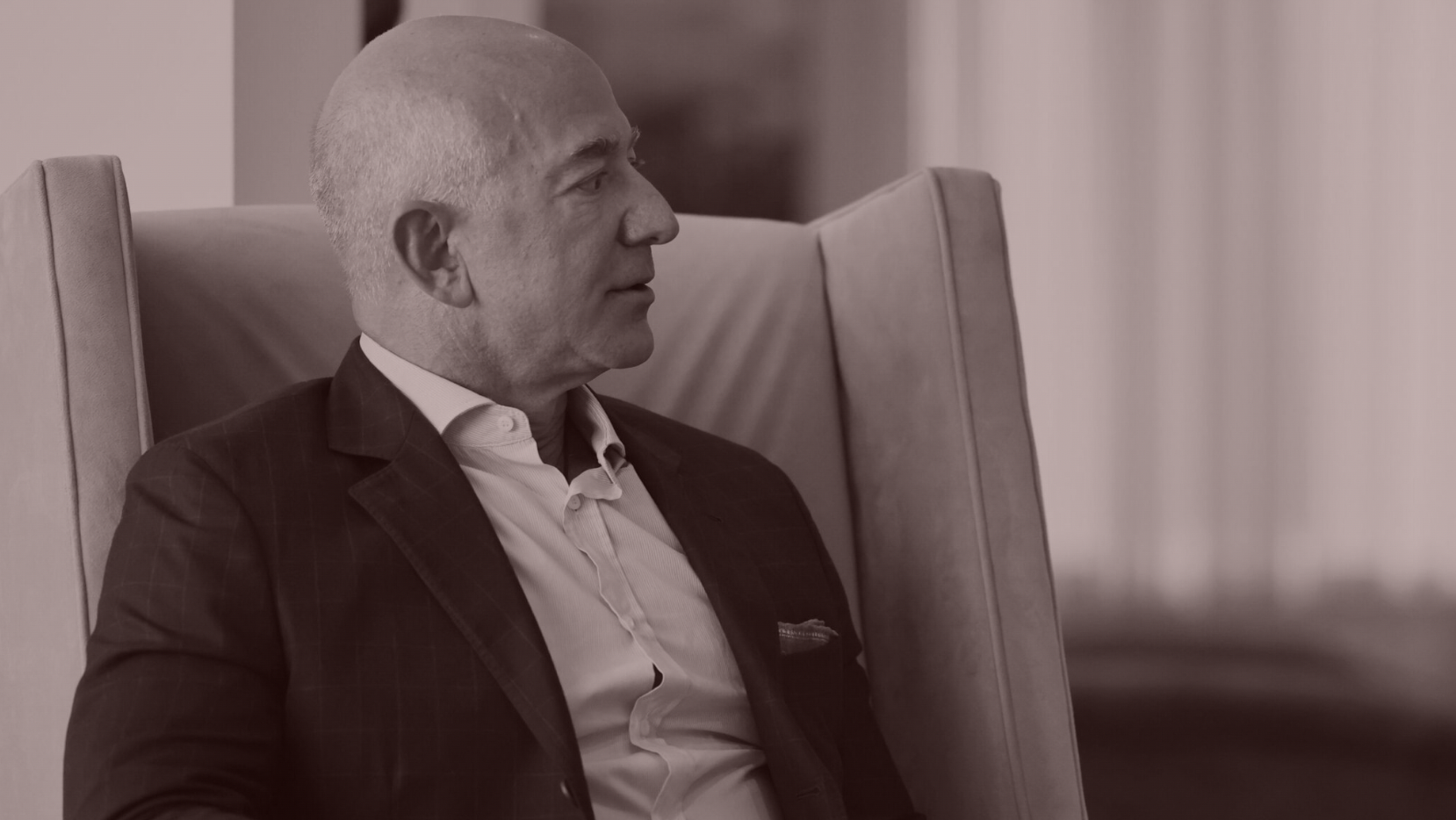
| This week, Jeff Bezos began the process of conducting in-person interviews with the final two candidates for the Washington Post publisher and C.E.O. position, the last step in a months-long search for an executive leader who can reverse the fortunes of a storied news company still on the hunt for a vision—and a sustainable revenue model—in the post-Trump, post-Marty Baron era.
One of the two finalists, according to sources familiar with the matter, is Josh Steiner, the investor and Bloomberg L.P. senior adviser who I identified as a leading candidate last week. Steiner makes a whole lot of sense for a number of reasons, notably the fact that he’s a former Lazard M.D. who also grinded away for years in the salt mines of government. I have ample reason to believe that the other may be Will Lewis, the former Dow Jones C.E.O. and Wall Street Journal publisher who recently launched a Gen Z-focused media startup called The News Movement. (The Post declined to comment.) Lewis is also on the board of the Associated Press and was once a finalist for the BBC Director General position. Earlier this year, he received knighthood at the nomination of former prime minister Boris Johnson.
Until recently, of course, Bezos had been relying on Patty Stonesifer, his longtime confidant and Amazon board member, to winnow the pool down from seemingly every media executive under the sun—many of whom got the call from the Sucherman executive search firm, but not Stonesifer herself—to a small group of five finalists. So many people in the WaPo universe would have loved it if Stonesifer were Dick Cheney-ing the process—running a search that effectively led to her own selection. Alas, that was never going to happen. A few weeks ago, Bezos held Zoom meetings with each of those five finalists and reviewed the six-page memos that they’d been asked to submit, but only these last two have been invited to come in and meet with Bezos in person.
Despite the very wide net that was initially cast for this search, Bezos and Stonesifer appear to have zeroed in on traditional candidates—a former top news executive with relevant experience and a media pro with history in both finance and government. (Steiner, as I’ve noted before, has the distinctly pertinent experience of having worked for another of the world’s wealthiest people.) Media businesses are people businesses, and unsurprisingly many in the Post newsroom are waiting for the white smoke to emanate in plumes through the chimney.
One plus for the forthcoming C.E.O. is that they’ll have a worthy deputy in Alex MacCallum, the Post’s recent-ishly hired C.R.O., who once had the distinction of being the youngest person ever appointed on The New York Times Company masthead. MacCallum eventually worked under Jeff Zucker at CNN, where she helped helm CNN+ (we are all mortal), and would likely have been on Mark Thompson’s executive radar were she not already engaged in the Stonesifer turnaround effort. Speaking of which… |
|
|
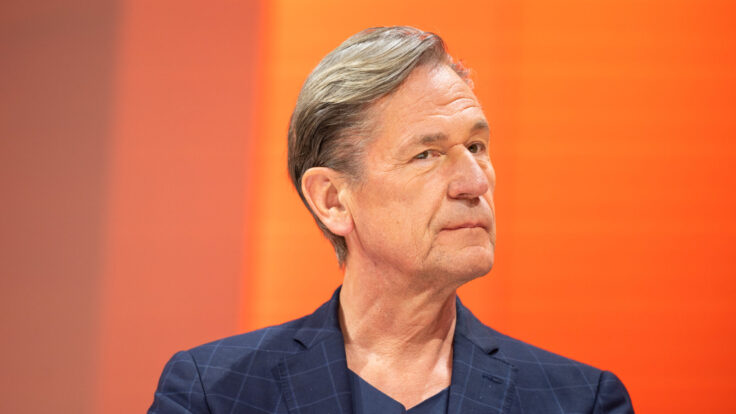
| Thompson, the newly installed chairman and C.E.O. of CNN, recently met with representatives from the Republican National Committee in an effort to try to secure a G.O.P. debate for the network, sources familiar with those discussions tell me. CNN is the one major news network (besides MSNBC, of course) that has not yet been guaranteed a debate. The network had petitioned the R.N.C. for a debate earlier this year, during the Chris Licht era, but received little interest in light of CNN’s adversarial reputation with pro-Trump Republicans.
Back in those early meetings, CNN had floated several potential conservative media partners who might mollify its reputation on the right, as well as conservative media personalities who could serve as co-moderators. One among them was Salem Media’s Hugh Hewitt, who will co-moderate the NBC News debate in Miami on November 8. Notably, CNN’s own media correspondent Oliver Darcy recently criticized NBC News for partnering with Hewitt and Salem, in particular, given what he described as its “history of peddling and profiting off extremism rhetoric.” It seems his own network was equally willing to “link arms with such organizations,” if only it’d been given the chance.
Perhaps it will be given the chance, now that Thompson is ushering in a new era for the network. (Thompson also met recently with high-level officials at the White House, I’m told). For now, as I reported earlier this month, NBC News will host the next debate in Miami; ABC News is likely to host a debate in New Hampshire ahead of its primary; and CBS News is likely to host a debate in Nevada, adjacent to the Las Vegas Super Bowl for which CBS also has rights, ahead of the state’s caucuses. (There appear to be some budgeting synergies involved in the latter, perhaps a harbinger of things to come for Paramount Global and its depressed stock.) Though as one media executive said of the debates, “Without Trump, do any of them matter anymore?” |
|
|
| Finally, on Tuesday, as major news organizations began quietly tweaking the 48-point-font headlines that had initially and regrettably blamed Israel for the deadly hospital blast in Gaza—a blast that in fact resulted from an errant Palestinian rocket, per U.S. and Israeli intelligence—it dawned on me that we were once again entering one of those unfortunate episodes when the media’s failure on a story of national or global import becomes its own micro-drama, exposing well-intentioned and mostly responsible newsrooms to the always-online critics seeking evidence of latent partisan bias, or, at the very least, a bias for speed over accuracy. In the fog of war, the Times, the BBC, the AP, etcetera, all gave credence to a false claim by the Hamas-controlled Palestinian Health Ministry. They were treated to accusations, particularly from the right, of journalistic malpractice.
I’m not particularly interested in lengthy autopsies on editorial miscalculation (there was a time, circa the 2012 Supreme Court healthcare ruling, when I was). I’ve spoken to sources at the White House, who were understandably miffed by the media’s rush to elevate the claims of a terrorist group, and sources at the Times and other news organizations who concede that yesterday was a clusterfuck at the copy desk.
Reasonable assumptions were made that will almost certainly not be made again. And, certainly, the geopolitical blast radius was rather wide—Biden’s summit with King Abdullah, El-Sisi and Abbas was canceled, and there are now protests raging across the region. But anyone who believes that the latest manifestation of anti-Israeli sentiment could have been preempted by more responsible headlines in Western media need only look at the fact that Rep. Rashida Tlaib still hasn’t corrected her post blaming Biden for an Israeli strike that killed 500 Palestinians.
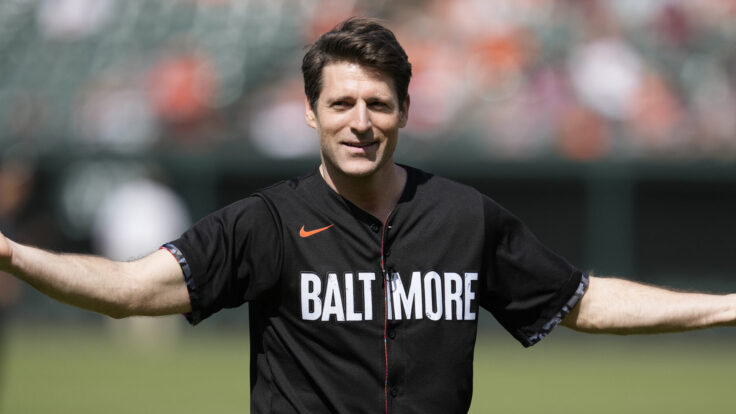
In any event, the fast-developing events in the Middle East, which are playing out alongside fast-developing events on Capitol Hill, have also offered some insight into how individual journalists can buoy the fortunes of news organizations. Barak Ravid, an Axios reporter deeply sourced at the highest levels of Jerusalem and Washington, has been breaking news on the U.S.-Israel response at a record clip, elevating his brand and allowing Axios to punch way above its weight on the biggest story in the world right now (much the same way Jonathan Swan burnished his and Axios’s reputation during the Trump presidency.) In recent days, Ravid broke the news about Israel’s call to evacuate the northern Gaza Strip, White House discussions of a possible U.S. military response to a Hezbollah attack, and, most recently, details of Biden’s private discussions with Netanyahu.
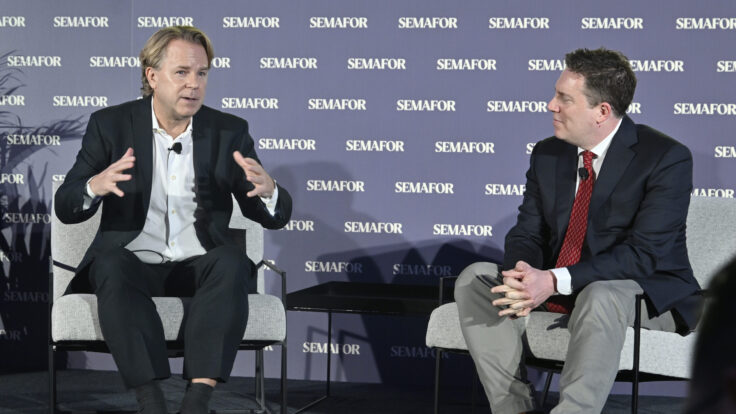
By the same token, Jake Sherman and his colleagues at Punchbowl have become indispensable during the ongoing contest for the House Speakership. It’s a testament to the idea, one we espouse often at Puck, that star reporters can often outperform entire desks. It also counters the prevailing wisdom that, in the age of Elon, following the news and parsing fact from fiction has never been harder. Indeed, if you know who to trust, and who to get your X alerts from, it’s never been easier. |
|
|
|
| FOUR STORIES WE’RE TALKING ABOUT |
|
|
|

|
 |
|
|
|
Need help? Review our FAQs
page or contact
us for assistance. For brand partnerships, email ads@puck.news.
|
|
You received this email because you signed up to receive emails from Puck, or as part of your Puck account associated with . To stop receiving this newsletter and/or manage all your email preferences, click here.
|
|
Puck is published by Heat Media LLC. 227 W 17th St New York, NY 10011.
|
|
|
|