| WELCOME BACK!
|
|
You’re receiving a complimentary version of The Best & The Brightest as a welcome gift to new readers.
Start a free 14-day trial to unlock unlimited access to Puck. |
|
|
Hello and welcome back to The Best & The Brightest. I’m Leigh Ann Caldwell,
hoping you’re having a better week than Trump’s trade negotiating team.
While they were racing to close deals with literally dozens of countries before the president’s tariffs were scheduled to kick in on Wednesday, Trump gave them a bit more time—extending the “reciprocal” tariff pause to August 1 in a new executive order. (He already called out Japan and South Korea, specifically, letting them know they are facing a 25 percent tariff beginning on August 1 if a
deal isn’t reached. More notifications are expected this week.) So far, the markets are hanging on—the latest indication, perhaps, that the TACO trade is still in effect.
By the way, if you missed my newest partner Ian Krietzberg’s Sunday night dispatch announcing his arrival at Puck, make sure to
sign up for his forthcoming newsletter, The Hidden Layer, about the big business of artificial intelligence. His first email, dropping tomorrow night, looks at the growing sentiment that any A.I. regulation would hinder innovation and that, when it comes to A.I., we can’t afford to slow down—and the shaky argument underlying the Senate Republicans’ killing of the A.I. moratorium in the
Big Beautiful Bill…
Tonight, my colleague Abby Livingston looks at the battle to control the media narrative surrounding the BBB now that it’s the law of the land. Plus, how Democrats are trying to leverage the legislative turmoil to expedite Republican retirements.
But first… |
Texas Flood Finger-Pointing
|
The scope of devastation and heartbreak after the deadly flooding of the Guadalupe River in Kerr County,
Texas, is still expanding. As with most natural disasters and mass casualty events, many parties are raising questions about what went wrong, and what could have been done to prevent it. To wit: What could local and state governments have done differently? Did resistance to spending tax dollars on warning systems play a role? And what impact did DOGE staffing cuts, including at the National Weather Service, have on weather forecasting and threat notification ahead of the severe
flooding?
There is already a lot of finger-pointing as the death count passes 100. Meteorologists have dismissed the notion that the vacancies at NWS played a role, but The New York Times reported that a leading meteorologist at the Austin/San Antonio N.W.S. office retired in April because of staff reductions. The paper also noted several other vacancies in the Austin and San Antonio satellite offices.
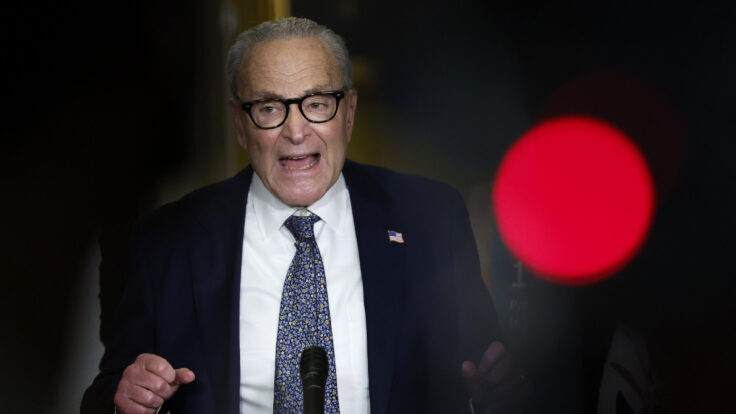
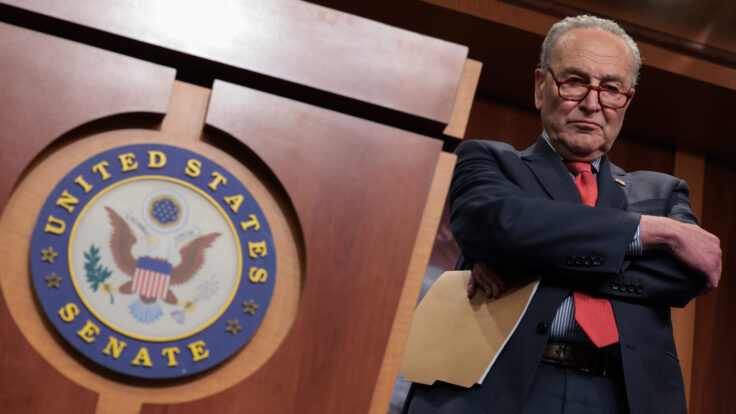
Earlier today, Senate Democratic Leader Chuck Schumer sent a letter to
Duane Townsend, the acting inspector general of the Commerce Department—which oversees the N.W.S.—asking for more information about the points of failure. Meanwhile, White House Press Secretary Karoline Leavitt, perhaps anticipating how damaging the narrative might be, dismissed speculation that cuts to the N.W.S. played a role, saying that Democrats and the media are pushing “falsehoods,” and that “the National Weather Service did its job.”
Alas, it’s
unclear whether any of these questions will be answered. The acting inspector general at Commerce has been in his role for just one month, appointed after Trump’s unprecedented firing of more than a dozen I.G.s. Plus, the administration has been reluctant to provide Congress with information on a long list of issues, from the elimination of USAID to the very identity of the acting director of the Centers for Disease Control and Prevention, and, of course, the military strikes
on Iran.
Rep. Bennie Thompson, the ranking Democrat on the House Homeland Security Committee, plans to ask for a briefing from FEMA on the response, according to an aide familiar with the request. Usually, a request isn’t necessary: Traditionally, administrations have provided briefings after deadly natural disasters as a matter of course, but Democrats on the committee have had trouble obtaining information on other issues, and there’s little faith that
this administration will provide it without some prodding. Thompson will also look into DOGE cuts at FEMA, firings, and the impact of climate change on natural disasters. “This is not politics, this is determining what went wrong and preventing it from happening again,” Thompson said in a statement.
One dynamic to watch is whether Texas Sen. Ted Cruz, who chairs the Senate Commerce Committee, which oversees the Commerce Department, faces local
pressure to interrogate the federal government. At a news conference in Texas, Cruz said that now is “not the time for partisan finger-pointing,” but he also said on Fox News that “something went wrong.” A spokesperson for Cruz said that Dr. Neil Jacobs, the
nominee to be Under Secretary of Commerce for N.O.A.A., will testify in a previously scheduled hearing.
And now, here’s Abby… |
|
|
You’re receiving a complimentary version of The Best & The Brightest at {{customer.email}} as a
welcome gift to new readers. For full access to Puck, and to each of my colleagues, subscribe today. |
|
|
Democrats see Trump’s signature legislation as an obvious liability for the G.O.P.—and a
wide-open path to flip the House in the midterms. But Republicans have a sales pitch of their own. |
|
|
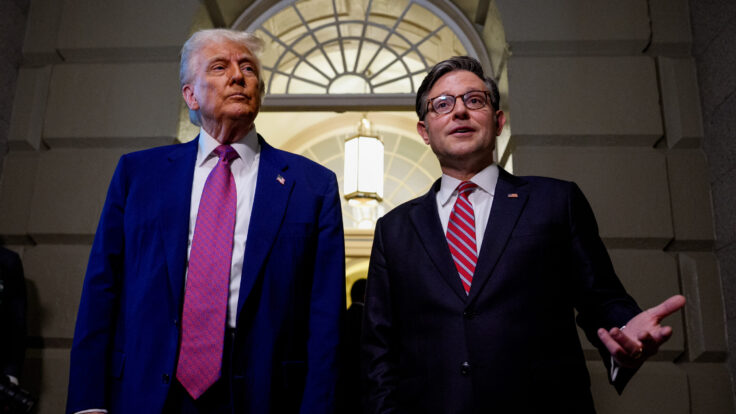
Even before House Speaker Mike Johnson brought down his gavel on Thursday, sending the One
Big Beautiful Bill Act to Donald Trump’s desk, the midterm battle over how to spin its contents had begun. Its passage marked the end of a fraught journey for the G.O.P., sure, but also the beginning of a new struggle to define Trump’s signature legislation in the public imagination.
Washington Republicans are surprisingly sanguine about the bill, which was deeply underwater with voters in multiple major polls conducted before the final vote. Democrats view the BBB’s unpopularity as an obvious opportunity heading into 2026. But Republicans, even those who opposed the bill before inevitably supporting it, aren’t catastrophizing. Polls also show that most ordinary Americans—i.e., not political junkies—still don’t know much about the law. And while Democrats will relentlessly push the message that it slashes
Medicaid and food aid to give the richest Americans a tax cut, Republicans have their own sales pitch—border-security spending, no taxes on tips, etcetera—and an entire media ecosystem to amplify it.
The messaging battle will be fiercest in swing districts, especially where vulnerable Republicans like California Rep. David Valadao—two-thirds of whose constituents rely on Medicaid—must now defend themselves from the Democratic onslaught. But Republicans are already
reframing these cuts as the result of work requirements for able-bodied adults, which do poll well. (Fewer than one in five Americans is in favor of Medicaid cuts, but more than six in 10 support work requirements, according to Kaiser.) And while Republicans in blue states, like New York’s Mike
Lawler, were always going to have to overcome the swinging pendulum of public opinion in the midterms, they can at least claim victory on raising the SALT deduction cap—a key demand of lawmakers in California and the tri-state area, whose districts could determine control of the next Congress.
So while this next cycle was always expected to be tough for Republicans, given the historical pattern of voters turning against the president’s party in the midterms, Republicans say they
can run on the bill. “Republicans have the ability to win this argument,” said Dan Conston, a Republican expert on House races. “They have plenty of compelling arguments and policies that got voted into law. They need to be disciplined and loud on the best provisions, and they can win.” |
The
Midterm Is the Message
|
Meanwhile, Democratic strategists are looking to flood the zone with anti-BBB messaging—in safe and
competitive districts alike. “People don’t like this bill, and the more they hear about it, the less they like it,” said Jesse Ferguson, a longtime House Democratic operative. “For Democrats, it’s not a question of, What is the message? It’s just a question of delivering it, over and over again. Voting for this bill was like lighting the match in a dynamite factory.”
Still, some Democrats I’ve spoken to expressed concerns that the party would overcomplicate its
own class warfare messaging on the BBB. Indeed, with the midterms just 15 months away, there’s a debate brewing among Democrats over how much to focus on Trump—his norm-breaking, self-dealing, prosecution of his enemies, etcetera—and how much to prioritize cost-of-living issues like Medicaid cuts and the administration’s tariff policy. “In the hierarchy of issues that affect people, the bread-and-butter issues are going to be more salient,” said a Democratic consultant who works on House races.
On the other hand, ignoring an unshackled president is, as another Democratic strategist told me, “an unrealistic goal in Trump 2.0.”
Either way, the next two months will set the stage: The August recess, in particular, is almost always the most crucial period of the cycle’s off-year. Everyone remembers the town halls of 2009, where conservative activists laced into Democratic incumbents across the country—the first harbinger that the party was in for a world of hurt over Obamacare, to
the tune of 63 seats lost in the House and six in the Senate. Democrats would love to see Republican incumbents face the same kind of public shaming.
Republicans, for their part, are trying to move beyond the BBB with as little attrition as possible. Retirement announcements are usually among the first signs of a party suffering from low morale or anticipating midterm setbacks. Nobody on Capitol Hill was surprised when Omaha-area Republican Rep. Don Bacon
announced that he wouldn’t seek reelection—back in May, Hakeem Jeffries told his caucus they were on “Don Bacon retirement watch.” But Senator Thom Tillis’s retirement announcement was unexpected, at least among Democrats gearing up to run against him in North Carolina if he survived a Trump-backed primary challenge. “Happily surprised” was how one Senate Democratic source put it to me on Monday.
Democrats see opportunities here—not just to win
seats, but also perhaps to nudge even more G.O.P. members toward retirement by trying to foreshadow just how miserable this midterm cycle could become. One Senate Democratic-aligned group recently dumped $200,000 into digital ads targeting Iowa Sen. Joni Ernst, who glided to a second term in 2020 and is considered safe.
But her “We’re all going to die” town hall gaffe, when asked about Medicaid cuts, is the stuff of Democratic strategists’ dreams. The real purpose of this kind of early ad buy is demoralization: Even if you win, it won’t be pretty.
So far, there aren’t that many vulnerable Republicans expected to retire—in the House, many of them are young and battle-tested. (If we start seeing Republicans in competitive districts head for the exits, the G.O.P. is in more trouble than they
think.) The Democratic project, then, will be to thrust retirement upon them. On their target list are the 16 (mostly) vulnerable House Republicans who signed a letter criticizing the Senate version of the BBB, with its deeper Medicaid cuts, and declared: “We cannot support a final bill that threatens access to coverage or jeopardizes
the stability of our hospitals and providers.” All of those members, of course, wound up voting for it in the end. There’s no doubt that Democrats will use those words against them in ’26.
Valadao, who was the lead signatory on the letter, is considered the best political athlete in the House G.O.P. conference. After losing reelection in the 2018 wave, the longtime central California congressman came back even stronger in 2020, to the point he was considered nearly impossible for a
Democrat to beat in the past two cycles. But that may have changed with the BBB. The day it passed, one Republican consultant texted me, wondering if Valadao might be the next Marjorie Margolies, the Democratic martyr of Bill Clinton’s 1993 budget bill, who lost her seat in the 1994 Republican revolution. For lawmakers old enough to remember that sacrifice, it’s a comparison that should not inspire confidence. |
|
|
Join Emmy Award-winning journalist Peter Hamby, along with the team of expert journalists at Puck, as they let you in on the
conversations insiders are having across the four corners of power in America: Wall Street, Washington, Silicon Valley, and Hollywood. Presented in partnership with Audacy, new episodes publish daily, Monday through Friday. |
|
|
Unique and privileged insight into the private conversations taking place inside boardrooms and corner offices up and down Wall
Street, relayed by best-selling author, journalist, and former M&A senior banker William D. Cohan. |
|
|
|
|
MATTHEW BELLONI, IAN KRIETZBERG & ERIQ GARDNER |
|
|
Need help? Review our FAQ page or contact us for assistance. For brand partnerships, email ads@puck.news. You received this email because you signed up to receive emails from Puck, or as part of your Puck account associated with {{customer.email}}. To stop receiving this newsletter and/or manage all your email preferences,
click here. |
Puck is published by Heat Media LLC. 107 Greenwich St, New York, NY 10006 |
|
|
|