The A.I. gold rush has touched off a mad scramble to produce enough energy—oil, natural gas, coal, solar, wind, geothermal, you name it—to power the thousands of data centers popping up across the country. House Energy and Commerce Chairman Brett Guthrie confronts whether a divided Washington can ever reach a consensus on energy growth before China wins the whole ballgame.
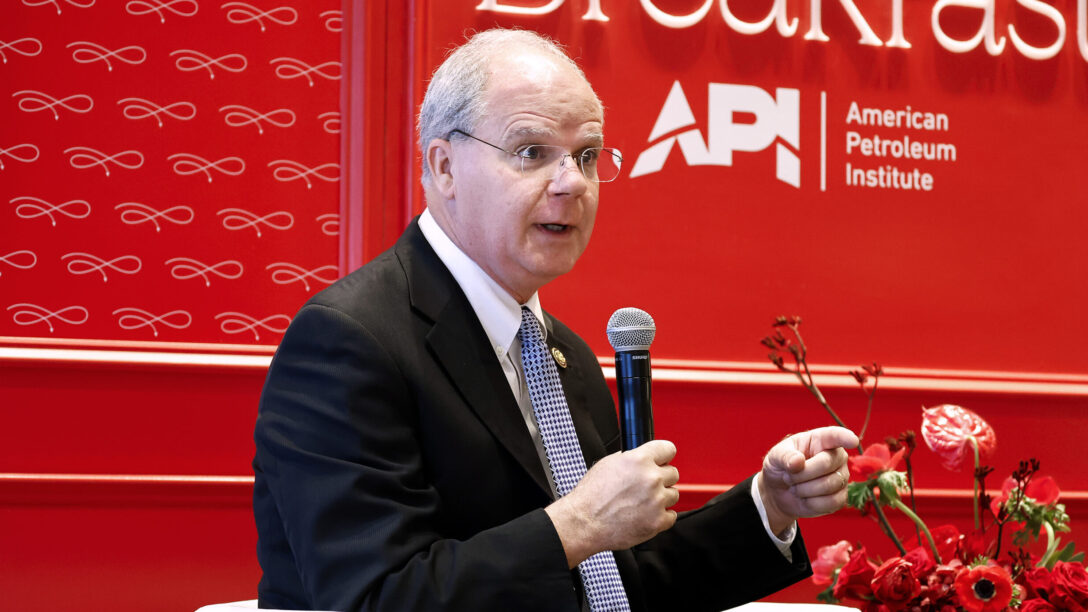
"We’ve got such a red tape economy. I think there’s a pathway for both sides to say, We know we need to build things. If we take 10 years to build a new-generation plant, it could raise prices. The difficult thing about our system is that we move slow. The bad thing about China is that they move too fast. We don’t want to be that either," says House Energy and Commerce Chairman Brett Guthrie.
Photo: Paul Morigi/Getty Images for Puck
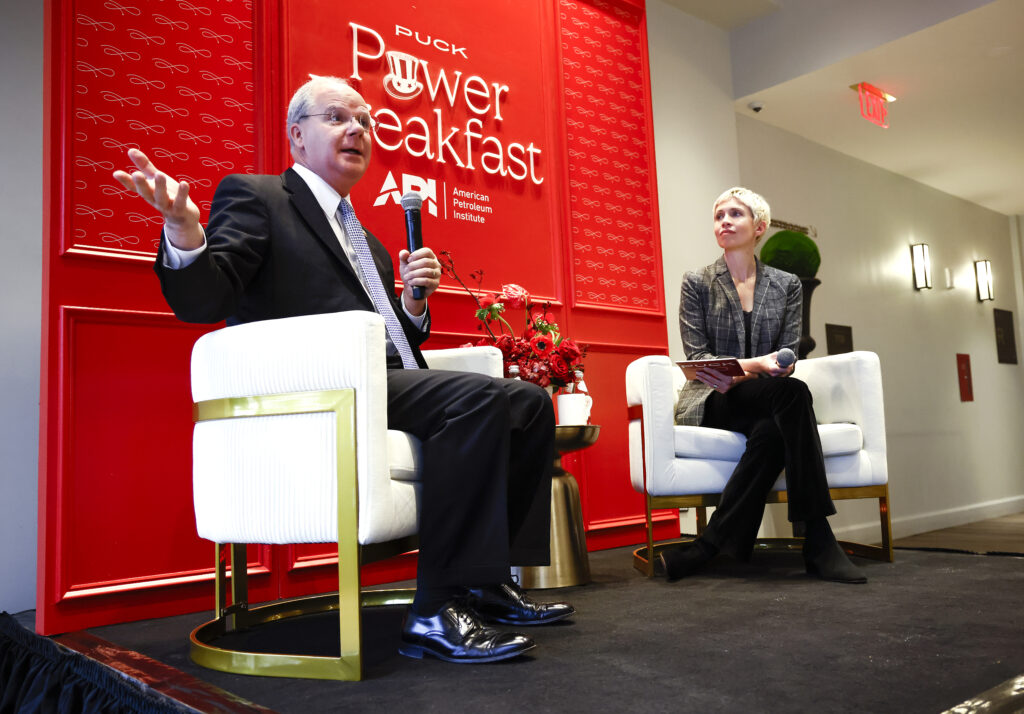
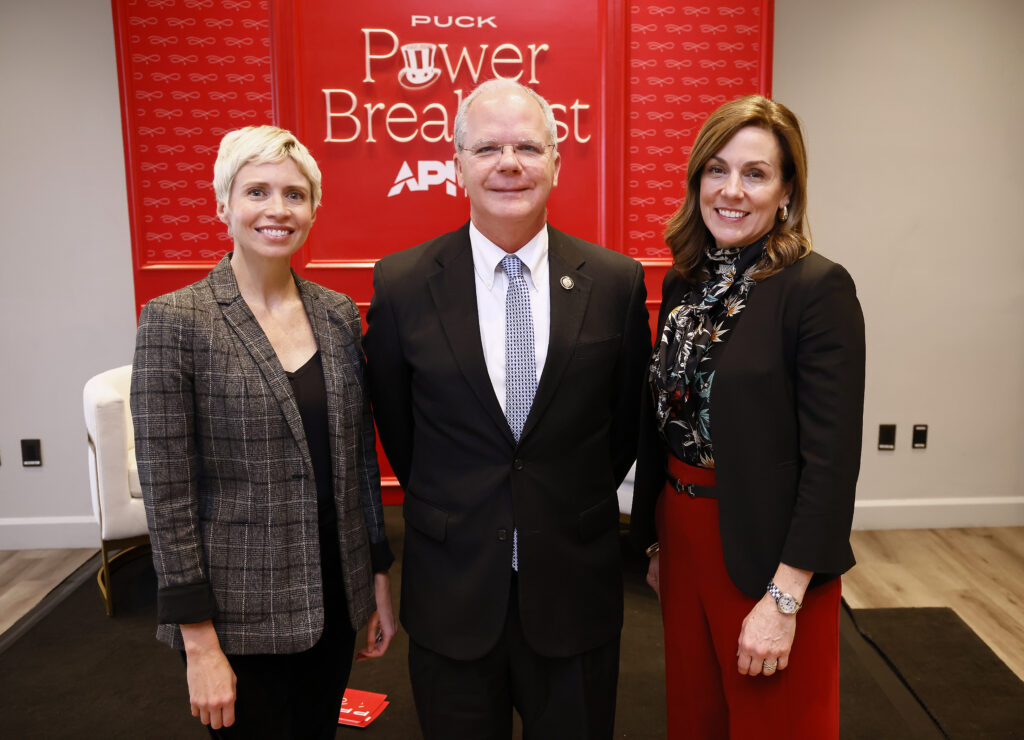
As the A.I. revolution triggers an unprecedented spike in America’s energy demands, Washington is scrambling to figure out how the U.S. can churn out enough energy to support the data centers sprouting up everywhere, while also protecting Americans from rolling blackouts and crippling utility bills. Yesterday, on the rooftop of the chic Riggs Hotel in Washington, I sat down with House Energy and Commerce Chairman Brett Guthrie for the latest Puck Power Breakfast, hosted in partnership with the American Petroleum Institute, to unpack what’s really at stake.
Guthrie, who hails from coal country in western Kentucky, led the committee responsible for eliminating more than $1 trillion in federal spending to help pay for tax cuts in the One Big Beautiful Bill. A quarter of that money came from rolling back Biden-era renewable energy tax credits—except for nuclear. In our conversation, Guthrie revisited that decision, and discussed the potential competition between consumers and A.I. hyperscalers. He also assessed the “all the above” strategy and acknowledged that energy affordability could be a sleeper issue of the midterms. The following has been lightly edited for length and clarity.
“Energy Dominance”
Leigh Ann Caldwell:You and Donald Trump both talk about “energy dominance” in the United States. It’s a priority for this administration and this Congress. But what does it mean?
Brett Guthrie:It means that we’re independent. We used to say “energy independence,” but President Trump likes to go bold, so now it’s “energy dominance.” Energy drives everything. My predecessor in this committee used to say, If it moves, it’s energy; if it’s not moving, it’s commerce. My version of that is, It takes energy to move commerce. After the Civil War, there was an explosion of energy and [an] explosion of the economy. Now, we’re at a point where we’ve been stagnant in energy. So it’s the time to grow.
When you speak of being stagnant in energy, are you referring to energy usage, which has been fairly level, or energy production?
It’s both. The demand for energy has been stagnant over the past generation, and the deindustrialization of middle America is part of it. We’ve become far more efficient at using energy, which is a great thing. So when you put those things together, we really haven’t had this demand. But now we’re industrializing, and the demand for energy is booming. The scale of what A.I. demands for energy is just phenomenal. These massive data centers use as much power as our major cities. The demand of one data center is like adding Seattle to the grid.
Is the U.S. prepared to meet that demand?
We’re preparing. I’m not saying we’re prepared. These men and women in that industry have the capital and the brain power. The thing we have to work on is that we can’t have a patchwork of 50 state laws. We have to deal with that, and that’s in our committee. But we just don’t have the energy. We’re competing with China. We’re prepared to win this battle, and I think we’re going to win this battle. But if Congress doesn’t do anything to improve the ability to produce energy, we won’t win this battle.
What does Congress need to do—and what are they doing, specifically?
Permitting reform so we can produce the energy is important. And when I say “all the above,” I mean it. We need every electron we can create. We absolutely need to have dispatchable power. You can do coal-clean, but certainly natural gas—and you have to be able to move it. We have more energy than they have in the Middle East. I think we have interest in the Middle East politically, but in terms of our economics, if we’re energy independent, then what happens over there doesn’t really affect our economy.
The Energy and Commerce Committeerolled back a lot of the tax incentives for wind and solar in the One Big Beautiful Bill. How does that help the all-the-above strategy?
What’s happened in the last few years is they’ve incentivized wind and solar so much that it makes it non-economical to develop natural gas and other products. Some essentially give the power away, because they get the tax credit. Investors are saying, Well, I’m not going to invest in dispatchable power because I can’t compete with tax credits for wind and solar. So we want it to be on an even playing field.
On Tuesday, it was reported that the administration is providing $1 billion of loan guarantees to reopen the nuclear plant at Three Mile Island. Is that creating an uneven playing field?
Well, we need to treat all sorts of energy the same.
This administration is canceling renewable energy projects around the country. Is that a mistake?
We’re trying to do this bipartisan. If you don’t, people are concerned that these things will change every two to four years. We saw those permits canceled with the Keystone pipeline, and now other permits have been canceled. Because of this, I think one thing we can come together on is permit certainty—that we have some provision in the law [so] if people issue permits and invest, they can depend on their permits. We need to address that.
A Red Tape Economy
Energy prices with A.I. have increased for consumers. Is there anything Congress can do to ensure some of these A.I.-driven cost hikes aren’t passed on to consumers?
I’m not sure there’s a direct link to A.I. causing the increase. When you decrease your production, you’re going to have an increase in rates. I know they just argued that in the gubernatorial race in New Jersey, but I don’t think that was directly related to A.I. coming online.
But if you’re going to bring a large demand on, and not increase supply, it is going to raise rates. People ask, Do we really want to go down the path of having these massive data centers? Well, the world’s going down that path. So the question is whether the United States is going to go down the path or not. We know what not to do. I’m pro-Europe, I want Europe to be successful, a prosperous Europe is good for the world. But they made decisions to take themselves out of this game with their energy policies and their regulatory policies.
We have to go down that path [of having data centers]—it’s not going to stop. There’s another country going down that path, and it’s China. They can make power cheaper for consumers, because if you have a big load, that spreads the costs. But if you bring on the size of the city of Seattle, and you don’t increase the energy going into that region, it will raise prices. So that’s our job, to make sure we have the supply.
From the production standpoint, does Congress need to do anything to ensure that consumers have access to energy, and that A.I. companies won’t get preference for energy?
We haven’t discussed having limits to preference. But I’ll tell you, if 435 members of Congress hear from their constituents that their prices are going up too high because of a data center, we’re going to react to that. The thing I’m trying to get across is that this is coming. We have the energy—whether it’s wind or solar, and we absolutely have the natural gas. The question is, how do we move it through a pipeline, how do we transmit the electrons once we generate them? If you look back at the infrastructure bill, they authorized $42 billion for broadband, so that every home can have broadband in three and a half years. Not one inch of fiber was built, because of all the permitting.
We’ve got such a red tape economy. I think there’s a pathway for both sides to say, We know we need to build things. If we take 10 years to build a new-generation plant, it could raise prices. The difficult thing about our system is that we move slow. The bad thing about China is that they move too fast. We don’t want to be that either.
How does the United States compete with China, which doesn’t have those barriers and has surpassed the U.S. when it comes to energy production?
We compete with them because we have better technology. But we’re not always going to be ahead of them if we don’t develop it. China is building excess power. We don’t need to compete with them in that regard, but we have to have enough power. People are projecting we need 152 gigawatts of power over the next decade.
What is the timeframe to have new natural gas plants open?
It depends on the permits. It could take three to five years. That’s why we need the wind and solar. That comes online quicker.
Permitting reform was a big topic after the Democrats passed the Inflation Reduction Act last year, and it died in Congress. What are the prospects at this point?
There’s a push. We have three committees working on it in the House. We all know this needs to happen. You’re seeing movements within the executive branch to try to make the system we have more effective. I think the prospects are good to have some sort of permitting reform. It seems like one party says, We need to move the electrons. And the other party says, We need to generate the electrons. What I’m trying to tell everybody is, you have to generate them and move them at the same time.
Could the energy and utility costs for consumers play a big role in next year’s midterms if they don’t come down?
I think it could. The press can’t hide inflation, because everybody sees it at the grocery store. They see it when they get their electric bill, or when they go to the gas pump. So we have to address it. And people have to know that we have a plan to address it. We’re trying to make it bipartisan. We’ll see if we can get there.
Didn't get an email? Check your spam folder and confirm the spelling of your email, and try again. If you continue to have trouble, reach out to fritz@puck.news.
Didn't get an email? Check your spam folder and confirm the spelling of your email, and try again. If you continue to have trouble, reach out to fritz@puck.news.
Member Exclusive
Get access to this story
Create a free account to preview Puck’s full offering, including exclusive articles, private emails from authors, and more.