{{ 'now' | timezone: 'America/New_York' | date: '%b %d, %Y' }} |
|
|
Greetings from Los Angeles, happy Halloween, and welcome back to In the Room. I’m thrilled to
share that Puck has closed its deal to acquire Air Mail, the inimitable digital media company founded by the legendary editor Graydon Carter. I’d like to extend a very warm welcome to my new colleagues.
In tonight’s issue, we go back inside CBS News, where Bari Weiss has been calling all over town in hopes of recruiting big-name talent—and evidencing some of her
inexperience along the way. Ultimately, these efforts hint at a more significant challenge: For all the focus on her politics, the real story of CBS’s Bari era hinges on her aptitude for managing the business.
🍸 On the latest edition of The Grill Room, Julia Alexander and I chew over Brian Roberts’s lukewarm earnings, Peacock’s perpetual stagnation, and what it all portends for NBC’s broader
ambitions—especially with WBD on the block. Plus, Mark Thompson’s way-too-little-too-late launch of CNN’s streaming service, Elon Musk’s Grokipedia sideshow, and much, much more. Follow The Grill Room on Apple, Spotify,
or wherever you prefer to listen.
Mentioned in this issue: Bari Weiss, Bret Baier, Anderson Cooper, Hillary Clinton, Donald Trump, David Ellison, Gerry Cardinale, Peter Keepnews, Tom Cibrowski, George Cheeks,
and many more…
Let’s get started… |
- The
Keepnews ejection: I’ve learned that several New York Times employees are up in arms over the paper’s decision to fire veteran obituaries deputy editor Peter Keepnews over an off-color remark he made in a meeting this week. According to Times sources, Peter made a joke about a photo of a rabbi during the meeting that apparently offended Hanna Ingber, who wrote a note to an obit editor in which she asked whether Keepnews was Jewish, and
wrongly speculated that he might be an “old white christian dude seeing a photo of a rabbi and making a rude statement about all jews.” (Keepnews is Jewish.)
The matter was brought to H.R. and, in light of this and past incidents, Keepnews was subsequently informed that he would be forced to resign from the paper. “After multiple incidents Peter offered his resignation,” Times spokesperson Danielle Rhoades Ha told me. “It was accepted.”
On Friday, about
two dozen Times journalists signed a letter to publisher A.G. Sulzberger, executive editor Joe Kahn, and other members of the Times masthead pleading with them to reconsider their decision. “We unanimously see the death penalty as unjust and self-harming,” they wrote, noting that “every one of Peter’s colleagues hold him in extraordinarily high regard.” The lengthy letter went on to praise Peter’s editing talents, “vast cultural learning,” and
commitment to reporters and colleagues.
“He is, we know, an eccentric,” they acknowledged. “He puts his foot in his mouth. Yet all of Peter’s colleagues, from a number of different backgrounds, absolutely love working with him. If our newsroom lacked brilliant eccentrics, would it be a newsroom at all?” The signatories also acknowledged that Keepnews’s remarks might warrant a suspension, but objected to the “sudden ultimatum, two weeks notice and humiliation. … Surely a compromise is
possible,” they continued. “Peter Keepnews is the best editor many of us have ever had.” - Cardinale rules: RedBird Capital founder Gerry Cardinale is seeking to assuage Telegraph employees who remain wary of his takeover of the British broadsheet, particularly amid reports—in The Telegraph and elsewhere—about his investment firm’s business with China. Cardinale has now proposed establishing an independent
advisory board to uphold journalistic integrity, and, in an op-ed for the paper this week, stressed his commitment to maintaining the paper’s integrity while turning The Telegraph into a “growth-oriented media company” and potentially “the most successful conservative paper in the English-speaking world.” Welcome to the news business, Gerry: To paraphrase Brian Roberts, there’s enough bullshit to go around, and it can outweigh the business from time to time. (Disclosure:
Following Puck’s recent acquisition of Air Mail, RedBird has become a minority shareholder in the company.)
- And finally… Remember 44 days ago when I told you that Ted Sarandos was considering a bid for Warner Bros.? Last night, Reuters
reported that Netflix has enlisted Moelis & Co. to evaluate a prospective offer. Reminder not to write anything off just because of what executives say in
public.
|
|
|
Bari Weiss walked into CBS News guns ablazin’, booking guests and shooting for the moon with
on-air talent, most of whom are locked in multiyear contracts. Will her inexperience in TV be a real hindrance, or is it just what the sleepy Tiffany network needs? |
|
|
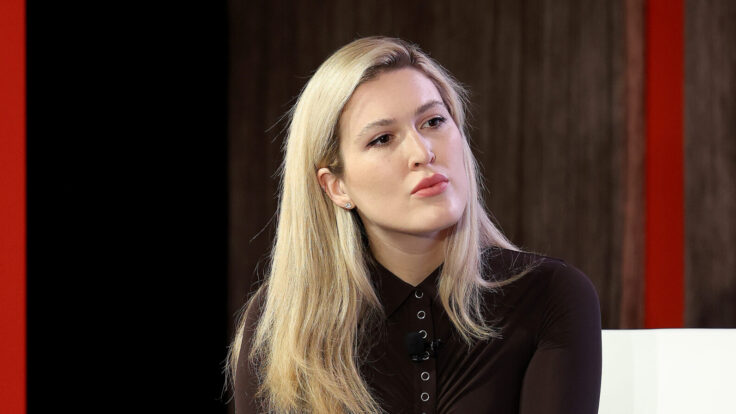
In recent weeks, as Bari Weiss begins her transformation of CBS News, she has been reaching
out to multiple anchors and correspondents at Fox News, CNN, and elsewhere, as well as their agents, to see whom she might lure to the network. At times, it seems she is merely information-gathering or blue-skying a fantasy roster of on-air talent. In several instances, however, she has had real discussions about the feasibility of their transfer. Her targets have included Fox News anchors Bret Baier, Bill Hemmer, and Dana
Perino, as well as CNN analyst Scott Jennings; and, as I reported earlier this week, she has also discussed expanding Anderson Cooper’s role at the network beyond 60 Minutes.
In an industry where talent acquisition has its own set rules of engagement, Bari’s instinctive and freewheeling approach has
struck many as unorthodox. To many TV news veterans, it is also seen as a sign of her inexperience and lack of managerial finesse. Network executives lock their talent into yearslong contracts—Anderson’s runs through 2026, Bret’s into 2028, and Dana’s into the 2030s—and include specified negotiation windows that don’t open until the final three to six months of the agreement. Savvier network leaders tend to re-up their stars before that window ever opens. Getting out of these contracts isn’t
impossible, of course, but it doesn’t happen on a whim—and it usually requires quite a bit of discretion.
The casual, D.I.Y. approach is very on brand for Bari, and presumably one of the reasons that David Ellison brought her in to disrupt the business. In her very first days at the network, she made an impression on staff by personally texting major guests—Bibi Netanyahu, Steve Witkoff, Jared Kushner, Hillary
Clinton, Condi Rice—to book them for segments on the Israel-Gaza conflict. (On Friday, Trump sat down with Norah O’Donnell for his first interview on the network since he sued 60 Minutes.)
Bari is an instinctive editor (the best are, really): She tends to assign story ideas or editorial framing based on her gut. In many regards, this has been a much-needed jolt to the bureaucratic complacency of the nearly 85-year-old
newsroom. Tom Cibrowski, the president of the news division, has described Bari’s energy and passion as “infectious.”
But hiring people requires a more delicate choreography—one involving Amy Entelis–type talent whisperers who have longstanding relationships with agents and lawyers, and understand the rules of the road. A television news arriviste, Bari is likely unfamiliar with those rules and has invited quiet mockery from her new
cable and broadcast contemporaries. Some have even suggested that she might be getting too close to “tortious interference,” the legal term that precludes a putative recruiter from trying to induce an employee to breach their contract. As one critical TV news insider put it, “she probably doesn’t even know what tortious interference means.” What’s more likely, though, is that she doesn’t give a shit. |
Bari’s thwarted recruitment efforts also hint at a more significant challenge. While much of the discourse
around Bari has centered on an often alarmist interpretation of her politics, the real story of CBS’s Bari era hinges on her aptitude for managing a meaningfully sized business in which she has no experience. As I’ve noted before, running a television news network requires three skill sets: P&L management, talent wrangling, and a strong editorial instinct. Bari arrived at CBS News with only the last of those, as well as a reputation for managerial shortcomings. Current and former Free Press
employees have described her leadership as “chaotic,” which may yet prove to be a significant handicap.
In theory, Cibrowski is there to manage the business while Bari sets the vision and tenor. But Bari’s hands-on approach is likely to put stress on that dynamic, especially since she reports directly to David Ellison while Cibrowski reports to TV chief George Cheeks. (Presumably this structure will be reset at some point.) As I reported earlier this week, Bari hired
Wall Street Journal deputy editor Charles Forelle without even introducing him to Cibrowski. Her calls to rival talent and their agents have been similarly unilateral. She has the latitude to do that, of course, but it’s not likely to foster healthy relationships.
Meanwhile, the gradient grew steeper still this week. On Thursday, Variety reported that Gayle King was “expected to depart” as co-anchor of CBS Mornings after her
contract expires next year. The CBS News front office quickly moved to repudiate that report, saying in a statement: “There have been no discussions with Gayle about her contract that runs through May 2026. She’s a truly valued part of CBS and we look forward to engaging with her about the future.” And, indeed, several CBS News sources assure me that there have been no formal discussions about Gayle’s contract or her future at the network.
Rival camps decipher this differently: Some see
Gayle’s lawyers, Allen Grubman and Larry Shire, trying to preempt next year’s contract negotiations, while others sense that this is coming from Bari. Either way, Gayle’s exit will likely come to pass. As I’ve reported for months, today’s TV news economics can’t sustain Gayle-level contracts ($10 million a year, I’m told). Moreover, the unspoken reality—obvious to every media executive I know—is that while Gayle is nominally a star, she doesn’t rate, and hasn’t
managed to move the morning show out of third place. And the icing on the cake is that her politics are misaligned with Bari’s mandate. So, yes, Gayle is likely to leave next year, but no one at CBS News has talked about that yet.
In any event, the fact that this is all playing out in the pages of Variety only further emphasizes how much Bari has to learn about the art of talent management. May 2026 is just more than six months away, which is a long time to spend
sparring with your biggest talent in the trades—especially when you’re having a hard time finding any other big names to replace her. |
|
|
Puck fashion correspondent Lauren Sherman and a rotating cast of industry insiders take you deep behind the scenes of this
multitrillion-dollar biz, from creative director switcheroos to M&A drama, D.T.C. downfalls, and magazine mishaps. Fashion People is an extension of Line Sheet, Lauren’s private email for Puck, where she tracks what’s happening beyond the press releases in fashion, beauty, and media. New episodes publish every Tuesday and Friday. |
|
|
A professional-grade rundown on the business of sports from John Ourand, the industry’s preeminent journalist, covering the
leagues, players, agencies, media deals, and the egos fueling it all. |
|
|
Need help? Review our
FAQ page or contact us for assistance. For brand partnerships, email ads@puck.news.
You received this email because you signed up to receive emails from Puck, or as part of your Puck account associated with {{customer.email}}. To stop receiving this newsletter and/or manage all your email preferences, click here. |
Puck is published by Heat Media LLC. 107 Greenwich St., New York, NY 10006 |
|
|
|