{{ 'now' | timezone: 'America/New_York' | date: '%b %d, %Y' }} |
|
|
Greetings from New York, and welcome back to In the Room. Thanks to
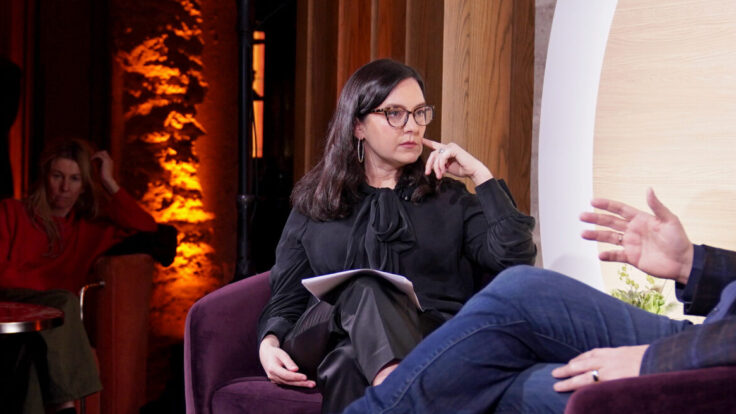
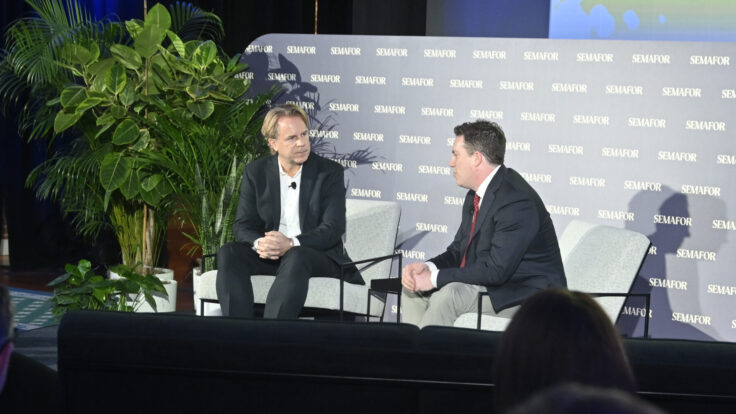
everyone who joined us this morning at the Hotel Chelsea for an event celebrating the most recent iteration of the Puck Private Conversation—our data and intelligence collaboration with Orchestra, a strategic communications and marketing company. In front of a room filled with media swells of
various stripes, Orchestra C.E.O. Jonathan Rosen, Puck founder Jon Kelly, and I unveiled the latest findings from our exclusive survey of media executives and insiders, which can be found here.
We shared insights regarding—what else—the rise of recurring-revenue subscription bundles, the proliferation of FAST
services, and debunked A.I. mythology. Thanks to everyone here who participated in the study, which was fielded earlier this quarter. And a special thanks to Ben Smith and Emily Sundberg for letting me put them on the spot with questions about their own businesses. For those who missed it, we’ll be running the recording on Friday’s episode of The Grill Room, and I’ll be sharing some of the highlights in Friday’s edition of the email.
In
tonight’s issue, news and notes on Ben and Justin Smith’s sojourn in the Gulf, and what it reveals about the true motivations underlying Semafor’s business. But first, some fresh scoops on Bari Weiss’s next moves at CBS News.
🍸 Plus, on the latest episode of The Grill Room, Andrew Ross Sorkin joined me for a candid conversation about the ins and outs of his media business. He
walked me through his less-chaotic-than-I-thought CNBC–DealBook schedule, explained why he’s prioritizing quality over quantity (and skipping the media-empire chase), and broke down his approach to high-stakes interviews. We also dug into the DealBook Summit, his toughest interview yet, and the advice he’d give to anyone trying to break into media in 2026. Follow The Grill Room on Apple, Spotify, or wherever you prefer to listen.
Mentioned in this issue: The Smiths, Elon Musk, J.D. Vance, Vineet Khosla, Bari Weiss,
Tom Cibrowski, Sophia Efthimiatou, Clare de Boer, Chris Licht, Tareq Alotaiba, Isaac Chotiner, Max Tani, and many, many more…
Let’s get started…
|
-
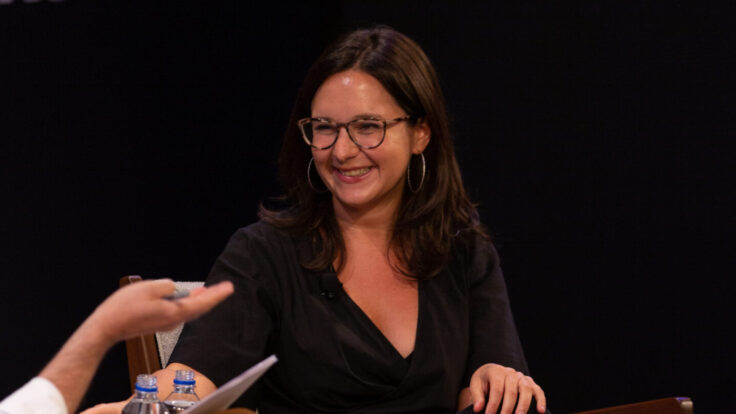
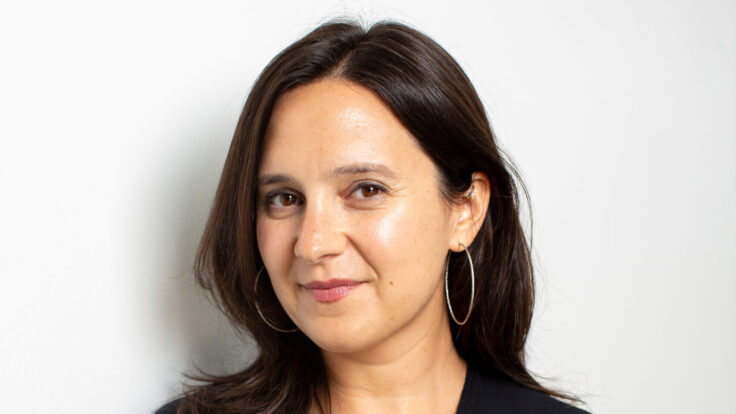
The Bari report: Bari Weiss’s heavily promoted and much-discussed town hall event with Erika Kirk drew fewer than 2 million viewers on Saturday night—an unremarkable showing that CBS is spinning as a win (“32 percent boost in the time slot! 185 million views across social!”) even though it performed at the level of the average CNN town hall. Anyway, as you might expect, the schadenfreude among the grizzled TV vet crowd has been thick. These types—you know who
you are—question why Bari chose to conduct the interview herself rather than hand it to 60 Minutes. They also grumbled about why she aired the conversation on a Saturday night—the day after Kirk went on Fox News’s The Five, which drew 3.3 million viewers. (I’m told that on a morning call days before the event, CBS News president Tom Cibrowski joked that staff should cancel their Saturday night plans to watch it.)
In any event, Bari
didn’t address the Kirk town hall during the 9 a.m. call on Monday, and even told her fellow executives that there was no need to linger on it. That said, she remains committed to the format: I’m told she is now pursuing Elon Musk and J.D. Vance for future town halls, both of which would presumably be bigger draws. (Bari and CBS News representatives did not comment.)
Meanwhile, Bari announced two new hires in the front office on Wednesday: chief
operating officer Sam Siegel, and S.V.P. of talent and brand strategy Sophia Efthimiatou. I also learned this week that Bari plans to sign a number of paid contributors to the network, including former national security advisor H.R. McMaster, ex-Marine Elliot Ackerman, cultural analyst Casey Lewis, chef and food writer Clare de Boer, and Puck’s own Lauren Sherman. Some of these
deals are structured with a low-five-figure upfront advance, plus an additional $1,000 or so for each appearance. These are small deals for the TV news business, historically speaking—but, of course, it’s a smaller business now.
Will any of this move the needle? Two months in, Bari has given the industry a lot to critique, and I can already sense an effort by some to prematurely write off her tenure at CBS News as a failure. Indeed, more than one media exec has quipped that she’s
evidencing Licht-ian levels of naivete. Obviously, she deserves more runway, which David Ellison is going to afford her. And you may recall that CBS News wasn’t exactly winning when she got there. She’s trying a lot. Hopefully, she’s learning a lot, too. - Ex Post facto: Speaking of iterative processes, I was intrigued by Washington Post C.T.O. Vineet Khosla’s take on the much-maligned rollout of the
Post’s A.I. tools—which, as Semafor has reported, are furnishing readers and podcast listeners with inaccuracies and fabricated quotes. The conventional response here would be a hasty recall and mea culpa, but Khosla is standing firm and saying the company will “iterate through the
remaining issues.”
In a recent interview with The Rebooting’s Brian Morrissey, Khosla cast the media’s obsession with accuracy as an impediment to innovation. Whereas the tech instinct is to ship, observe, and iterate, the media instinct—or, really, the journalistic instinct—is to prevent error. “Getting
something slightly wrong is not the end of the world [in tech],” Khosla said, “but getting something slightly wrong in the world of media is often perceived as the end of the world.” I can hear the J-school crowd hyperventilating here, but it’s worth noting that this reflexively risk-averse mindset is precisely why investors typically hate media—and why it often takes the industry so long to catch up to changes in consumer behavior. - From up on
VandeHei: On a related note, Axios C.E.O. Jim VandeHei has published his latest missive on the state of the media, which, he writes in his singularly staccato prose, “is badly broken, deeply polluted, and increasingly dangerous.” Jim rightly diagnoses that our realities are “no longer defined by ‘the news,’” but rather “by the videos you watch, the podcasts
you listen to, the people you follow on social media and know in person, and the reporting you consume.” His rather obvious prescription, for Axios and others, is a commitment to fact-based reporting—fighting “fake fire with actual fire.”
No argument there, though I doubt that alone will save the fortunes of any media company in 2026. Factual accuracy is still table stakes in this business, but companies need innovation on the product side, as Khosla noted above. Jim’s product
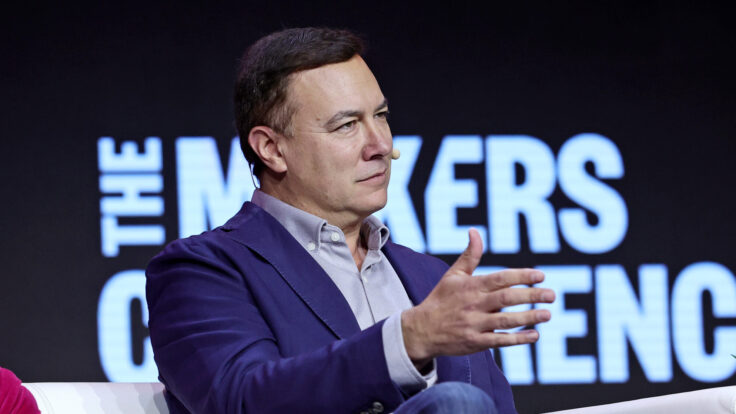
insight a decade ago was to deliver the news in a faster and more concise format. But, as he knows, A.I. does that better than anyone, and the acceleration will only continue. What’s next? - Media moves: Dow Jones has tapped former Bloomberg Media C.E.O. M. Scott Havens to serve as its first-ever chief growth officer, per Adweek. Havens, who was most recently with the New York Mets, is the second media C.E.O. to join Dow Jones
in as many years. Former Fortune C.E.O. Alan Murray now serves as head of the WSJ Leadership Institute.
- And finally…: I was delighted to hear from a Wall Street Journal source that editor Emma Tucker cited In the Room during her end-of-year town hall. Specifically, she referenced this article from late July, which explained how the Journal’s aggressive political scoopage was setting off alarm among its rivals at the Times. More specifically, Emma referenced the opening anecdote about this two-headed dragon.
|
|
|
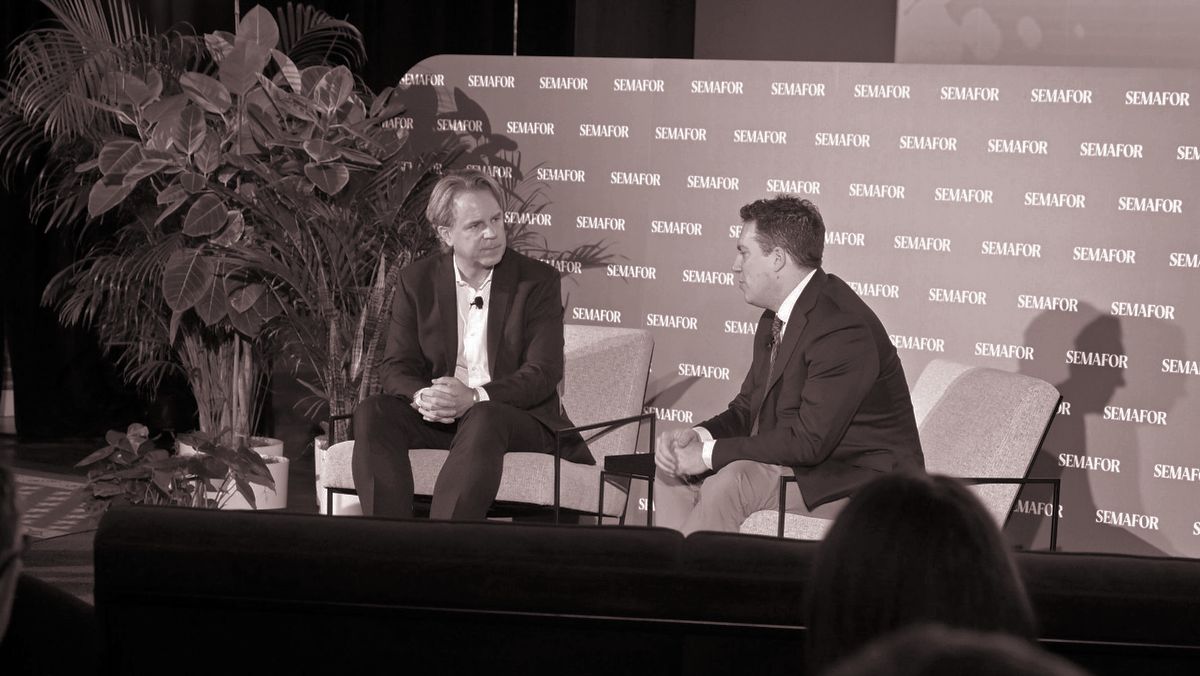
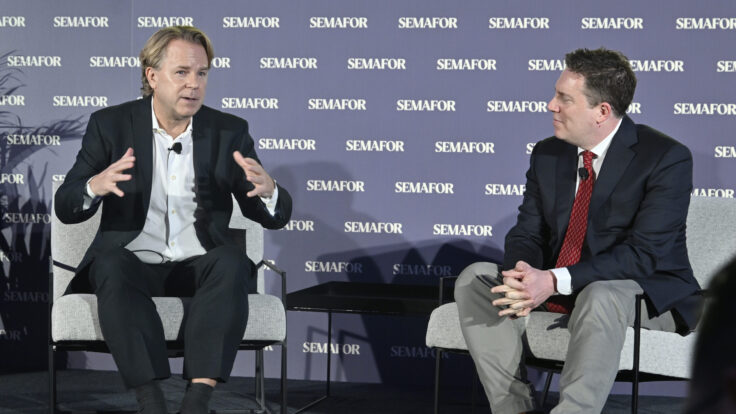
As Semafor expands further into the Gulf, it’s becoming clear that Justin Smith
and Ben Smith’s media baby is looking a lot more like the former than the latter. |
|
|
A few weeks ago, Semafor co-founder and editor-in-chief Ben Smith found
himself ensnared in an old-school, journo-versus-journo pissing match on X—the kind of tiresome digital contretemps that was a regular hazard of the occupation during his past life as a muckraking reporter. Ben, who has mostly managed to evade this sort of digital dust-up during the executive phase of his career arc, had promoted a benign-if-unwary Semafor essay noting that Saudi Crown Prince Mohammed bin Salman had effectively outrun his association with the murder of
Jamal Khashoggi—a largely unassailable point, at least on a geopolitical level, given his recent White House visit and Trump’s fulsome embrace. Moments later, however, The New Yorker’s Isaac Chotiner had a bone to pick. “You would have to be brain-dead to read this piece,” he tweeted, “and not immediately wonder who is funding Semafor Gulf.”
Semafor Gulf, which launched last year, is the startup’s newest vertical and an
increasingly important part of its P&L—and also, perhaps, a harbinger of its future. Justin Smith, the company’s C.E.O. and co-founder, had always ostensibly conceived of Semafor as a globally minded media enterprise. Yes, Ben may have uttered that memorable line about the underserved community of 200 million or so college-educated English speakers. But the business always seemed rooted in Justin’s formative experiences in the Lufthansa lounge—as a young salesman at The
Economist, his early stab at entrepreneurship with Breaking Media, the Atlantic years (particularly the rise of Atlantic Live and the birth of Quartz), and then his tenure as the C.E.O. of Bloomberg Media. After a career of working for billionaires, Justin understandably wanted the opportunity to chart his own journey, with field notes learned along the way.
And yet Semafor initially, and not always comfortably, shared the DNA of both of its founding fathers. Despite
Justin’s own intentional cosmopolitanism, Ben remained a pit bull reporter at heart—the kind of guy a newsroom loved because he didn’t shy from Twitter feuds. When Semafor came to market, in 2022, its very look and feel manifested the occasionally divergent styles of the Smiths. The worldliness—as manifested by all those clocks on the home page, a news bureau in Africa, and a Tyler Brûlé–approved manila-colored backdrop—was mediated by the sort of scoop-driven
reportage that had defined Ben’s career. Was this a luxury product? A niche BuzzFeed? Yet another D.C.-inflected media play? Despite the grand pronouncements, it wasn’t always clear in those days.
Three years in—perhaps because of that early indecision—Semafor has distinctly taken on more of Justin’s characteristics. After overhiring and over-raising in those incipient years, the company unabashedly markets itself now as an events-first media company. There’s no shame in that, of course,
besides the fact that it’s a clunkier, less stable model that would demand a lower multiple when the time comes. Meanwhile, for students of Ben’s career, it’s hard not to wonder about the company’s fascination with the Middle East—especially for a guy who’s admittedly more Ditmas than Abu Dhabi. Is this just business as usual, or the latest sign that a partnership of supposed equals has been reset?
For his part, Justin isn’t shy about his deals in the Gulf. He recently posted a photo on
LinkedIn with the chairman of Dubai Chambers, an Emirati business group, touting Semafor’s partnership with the organization. He also used the occasion of Semafor Gulf’s recent expansion to tout a sponsorship deal with First Abu Dhabi Bank. Arguably, these partnerships are no different than those that Semafor and its rivals establish with the likes of Bank of America or Goldman Sachs here in the States. But in a region where all money invariably leads back to the monarchies, and as U.S.
audiences continue to adapt to the American business community’s sudden embrace of Gulf financing, these relationships are bound to draw greater scrutiny. In recent days, for instance, some critics of Semafor’s exploits in the Gulf have drawn my attention to the fact that regular Semafor contributor Tareq Alotaiba is the brother of Yousef Alotaiba, the U.A.E.’s ambassador to the United States. |
On X, Ben chided Chotiner for baselessly insinuating that Semafor was funded by the Saudi
government, and Chotiner backed off, claiming the piece was simply inane. When I followed up with Ben later, he confirmed that Semafor hadn’t taken any government investment, though he acknowledged that, like other media companies, they had taken advertising dollars. Meanwhile, Semafor’s reporting in the Gulf has included some notable exclusives—including, most recently, Saudi Arabia’s decision to embrace alcohol, as well as a corruption watchdog’s arrest of two executives involved in a Riyadh
real estate development. If there is a line that Semafor risks crossing by virtue of its deals in the Gulf, it hasn’t crossed it yet.
Perhaps more intriguing is what Semafor’s business in the Gulf underscores about Semafor’s domestic operations. The attempt to blend Ben’s journalistic skills with Justin’s global Rolodex appears to have fallen short of the aforementioned 200 million college-educated English readers; indeed, Semafor has quickly and quietly morphed into an events business
oriented almost entirely around sponsorship deals. A few months ago, Justin told Adweek that live events had become its “core” business, accounting for more than half of the company’s total revenues. For many, their sole touchpoint with the brand’s editorial is Ben’s Sunday evening newsletter, written largely by Max Tani, which seems more preoccupied with the rumblings of the creative underclass than those of the global elite.
There’s nothing wrong with
this, of course. It suggests an insight on Justin’s part—no doubt learned during his days at Bloomberg—that most sponsors probably don’t read the copy and are just looking for a respectable media partner. Still, one can’t help but wonder whether Ben knew just how much his baby was going to end up looking like Justin. The Smiths like to refer to their events as “live journalism,” but it’s hard not to see the journalism as anything more than window dressing for the real business. Semafor Gulf is
only the most brazen display of that thesis. In time, it may also prove to be the trickiest. |
|
|
A professional-grade rundown on the business of sports from John Ourand, the industry’s preeminent journalist,
covering the leagues, players, agencies, media deals, and the egos fueling it all. |
|
|
Puck founding partner Matt Belloni takes you inside the business of Hollywood, using exclusive reporting and insight
to explain the backstories on everything from Marvel movies to the streaming wars. |
|
|
Need help? Review our FAQ page or contact us for assistance. For brand partnerships, email ads@puck.news. You received this email because you
signed up to receive emails from Puck, or as part of your Puck account associated with {{customer.email}}. To stop receiving this newsletter and/or manage all your email preferences, click here. |
Puck is published by Heat Media LLC. 107 Greenwich St., New York, NY 10006 |
|
|
|