{{ 'now' | timezone: 'America/New_York' | date: '%b %d, %Y' }} |
|
|
Greetings from Los Angeles, and welcome back to In the Room. Netflix’s Ted
Sarandos used this week’s earnings call to reframe the competitive map, insisting that “television” is no longer a discrete industry or format, but rather a catchall for anything capable of capturing consumer attention, cultural relevance, or ad dollars. Yes, the argument conveniently anticipates the impending regulatory scrutiny around a Netflix–WBD tie-up, but it’s also the correct assessment of an ecosystem in which old categorical boundaries have collapsed, distribution is fungible,
and every major platform is now aggressively encroaching on everyone else’s turf. “TV is not what we grew up on,” Sarandos said. “TV is now just about everything.”
On a related note, YouTube C.E.O. Neal Mohan released his annual letter this week and pointed out the breadth of the service’s formats: “longform, Shorts, music videos, livestreams, podcasts, and more.” He also said YouTube will start integrating “image posts” into Shorts, à la Instagram—a reminder
that categorical boundaries are collapsing in the social space, too.
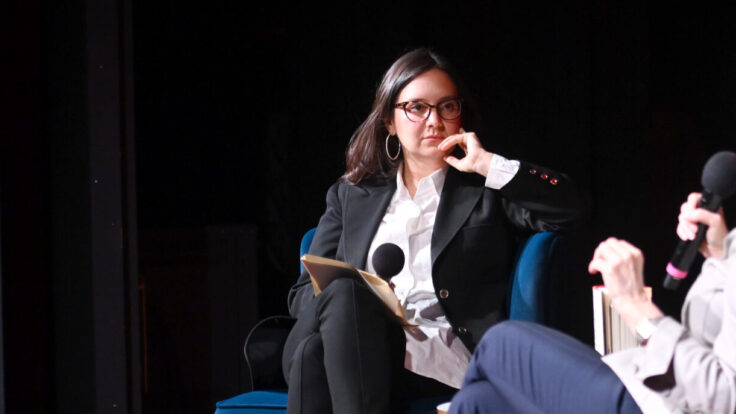
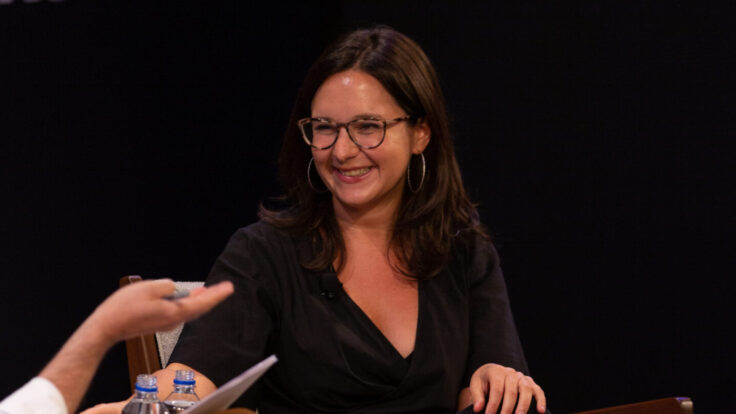
In tonight’s edition, news and notes on the escalating tensions between Bari Weiss and her CBS News charges in the wake of yet another prolonged 60 Minutes drama, which has exposed the dysfunctions of a newsroom steeped in mutual distrust. Indeed, we’ve reached the point where correspondents are openly accusing the front office of being political mouthpieces—which is not exactly a healthy
dynamic for a newsroom.
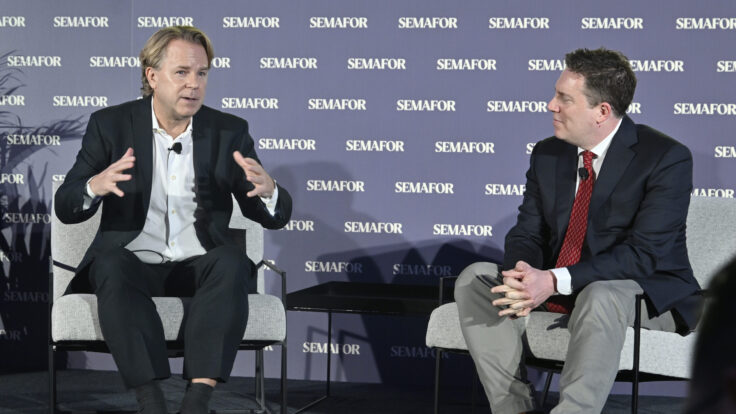
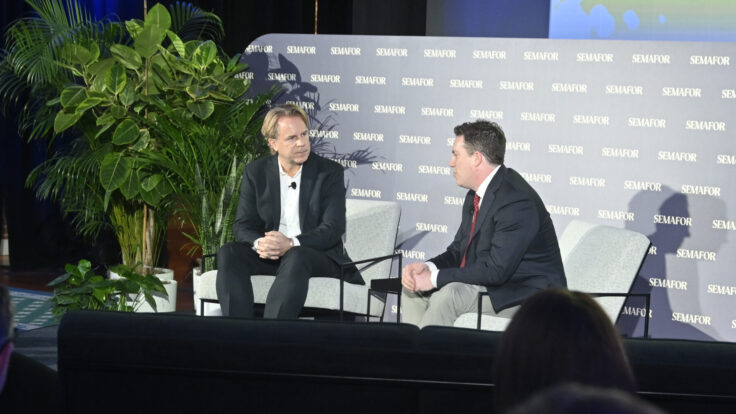
🍸 Plus, on the latest episode of The Grill Room, Semafor co-founders Justin Smith and Ben Smith joined me to justify their staggering $330 million valuation, break down the economics of an events-centric media company, and outline their broader ambition to build a global, intelligent, independent news brand in the mold of The Economist and the Financial Times. Follow The Grill Room on
Apple, Spotify, or wherever you prefer to listen.
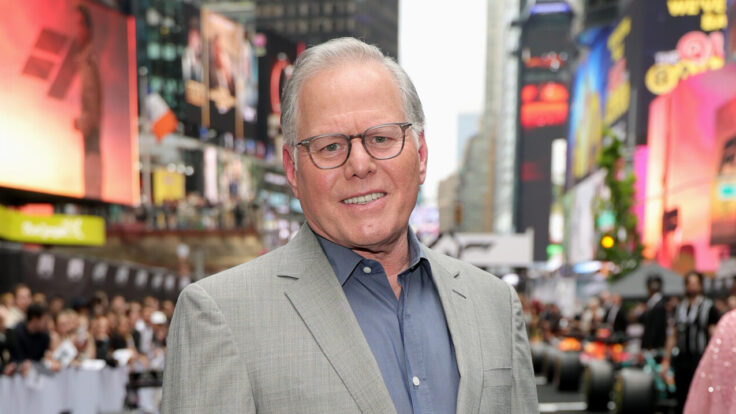
Also mentioned in this issue: David Zaslav, David
Ellison, Jeff Zucker, Chris Licht, Mark Thompson, Evan Hollander, Ali Zelenko, Mel Zukerman, Colby Hall, Sharyn Alfonsi, Karoline Leavitt, Tony Dokoupil, Tom Cibrowski, Tanya Simon, and many, many more…
But first… |
-
CNN shrinkage: CNN’s annual profits have been cut in half since Warner Bros. Discovery acquired the network—a sign of mismanagement by David Zaslav’s handpicked leadership over the last four years in addition to the obvious industry-wide entropy. In WBD’s latest S.E.C. filing, CNN is forecast to bring in just $600 million in adjusted operating profit for 2026—down from $1 billion-plus profits every year from 2017 through 2021, according to internal
financial documents shared by a CNN source. In 2020, the network brought in a record-high $1.17 billion in profits.
CNN’s erosion can’t be rationalized by the industry’s secular decline or post-“Trump bump” news fatigue alone. Both Fox News and MS NOW (née MSNBC) have delivered record-high revenues in the five years since Trump’s first term, according to sources at both networks. CNN is now projecting $1.8 billion in revenue for 2026—the lowest annual revenue
figure since the years prior to Jeff Zucker’s arrival in 2013.
Instead, CNN’s decline can be seen as the result of leadership failures that have been well catalogued here over the years: First came Chris Licht, a memorably naive and insecure leader who decimated TV ratings and staff morale. Then Mark Thompson, an aloof philosopher-C.E.O., effectively abandoned linear growth in favor of a much-ballyhooed digital transformation
that he has been slow to deliver. Would inexorable market forces have inflicted this damage anyway, or might different leadership have shepherded the network into a more durable future? We will never know. - Politico’s quiet hire: Politico, which is in the midst of a leadership transition, has quietly appointed a new
communications chief: Evan Hollander, a former Democratic House staffer, has been named S.V.P. of communications for Politico’s U.S. business—a fact that only came to my attention via sources who noticed the change on Evan’s LinkedIn page. Politico has yet to issue a press release.
- Dept. of corrections: In a previous item about Bari Weiss’s many press handlers, I inadvertently referred to NBC News P.R. vet Ali Zelenko as a “deputy” to Paramount comms chief Mel Zukerman. Ali has her own shop, of course—Ali Z Strategies—and reps several clients, including Bari. I regret the error.
- And finally…: In the ultimate act of auto-meta-omphaloskepsis, Mediaite’s Colby Hall has
launched a daily media newsletter that aggregates media newsletters. Yes, it’s cute, and yes, they’re in on the joke. “We’re excited to launch this because, if we do our job right, it solves a real problem: staying on top of what’s actually happening in media about media, without wading through all the filler,” Colby told me. “It’s not meant to be silly
or performative, but we do want a voice that doesn’t take itself too seriously. We have real respect for our newsletter peers and plan to highlight great work when it deserves it—and, like a good Little League coach, offer some tough love when it’s warranted.” Snake, eat tail.
|
|
|
After a month of contentious delays, 60 Minutes finally aired its piece
on the notorious El Salvador prison CECOT. The “hostage standoff,” as one person put it, ended in an uneasy truce that could have been reached a month ago—and without exposing the distrust and division at Bari Weiss’s CBS News. |
|
|
On Sunday, amid the diversions of NFL divisional playoffs and a three-day weekend, CBS’s 60
Minutes aired “Inside CECOT,” an austere report about the notorious maximum-security prison in El Salvador and the Venezuelan men who’d been sent there by the Trump administration. The segment had initially been scheduled to air in late December, but was abruptly and famously delayed by Bari Weiss at the eleventh hour—after CBS had already begun promoting it. Bari said the piece was missing “critical context” and comment from the Trump
administration. Critics suspected that she had preempted it in order to help her boss, David Ellison, stay in the president’s good graces. Amid the competing narratives and ensuing mishegas, the piece inadvertently aired in Canada and was shared widely on YouTube.
Inside CBS, the delay instantly became a new front in the increasingly contentious war between Bari and her growing chorus of antagonists. Sharyn Alfonsi, the correspondent on
the piece, publicly accused Bari of pulling the episode for political reasons—a point critics seized on the next day, when Larry Ellison pledged $40 billion to backstop his son’s bid for Warner Bros. Discovery. For the anti-Bari set, the move was the most brazen display yet of the network’s ongoing capitulation to Trump. Indeed, over the weekend, the Times revealed that White House Press Secretary Karoline Leavitt had approached Evening News
anchor Tony Dokoupil after his January 13 interview with the president and told him the network needed to run the conversation in full. “Yeah, we’re doing it,” Tony told her. For good measure, Karoline threatened to sue if they didn’t. Though the Times report doesn’t mention it, CBS sources who have seen the video said that network president Tom Cibrowski was also present when Karoline made the threat, and said nothing. |
Beyond the political anxieties, the drama over the “Inside CECOT” package has also exposed
seemingly unsustainable fissures between CBS News staff and the division’s leadership team. After delaying the piece, Bari asked 60 Minutes executive producer Tanya Simon to have Sharyn obtain comment from at least one administration official and add official data points from the Department of Homeland Security to her report. Sharyn refused to change her initial report. She also argued that she didn’t need further comment from the White House because she had already reached
out to the administration and received only a cursory response.
Over time, Bari and her team saw Sharyn’s refusal to entertain any changes as insubordination, even an attempt to sabotage Bari’s leadership. They raised two pointed criticisms of the original report: The first was that, according to a photo supplied by D.H.S., one of the prisoners featured in the piece had tattoos of a swastika and “666,” a symbol associated with the Aryan Brotherhood, that had not been shown. The
second was that the original report claimed only 3 percent of the men sent from the U.S. were violent offenders, but failed to mention that nearly half had convictions or pending charges for crimes. For Bari, this was the missing “critical context”; for Sharyn and some others at 60 Minutes, it was a bad excuse for justifying a politically motivated preemption. “Bari just has eggs on her face right now,” one source sympathetic to Sharyn said, “and she’s trying to deflect from the
fact that she has eggs on her face.”
In any event, Sharyn dug in, while Bari made her frustrations well known to friends and fellow executives. One source likened it to “a hostage standoff,” with Bari repeatedly asking for updates that Sharyn refused to provide. Until last week, most of these hostilities were relayed through Tanya and other intermediaries. Bari and Sharyn met for the first time only on the Monday before the segment went to air. Upon walking into her office, I’m told,
Sharyn’s first words to Bari were, “It’s so nice to finally meet you.”
Sharyn seemed angry and annoyed throughout the meeting and resistant to any input, according to multiple sources. At one point, Adam Rubenstein, a Free Press and New York Times alum who now serves as Bari’s deputy, began explaining the connotations of the 666 tattoo. Sharyn yelled at him, “You don’t get to produce me!” She then accused him of being “a mouthpiece” for the administration and
asked him whether he had ever produced a minute of television news before. He said he had, and urged her not to take anything personally—at which point Sharyn almost left the room.
Days before the broadcast, Sharyn and two CBS News crews traveled to Washington, D.C., to obtain comment from an administration official, such as Stephen Miller, Tom Homan, or Kristi Noem. She was unable to get anyone to comment on the record,
which set off another round of finger-pointing: Sharyn’s supporters criticized Bari for failing to persuade any of her administration contacts to sit for an interview, while the front office faulted Sharyn for failing to get comment from officials who had been willing to appear on other CBS News broadcasts.
In the end, “Inside CECOT” aired under a brokered truce: Sharyn did not make any changes to her original report, but amended her in-studio postscript to include ICE-supplied data about
the criminal convictions and pending charges. She also offered an update about the aforementioned tattoos, noting that the prisoner in question had altered the tattoo of the swastika just before being sent to CECOT, which is why it looked different during the interview.
Far from alleviating tensions, the CECOT saga has exposed the deeper dysfunction of a newsroom steeped in mutual distrust. The vast majority of CBS News insiders I’ve spoken with view Bari as a threat to the integrity and
legacy of the network, either because of her politics or her managerial shortcomings. Bari, meanwhile, can barely contain her contempt for employees she regards as mediocre at best and treacherous at worst. Not to state the obvious, but no matter what you think of Bari or her detractors, that is not a viable dynamic for any workplace—nor does it provide fertile ground for a reversal of CBS News’s fortunes.
Bari memorably introduced herself to CBS News staff by declaring that she wanted
to “win.” And who doesn’t? But in journalism in general, and TV news in particular, you need a team to do so. |
|
|
The industry’s go-to source for unflinching reporting on the trillion-dollar business of artificial intelligence -
perhaps the single most important technology of our time. Ian Krietzberg, the powerhouse journalist behind The Deep View, delivers twice-weekly insights into the latest dealmaking and breakthroughs in A.I., and how the intersecting worlds of finance, entertainment, media, and politics are being transformed in its wake. |
|
|
Puck sports correspondent John Ourand and a rotating cast of industry insiders take you inside the executive suites
and owners boxes where the decisions that shape the entire sports business are made. You’ll hear interviews with players, network execs, and everyone in between. The Varsity is an extension of John’s private email for Puck by the same name. New episodes publish every Wednesday and Sunday. |
|
|
Need help? Review our FAQ page or contact us for assistance. For brand partnerships, email ads@puck.news. You received this email because you
signed up to receive emails from Puck, or as part of your Puck account associated with {{customer.email}}. To stop receiving this newsletter and/or manage all your email preferences, click here. |
Puck is published by Heat Media LLC. 107 Greenwich St., New York, NY 10006 |
|
|
|