Greetings from Santa Monica, and welcome back to In the Room. In tonight’s issue, news and notes
on Bari Weiss’s highly anticipated arrival at CBS News, which has inspired a lot of impassioned feelings and served as a Rorschach test for the entire media industry. Will Bari save CBS News or destroy it? It depends on whom you ask. But perhaps the most important question is whether or not she can deliver the august brand from its complacency.
🍸 Plus, on the
latest edition of The Grill Room, Chris Balfe, C.E.O. of Red Seat Ventures, joined me for a deep dive into the booming independent creator economy—what creators need, how they can scale, the smartest ways to unlock new revenue streams, and more. Balfe also broke down Red Seat’s growing portfolio of conservative voices from
Tucker Carlson to Megyn Kelly, and its recent acquisition by Fox. Follow The Grill Room on Apple, Spotify, or wherever
you prefer to listen.
📝 Finally, there’s still time to fill out the latest Puck Private Conversation survey, powered by our partners at Orchestra. This survey is focused on the most pressing issues in the media industry, including how you think A.I. will impact our industry, whether
Paramount will buy WBD, and the fate of The Washington Post. We will be publishing the results in the coming weeks, so this is your last chance to have your voice heard. Just click here.
Mentioned in this issue: Bari Weiss, Larry Ellison, David Ellison, Lynn Forester de Rothschild, Cesar
Conde, Caitlin Flanagan, Tom Cibrowski, Jonathan V. Last, Rebecca Blumenstein, and many more…
Let’s get started… |
- Skydance
courts Apollo: Skydance-Paramount chief David Ellison has had preliminary conversations with Apollo in recent days to gauge the private equity firm’s interest in joining his company’s bid for Warner Bros. Discovery, per sources familiar. The New York Post, which was first to report on the talks, suggests that this may signal that David’s father, Larry, has “a limited appetite for media deals.” My understanding is that Ellison and
RedBird have the capital (and appetite) to cover the acquisition, but may be trying to preempt competition from Apollo and other buyout firms that could make a rival bid for WBD. In any case, the talks are very early, and my guess is that, barring a sweetheart deal, the Ellisons would rather take WBD on their own.
- The Economist on the block: Lynn Forester de Rothschild is putting her family’s 26.7 percent stake in The
Economist up for sale, per Axios’s Sara Fischer, with an expectation that it will reap up to £400 million, or around $535 million. Who might buy it? Sara reports that Lazard, which is handling the sale, is already in talks with several “U.S.- and U.K.-based buyers, mostly family offices, high-net-worth individuals or strategic
investors.” She also noted that foreign buyers might conceivably enter the mix, given the recent acquisitions of Forbes, Fortune, and the Financial Times by individuals and investment groups in Asia.
- Cesar’s palace intrigue: With NBCUniversal finally saying goodbye to MSNBC as the Versant spinoff becomes official, NBC News Group chairman Cesar Conde has informed staff that NBC News will have a new
reporting structure that elevates Rebecca Blumenstein, a former Times editor whose ascent at NBC has occasionally miffed the TV veterans. She will now control all aspects of NBC News outside of its most important asset, the Today show. Janelle Rodriguez, the programming chief who formerly reported directly to Cesar, will now report to Rebecca, as will the heads of standards, marketing, production and operations, and Meet the Press.
- And finally…: Will Lewis’s Washington Post has lost two more reporters: fashion critic Rachel Tashjian, who is joining CNN, and food critic Tom Sietsema, who appears poised to go independent. At some point, I trust, the Post newsroom will stop hemorrhaging talent and start hiring notable names again.
|
|
|
The overwrought media reaction to Weiss’s first days at CBS News would seem to validate the
Ellison thesis for putting her in charge. But there’s plenty of cautious optimism inside the newsroom, too. “Having a new force come in isn’t the worst thing,” said one source. “Anyone who is acting like CBS News internally is aghast is not capturing the actual mood.” |
|
|
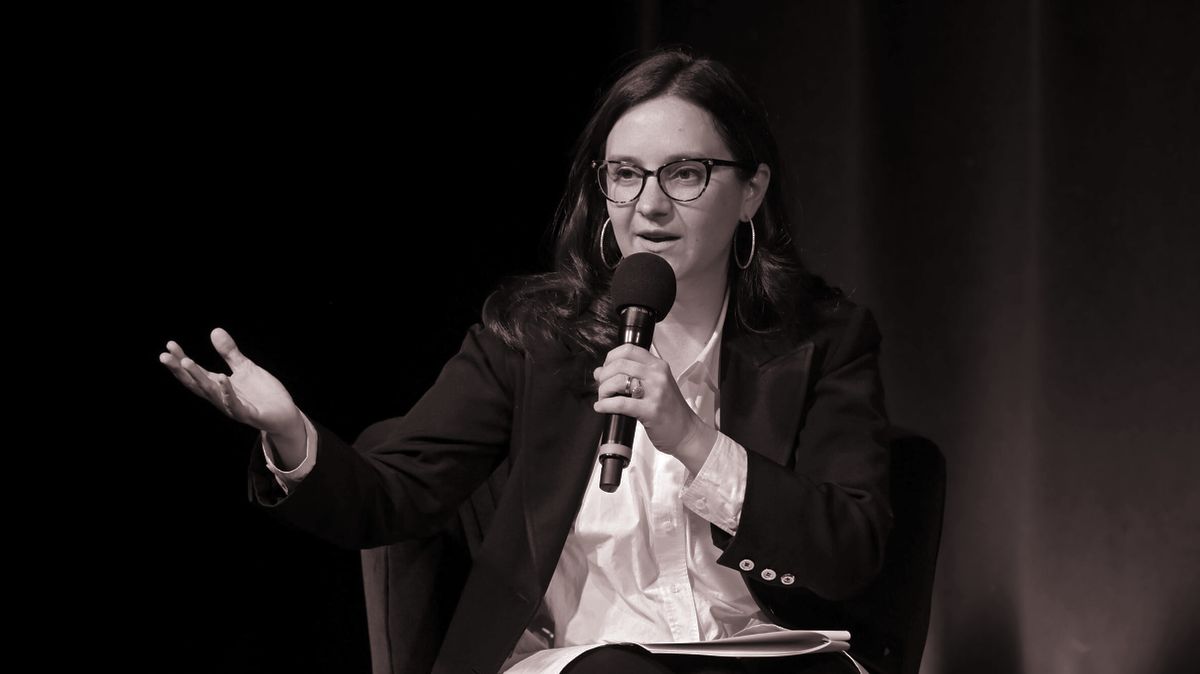
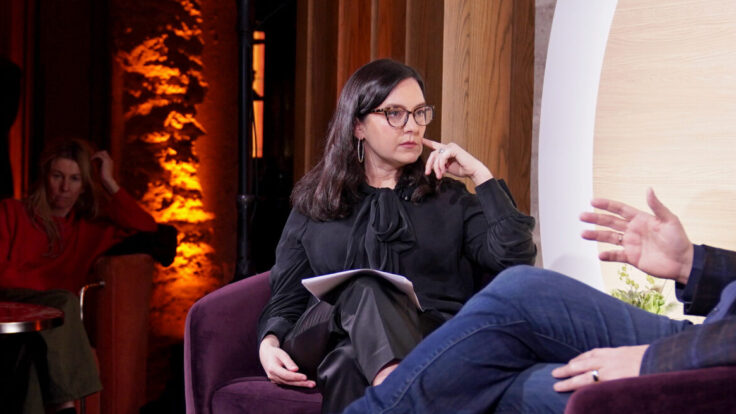
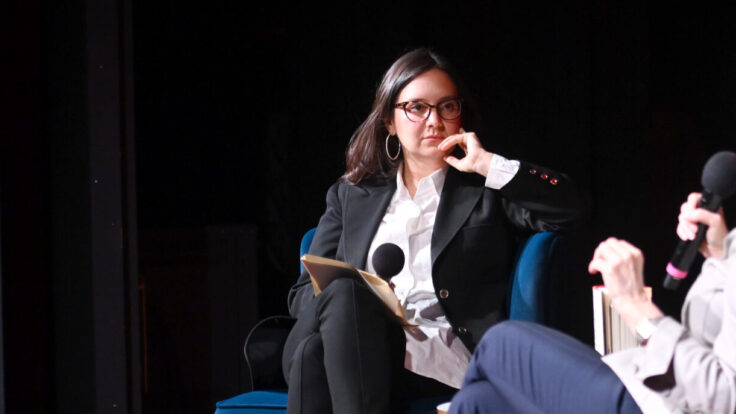
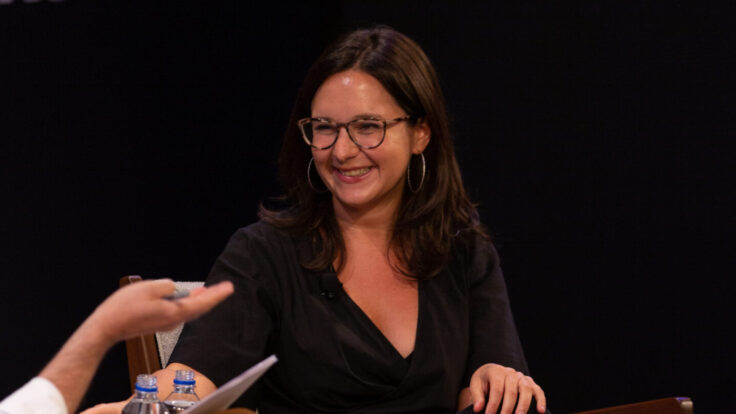
On Tuesday morning, in her first editorial meeting since being appointed editor-in-chief of CBS News,
Bari Weiss told staff, in no uncertain terms, that she wants “to win”—to restore Americans’ trust in the network and perhaps even win the ratings war, too. It was the usual sort of pump-up speech that any new media leader delivers during their first week on the job, when they’re still trying to build goodwill and inspire the troops, albeit with a hefty dose of Elder Millennial chutzpah. “Let’s do the fucking news,” she concluded to the room full of
reporters.
A day earlier, of course, Skydance-Paramount C.E.O. David Ellison had finally announced his acquisition of The Free Press in what was essentially a $150 million cash-and-stock acqui-hire. The news was a long time coming—I’ve been presaging the deal, including the financial terms and nature of Bari’s role, for weeks. But once it was official, the deal catalyzed paroxysms across the media that exposed a deep divide in the industry. In my 15-plus years
covering this business, in fact, I have never witnessed such a Rorschach test.
The reactions to Bari’s rapid ascent, from Times contrarian to Substack entrepreneur to the highest echelons of network news, might best be plotted on a Cartesian plane charting opinions of both Bari’s politics and Ellison’s motivations. In one quadrant, Bari is an ultra-centrist truth-teller who defied mainstream media’s liberal orthodoxy and was brought to CBS to restore First Amendment principles to
the fourth estate. In an opposing quadrant, she is a rage-harvesting right-winger deployed to destroy one of the most storied names in journalism, simply so the Ellisons can curry favor with Trump. The other two corners are reserved, respectively, for those who abhor her politics but respect her entrepreneurship, and those who admire her contrarian streak but still suspect that the Ellisons have made a catastrophic strategic mistake. Where do you find yourself?
The alarm
ringers offer a clear illustration of the media groupthink and, frankly, laziness, that Bari has so often railed against. In the last 72 hours, otherwise smart writers and reputable media companies have made broad, sweeping, and baseless statements about Bari and The Free Press that evince a sort of paranoid psychosis, or what The Atlantic’s Caitlin Flanagan has described as “Bari Weiss–derangement syndrome.” In one commonly held but unsubstantiated view, the Ellisons
brought Bari to CBS as an olive branch to Trump. “The Ellisons understand that in an authoritarian context they must transform their media company so that it is acceptable to the [Trump] regime,” Jonathan V. Last wrote in an especially evocative piece for The Bulwark. “That’s why they are buying Bari Weiss’s Free Press and making her editor-in-chief of CBS News.”
Never mind that The Free Press, like the Murdochs’ Wall Street Journal editorial
board, often criticizes Trump, his policies, and his
administration. Never mind that, as I’ve noted, Bari’s free speech absolutism is likely to catalyze more dust-ups between the network and the administration. Never mind that Bari’s politics might simply be the
Ellisons’ politics, too, and that a privilege of owning a news network is that you can shape its editorial posture to your liking—especially if that news network has been hemorrhaging viewers and profits and is therefore ripe for disruption. As Jon Allsop observed in The New Yorker, had Kamala Harris been elected, David might have “acquired CBS and hired Weiss anyway, to similar howls from the left.”
At the same time, some of the fawning praise for Bari also lacks intellectual rigor. To her fans, Bari’s anointment at CBS News vindicates the thesis that mainstream media became too liberal, and heralds the return of centrism. But Bari brings her own biases to the table—including her
unblinking support of Israel and, most notably, an obsession with dragging the historically liberal institutions (The New York Times, the Ivy League, etcetera) that made her career. The conceit of networks like CBS is that they eschew an agenda in order to deliver fearless, fact-based journalism. Bari claims the same mantle but comes to the job with an agenda and a clear set of adversaries. And it can be hard to play the centrist when you keep punching select targets. |
In any event, the diverging interpretations of the Free Press deal have, unsurprisingly, influenced the
larger narrative surrounding how CBS News staff are coping with Bari’s arrival. According to The Independent, employees “are ‘literally freaking out’ about Bari Weiss taking over [the] newsroom,” and, per one source, “using words like ‘depressing’ and ‘doomsday.’” The atmosphere is “tense” and “rife with insult over the new hire,” according to Mehdi Hasan’s Zeteo. The Guardian cited a source who said, “A throwing up emoji is not enough of a reflection of the
feelings in here.”
It’s difficult, frankly, to see these reports as anything other than supporting evidence for Bari’s evergreen thesis about media bias—a desire to amplify the preferred narrative, rather than do the actual reporting. There may also be some envy at play, too. Most legacy media journalists who launch Substacks with bold mission statements about speaking the truth end up publishing uninspired partisan analysis and doing video chats with Steve Schmidt
every week. Bari went out and built a nine-figure business.
In the days since her start, I’ve surveyed at least 15 CBS News sources across the organizations and, in addition to the very real uncertainty around how this is going to work and what it will mean for specific people’s jobs, the overwhelming response has been excitement, cautious optimism, and relief. “The leadership and vision is welcomed,” said one CBS News source. “We’ve had none—zero. Our past presidents were paper
pushers who managed up well but knew nothing about journalism.”
“People want to see CBS succeed, and having a new force come in isn’t the worst thing,” said another. “Anyone who is acting like CBS News internally is aghast is not capturing the actual mood. There’s not celebrations across the board, but those who know her and her work believe this is someone who is trying to come in and change it. And her journalistic principles hit a good note with a lot of people.”
Other sources
who met with Bari in her first 48 hours described being encouraged—noting, in the words of one, that she was “charming, smart, and said the right things.” CBS News president Tom Cibrowski, speaking in a meeting this week, described Bari’s energy and passion as “infectious.”
Perhaps these insiders understand something the paranoid critics and anonymous “doomsday” leakers do not. The existential threat to CBS News isn’t Bari, but rather the complacency that made her ascent
possible: the lack of innovation that kept CBS News mired in last place in the ratings; the failure to develop a robust direct-to-consumer strategy; the inept leadership that allowed internal dramas to metastasize into national referendums on the brand. While some view Bari as a violent rupture with CBS News’s storied journalistic traditions, others realize that, without some transformation, CBS News won’t command any influence at all.
Of course, things will get harder when Bari starts
overriding editors and producers on story assignments, when her well-attested lack of managerial skills inevitably comes to bear, and especially when Paramount begins implementing its long-anticipated layoffs and staffers measure those cost cuts against that $150 million valuation. For now, Bari is on a listening tour: trying to get her arms around the place, “find the bathroom,” as the saying goes, and understand how a broadcast news network functions—a tall order for someone who has
never worked in the TV business.
In time, CBS sources said, she will start setting the editorial strategy, vision, and focus for all of CBS News: CBS Mornings, CBS Evening News, Face the Nation, and, perhaps most consequentially, 60 Minutes, while also controlling the CBS News website alongside The Free Press. This will include assigning some stories, shaping others, matching writers and correspondents to assignments, booking big guests,
and setting the general tone and tenor of the coverage—all while Cibrowski keeps the infrastructure humming. But, lest there was still any doubt, the angle of every story and package is ultimately up to Bari. She will report directly to David. And David bought Bari to be… Bari. |
|
|
Puck fashion correspondent Lauren Sherman and a rotating cast of industry insiders take you deep behind the scenes of this
multitrillion-dollar biz, from creative director switcheroos to M&A drama, D.T.C. downfalls, and magazine mishaps. Fashion People is an extension of Line Sheet, Lauren’s private email for Puck, where she tracks what’s happening beyond the press releases in fashion, beauty, and media. New episodes publish every Tuesday and Friday. |
|
|
A professional-grade rundown on the business of sports from John Ourand, the industry’s preeminent journalist, covering the
leagues, players, agencies, media deals, and the egos fueling it all. |
|
|
Need help? Review our FAQ page or contact us for assistance. For brand partnerships, email ads@puck.news. You received this email because you signed up to receive emails from Puck, or as part of your Puck account associated with {{customer.email}}. To stop receiving this newsletter and/or manage all your email preferences, click here. |
Puck is published by Heat Media LLC. 107 Greenwich St, New York, NY 10006 |
|
|
|