Greetings from San Francisco, where I’m spending the weekend with some friends in Golden
Gate Park, and welcome back to In the Room. Congrats to Bob Iger and Jimmy Pitaro on their landmark deal with the NFL—which, per Marchand (!), is expected to bring RedZone and the NFL Media assets to ESPN.
In tonight’s issue, a special report from Puck’s new A.I. correspondent, Ian
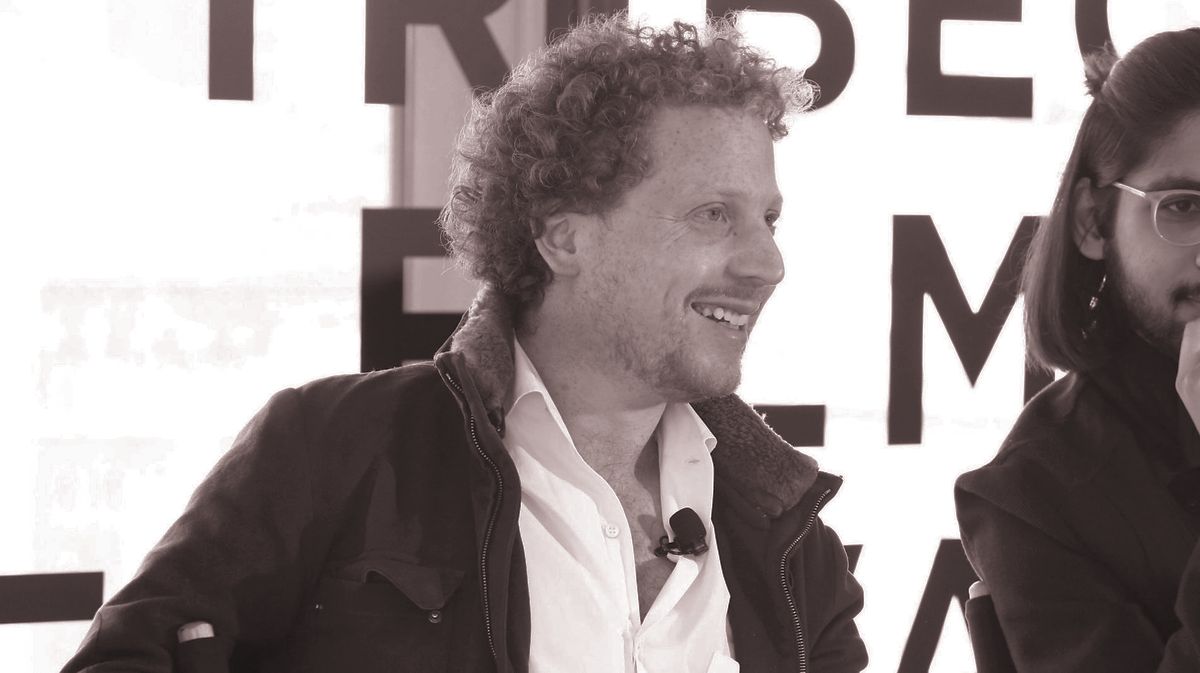
Krietzberg, who talked to Edward Saatchi, the C.E.O. of Fable Studio, about his company’s new A.I.-powered content-generating app, which is designed to create near-instantaneous TV episodes. (Hollywood is not amused, but maybe they should be.) Saatchi—who, yes, is a Saatchi—hopes the app, boosted by a recent funding round led by Amazon, will become “the Netflix of A.I.” Fasten your seatbelts. (Sign up for Ian’s
brilliant private email, The Hidden Layer, right here.)
🍸 Plus, on the latest edition of The Grill Room, Julia Alexander and I examined The Wall Street Journal’s remarkable reinvigoration in the Emma Tucker–Trump 2.0 era, and assessed the second- and third-order effects of Trump’s lawsuit against
Rupert Murdoch. Follow The Grill Room on Apple, Spotify, or wherever you prefer to listen.
Let’s get
started… |
-
Reddit bets on search: Reddit, which saw its shares surge nearly 20 percent today following a report of 78 percent year-over-year revenue growth, is signaling a strategic pivot toward search as it contends with declining referral traffic from Google. In a letter to shareholders, C.E.O. Steve Huffman outlined his ambition to position Reddit as “a go-to search engine.” Meanwhile, Reddit Answers, its A.I.-driven search product, has already expanded from 1 million weekly
users earlier this year to 6 million. It’s a clever idea: As Google’s search product has become borderline unusable, more users have been turning to Reddit—or adding “Reddit” to their Google queries—to access its massive repository of user-generated answers. Perhaps consumers will start bypassing Google and go directly to the source.
- A Dotdash rebrand: Dotdash Meredith, the sprawling portfolio of digital and legacy publications owned by
raconteur Barry Diller’s IAC, is being rechristened as People Inc., after its best-known magazine. “Everybody knows People,” C.E.O. Neil Vogel told Axios this week. “When you were explaining what Dotdash Meredith was, the first thing you said was, ‘Oh, we’re People.’”
Dotdash has long been a very
profitable, if profoundly unglamorous, magazine operation. The rebrand doesn’t really infuse any glamour, of course, but it sure beats the old moniker, which reads like a Midwest chemical manufacturer. It also gives Vogel a chance to engage in some particularly dreadful brand storytelling: “‘People’ applies to all of our brands,” he told Axios. “All the content we make, all of the events we have, and all of our experiences are driven by people.” Real shades of
Pharrell at Cannes Lions here. - About those Vox cuts: Vox Media eliminated some roles on its branded content and marketing teams this week, which was notable given that C.E.O. Jim Bankoff was on my
podcast this week and said there were no plans for layoffs. In his defense, Jim was referring to the kind of broad layoffs or buyouts that have recently bowdlerized Business Insider, Gannett, The Washington Post, etcetera—all of which have come with heavy pablum about adapting for the A.I. disruption. While Jim said Vox employees would be
spared that fate, he did say that he had “a responsibility to reprioritize things,” and that “part of the responsibility of succeeding is to free up resources, to invest in the new things that are going to propel us forward.” That’s quite reasonable. Then again, based on our conversation on The Grill Room, Jim seems to believe that the source for that growth will come from Vox’s podcast network, which isn’t terribly reassuring. But good luck!
- And
finally… R.I.P. to the C.P.B.: The Corporation for Public Broadcasting announced today that it’s shutting down after nearly 60 years following Congress’s vote to pull $1.1 billion in federal funding. The move puts pressure on NPR, PBS, and some 1,500 member stations that C.P.B. supported, all of which will now have to lean even more heavily on individual donors for support. Godspeed.
|
|
|
A head-spinning conversation with Edward Saatchi, the C.E.O. of Fable Studio,
about his new Amazon-backed, A.I.-fueled content-generating app, which promises to create near instantaneous TV episodes and, naturally, has all of Hollywood on edge. |
|
|
Edward Saatchi, the C.E.O. of Fable Studio, recently told me about a “minor
problem” that had been bugging him. His company, the A.I. startup behind Showrunner—the technology responsible for those A.I.-generated episodes of South Park that went viral during the 2023 Hollywood strikes—had just closed a new round of funding led by Amazon. And, Saatchi disclosed, he was hoping to launch an entirely new content platform that would eventually become the “Netflix of A.I.”—his words, not mine. But, he conceded, “we have no idea whether anyone wants what I’m
describing.”
The premise of the Showrunner app, which is launching alpha testing this week, is pretty remarkable. In short, Saatchi says that users will be able to generate and distribute TV-episode-length video content using licensed I.P., essentially allowing anyone to create fan-fiction twists on their favorite stories and genres. Then, one day, rather than write your own Lord of the Rings–style story, for example, you might upload a few images, enter a brief prompt, and
then—voilà—generate a schlocky version of Peter Jackson’s epic trilogy in which the fellowship is made up of you and your friends. (Not surprisingly, there are still unresolved questions about the use of I.P., which has come to a head on various legal fronts, as documented by my partner Eriq Gardner.)
The alpha
version is powered by a model that the company calls Show-2, an evolution of Show-1, which was responsible for the South Park episodes. Show-1 uses a combination of diffusion models (the primary architecture behind A.I. image generators), large language models, and something Fable calls “multi-agent simulation,” which provides world context and continuity. There are
about 100,000 people on the waitlist for the alpha version, which will be free at first, and then rise to between $10 and $20 per month for credits that can be used to create programs. Interestingly, creators will also get paid if other users build on top of their original I.P.
In the 24 hours since Saatchi announced the new Showrunner platform, the backlash was swift, from both cinephiles and industry folks wary of a world indifferent to the creative, human labor that
goes into making TV shows and films. Naturally, these concerns dovetail with many of the anxieties consuming moviemaking in general, as some studios ink deals with A.I. companies out of a desperate desire to prepare for a revolution in the way content is created and distributed. Notably, Saatchi professes that
his software will enhance creativity. He is, after all, the son of advertising legend Maurice Saatchi.
Obviously, there’s a lot to dissect here, so I called up Saatchi to discuss where he sees all of this heading. Our conversation has been lightly edited and condensed for clarity. |
Hollywood’s
Inflection Point
|
Ian Krietzberg: Is the idea behind Showrunner to supplement Hollywood rather than break it? To work with creators rather than displace them?
Edward Saatchi: I think that’s right. But it also opens up non-Hollywood creators to be able to create their own story—and their own story world. It creates the possibility of a movie that could surpass the original. When I spoke with the head of one of the studios about this, they were like, “Edward, if you try to do that, not only will
I not help you, but I’ll do everything in my power to stop you.” But other people who have played video games are like, “Yeah, that seems to be the direction things are going in.”
Among the studios you’ve talked to, is there a concern about a flush of A.I. content devaluing the original I.P.?
I think there’s the old, true concern of, does social media cannibalize? Does gaming cannibalize? There’s a lot of openness now, especially because we make clear that you own
the story. We have our own shows, and we want people to make their own. In terms of I.P. holders—and we’re buying up I.P. as well—I think there’s a feeling of, If we’re going to treat this as an artistic medium, then that starts to become more exciting, more interesting, and more sort of infinite. This is a great way to feel a sense of ownership over that world.
One of the shows we’re working on is a high-school show. We were trying to think: What is the next great
high-school show that dominates the cultural conversation in America? We thought, maybe the next great high-school show isn’t one show, but 7,000 shows that the people of Akron High are uploading themselves, with their parents, their teachers, as characters, and every day is a kind of narrative contest as to what actually happened that day, scene by scene. It’s very much not what exists currently, and that fits with what I see as the trajectory for A.I.—a new medium that’s
playable, that’s remixable, that’s multiplayer. But that can’t just be for one-off memes. There has to be a path for this to become a true artistic medium.
What’s the business model for this, and how are the conversations going with I.P. holders?
The model is subscription- and asset-library-based. People can buy characters, they can buy sets. They can create them, too. So let’s say it’s an original world. In our model, the creator builds out their show and says,
“Hey, here’s the pilot. Why don’t you, my fans, go and mess with it?” Then when people pay to make content with that show, and interact with the showrunner, the creator gets compensated in a rev share.
In terms of conversations with the studios, the two things that have made them more comfortable are, one, that the I.P. holder owns all the I.P., and all the derivative I.P. being created; then, in some cases, people want it to be very closed-off, so users can’t share outside. For some
people, that’s been important, while others are saying, “There must be something more here for how powerful it is”—meaning, it’s an opportunity for new revenue, not just cost-cutting. |
Broadly speaking, where do you see the A.I. media push going? We’ve seen advanced VFX,
face-swapping, and de-aging. We’ve also seen hints at fully A.I.-generated content.
I think about this stuff all the time. Since we’re treating this as a new medium—rather than a way to make the old medium more efficient, or to improve the cost structure of the visual effects industry—I can imagine a future where ILM releases a Star Wars model. It’s been directed by Dave Filoni [George Lucas’s
heir apparent], and the model has a clear understanding of Star Wars, but also environmental storytelling, so that as you’re prompting, you’re discovering things that they’ve put into it.
So it’s going from playing defense—This movie used to take 1,000 people, and now it’s going to take 90 people, which is pretty grim—to 700 people tried to create this massive story universe for you. Basically, in addition to a new movie in the cinema, there would be a Star
Wars model, where you can build out your own stories, all of which are owned by Disney. You pay for the privilege, but you can also go really deep into that world. You can tell a story about a planet that’s your dream planet, a bar on that planet, and whatever goes on within it.
I think there’s a big opportunity to think of the model as a work of art, and something that can be directed. Maybe the artist becomes like Ed Harris in The Truman Show, building out
a world. You could see a Paramount+ or Disney+ where people are paying $5 extra to be able to create their own stories, paying for the privilege to be able to create within it.
Art has been getting devalued as content for a long time. How would this not devalue it even further?
I was just watching James Cameron interview George Lucas, and he was saying about Star Wars, “Oh, it was very political. And the rebels would be called terrorists
today.” And George Lucas was like, “They were the Viet Cong.” That’s what it should be. It should be a work of art, an artist genuinely creating a simulation story world filled with environmental storytelling and these moral things. I think that’s exciting. That’s what I hope we can do—it’s not a tool, but a work of art in and of itself that you can explore by prompting.
I’m not sure where the audience would be on something like this.
I talk about that a lot. We
know people want movies. We have no idea whether anyone wants what I’m describing. Minor problem. |
|
|
Join Emmy Award-winning journalist Peter Hamby, along with the team of expert journalists at Puck, as they let you in
on the conversations insiders are having across the four corners of power in America: Wall Street, Washington, Silicon Valley, and Hollywood. Presented in partnership with Audacy, new episodes publish daily, Monday through Friday. |
|
|
A professional-grade rundown on the business of sports from John Ourand, the industry’s preeminent journalist,
covering the leagues, players, agencies, media deals, and the egos fueling it all. |
|
|
Need help? Review our FAQ page or contact us for assistance. For brand partnerships, email ads@puck.news. You received this email because you signed up to receive emails from Puck, or as part of your Puck account associated with {{customer.email}}. To stop receiving this newsletter and/or manage all your email preferences, click here. |
Puck is published by Heat Media LLC. 107 Greenwich St, New York, NY 10006 |
|
|
|