 |
|
Greetings from Washington, where we’re in the full swing of White House Correspondents’ Dinner weekend festivities. Last night’s Puck-WME-Snap party at the Riggs was a packed house and a resounding success, and it was a true pleasure to see so many friends from politics and media, and to talk shop over old-fashioneds. And, as you’ve no doubt heard by now, my partners Matt and Peter extracted some big news out of last night’s honored guest, Aaron Sorkin: He is currently writing a new movie about January 6, a quasi-sequel to The Social Network that pins the Capitol attack squarely on Facebook. (I’m sure Mark is thrilled).
Meanwhile, on today’s edition of The Powers That Be, Peter and I gab about the glamour and the squalor of nerd prom, and offer a gut-check on the state of the various D.C. media outfits: the Post, Politico, Punchbowl, Semafor, et al.
In tonight’s email, some new reporting on the spirited reactions from the DMV to Politico’s recent story on the bad blood between the White House and the Gray Lady.
But first…
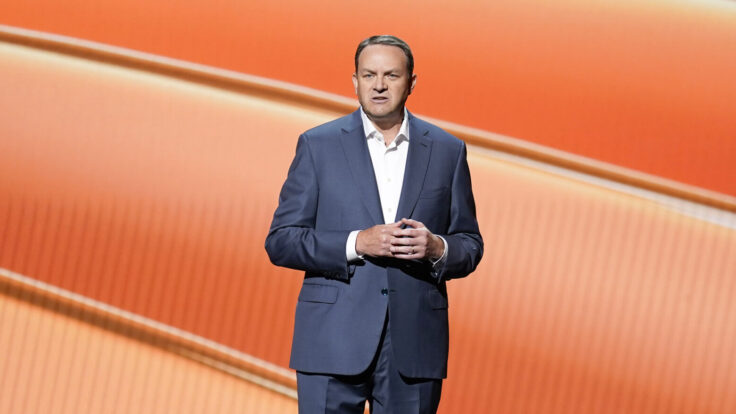
👀 Paramount moves: Shari Redstone and the Paramount Global board are considering removing C.E.O. Bob Bakish and replacing him with an interim leadership triumvirate (including George Cheeks) while she decides on a buyer for the company, per WSJ. Of course, my Puck partner Bill Cohan first reported two weeks ago that the Shari-Bakish relationship had grown “increasingly tense and complex”—and that, in the event of a Skydance takeover, Bakish would be forced out to make way for Jeff Shell.
🗞️ Out of England: Jeff Zucker’s RedBird IMI plans to formally withdraw its bid for the Telegraph and Spectator, per Axios (and confirmed by a source familiar). That’s been seen as a likely move ever since the Tory government took the extraordinary step of enacting a new law to block the deal. In any event, this frees Zucker up to pursue other media acquisitions and, perhaps, play a new role in a Jeff Shell-led Paramount.
💨 Bloom off the Poppy: Poppy Harlow is leaving CNN after nearly two decades at the network, having elected not to accept a new offer, I’m told. Her new role would have been analogous to the one offered to her former morning show co-anchor Phil Mattingly, who now serves as chief domestic correspondent. After putting out feelers to rival networks and having spent several weeks thinking things over, I’m told Harlow is going to start a new chapter of her career and may eventually pursue a role in the private sector, drawing a page from Campbell Brown. (Brown left CNN in 2010 and joined Meta, née Facebook, as head of global media partnerships in 2017).
Needless to say, the current dynamics in cable media may have forced her hand. Harlow was making $1.5 million a year at CNN, I’m told, and she didn’t move ratings. As I’ve reported, Mark Thompson’s new digital-first CNN strategy will require shifting toward investment in less-expensive talent with greater multiplatform versatility. (Don’t panic, everyone: He’ll still foot the bill for a few Tappers and Andersons). Meanwhile, broadcast networks are facing similar cost strictures and probably didn’t see an obvious place for her. Indeed, Harlow is in some ways the prototypical example of the kind of talent who will struggle to find quarter in the new TV news environment—a younger broadcaster with last-gen talents, competing in a new world that no one quite understands yet.
In any event, despite the petty, Real Housewives-style drama between her, Don Lemon, and Kaitlan Collins on Chris Licht’s ill-fated morning show—and, certainly, mixed feelings about Harlow within the network generally—the departure here is, unlike Lemon’s defenestration, both civil and amicable. Indeed, Thompson will host a going-away party for Harlow next month in New York.
|
 |
| Biden & His Times |
| News, notes, and fresh reporting on a deliciously perfect WHCD week micro-scandal—Politico’s mischievous, made-for-pot-stirring report on the alleged beef between the Times and the White House. |
|
|
|
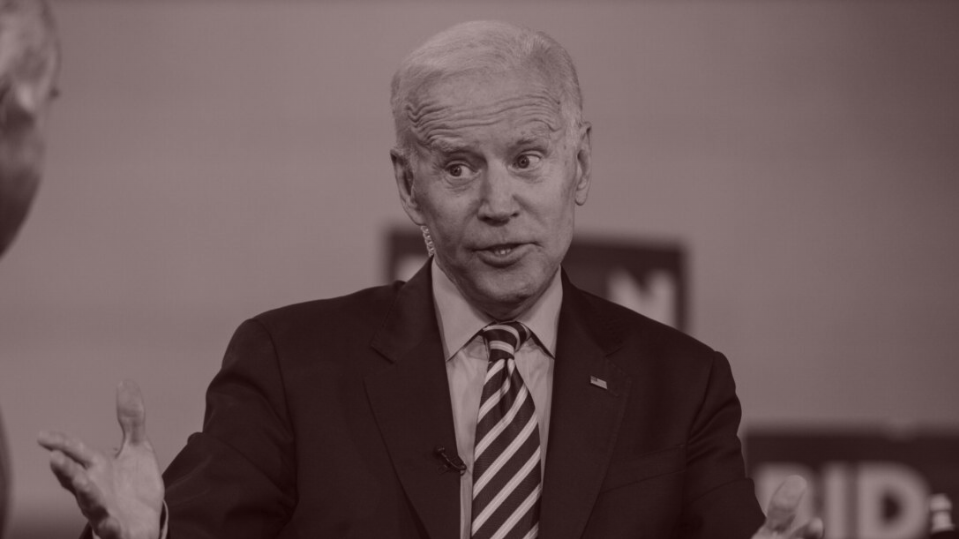
| On Thursday, in anticipation of White House Correspondents’ Dinner weekend and the rolling canapé and conversation-starter circuit, Politico channeled a little bit of its devilish, late-aughts, shit-stirring character. The now-establishmentarian, Axel-owned, former media wunderkind published a lengthy magazine piece, written by Eli Stokols, chronicling the “petty feud” between the Biden White House and The New York Times. As Stokols perceptively noted, Bidenworld, itself a touchy place, has long chafed at the newspaper’s treatment of their principal—particularly when it comes to coverage of his age and fitness. Sure, the Times can be a bit smug, but so can the White House. Anyway, at least ostensibly, it was a perfect idea for a Politico story.
As always, the story behind the story—as well as the response from the Times, the White House, and the Washington chattering classes—reveals quite a bit more. And yes, dear reader, I recognize we’re peeling quite a few layers into the metaphorical onion. Nevertheless, at a deeper level, the rift may expose some of the anxieties and vulnerabilities of both the Biden campaign and the Times (and, perhaps, Politico, too) at an uncertain moment in politics and media.
The viral nugget in this story—viral in Washington and at 620 Eighth Avenue, anyway—was the insinuation that A.G. Sulzberger, the muted Times Co. chairman and publisher, was somehow behind this contretemps. According to Stokols, A.G. was sufficiently pissed about Biden’s reluctance to grant the traditional—but, let’s be honest, typically jejune and milquetoast—presidential interview that he ordered his charges to pursue more aggressive coverage. One anonymous Times reporter told Stokols that Sulzberger “is pissed [that] Biden hasn’t done any interviews and quietly encourages all the tough reporting on his age.” And this quote buoys a broader narrative that portrays Sulzberger as entitled and vindictive and perhaps out of touch with the fact that, in an era of TikTok and influencer podcasts and digital disintermediation, presidential candidates no longer need to acquiesce to the Times’ scrutiny.
Stokols’ theory, at least according to the town’s Times-White House scholars, bore the fingerprints of Biden comms officials Andrew Bates and T.J. Ducklo (the two did not comment). But, in many ways, it doesn’t quite pass the smell test. Sulzberger, who was born into the Times, has an ur-disciplined view of publisher decorum. And the very notion that he would circumvent his executive editor to tinker with coverage is semi-farcical. After all, Sulzberger may have been born wealthy (Central Park West, Fieldston, Brown, blah blah blah) but he was raised by McKinsey report-imbibing Cardinal Richelieu types, and he has the personality of a chemistry professor rather than a retaliatory battering ram.
And, as several Times reporters felt compelled to say publicly during the past 24 hours, this is not the way he treats his paper, at all. Of course, he would certainly like to maintain the age-old tradition of the presidential interview, and has advocated with both Vice President Kamala Harris and other White House officials to get it. But, as the Times itself said in its response to the piece, “The notion that any line of coverage has been ordered up or encouraged in retaliation for declining an interview, or any other reason, is outrageous and untrue.” Shortly after the piece came out, the Times’ Jonathan Swan wrote on X, “I have spoken to AG over the past year about this topic & this caricature is unrecognizable… It’s such a b.s. mischaracterization of his views about the importance of serious longform presidential interviews.” The Times’ Peter Baker similarly told me by text: “I’ve never heard AG say anything like that and can’t imagine he ever would. He wants us to cover this president and every president aggressively, fairly and accurately, regardless of whether we get an interview. He’s a complete straight-shooter.”
Indeed, Politico probably would have included any concrete examples of retribution in the piece, if it had them. And, while it’s common for reporters to circle the wagons when their institution comes under attack, several of Stokols’ own colleagues at Politico and many White House reporters at other outlets also told me they found the argument unpersuasive. |
| The Times, The Times, The Times! |
|
| On some level, the Politico piece demonstrated the White House’s preoccupation with the Times—a lingering beef over what they see as the paper’s relentless coverage of Biden’s age, a penchant for bothsidesism, and broader lack of perspective on what’s at stake if Trump wins. It is perhaps worth noting here that the Times has devoted far, far more ink to covering Trump’s myriad misdeeds, the 91 felony charges, the fact that he fell asleep in court, etcetera, etcetera, and that it is the Times itself that recently credited Biden as being the Democratic president “who historians, political strategists and policy experts argue has racked up the most expansive list of legislative accomplishments—and has received the least amount of credit for them.” Anyway, people hear what they want to hear sometimes.
Nevertheless, the Biden team is so miffed that, as Stokols reports, they were willing to temporarily demote the Times from the “tier one” press list after a row over the paper’s mishandling of a quote, and feed criticism about the Times to a satirical Twitter account—and go to war with the Times in the pages of Politico. “I think [this piece] showed the Biden perspective,” one veteran Washington editor told me. “If you aren’t amplifying their talking points and overlooking their weaknesses, you are complacently aiding the forces trying to end democracy.”
Of course, this sword fight all seems sort of silly. On the one hand, the White House rightly understands that the media environment has changed, and that a formal Times interview—or the Super Bowl pregame interview on CBS, or even a presidential briefing—is no longer a necessary duty of the office. More to the point, it probably isn’t worth subjecting a historically gaffe-prone 81-year-old president to actual journalists—who, yes, have legitimate questions about his mental fitness—simply in order to satisfy their demands for transparency and good governance. And that’s especially true when Biden can reach a far broader audience, with far, far less scrutiny, via TikTok videos and Smartless and Howard Stern. (Indeed, Biden sat down for a mostly softball interview with Stern the day after the Politico piece ran.)
On the other hand, the Biden team’s anxiety over the Times’ coverage points to another, less-appreciated truth: Even in the age of disintermediation, the Times still frequently sets the agenda and plays an instrumental role in shaping the national narrative. It may count 10 million subscribers, but its true reach extends across the digital aggregators and cable news networks and influencer podcasts that still treat it like an assignment editor. How else to explain the Biden team’s preoccupation, and its juvenile attempt to work the refs? In the end, the silliest part of this micro-drama may be that it reveals Politico’s own infatuation with the Times, which it apparently views as the true embodiment of the caricature draped on A.G.—entitled, sharp-elbowed, opportunistically petty. And perhaps, amid this weekend of back-patting and binge-drinking, that’s actually a sort of rivalry to celebrate. |
|
|
|
| FOUR STORIES WE’RE TALKING ABOUT |
 |
|
 |
| Ellison vs. Apollo |
| Matt & Bill debate the likely path forward for Paramount. |
| MATTHEW BELLONI |
|
 |
|
 |
|
|
|

|
 |
|
|
|
Need help? Review our FAQs
page or contact
us for assistance. For brand partnerships, email ads@puck.news.
|
|
You received this email because you signed up to receive emails from Puck, or as part of your Puck account associated with . To stop receiving this newsletter and/or manage all your email preferences, click here.
|
|
Puck is published by Heat Media LLC. 227 W 17th St New York, NY 10011.
|
|
|
|