 |
 |
|
Happy Wednesday, I’m Dylan Byers.
|
|
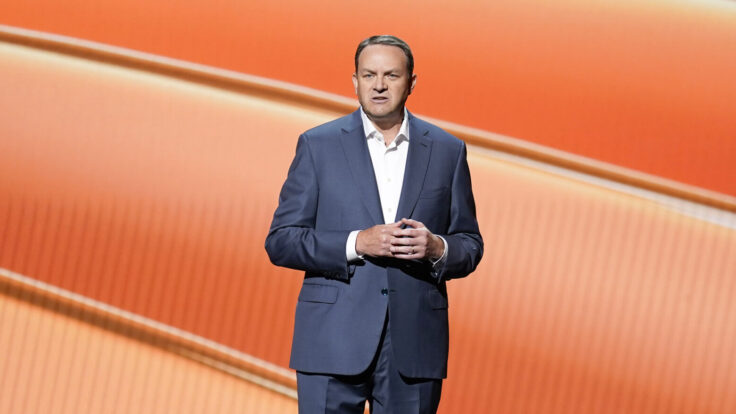
Welcome back to In The Room, my biweekly private email revealing the inner workings of the media industry. On Monday, Axios announced that it had agreed to sell itself to Cox Enterprises for $525 million—a remarkable figure, some 30 percent higher than an offer presented to its co-founders, Jim VandeHei, Mike Allen and Roy Schwartz, only a year earlier. Today, their long road to remaking the media landscape—and what it might take for Semafor’s Ben and Justin Smith to overcome their own growing pains.
|
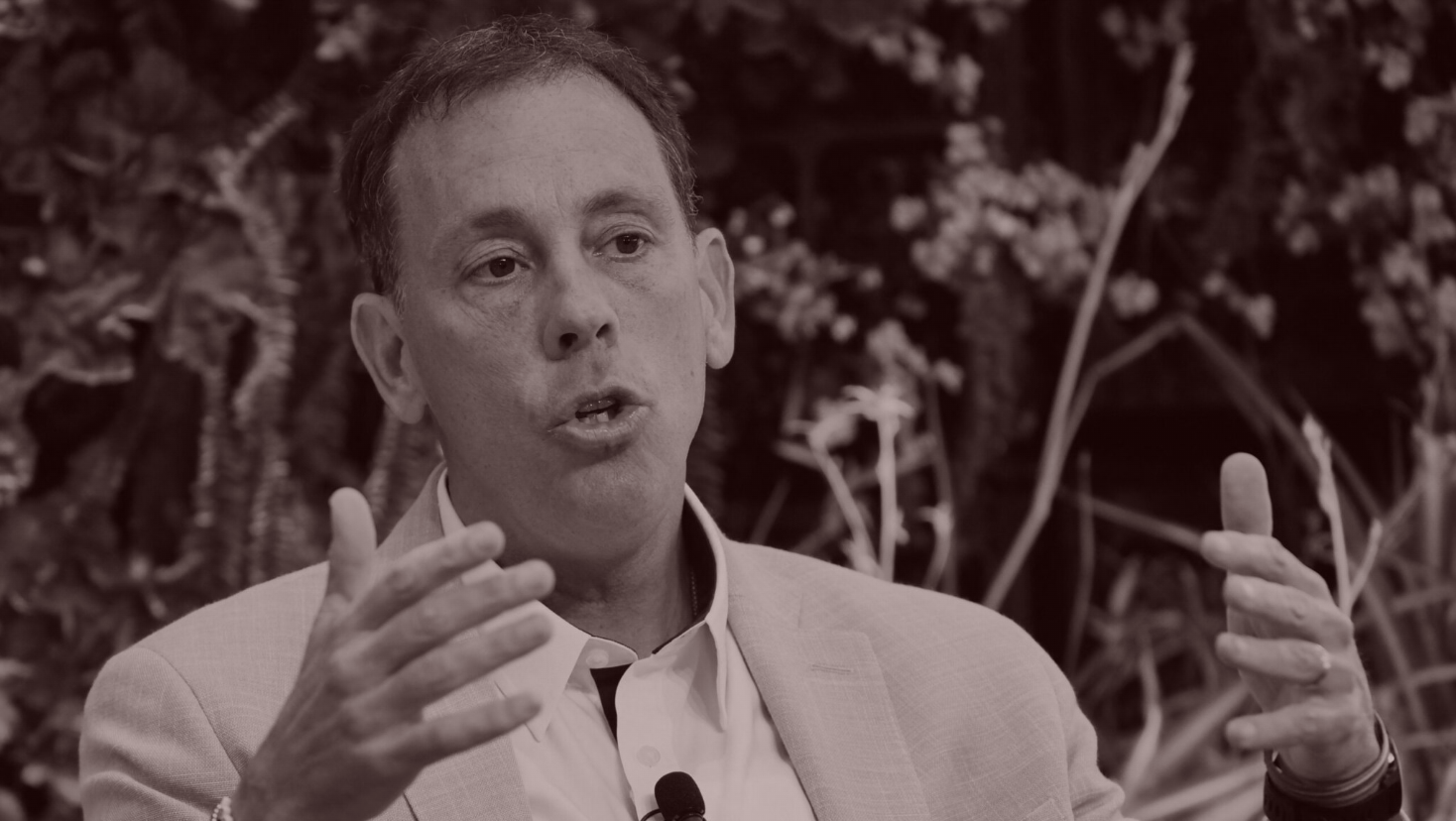 |
| Axios in Wonderland |
| How VandeHei, Allen, Schwartz & Co. remade media in a town that doesn’t like to remake anything. Plus the latest media schadenfreude enveloping Semafor. |
|
|
|
| Back in early July 2021, Axios C.E.O. Jim VandeHei was in his home state of Wisconsin when he received an interesting inbound call. It came from Mathias Döpfner, the erudite and elegant C.E.O. of Axel Springer, the German media giant. During the past decade, Döpfner has greatly expanded both his firm’s footprint and its influence in the U.S. In 2015, Axel acquired Henry Blodget’s Business Insider for $450 million. Years later, Business Insider would buy a minority stake in Morning Brew for $75 million. Meanwhile, Axel entered into an investor agreement with KKR upon which Henry Kravis’s private equity colossus became the company’s majority shareholder for $3.2 billion. Döpfner was appointed to the Netflix board of directors in 2018.
On this July day, Döpfner was in Sun Valley attending the annual Allen & Company conference along with Kravis, among others. He told VandeHei that the two men wanted to meet with him immediately, according to multiple sources familiar with the situation. Döpfner sent a private plane to ferry him from Wisconsin to the conference early on the morning of July 8. Once there, Döpfner and Kravis outlined a plan in which Axel would buy both Politico and Axios, with VandeHei running the combined enterprise. (His Axios co-founders, Mike Allen and Roy Schwartz, would also assume leadership positions in the new business combination.) VandeHei said he was intrigued, if somewhat skeptical, about the idea and would bring it back to the board for review and discussion. |
| ADVERTISEMENT |
 |
Market currents, a new podcast from the Northern Trust Institute, explores today's most hotly debated investment topics. Learn more.
|
|
|
| Had talks gone forward, Axel would have proposed $1 billion for Politico and $400 million for Axios, sources familiar with the conversation told me. But the vision never materialized, obviously. The sources familiar with the Axios board meeting said that, among other things, VandeHei, Allen and Schwartz eventually soured on the idea of going back to a company that they’d left on less than amicable terms. The tension between VandeHei and Politico owner Robert Allbritton, as well as VandeHei and his Politico co-founder John Harris, is the stuff of Washington legend, and has been well (and perhaps overly) documented. In the end, Axel ended up buying Politico for $1 billion, approximately 5x its annual revenue, and Axios eventually received an equity investment from Cox Enterprises valuing the company at $400 million, a little more than 4.5x revenue. (Both VandeHei and Döpfner declined requests for interviews.)
At the time of Axel’s billion-dollar Politico acquisition, the Times reported that Döpfner was still pursuing Axios. But when asked in a Politico town hall why he had chosen Politico over Axios, he suggested there was no reason to consider Axios when Politico was available. Whatever the case, earlier this week, Axios completed a sale to Cox for $525 million, a valuation also equivalent to 5x revenue, 30 percent more than Axel’s offer a year earlier, and in a bizarre recessionary market. It’s a remarkable achievement, and suggests as much about the future of Washington media as it does the past. |
|
|
| In the past 15 years, VandeHei has become a seminal figure in the history of Washington media. And in many ways, he provides a fascinating juxtaposition. For years, after all, Potomac media players tended to be staid and patrician heirs: the Grahams, the Bradlees, Buckley, Allbritton, and so forth, who were often well-heeled in rearing and institutionalist in mindset, benefactors more than moguls. VandeHei, who recently referred to himself as “just Jimmy from Wisconsin” on CNBC, was a fish out of water in this milieu—a self-admittedly underachieving state schooler from Oshkosh who broke into the business as a reporter at Roll Call. For years at Roll Call and then the Washington Post, he established himself as an admired reporter, but his focus veered more toward neutering media of its more historic and anodyne conventions, and in the process he evolved from a journalist to an operator and innovator.
Among other things, VandeHei saw the declining value in the traditional format of straight news articles, which were often overloaded with bothsidesisms and B-matter that make them impenetrable to readers. In a town that ran on bulleted talking points, why did media companies make their content so abstruse? Further, he recognized that the finished product of Washington often ignored all the sausage-making intrigue that the insiders truly craved. And lastly, he recognized that, amid the economic fallout of 2008, format innovations would lead to sales innovations. Editorial products could be honed and targeted to specific hyper-engaged audiences, whose interest and influence would naturally attract Fortune 500 advertisers. Washington is a small town, and this feedback loop could make for good business.
In building both Politico and Axios, VandeHei has maintained a distinctly Midwestern disposition and humility—he’s a skinny, straight-laced family guy and Packers fan who opts for J. Crew outlet-ish collared shirts with jeans and sneakers. On the other hand, the veneer barely masks the cutthroat ambition, competitiveness, and self-confidence that enabled Jimmy from Wisconsin to step over many of his complacent and patrician counterparts to help will to life two wildly successful digital media startups that forever altered the tenor and velocity of political journalism and brought to fruition an entire generation of all-star political reporters, including but not limited to: Allen, Maggie Haberman, Ben Smith, Jonathan Swan and the three-pronged team of congressional reporters behind the instantly influential Punchbowl News. The $525 million deal for Axios represents twice what Jeff Bezos paid for The Washington Post.
During his ascent, J.V.H., as he’s sometimes known by media people in D.C., certainly rubbed some people the wrong way. Washington is a media ecosystem where many journalists went to Harvard and remain obsessed with legacy brands, like The Atlantic, the Post, the Times, CNN, et al. Plenty of them chafed privately at how Axios’s patented bulleted style wasn’t really writing, you know. Nevertheless, they would usually concur, the format proved irresistible and irreversible in a world of endless content.
According to Axios’s own report on the deal, the company raised $55 million. Which means that after the preferred shareholders are paid back their initial investment, Axios’s founders, investors, and team are looking at a pie of $470 million to divvy up. Given the likelihood of dilution, earnouts, and accounting for whatever was already taken off the table, VandeHei and his partners likely exited with generational wealth, giving them the last laugh. |
| ADVERTISEMENT |
 |
|
|
|
|
| While VandeHei & Co. take a much deserved victory lap, Justin Smith and Ben Smith (from Hartford and New York, respectively) are preparing to embark on their own, much-ballyhooed foray into digital media. Semafor, which the Smiths have pitched quite loftily as a disruptive global news site to rival the Times, is slated to launch in October with a presence in the U.S. and Africa. One of the Smiths’ conceits is that Semafor will be the “Netflix of news,” because local bureaus will create content for local audiences that might conceivably go international, à la Squid Game—as opposed to news organizations, like their respective alma maters Bloomberg and the Times, which have international bureaus intended to cater to U.S. or global audiences.
So far, Semafor’s presence in Africa consists of one reporter who splits his time between Lagos and New York. In the U.S., they have hired a business editor in New York, a technology editor in San Francisco, and a political reporter in Washington.
Much has been made of the Smiths’ inability to lure the big-time, household name journalists they initially hoped to bring on board (entreaties were made to Maggie Haberman, Jonathan Swan and Andrew Ross Sorkin, among others). But with two months to go until launch, the recruitment challenge is continuing in Washington, which, unlike Silicon Valley, remains an institutionalist place where many reporters fear that a change of stomping grounds will result in not getting their calls returned. As I reported back in the Spring, Ben tried to recruit then-Journal reporter Mike Bender for the role. He went to the Times, instead.
More recently, Smith secured an informal commitment from Post politics editor Peter Wallsten—to the point where Wallsten informed the Post of his intention to leave. But then Wallsten backed out at the eleventh hour, telling editors at the Post he had changed his mind and wanted to stay. Smith has also courted Politico editor and MSNBC regular Sam Stein, but to no avail. At the Aspen Security Forum, last month, Semafor editor-at-large and events guru Steve Clemons was overheard informally pitching Aspen cybersecurity director Garrett Graff on another role.
One hire that may be within Smiths’ sights, I’m told, is Politico’s Maxwell Tani, a media-turned-politics reporter who has had extensive conversations with Smith about joining, but has yet to sign. Tani currently co-authors Politico’s afternoon/evening West Wing Playbook. “We're so proud of our growing team and the phenomenal bench of talent that have joined us already,” Semafor comms chief Meera Pattni told me in a statement. “We'll be sharing more in the coming months and can't wait to get started.”
In many ways, the extended largely-in-plain-view pre-launch of Semafor is reminiscent of what VandeHei, Allen, and Schwartz experienced back in 2016, during their enigmatic interlude between leaving Politico and launching Axios. Indeed, the Smiths have experienced the many stages of media foreplay: the extraordinary enthusiasm and insane expectation-setting that followed their dual exit announcement in the Journal and Times; a blowback engendered by their perhaps-slightly-too promiscuously enthusiastic-press strategy. We’ve now entered a stage in which a cynical media wonders whether their large Series A, led by U.H.N.W. individuals rather than institutions, has set up unrealistic expectations. Meanwhile, Ben and Justin appear to have subsequently operated by keeping their cards closer to the vest in preparation for an October launch.
But one reason, perhaps, why Politico, Axios, and Punchbowl were so immediately influential is because audiences are looking for new voices and format innovations and innovative brands, especially in Washington, where institutionalism reigns. Like the Axios trio before, the Smiths left their cushy jobs at the peak of their powers and they’ve raised enough cash to buy themselves the latitude to learn and experiment and innovate on the fly. They’ve chosen to take the hard, long road, and the Axios exit should be incentivizing enough for them to figure it out. |
|
|
|
| FOUR STORIES WE'RE TALKING ABOUT |
 |
|
 |
| A Web3 Scandal |
| Matt and Taylor Lorenz break down Hollywood's place in the Creator Economy. |
| MATTHEW BELLONI |
|
 |
|
 |
|
|
|

|
|
|
| You received this message because you signed up to receive emails from Puck
Was this email forwarded to you?
Sign up for Puck here
Sent to
Unsubscribe
Interested in exploring our newsletter offerings?
Manage your preferences
Puck is published by Heat Media LLC
227 W 17th St
New York, NY 10011
For support, just reply to this e-mail
For brand partnerships, email ads@puck.news |
|
|