Welcome back to The Varsity, our thrice-weekly email on the people who run the
sports business and the deals they make—or dream of making, anyway. I trust everyone is rejuvenated after the long July Fourth weekend. I am ready to get into it.
Before we begin, I want to make sure that you sign up for Puck’s newest private email on the trillion-dollar A.I. industry, The Hidden Layer, from my new partner, Ian Krietzberg. You can sign up
here. Take a look at Ian’s introductory email, which came out over the weekend. He brings a much more measured tone to the incipient technology than all the carnival barking reportage that Marchand forwards me. ( Speaking of… Andrew, there’s no L.L.M. for that crisp sancerre…)
🚨🚨 Pod alert: Speaking of Ian,
he’ll join the Varsity podcast on Wednesday to discuss how leagues, teams, and the media are incorporating A.I. into their businesses. We’ll spend some time on Wimbledon’s controversial A.I. line judge, which went offline—maybe it “hallucinated”?—during three crucial points on Sunday. Also, make sure to download yesterday’s episode: The legendary columnist Christine Brennan explained why the WNBA was unprepared for Caitlin Clark’s celebrity.
Okay, let’s get to it…
|
|
|
A MESSAGE FROM OUR SPONSOR
|
PERFORMANCE UNLEASHED
Agile, powerful, iconic. The Range Rover Sport is a dynamic SUV with a distinct take
on sporting luxury.
EXPLORE
|
|
|
- The top bananas: The Savannah Bananas recently sold out Nats Park for two appearances, engaging a young fanbase that was happy to stick around for hours. Over the weekend, the barnstorming baseball-esque team likewise sold out Fenway. Tickets to their Camden Yards appearance next month are selling for more than $200 on the secondary market. ESPN, which recently signed a deal to carry 10 Banana Ball games this summer, carried Saturday’s contest, while
Roku handled the game on Sunday.The TV numbers aren’t in yet for Saturday’s game, but the previous four games on ESPN2 this summer have averaged 460,000 viewers. By comparison, Sunday Night Baseball is averaging around 1.75 million viewers this season, which may help frame the economics of the deal. SNB, after all, is the cornerstone of an annual $550 million contract with Major League Baseball—a deal that ESPN walked away from, of course, but may now be circling again
at a reduced price. As it has with TGL or the PLL, ESPN has in the Savannah Bananas a cheaper programming partner that offers a decent audience for a relatively low rights fee. (The network hasn’t disclosed how much it paid.) As the media rights market adjusts to a post-NBA deal reality, we should expect to see the major players put together portfolios that include marquee items, like the NFL or NBA, alongside much less expensive options.
- Christine Brennan
unplugged: Tomorrow, Christine Brennan’s On Her Game: Caitlin Clark and the Revolution in Women’s Sports hits better booksellers everywhere. On yesterday’s episode of the Varsity podcast, she previewed her argument that the WNBA was unprepared for Clark’s stardom. In particular, Brennan recalled her conversation with a WNBA executive who had expected Clark’s arrival to be on par with former UConn star Maya Moore’s entrance into the league.
“I said, ‘What are you talking about? This is so much bigger,’” Brennan told me. “What was so interesting to me then was that this was the reaction of a top official in the WNBA, which tells us that they had no idea what was coming.”Brennan was aghast. How had the league not prepared its players for the sudden, unprecedented attention that was about to be lavished on them, and which would upend their daily lives? “The WNBA should have done seminars, just talking sociology,
psychology. Give these players the access to information, discuss it with experts like Dr. Harry Edwards,” she said, referring to the ubiquitous sociologist. “It is troubling, because this is the moment for the WNBA. Don’t fight it—figure out a way to have everyone handle it. And that certainly did not happen.”
- The globalization of women’s soccer: The news that 18-year-old U.S. women’s national team star player Lily
Yohannes had signed a three-year contract with OL Lyonnes, the powerhouse French team, reminded me of NWSL commissioner Jessica Berman’s Varsity podcast appearance back in March. After all, we spoke right after Chelsea signed Naomi Girma for a record-breaking $1.1 million transfer
fee. Berman was sanguine about the situation, and reminded me that interleague movement was simply much more frequent in soccer. “The sport of soccer is the true global game. It is what makes it so exciting and fun,” she said. “We have to just start at that point, because it’s part of the game that players move between leagues.”Nevertheless, she highlighted some of her retention tools. The NWSL, among other things, boasts a team salary cap of $3.3 million and parity across the entire
league. “One of our superpowers is the competitiveness of our league. Inherent in being a competitive league is that you have constraints on compensation, so that you don’t have ‘haves’ and ‘have-nots.’ Our games are not 8-0 games. Anyone can win any game. Fans want to turn on their TV and watch the game because they actually don’t know who’s going to win. That’s important to us.”
- Costas on MTP: Will sports leagues, and their wealthy owners,
eventually regret maximizing their revenues by spreading their media rights across a multiplicity of streamers and social channels? Yesterday, on NBC’s Meet the Press, Bob Costas hypothesized that the craze for highlight reels, and the availability of games on so many different platforms, may dampen fan interest over the long term. “Information and enjoyment, in one way or another, are coming at people from so many different directions that even network television—which
is still at the center of it, but doesn’t own it—doesn’t have the complete primacy it once had,” the legendary sportscaster said. “I think it does diminish [excitement] to some extent. There are also different aspects to it as well. Gambling. So much of it is, for at least some portion of the audience, transactional now. [If] you got a bet on the game, you have a different relationship to how that game plays out than if you’re just rooting for your team.”Is Costas correct, or are these
the sour grapes of an old-timer out of touch with modern trends? The answer, of course, is somewhere in between. Nearly every league has some concern about spreading its rights across too many partners, which runs the risk of annoying true fans without winning over many casual ones. But executives also know that we live in a post-monoculture era, in which leagues need to flourish on all platforms, including gaming. Indeed, as we say so often here, we’ve probably reached the down slope of the
sine curve for media rights fees for all sports besides football—the result of fewer and smarter bidders, all of whom have increasing leverage. Eventually, diminished revenues will be replaced by proceeds from gaming, real estate, and hospitality as relatively simple businesses become far more complex. I’m guessing Costas knows this, too, even if he might not want to admit it.
- People news: One of college sports’ most highly respected—and
best-liked—athletic directors is taking a step back. Joe Castiglione announced his retirement today after 28 years leading Oklahoma’s athletic department—the longest tenure of any current A.D. … Congrats to Friend of The Varsity Matthew Berry, whose Fantasy Life company announced $7 million in new financing from a crop of bold-faced names, including David Blitzer, Gerry Cardinale, Roger Ehrenberg, Larry
Fitzgerald, Chad Hurley, John Legend, and Jeff Shell. LeBron’s LRMR Ventures led the financing round. … FanDuel has bolstered its lobbying ranks, poaching Jonathan Nabavi from the NFL to be vice president of federal affairs, and Shailagh Murray from Columbia University to be senior vice president of public affairs. Nabavi was the NFL’s vice president of public policy and legislative affairs, and
Murray was Columbia’s executive vice president for public affairs.
|
Now, on to the main event…
|
|
|
Everyone in the sports-media industrial complex has been trying to game
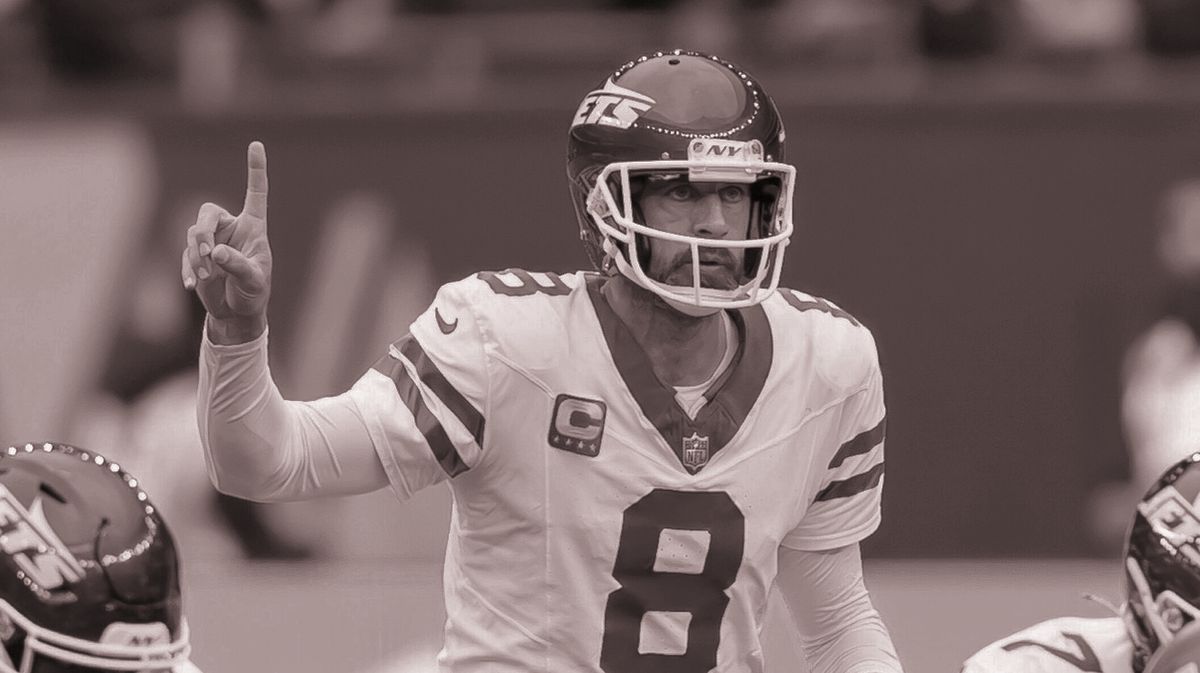
out the NFL’s strategy for exercising its change-of-control option in its CBS/Paramount deal. But the current idea gaining traction will throw everyone for a loop—especially the NHL and MLB.
|
|
|
One of the simmering subplots in Skydance and RedBird’s tortured, endless, and inevitably
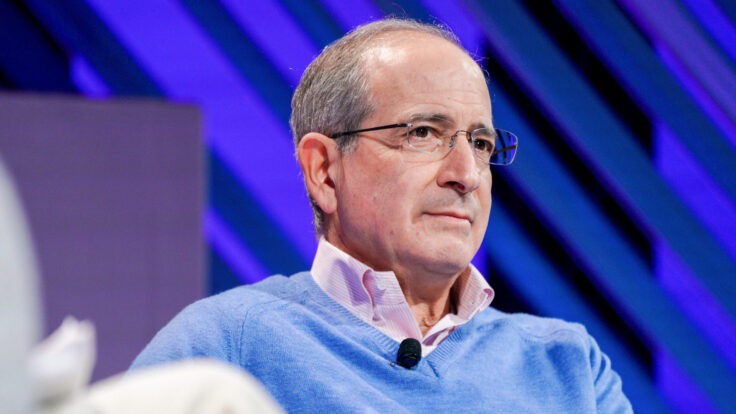
litigation-stoking pursuit of Paramount Global, Shari Redstone’s mismanaged heirloom, has been the fate of CBS’s annual $2.1 billion NFL deal. Indeed, that yearly payment represents a quarter of the total valuation of the proposed merger, which finally seems on the glide path to closing after Trump extracted his $16 million blood sacrifice last week. And yet, it’s unequivocally underpriced in a world where Disney is spending hundreds of millions more
per season on the NBA.
The media industry has coalesced around the understanding that the Shield and its owners won’t accept this economic inequity lightly. The NFL included provisions in its media contracts allowing it to opt out in 2029, and everyone fully expects the league to trigger them and commence renegotiations. In fact, if the NFL wanted to really maximize its revenue, it could hit the market even sooner: The league has a change-of-control provision in its deal with CBS, which
would be activated after the deal presumably closes this fall—F.C.C. willing. The NFL would have two years to exercise the change of control from the moment the sale closes.
|
|
|
A MESSAGE FROM OUR SPONSOR
|
PERFORMANCE UNLEASHED
Agile, powerful, iconic. The Range Rover Sport is a dynamic SUV with a distinct take
on sporting luxury.
EXPLORE
|
|
|
Notably, as NFL and Skydance officials meet in advance of the deal’s closing, sources have told me
that the change-of-control provision has not been a big issue so far. But another idea appears to be getting some traction in NFL offices: According to my sources, the league could approach the networks before the 2029 opt-out and try to renegotiate new deals. In this current configuration, the NFL would waive any opt-out provision and extend the current broadcast deals, which expire in 2033, for another year or two.
A lot has to happen before the NFL actually
moves forward with this kind of plan—starting with the closing of the Skydance-Paramount merger. But it would make a lot of sense for the league, allowing it to bring its rights to market before MLB and the NHL, whose rights deals come up in 2028. By cutting the line, the NFL could proposition streamers and legacy media companies before they spend their treasure on other sports rights. Given the slow, secular decline of traditional companies, hastening the negotiating window would also
likely enlarge the bidding pool, and may ensure that traditional media companies keep streamers at bay for at least one more cycle. Amazon, Netflix, and YouTube have all signaled their interest in expanding their NFL relationships. If the league is able to persuade the TV networks to go early, it could create new packages that give streamers more games while placating the desires of legacy partners.
The NFL has a well-earned reputation for ruthless negotiations. In 2008, Sprint paid
handsomely for the league’s mobile rights. Two years later, when Apple launched the iPad, the NFL said Sprint’s deal did not include tablet rights; the league then sold those rights separately. But there is a belief that the NFL could treat Disney and Skydance quite differently. It has spent the better part of a year negotiating to have Disney take a stake in NFL Media properties. A few years ago, Skydance and the league partnered to create Skydance Sports. Shortly after, the NFL and RedBird
partnered on EverPass Media.
|
On the market for sports rights: “How is it that Formula 1 is struggling to get $180
million from the market when WBD was so eager to hand that much over to a second-tier pro wrestling company in AEW? Is this just another instance of Zaslav not understanding the market?” —A Puck subscriber
On Gen Z and Gen Alpha: “Totally spot-on insight from Jon Wertheim on your podcast. Sports have never been
hotter, and the games have never mattered less. It’s really fascinating to see shoulder programming, in some ways, become more important, and interesting, than the main event. Okay, not more important, but increasingly important.” —A D.C. lawyer
|
|
|
The industry's go-to source for unflinching reporting on the trillion-dollar business of artificial intelligence -
perhaps the single most important technology of our time. Ian Krietzberg, the powerhouse journalist behind The Deep View, delivers twice-weekly insights into the latest dealmaking and breakthroughs in A.I., and how the intersecting worlds of finance, entertainment, media, and politics are being transformed in its wake.
|
|
|
Finally, a media podcast about what’s actually happening in the media—not the oversanitized,
legal-and-standards-approved version you read online. Join Dylan Byers, Puck’s veteran media reporter, as he sits down with TV personalities, moguls, pundits, and industry executives for raw, honest, sometimes salacious conversations about the business of media and its biggest egos. New episodes publish every Tuesday and Friday.
|
|
|
|
|
MATTHEW BELLONI, IAN KRIETZBERG & ERIQ GARDNER
|
|
|
Need help? Review our FAQ page or contact us for assistance. For brand partnerships, email ads@puck.news.
You received this email because you signed up to receive emails from Puck, or as part of your Puck account associated with {{customer.email}}. To stop receiving this newsletter and/or manage all your email preferences, click here.
|
Puck is published by Heat Media LLC. 107 Greenwich St, New York, NY 10006
|
|
|
|