Welcome back to The Varsity. I’m John Ourand coming
to you from Washington, D.C., the soccer capital of the world—at least for the next few days. Marchand will be bringing the orange slices.
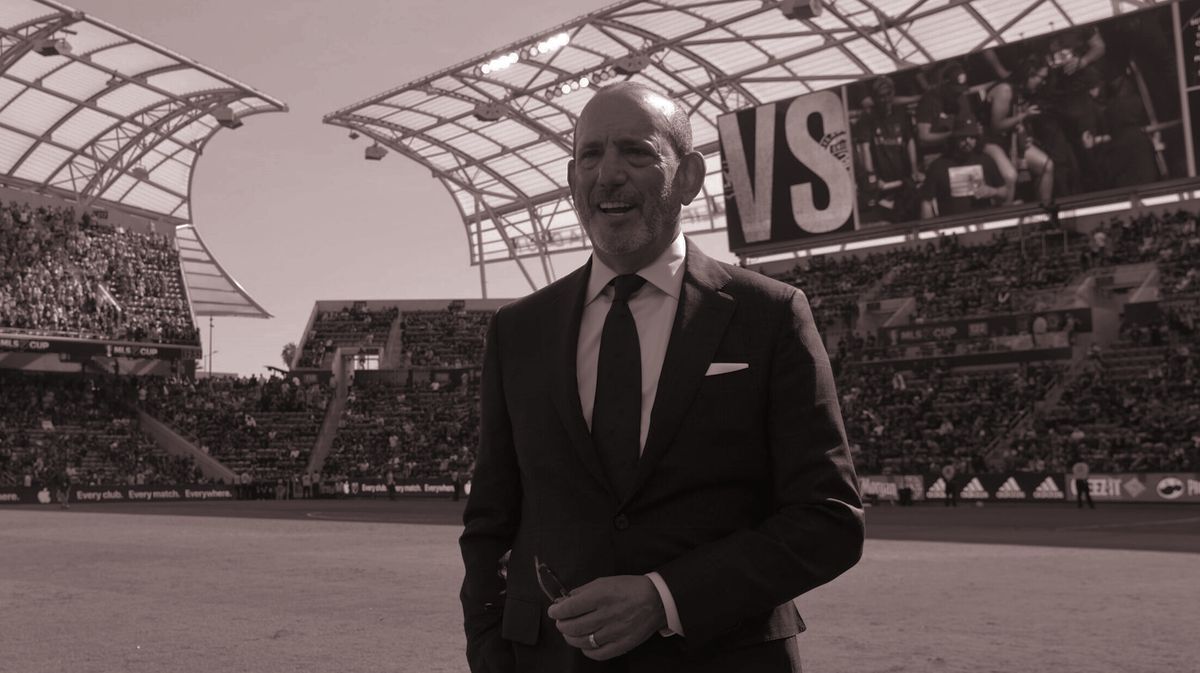
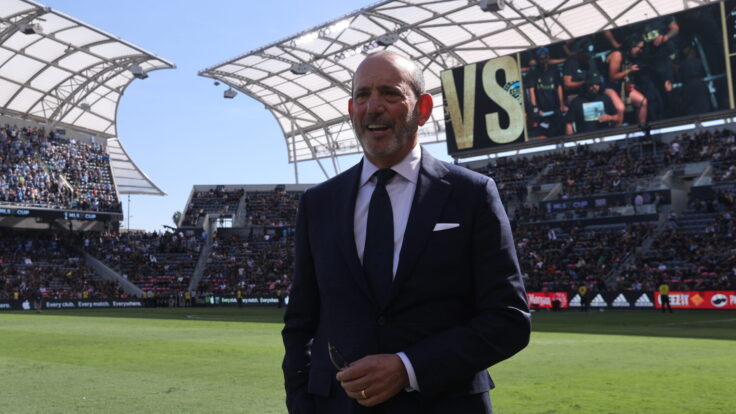
Pod alert: For this weekend’s episode of The Varsity, I interviewed MLS commissioner Don Garber onstage last night at my alma mater, the University of Maryland. (Go Terps.) During the talk, Garber spoke in depth about the league’s much-maligned deal with Apple and why it has worked for MLS,
despite the recent revision of terms—more on that below. Also, make sure to download yesterday’s episode, a sports media year-in-review with my Puck partners Julia Alexander, Dylan Byers, and Eriq Gardner.
Okay, let’s get to it…
|
Player of the Week: Ben Johnson
|
How great was it to see Bears coach Ben Johnson disrobe after his team
beat the Eagles on Friday? Casual national viewers may have mistaken it for an impromptu act of testosterone-addled joy, but there was more on the line in Chicago. Earlier this season, beloved North Side hot dog stand The Wieners Circle said it would give away dogs if Johnson went shirtless to celebrate a win. Anticipation had built over the Bears’ recent, somewhat surprising season until Johnson finally delivered on Black Friday. A silly
story? For sure. But also a great demonstration of how a winning football team can galvanize a city and pump up civic pride. Well done, Ben.
|
Down to the J.V.: College Conference
Commissioners
|
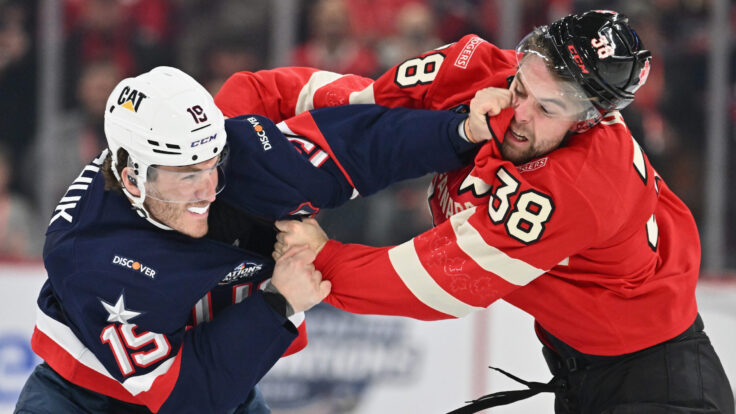
As the NCAA barrels toward the CFP, it is suddenly open season on college conference commissioners.
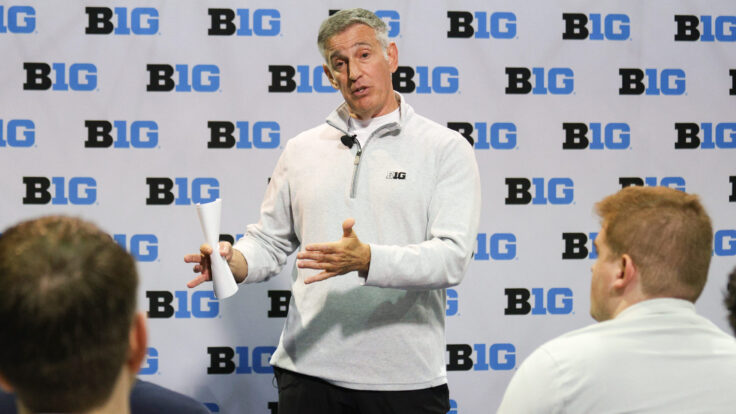
First, Congressman Michael Baumgartner put Tony Petitti on blast, posting on X that the Big Ten commissioner should “spend LESS money trying to buy votes w DC lobbyists and make MORE of an effort to STOP being a bullying jackass.” Then it was Miami superfan Chuck Todd calling on ACC commissioner Jim Phillips to resign “if the conference gets completely left out of the CFP. … Do something commissioner Phillips. Anything. Show some real anger and fight.” The good news, of course, is that the CFP will inevitably expand in future seasons and everyone will make even more money.
|
- NWSL’s star problems: The NWSL has proven to be a good business, with healthy growth in its decade-plus existence. But it might be better at incubating talent than retaining it, especially as star players start fielding lucrative offers from Europe. In the last year, Naomi Girma has gone to Chelsea, Crystal Dunn moved to Paris Saint-Germain, and Jenna Nighswonger is heading to Arsenal.In an effort to keep
Washington Spirit star forward Trinity Rodman in D.C., the club recently proposed a four-season deal worth more than $1 million per year, which would be the league’s richest contract. The Spirit and Rodman tried to get around salary cap issues by backloading compensation to the end of the contract, per Jeff Kassouf. But the league vetoed the deal this week, saying it ran afoul of the spirit of the NWSL competition rules. The NWSL Players Association has now filed a grievance, arguing that the deal does fit within the collective bargaining agreement.
In November, commissioner Jessica Berman said that she wants to keep Rodman in the league: “We will fight for her.” The NWSL reiterated that stance in a comment, saying, “We will do everything we can, utilizing
every lever available within our rules to keep Trinity Rodman here.”
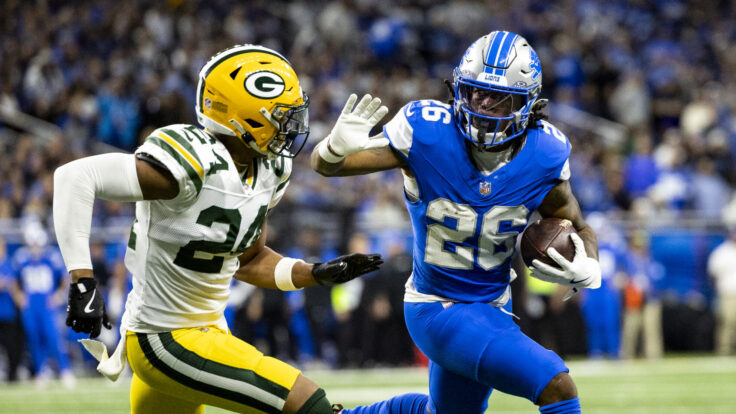
- NFL’s Thanksgiving bonanza: It’s official. The Chiefs–Cowboys game last Thursday had more than 57 million viewers on CBS, and the Packers–Lions earned more than 47.7 million viewers on Fox. As just about everybody (including yours truly) predicted beforehand, these are now the league’s two highest-viewed regular-season games in history—a fact confirmed by accuracy-enhancing
changes that Nielsen made to how it counts viewers.I spend a lot of time talking about how Netflix and YouTube have entered the sports market to eventize games. As these numbers show, CBS Sports and Fox Sports have been relying on that strategy for years. And they both use the power of broadcast TV, coupled with their own streaming services, to cut through with big events.
- Thursday night threshold: Sooner or later, Amazon Prime’s
streaming-only Thursday Night Football is going to overtake one of the primetime TV broadcasts for viewership. Many wondered at the start of the season whether this would be the year.It could be a close one this season. Through Week 13, Amazon Prime has averaged 14.8 million viewers per game this season, which is less than Monday Night Football’s 15.5 million average across 17 games, including nine games simulcast on both ABC and ESPN, with two more to come. Amazon still has four more weeks to
make up ground—including tonight’s Cowboys–Lions game, a matchup with major playoff implications that should post a huge number. Amazon also has a Broncos–Chiefs Christmas night game that is certain to pop. Plus, MNF has two ESPN-only games left on its schedule: Miami–Pittsburgh on December 15 and Rams–Falcons on December 29. See you in January with a final tally.
- Shrinking the field: Media executives are quietly cheering Brian
Rolapp’s plans to cull the number of events and size of the fields at various PGA Tour events, telling me that these changes have been a long time coming. Rolapp, a former NFL executive, alongside Tiger Woods, outlined the shake-up to players at a recent event in the Bahamas. Per the Golf Channel, Rolapp and Woods discussed having 20 to 25 tournaments per year and gravitating toward the best courses and markets. They also discussed a promotion-relegation system for
golfers.
- Amazon’s quiet coup: Yesterday, my partner Julia Alexander brilliantly excavated why Amazon may actually be the stealth winner of the streaming wars. Yes, the company makes originals and is now the third-most-used streamer, but as Julia points out, Amazon’s real edge comes from its role as the
industry’s great aggregator. Prime Video Channels quietly funnel millions of subscribers to services like Paramount+, Starz, Apple TV, and now Peacock—while Netflix and Disney’s suite of products remain holdouts. “Peacock, which just joined Channels in August, has already gained nearly 1 million new subscribers,” Julia wrote. “And around 60 percent of signups (roughly 1.4 million) for Fox One, which launched in August, came through Amazon.”Julia continued: “Amazon’s scale and ambition to
unite the world’s streaming services on its platform will only continue to increase its [Nielsen] Gauge share. If Amazon effectively becomes the de facto TV app, it can monetize this attention capture with its proprietary ad management system, thereby owning both audience and ad structure. It’s enough to make you wonder if Amazon—not Netflix—actually won the streaming wars.”
|
|
|
Amid revisions to MLS’s controversial deal with Apple, commissioner Don Garber is
defiantly proud of the partnership that will go a long way to defining his legacy in sports media.
|
|
|
Back in the summer of 2022, Major League Soccer faced a lot of criticism after it announced its
exclusive, all-in, decade-long $2.5 billion streaming deal with Apple TV. Yes, yes, the contract offered guaranteed cash and the appearance of orthogonal thinking. But the league was also leaving traditional television to tie its fortunes to a service that felt like more of a boutique. Apple TV may be a shingle on a $4 trillion market cap company, but its low subscribership (estimated at more than 40 million), general lack of transparency, and unclear vision have long vexed the
entertainment industry. On top of that, matches would largely exist behind a Season Pass paywall that cost an additional $15 per month. Not great!
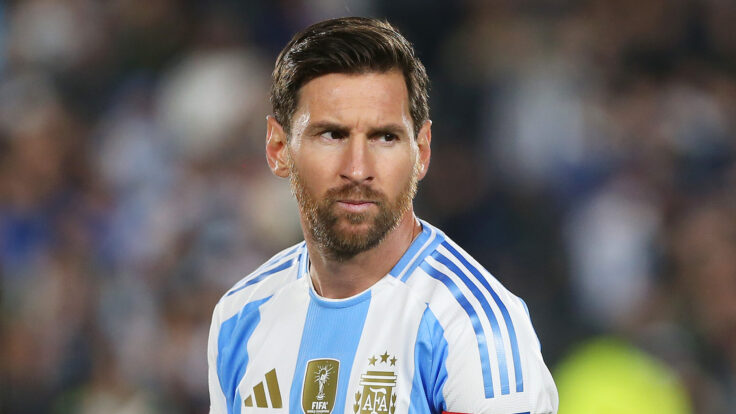
MLS certainly couldn’t sneeze at around $250 million per year for a league still operating with a startup mentality—a “startup” that is now 30 years old. And the Apple partnership undeniably helped attract talent, like Lionel Messi’s watershed signing with Miami. But the deal also marked a radically different media strategy
than other leagues were taking at the time. Instead of partnering with multiple media companies and streamers as a way to maximize engagement—the polytheistic approach popularized from NASCAR to the NFL to the NBA—MLS was forced to answer increasingly annoying questions: How many people were watching its games? And why hadn’t Apple ever broken out those numbers?
Last month, MLS and Apple revised their partnership. The deal will end three and a half years earlier than expected, with Apple
TV making all its MLS games available to all its subscribers, sans paywall, and the league moving some games back to traditional television. At first blush, it seemed as though both parties were waving their white flags in order to move forward in the best interests of their businesses.
But MLS commissioner Don Garber insists that he does not see it that way. On Wednesday, during an interview at the University of Maryland, he pushed back heartily on that narrative,
telling me that MLS has seen increases in revenue, team valuations, and attendance in the three years since signing its Apple deal—not bad for a league that supposedly chose money over a broad audience.
Furthermore, he said, the league has experienced steady viewership growth on Apple TV. “When you do bold things that anticipate the future, you have to break some glass,” Garber told me. “The industry didn’t quite understand what we were trying to achieve.”
|
In Garber’s version, the Apple deal was partly an omnibus attempt to respond to the broader R.S.N.
pandemic in the industry. Given that the league had previously sold around 500 games per season to local stations, Garber sensed that those buyers would dry up amid the roiling bankruptcies, grinfucking, and cliff-pathing that beset the cable business. “We saw four or five years ago what is happening now to the R.S.N.s,” Garber told me. “We needed to not just renew a hundred games. … We wanted to aggregate all [those local games] into a global package that anybody, anywhere—without blackouts—can
go with the touch of a button and capture the excitement of Major League Soccer.”
Garber described Apple, and S.V.P. of services Eddy Cue, as sports media disrupters, and suggested that sports’ broader move to streaming is akin to television surpassing radio in popularity and cable outpacing broadcast. “It always disrupts, but it always settles down, and live sports is always a winner,” he said. By the time MLS is back in the market with its rights in three years, Garber
expects that his early embrace of streaming services will pay off. “The vast majority of young people—and this is our audience—are watching streaming services,” Garber said. “It’s changing, and we are right in the middle of all of that in ways that have been good for us, albeit way different and certainly criticized. But we got thick skin in the soccer business. I’m bullish on Apple, and I think this new strategy they have with F1 and baseball is going to be great for them.”
With the new
deal, he went on, the league has more flexibility to place games on traditional linear TV—something that will undoubtedly help grow its audience. Fox, for example, will carry this weekend’s MLS final between Messi’s Miami and Vancouver. The league isn’t getting off completely pain-free, though. As part of the deal, it gave up a revenue-sharing arrangement for guaranteed rights payments—$200 million next year, $107.5 million for a shortened season in the spring of 2027, and $275 million for the
following season. The deal now ends at the end of the 2028-29 season—three and a half years earlier than planned. “The shortened deal makes sense for us,” Garber said. “We had a deal that was a revenue share that’s gone away. So we gave something up, and we’re going to get something back.”
|
On ESPN and Lane Kiffin: “The most interesting part of the Lane Kiffin
story is the media angle. ESPN worked so hard to defend him, on both College GameDay and the Egg Bowl telecast. Plus, Kiffin admitted that ESPN analyst Nick Saban effectively told him to leave. The tie-ups between Kiffin’s agent and those heavyweight voices make the whole thing ripe for conspiracy.” —An editor
On the R.S.N.s: “As you continue to put more nails in the R.S.N. coffins, you should probably mention that the digital tier hasn’t had
the anticipated impact on audience for MLB, NBA, or NHL—at least when adding in streaming.” —A media exec
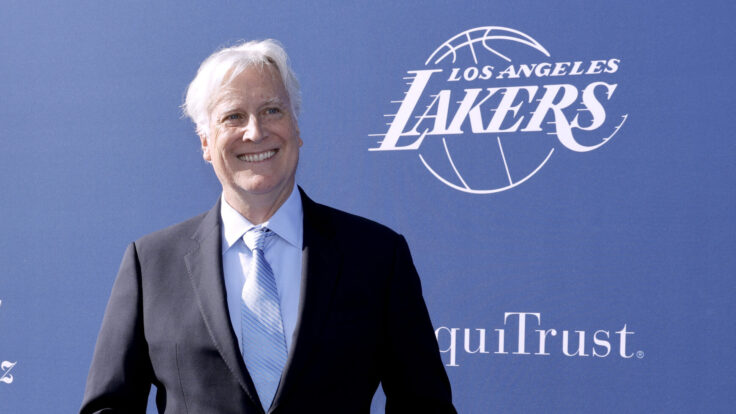
On the Lakers’ and Dodgers’ R.S.N.s: “Would there be any equity in either of those R.S.N.s without a carriage commitment from Charter?” —A finance executive
[ Ed. note: It’s impossible to conceive of any R.S.N. sale that doesn’t also include a long-term carriage commitment from Charter.]
On grinfucks and cliff paths: “I enjoy
watching all the pearl-clutching whenever our clips have the word ‘grinfucking’ in them. Does he always curse? Can we forward this? Should we edit it? So good.” —A fan
|
Have a great weekend,
John
|
|
|
The ultimate fashion industry bible, offering incisive reportage on all aspects of the business and its biggest
players. Anchored by preeminent fashion journalist Lauren Sherman, Line Sheet also features veteran reporter Rachel Strugatz, who delivers unparalleled intel on what’s happening in the beauty industry, and Sarah Shapiro, a longtime retail strategist who writes about e-commerce, brick-and-mortar, D.T.C., and more.
|
|
|
Finally, a media podcast about what’s actually happening in the media—not the oversanitized,
legal-and-standards-approved version you read online. Join Dylan Byers, Puck’s veteran media reporter, and Julia Alexander, a longtime media analyst, as they sit down with TV personalities, moguls, pundits, and industry executives for raw, honest, sometimes salacious conversations about the business of media and its biggest egos. New episodes publish every Tuesday and Friday.
|
|
|
Need help? Review our FAQ page or contact us for assistance. For brand partnerships, email ads@puck.news.
You received this email because you
signed up to receive emails from Puck, or as part of your Puck account associated with {{customer.email}}. To stop receiving this newsletter and/or manage all your email preferences, click here.
|
Puck is published by Heat Media LLC. 107 Greenwich St., New York, NY 10006
|
|
|
|