Welcome back to The Varsity. I’m John Ourand, recovering from another
great Christmas break. The award for best gift goes to my son for giving me an official Pete Alonso Orioles jersey. Opening Day is only three months away.
This private email will be off the rest of the week, but the Varsity podcast will appear as usual, with MoffettNathanson’s Michael Nathanson joining us on Wednesday for a rollicking conversation about what to expect for sports media in 2026. Then, on Sunday, The New York
Times’s Ken Belson returns to discuss his excellent piece on the hidden costs that come with the professionalization of youth sports.
Today, as the new year rounds into view, my partner Julia Alexander provides her typically insightful streaming-related sports media predictions for 2026. Fire up your
preferred gambling app of choice and play along.
Mentioned in this issue: Lauren Thomas, David Preschlack, Scott Kacsmar, Hans Schroeder, Dave Sheinin, Neil Best, Craig Carton, Roger Goodell, Adam Silver, Gabe Spitzer, David Ellison, Neal Mohan, Rob Manfred,
Pat McAfee, Dave Portnoy, and many more…
Okay, let’s get to it… |
- The R.S.N. conundrum: Main Street Sports’s future could hinge on whether the R.S.N. operator is able to complete a deal that brings in DAZN as a majority owner. As WSJ’s Lauren Thomas reported two weeks
ago, the London-based O.T.T. platform is in “advanced talks” to take a majority stake in Main Street, which operates the FanDuel-branded R.S.N. If a deal is reached, it’s likely to happen next month. If not, Main Street Sports could be forced to shut down in late spring, once the current NBA and NHL seasons are complete.
Days after that WSJ report, Main Street Sports C.E.O. David Preschlack sent an email to staff acknowledging that changes could be coming and
letting them know the company is trying to renegotiate rights fees. “We have engaged with certain team partners around their rights payments and the terms of sustainable partnerships as we work to get more clarity on the future direction of the company,” Preschlack wrote. “These discussions are progressing in earnest, and we are working diligently to finalize the path forward as soon as we can.” - Subscriptions ’R Us: Several of my non-sports business
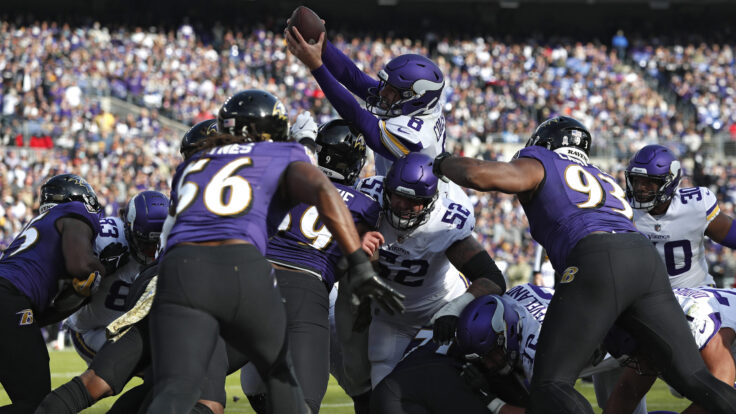
friends shared Scott Kacsmar’s tweet complaining about the NFL schedule this past week, which required subscriptions to Netflix, Amazon Prime Video, Peacock, and pay TV (ESPN and NFL Network), in addition to broadcast. This sort of thing is obviously a headache for fans, although the NFL seems to believe it’s worth trading discoverability for reach.
At
Puck’s In the Arena sports media conference, in October, I asked the NFL’s Hans Schroeder about the role streaming services will play in future rights negotiations. Schroeder, the league’s top media executive, slightly shrugged off the discoverability gripe—in fact, he cited viewership stats from Netflix, Peacock, and Amazon demonstrating
that fans are ably finding games. “Whereas at one point maybe reach was going to be a question, I think our model—that is so predicated on reach—is going to be very sustainable with whatever partner we choose,” Schroeder told me. - ESPN’s Choose Your Own Adventure: Earlier this month, my partner Dylan Byers surveyed the media executives and industry insiders who subscribe to his superb private email,
In the Room, and squeezed in a question about ESPN’s long-term strategy. The results were fascinating: “A third of respondents believe joint ventures will define ESPN’s next chapter, suggesting a world where the legacy sports network becomes a kind of
multipartner distribution consortium,” Dylan wrote. “But 24 percent still think linear carriage remains the real profit engine, a bet that the old economics may erode slower than predicted. Another 24 percent argue the D.T.C. stream will eventually become a true flagship product, finally rivaling cable. And 20 percent envision ESPN merging with or spinning into a tech platform altogether.”
- Reading list: WaPo’s Dave Sheinin wrote today about the existential threat that legalized betting poses to sports leagues. “This month, a Washington Post-University of Maryland poll of 1,032 American adults found plummeting support for sports gambling nationwide, compared with a similar poll conducted in 2022, and widespread concern about the possibility of fixed or
rigged outcomes. Some of the largest drops in support for legalized gambling came from frequent sports consumers and those who bet on sports—the ones who know best the havoc it has wrought. Overall, 66 percent of respondents, including 72 percent of those who have gambled in the past five years, expressed concern that games could be fixed or rigged.”
Concerning, sure, and a not-unexpected pendulum swing regarding a newly legalized industry. But leagues and teams will increasingly rely on
gaming partnerships and experiential deals as local media revenue erodes and more R.S.N.s face their own Main Street–style conundrums. Everyone seems incentivized to make the necessary governance and regulatory changes to ensure this works out and the general public gets comfortable with wagering. - Neil Best’s 2026 storylines: Over the weekend, Newsday sports media reporter Neil Best
announced his retirement after a stellar 43-year career. An all-around good guy, Best was especially well-liked in the business (check out the glowing social posts directed toward him). I couldn’t resist extracting a few final insights from Neil before he packs it in, so I called him this morning and asked him for the top three sports media stories that
he would have been covering next year:
- Craig Carton’s return to WFAN for a third time: “That’s a big local sports media story here in New York.”
- ESPN Unlimited’s growth: “This is personal for me, because
as I consume sports media as a normal person, I am leaning toward cutting the cord. Can I be a sports fan and a cord-cutter now that this product is available?”
- The U.S. World Cup: “I covered a lot of games at Giants Stadium in the 1994 World Cup. I think it’s going to be a huge success, just because the U.S. is so much more sophisticated than it was in 1994. And even then, it was a big success.”
|
|
|
Why Prime Video should win a major NFL package on top of Thursday Night Football,
the real endgame for podcasts on Netflix, the future of the UFC-Paramount partnership, and other sports media predictions for 2026. |
|
|
The sports media industry has been living through an epoch of rapid and practically unprecedented
change. In the last 12 months alone, David Ellison shelled out $7.7 billion for UFC rights; Apple started walking back a $2.5 billion deal with MLS and placed a $750 million bet on F1; and ESPN acquired NFL Network and launched a D.T.C. app. Meanwhile, Neal Mohan brought an exclusive NFL game to YouTube; Amazon broadcast the first global Black Friday game; and MLB’s Rob Manfred partnered with Netflix. And that’s just the tip of the
iceberg.
I expect the migration of sports rights from legacy distributors to streaming platforms will be among the biggest stories next year, too. But let’s go out on a limb and get even more specific in a special, end-of-year hypothesis spectacular. Here are the three sports media plotlines I’m anticipating in 2026… |
1.
Amazon Will Win a Major NFL Package
|
Neither commissioner Roger Goodell nor Hans Schroeder, the NFL’s
top media exec, wants to confirm that they’re going to move up the league’s rights negotiations to 2026, but it’s a safe bet those conversations will begin next year. And my money is on Amazon winning a major package to pair with Thursday Night Football.
It hardly bears repeating why Amazon would want more games: Live sports are the last reliable subscription driver in a fractured media landscape. But there are good reasons to expect the NFL would want to deepen
its relationship with Amazon, as well. For one, Prime Video expands the league’s reach with international audiences, just as Amazon’s deal with Adam Silver is bringing dozens of NBA games to key European markets. Amazon’s approach to creating a platform that sports fans flock to throughout the week is also aligned with Goodell’s goal of maintaining football viewing as a habitual activity—unlike Netflix’s strategy, where V.P. of sports Gabe Spitzer is
focused on singular, one-off events.
Obviously, Amazon has more dry powder than virtually all of its media rivals, outside of YouTube. When Disney, Paramount, and Comcast were all flush with pay TV revenue and cable distribution fees, raising the ante on every new round of sports rights negotiations was pretty much standard practice. Meanwhile, Google, Amazon, and Netflix—currently worth more than $6 trillion combined—want more sports programming on their services because advertisers are
committing a larger portion of their budgets to connected TV offerings, and because sports increase the perceived value of a service. Any one of them could bid big on a package of new games that the likes of Disney, Paramount, or Comcast would be hard-pressed to match.
If Amazon can prove they’re a reliable partner for global growth, then they may be a safer bet for the NFL right now. Arguably, from the global angle, YouTube would be the best partner: There are localized versions of
YouTube in over 100 countries, and across 80 languages, per the company. But its $2 billion annual deal for Sunday Ticket means it doesn’t need to bid on another expensive NFL package. Amazon is the next best option—it’s the second-largest global streamer behind Netflix, and has a loyal sports audience in international markets, a powerful ad marketplace, and the funds to commit upfront. |
2.
Netflix Will Go Deeper on Video Podcasts
|
Netflix, which is working to build its sports offerings without overcommitting to multiyear,
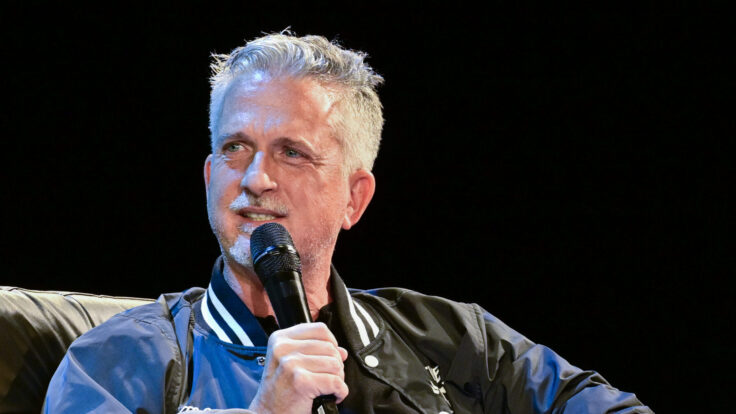
multibillion-dollar league deals, has already indicated its intention to experiment in the space carved out by ESPN with Pat McAfee and Fox Sports with Dave Portnoy—two giants in sports media who emerged from the primordial podcasting stew. So far, Netflix has inked licensing deals with The Ringer (The Bill Simmons Podcast, The Zach Lowe Show, The Ringer Fantasy Show, The Ringer NFL Show, The Ringer NBA Show, and
others), Barstool (Pardon My Take, The Ryen Russillo Podcast, Spittin’ Chiclets), and a handful of other relevant deals.
The past two years marked a turning point in how consumers engage with podcasts, which have evolved from a purely auditory experience into something that now more closely resembles TV talk shows. YouTube is the largest podcast platform by audience share—with more than 1 billion monthly active podcast viewers, and twice as many people choosing
YouTube than Spotify as their primary podcast platform, according to a report from Cumulus Media and Signal Hill Insights produced last year. It’s easy to imagine Netflix tapping further into the less expensive, athlete-hosted podcast genre that is springing up everywhere. A study conducted by USC Annenberg earlier this year found that athlete-owned podcasts have generated more than 7 billion YouTube views, 725 million TikTok likes, and 37 million Instagram followers, combined.
For
Netflix, podcasts offer an opportunity to lean into an emerging content format and move away from an oversaturated standby. Due to the surge in sports docs over the past few years—12 percent of all documentaries commissioned in the second quarter of this year, up from 3 percent at the start of 2019, per Ampere Analysis, as reported by Bloomberg—Netflix may slow its roll and find alternatives that can be produced more cheaply and efficiently. Although some docuseries are absolute
smashes—Beckham is still one of Netflix’s most-watched sports docs, debuting with close to 44 million views in the second half of 2023—not everything in the oeuvre is destined for success. Enigma, which focused on Aaron Rodgers’ ham-fisted search for himself, struggled to get 3.1 million views in its first two weeks on Netflix, and amassed only 1.8 million more in the first half of 2025.
Netflix may already be starting to hedge its unscripted sports
ambitions. The NBA docuseries Starting 5, from Peyton Manning’s Omaha Productions, was reportedly quietly benched when it turned out that no one was watching. Netflix also recently axed Tour de France: Unchained and Break Point. Instead of throwing good money after bad on these polished-but-underperforming documentaries to offset the lack of actual sports on Netflix, sports-themed video podcasts offer company executives a safer bet. |
3.
UFC Will Have a Massive Year
|
UFC’s move to Paramount+, a streaming service with around 80 million subscribers globally, will
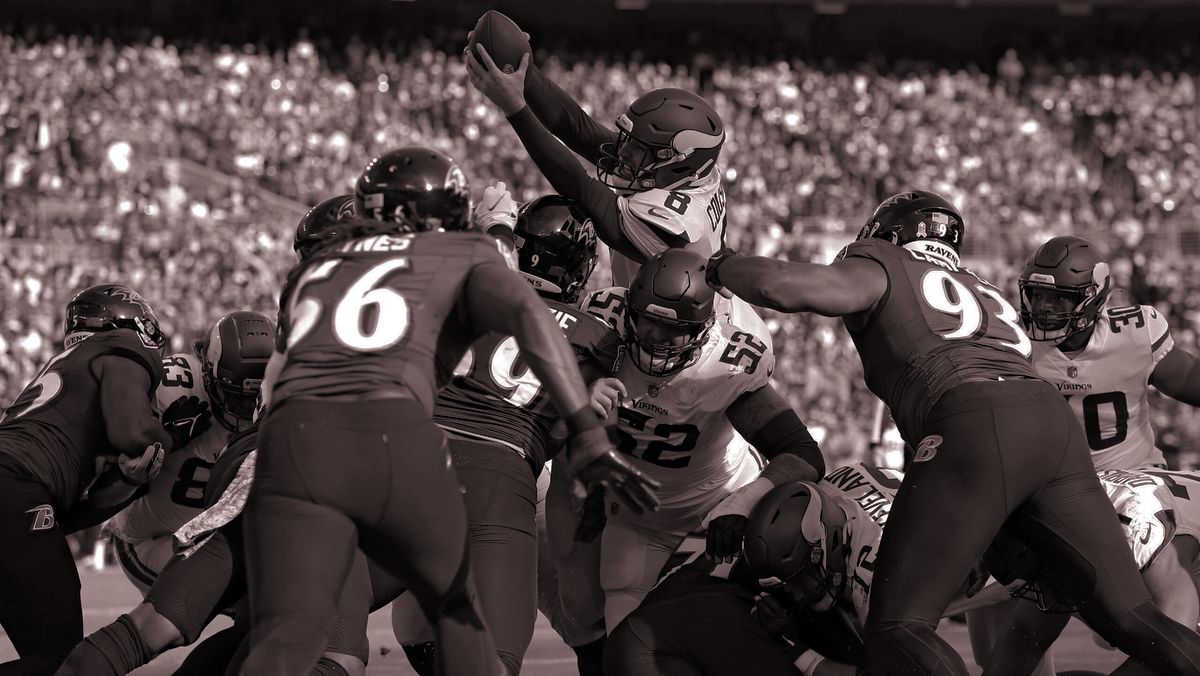
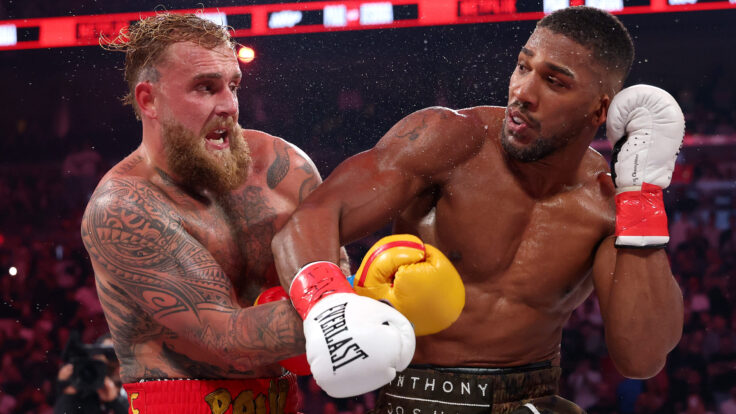
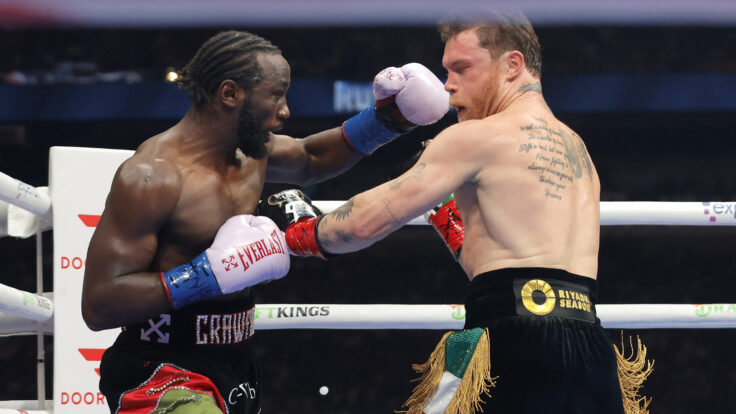
surely expose the sport to younger audiences. But the even bigger accelerant for the UFC will be the continued growth of sports betting. According to Statista, just under 20 percent of American bettors surveyed placed wagers on boxing and M.M.A. matches last year. Meanwhile, the median age of a UFC fan in the U.S. is 37, lower than the NBA (39), NASCAR (41), and the NFL (46), per The Economist—a demographic that mirrors the average sports bettor. And now, after several decades, UFC’s
pay-per-view barrier is falling down.
TKO president Mark Shapiro isn’t shying away from acknowledging the importance of gambling to the UFC’s future. Last month, TKO entered a deal with the crypto-based prediction platform Polymarket, which TKO C.E.O. Ari Emanuel praised as a step toward transforming “passive viewership into active participation.” Some analysts predict that online sports betting could surpass $200 billion in the U.S. by 2027. Shapiro
and Ellison are likely betting that a growing percentage of that traffic will include UFC.
So let’s end our 2026 divinations there, on a bet. Fire up your prediction market of choice and we’ll see you in January. |
On Netflix’s Christmas games: “If Netflix is going to be serious about showing live
sports, it needs to cut down its delay significantly. Nothing kills the vibe of a football game quicker than knowing the play you’re watching is gonna be moot when Goff throws an interception 30 seconds down the road.” —A frustrated Lions fan
On Minnesota transplants: “I do not consider Brenda and Brandon Walsh as Minnesota celebrities, due to their poor pronunciation of local suburbs like Wayzata.” —A native Minnesotan
More on
Minnesota: “To be fair, Brandon and Brenda left Minnesota and didn’t become superstars until moving to Beverly Hills.” —A Varsity subscriber
On the best Christmas message I received this year: “Thank you for another year of engaging and entertaining sports coverage. While Lady Whistledown and Bridgerton have been on hiatus, Puck and your daily updates have filled that gap beautifully.” —An ESPNer |
Thanks, Julia. Happy New Year! See you all in 2026.
John |
|
|
Finally, a media podcast about what’s actually happening in the media—not the oversanitized,
legal-and-standards-approved version you read online. Join Dylan Byers, Puck’s veteran media reporter, and Julia Alexander, a longtime media analyst, as they sit down with TV personalities, moguls, pundits, and industry executives for raw, honest, sometimes salacious conversations about the business of media and its biggest egos. New episodes publish every Tuesday and Friday. |
|
|
The industry’s go-to source for unflinching reporting on the trillion-dollar business of artificial intelligence -
perhaps the single most important technology of our time. Ian Krietzberg, the powerhouse journalist behind The Deep View, delivers twice-weekly insights into the latest dealmaking and breakthroughs in A.I., and how the intersecting worlds of finance, entertainment, media, and politics are being transformed in its wake. |
|
|
Need help? Review our FAQ page or contact us for assistance. For brand partnerships, email ads@puck.news. You received this email because you
signed up to receive emails from Puck, or as part of your Puck account associated with {{customer.email}}. To stop receiving this newsletter and/or manage all your email preferences, click here. |
Puck is published by Heat Media LLC. 107 Greenwich St., New York, NY 10006 |
|
|
|