Welcome back to The Varsity. I’m John Ourand, back in D.C. all week and
mesmerized by the terrible stories coming out of Bethpage Black—from the emcee who tried to whip the crowd into a frenzy with a foul-mouthed chant directed at Rory McIlroy to an on-course meltdown by the U.S. team. What a terrible look for the PGA of America, which runs the Ryder Cup. Afterward, Tom Watson
admitted that he was ashamed.
And now for some good news!: Commanders owner Josh Harris has joined the all-star cast for In the Arena, the media conference we’re putting on with MoffettNathanson in a couple of weeks, which already includes the NBA’s Adam Silver, RedBird’s Gerry Cardinale, Fox Sports’s Eric
Shanks, Liberty’s Derek Chang, and many others. Click here to buy tickets. |
🎧 Pod alert: Michael Nathanson, my partner in the conference,
joined The Varsity on Sunday to discuss the most recent dislocations in the sports media industry. Meanwhile, Axios’s Sara Fischer returns to The Varsity on Wednesday to hit on the biggest happenings in sports media, including ESPN’s new NFL and MLB deals. Listen
here and here.
And a reminder that we’ve entered the home stretch of Puck’s fourth anniversary sale. Click here for 20 percent off an annual membership.
|
- A YouTube-NBC update: YouTube TV and NBC are still far apart on the largest outstanding issue in their carriage battle—whether or not Comcast will allow the platform to ingest its Peacock programming. Their current deal runs out tomorrow at midnight, and the timing would seem to work in favor of NBC: The network has Bills–Patriots and Lions–Chiefs on Sunday Night Football the next two Sundays, plus a bunch of popular upcoming college football games, including
Michigan–USC.
But this is a different kind of cable carriage fight. Indeed, media companies have never fought over distribution with a division of a $3 trillion company. As LightShed’s Rich Greenfield wrote in a recent research report: “Put yourself in YouTube TV’s shoes. … Despite YouTube TV paying over $10/sub/month
for the NBCU suite of channels, it sees Peacock run promos for $25/year.”
Rich continued: “Concurrent with the aggressive discounting of overpriced DTC streaming services (relative to content and engagement), programmers are now pushing/adding their streaming services into existing MVPD/vMVPD bundles. Ultimately the danger for legacy media is that YouTube and its parent company, Google, would be unaffected if YouTube TV collapsed and/or disappeared. By contrast, NBCU or Disney losing 15
percent of its video subscriber base, even if a meaningful portion is recaptured by MVPD/vMVPD competitors or DTC streaming apps, would be quite painful.” - Who’s behind the Paramount-WBD leak?: My partner Bill Cohan just published a great piece on where things stand with the
Ellison–Warner Bros. Discovery deal that was leaked in The Wall Street Journal some two and a half weeks ago. Bill, who was an M&A banker for decades, was particularly interested in both the timing of the leak and the silence that has followed it.
After all, WBD has soared in value by some 60 percent since the Journal story. In banking terms, that’s one expensive fucking leak! As Bill noted, “It’s not all that clear to me
how the Ellisons get the WBD share price to float back to Earth, except perhaps by delaying any bid, perhaps for months.”
He continued: “If no bid were forthcoming in the next few weeks, or months, WBD shareholders might begin to feel that a bid may not be coming after all. And all the speculators, or arbitrageurs, might begin dumping their shares, putting downward pressure on the stock. Might this explain why things have gone so silent, so suddenly?” - Paramount’s
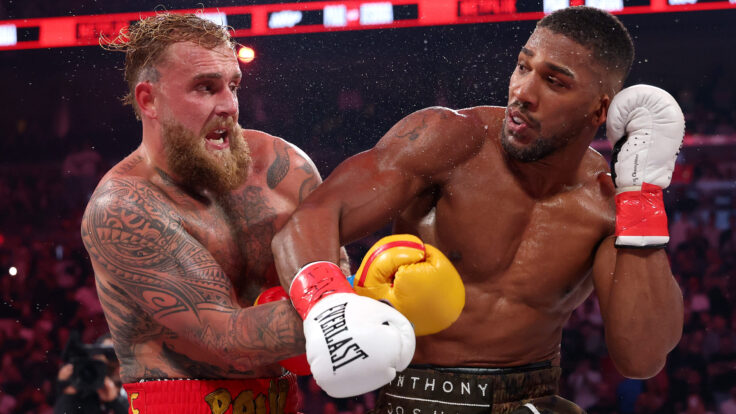
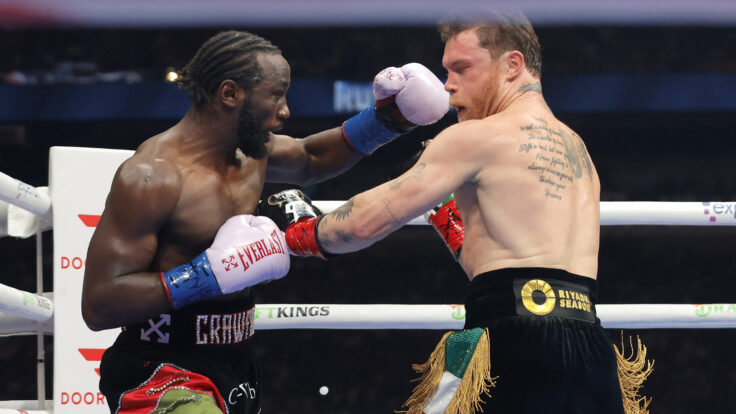
Zuffa deal & EA’s take-private: Of course, Varsity readers weren’t surprised by today’s announcement that Paramount signed Zuffa Boxing to a five-year deal. The financial terms are tough to come by, but it’s noteworthy that Paramount paid $7.7 billion for UFC rights about a month ago. TKO, which sold the rights to both of these leagues, originally wanted to package the deals together before deciding to separate them. Under the agreement, Paramount+ will carry at least 12 events annually
starting next year. For Nick Khan and Dana White, the first order of business is signing as many as 450 boxers to take part in those fights.
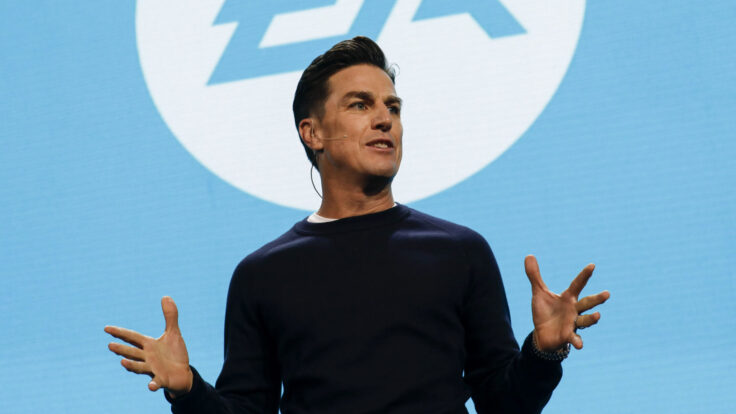
In other deal news, Electronic Arts, the owner of the Madden NFL franchise, is going private following a $55 billion sale to a group that includes Silver Lake, Jared Kushner’s Affinity Partners, and the Saudi Public Investment Fund. As my partner Dylan Byers
reported three years ago, Comcast’s Brian Roberts kicked the tires on EA once upon a time. - Baseball resurgence: Even the most optimistic observers believe that Major League Baseball will endure a work stoppage after next season, and possibly into the 2027 regular season, when the league’s labor deal expires. Obviously, the issue comes down to money—in particular, a potential salary cap. Of course, every other
major U.S. professional team sport has a cap, and MLB owners suggest that the measure would only make the league more competitive and support more vulnerable players. But the players—or at least a vocal contingent—view a cap as a crime against humanity that, additionally, wouldn’t solve any of the issues that the owners gripe about. (I’m not trying to mediate this dispute, but both have a point.)
On a
recent episode of The Varsity, ESPN analyst Jeff Passan suggested that the owners’ leverage would be diminished by the fact that MLB’s media rights come up for auction in 2028. And no one but a blockhead would go to market on the heels of a stoppage that led to canceled games, thereby refreshing everyone’s memory about the horrors of ’94.
Also, the league has momentum: MLB posted a total attendance figure of 71.4 million, its third straight annual year-over-year increase. Plus, viewership increased for all of its national TV packages: ESPN’s Sunday Night Baseball is up 21 percent, and the Fox broadcast has also increased by 9 percent. Another interesting stat: The average game length dropped to the lowest duration in 40 years at 2 hours and 38 minutes. Only three nine-inning games lasted more than three-and-a-half hours.
Just four years ago, that figure was at 391. - People news: This morning’s news that Comcast elevated Mike Cavanagh to co-C.E.O., alongside Brian Roberts, was greeted with a yawn by investors and financial analysts. Cavanagh was already running Comcast’s day-to-day, while Roberts has taken on more of a strategy role. “Nothing changes,” one analyst told me. “Mike’s been the one pushing to get rid of all the negative
assets. He’s the one behind the Versant separation.” ... Tyler Epp, who built the Miami Grand Prix into the most important F1 race in the U.S., is now the global head of commercial strategy for Cadillac’s Formula 1 team. Katharina Nowak will run the Miami race in Epp’s absence. … Happy trails to Nats play-by-play guy Bob Carpenter, who signed
off for good yesterday following a 20-year run as the voice of the team.
|
Now on to the main event… |
|
|
Super-analyst Michael Nathanson offers a candid view of the sports rights dialectic taking
place between the legacy media companies, who need these games more than ever, and the hyperscalers with all the money in the universe. |
|
|
It’s been a rough decade-plus for legacy media companies for all the obvious reasons: accelerated
cord-cutting, increasingly expensive rights, a plethora of new consumer options, the rise of user-generated content, etcetera, etcetera. Oh, and the fact that their hyperscaled competitors are so disproportionately large. To wit: This year, Alphabet, the parent company of YouTube TV, plans to spend around $85 billion in capex. That’s the equivalent of about four Paramounts; nearly two WBDs; or close to three Fox Corps. (Must be nice…!) Of course, there is nothing to stop these
companies from eating up the sports media marketplace, too. Amazon has already replaced TNT as an NBA partner. Netflix outbid Fox for the Women’s World Cup.
And yet legacy media companies are trying their hardest to combat this apparent manifest destiny, bidding for sports rights with an almost existential abandon. Soon after David Ellison’s Skydance bought Paramount, it outflanked its competitors by signing rights deals with UFC and Zuffa Boxing. Facing competition from
Netflix, NBC secured U.S. Golf Association rights. And ESPN ponied up to keep WWE’s Premium Live Events from heading over to a streamer.
On the latest Varsity podcast, MoffettNathanson analyst Michael Nathanson marveled at legacy media’s staying power in the sports rights marketplace, and delved into the fraught subtext of these
deals as the dialectic between incumbents and hegemons plays out. As always, the following has been lightly edited. |
John Ourand: Legacy media has cut a bunch of big deals recently:
Paramount-UFC, Paramount-Zuffa, ESPN-WWE, NBC-USGA. Is this a trend? Are you surprised that the streamers aren’t more involved?
Michael Nathanson: I’ve been flabbergasted. It started with that UFC deal. I don’t understand how Paramount makes that deal—paying double what ESPN was paying. In the prioritization of what Paramount needs to fix, getting to UFC was not on my list of things they needed to do. But this is a new regime, a new day. And they’re really focused,
rightly so, on sports, streaming, and studio. And that’s their three core drivers.
Roger Goodell is also saying that he may open up negotiations as early as next year. The funny thing is that when I started to make calls on that, it became clear that the push to get deals done early was not coming from the NFL—it’s mostly coming from the legacy media companies that want certainty.
I would do the same thing. Look at the ratings—they remain up three weeks in. Look at
advertising trends—they are incredibly strong. This is the most important thing legacy media has to do: re-sign and keep these rights. And they have to do it before the Amazons, Netflixes, and YouTubes, or even Apple, start to get even more aggressive.
That’s the whole point of the networks wanting to get in early—if you’re renewing a package, the NFL can’t take that package from you and give it to a streamer.
The question I have is what these packages look like in
the future. The NFL could create an A package and a B package, based solely on the quality of games. It would have more Chiefs and Bills games in the A package. But broadcasters like the packages the way they are; that’s where their station footprint is. I wonder if the networks want to try to get there before Goodell and [NFL executive V.P. of media distribution] Hans Schroeder recut the packages into something different. Netflix wants to eventize their sports
programming, right? So give Netflix the quarterback package—make it Lamar Jackson versus you pick the quarterback every single week.
That said, if I’m the league, and I’m the broadcasters, I feel like my future is predictable if I keep these rights where they are. I know what my viewership looks like, and ad numbers keep going up. That’s predictable. The league doesn’t want to go into a more chaotic world. |
I’m fascinated by the YouTube TV–NBC carriage battle. It seems different from all the ones that I
have covered over the years. Sure, it’s about pricing and packaging. But it’s about modern-day issues, too, like how YouTube should offer Peacock.
The problem is that NBC is trying to get monetized for the entire shelf space right now, just as it is about to break off Versant. The guys at YouTube TV are not dumb. They know that if they wait a bit, there’ll be two separate companies with two separate affiliate contracts.
But it also seems like a streaming business plan has
caught up with legacy media. We’ve spent a lot of time writing about the proverbial cheating that legacy media was doing with their streaming products, with a retail rate drastically lower than the wholesale rate they were charging distributors. It seemed obvious that they would run into a buzz saw. But it never came.
And the worst offender of that was Peacock, which was around $4 per month.
Don’t forget how Bob Bakish rolled out
Paramount+ with a mountain of sports, news, and entertainment programming. If there’s a big overlap of content offerings between streaming and linear, it should be part of the bundle. It should be on-demand. The challenge is when there’s content that is so different. HBO’s flagship shows have nothing to do with what WBD offers in the cable bundle. The more Paramount pushed into Yellowstone, it could make the same argument.
Everyone’s case is a stand-alone case. But if you’re
YouTube TV, I want 50 channels for 50 bucks. The bundle has gotten too big. Look at what tech has done our entire lives: They find a way to deliver what consumers want. The guys at YouTube TV don’t have to be in this business. At some point, if this product is not delivering, they will find another way to do it.
Do you view YouTube TV versus NBCU as a life-or-death deal?
It’s a business deal.
I don’t know. Legacy media doesn’t want
to roll over for Google.
It would be a wake-up call for everyone who deals with YouTube TV if they went that hard against NBC and put them off. That would have everyone fall in line quickly, right?
It really comes down to cost. Alphabet is under pressure to control non-A.I. costs. If you’re the C.F.O. of Alphabet, you're looking to squeeze costs in businesses that are non-A.I.-focused as hard as you can. |
On Iger’s replacement: “I loved
hearing Mark Shapiro talk the Disney C.E.O. job on your podcast. Mark Shapiro would be great. The market would certainly like it. And it seems like he would want it.” —A former ESPNer
On a possible podcast co-host: “Is Michael Nathanson auditioning to become your new podcast partner, replacing Marchand?
I hear that Michael likes a crisp tequila. Straight up.” —A Varsity subscriber |
|
|
Finally, a media podcast about what’s actually happening in the media—not the oversanitized,
legal-and-standards-approved version you read online. Join Dylan Byers, Puck’s veteran media reporter, as he sits down with TV personalities, moguls, pundits, and industry executives for raw, honest, sometimes salacious conversations about the business of media and its biggest egos. New episodes publish every Tuesday and Friday. |
|
|
The industry’s go-to source for unflinching reporting on the trillion-dollar business of artificial intelligence - perhaps the
single most important technology of our time. Ian Krietzberg, the powerhouse journalist behind The Deep View, delivers twice-weekly insights into the latest dealmaking and breakthroughs in A.I., and how the intersecting worlds of finance, entertainment, media, and politics are being transformed in its wake. |
|
|
Need help? Review our FAQ page or contact us for assistance. For brand partnerships, email ads@puck.news. You received this email because you signed up to receive emails from Puck, or as part of your Puck account associated with {{customer.email}}. To stop receiving this newsletter and/or manage all your email preferences, click here. |
Puck is published by Heat Media LLC. 107 Greenwich St, New York, NY 10006 |
|
|
|