 |
 |
|
Welcome back to In The Room. I’m Dylan Byers.
|
|
Tonight, on the heels of the annual Warner Bros. Discovery holiday press party, some year-end reflections and ruminations on David Zaslav’s Hollywood saga heading into an uncertain 2024. Plus, some updates on CNN’s dismal ratings and the great Zucker Telegraph chase.
And… Later this week on The Powers That Be, my colleague Peter Hamby and I consider what Zucker’s Telegraph bid could mean for the U.S. media landscape in a post-Murdoch world, and the 500-to-1 odds that the former CNN chief might one day end up with Fox. That goes live here on Friday.
|
 |
| A Very Zaz X-mas |
| News and notes on the media amid the season of yuletide gossip: WBD theories, CNN hypotheticals, and more Zuckerology. |
|
|
|
| On Tuesday night, after tying some lights around the palm trees outside my front door, I ventured down the hill to Sunset Tower, the iconic, century-old Hollywood landmark and onetime A-list pied-à-terre, for the annual Warner Bros. Discovery holiday media party. This was the first (for me, anyway) in a gauntlet of mediaco cocktail-and-canapés soirées that stretch from now until a week before Christmas in Los Angeles and New York. These events, which cap the professional year with a healthy dash of civility and cheer, are effectively a party favor for the more obsequious members of the trade press, an olive branch to more critical chroniclers, and, in their best iterations, a reminder that no matter what happens in the occasionally contentious arena of press and public relations, we’re all adults trying our level best to notch wins and sustain losses, and thus all deserving of a Christmas truce.
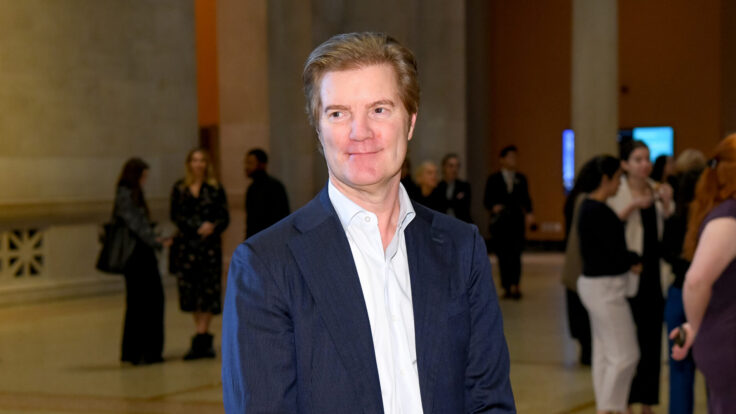
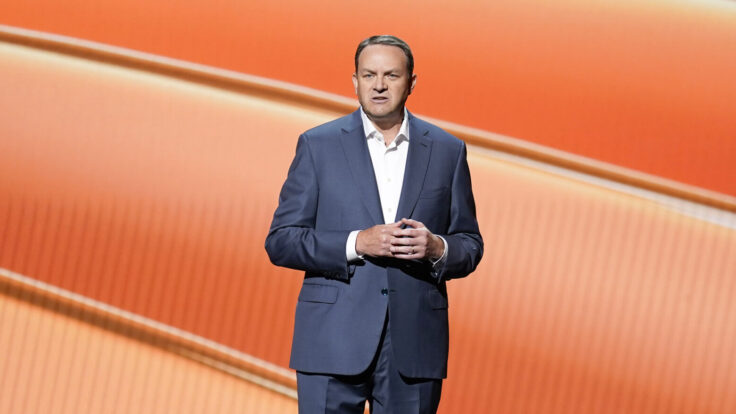
In any event, this seemed like an opportune time to check in with David Zaslav & Co. and take stock of the pilgrim’s progress, 20 months post-merger. It’s no secret that Zaz looms large in the Puck Cinematic Universe. His rise to media moguldom via a brilliant stealth merger, his subsequent fall from Hollywood and Wall Street (and the media’s) good graces, and his unyielding effort to weather the storm and mastermind an exit, is in itself among the most compelling business stories of our time. More importantly, Zaz’s predicament—the debt, the streaming pivot, etcetera—is Hollywood’s too, and, fairly or unfairly, he has become the caricature for this uncertain era in the media business.
Without betraying confidences or off-the-record conversations, it occurred to me halfway through the night’s martini that Zaz and the WBD executive team have been remarkably chastened by their experience so far, and, honestly, in a rather refreshing way. The Zaz who had initially tried to refashion himself as a Hollywood savior and modern-day Jack Warner—and made himself the subject of far, far too many profiles in the process—was once again himself: a charismatic and affable guy, sure, but also a ruthless cost-cutter in the Welchian mold, who wasn’t afraid to make brutally unpopular decisions in order to generate cash flow. The recent New York Times Magazine opus on the man—hopefully the last, at least for a while, entry in the art of longform Zazology—seemed to cement this reputation as an “out-of-touch and overpaid corporate C.E.O.” who misjudged Hollywood.
By the bar, one WBD executive asked me what I thought of the Times piece. From a public relations perspective, it was obviously devastating, and undeniable evidence of just how far Zaz’s star had fallen in the eyes of, well, almost everyone. The Times had declared him “the widely reviled symbol of Wall Street’s exploitation of the town,” and the photos (which he probably shouldn’t have posed for) tried to convey that thesis, as well. On the other hand, I thought, Who cares? Zaslav isn’t going anywhere, of course, and the slings and arrows hardly seem to have dulled his self-confidence or his optimism about the path ahead. Plus, he’s already so fucking rich—a potential billionaire before all is said and done—that he might be able to laugh off the criticism as the mere price of doing business.
More to the point, now that the golden light of those early, halcyon days has faded, we can finally go back to judging him on the merits of his true mission—which is not to assuage Hollywood, but rather to execute a financial play and get rich(er) in the process. |
|
A MESSAGE FROM OUR SPONSOR
|
 |
| Your health insurance company and their pharmacy benefit manager (PBM) can decide which medicines you can get at the pharmacy – regardless of what you and your doctor think is best. Why do they do that? So they make more money for themselves. See why middlemen should work for you, not against you. |
|
|
|
|
| Over the course of Zaz’s tenure, a litany of critics from Hollywood to Wall Street have been in my ear, repeatedly reminding me just how far the stock has fallen, and how disastrous Zaz’s handling of this business has been. “At some point, someone has to write [that] it was a horrible acquisition and that Zaz really has no clue on how to really run it,” one of those folks texted me recently.
And, sure, it’s hard to look at most of the available scoreboards—the share price (down 55 percent since the WBD stock was issued), the good will of the creative community, the press coverage—and spot a win. On the other hand, there’s Barbie, and HBO is still HBO, and as my colleague Bill Cohan has oft-noted, Zaz is paying down the debt, and he is generating free cash flow, to the tune of some $5 billion right now, by his account.
In any case, I don’t think you can judge Zaslav’s performance without considering the long-term calculation. The media industry is hurtling toward greater consolidation—the recent return of the bundle is only the latest manifestation of this inevitability—and conventional wisdom holds that in a matter of years there will only be one or two legacy media companies who get to have a seat at the table alongside Amazon, Apple and Netflix. The combination of WarnerMedia and Discovery was always a mere placeholder for another deal, as my colleague Matt Belloni first noted more than two years ago. In October, I reported that WBD was seriously eyeing a Paramount acquisition, post-2024, a fact Zaslav and John Malone later hinted at, as well. And that doesn’t preclude a much more substantial WBD-NBCU tie-up further down the line.
Whatever Zaslav’s personal reputation may be with the town, he still seems better positioned than most of his rivals to be occupying a chair when the music stops, or to at least engineer the deal that will hand Max, HBO, Warner Bros. et al., off to another suitor on favorable terms. In any event, Zaz & Co. are still operating on the assumption that, when the dust settles, they’ll be in a position to acquire.
Now, a lot needs to go right—he needs more Barbies, more Max subscribers, ideally a stronger CNN, etcetera—but none of his alleged sins has necessarily disadvantaged WBD in that regard. If Zaz’s WBD can earn more EBITDA as it services the debt, he’ll have the numerator-denominator combo that pops a stock. It’s a big if, but it will test the town’s memory and animus. |
|
|
| Speaking of CNN, a quick addendum to my report last week on Mark Thompson’s plans to transform the digital business in concert with his broader multiplatform, more-than-linear vision. I noted then that CNN’s fate no longer rests on television ratings, which is true enough in the long term.
But of course, it’s also true that until the digital vision is fully realized, and until streaming becomes a formidable business in its own right, the linear product is what sustains CNN and accounts for the vast majority of its revenue. And the most recent ratings to come across the transom are staggeringly low, even by the standards of modern-day cable news. |
|
|
| On Monday night at 9 p.m., CNN’s Kaitlan Collins drew an audience of just 375,000 viewers and a mere 70,000 in the 25-to-54 demo. The numbers went down from there, and by 11 p.m. Laura Coates had an audience of just 285,000 viewers and—no joke—36,000 in the key news demo. And sure, this was one night, and yes, Collins was up against Rachel Maddow’s Liz Cheney interview, which dominated the ratings, and Monday Night Football, etcetera, etcetera.
So, fine, pick a different metric: Last week’s primetime averages were down double-digit percentages from the same week a year ago. Not to put too fine a point on it, but these are unsustainable numbers for the linear business, tangible evidence of the enduring damage that Chris Licht’s leadership did to the brand, and yet another reminder of the Herculean challenge Thompson faces in restoring its reputation.
Will Thompson change primetime? It’s a question I get asked quite often these days, mostly from folks inside CNN. The honest answer is that I really don’t know (Thompson has held his plans admirably close to the vest). Surely, he must have asked himself—and perhaps his direct reports—whether this is really the best that the world’s leading news network can do in its marquee hours. Officially, the network is fully behind this strategy, and some members of the network’s top brass have told me that I’m far too bearish about these anchors’ potential. Perhaps. But if the numbers continue to trend in this direction, no one will be around to see that potential realized, anyway. |
| Finally, Some More Zucker Intrigue |
|
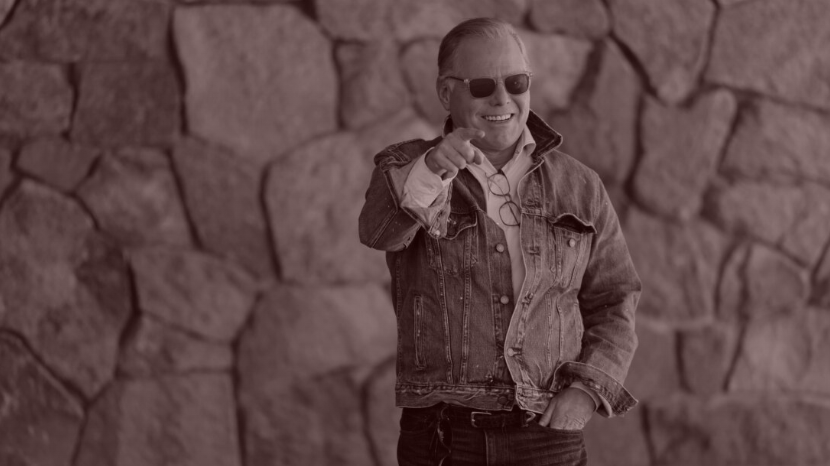
| There have been a couple intriguing developments across the pond pertaining to RedBird IMI’s bid for The Telegraph. Earlier this week, Axel Springer C.E.O. Matthias Döpfner fired on the Jeff Zucker-led bid in an interview with Semafor, arguing that the U.K. shouldn’t hand over its storied center-right broadsheet to Abu Dhabi-backed ownership. “There is a huge danger that these players do not have a value set of free and open societies... that they as media owners play a very unhealthy role,” he said. “It's very seductive... but the price you would pay... will be very high.”
The broadside from Döpfner—who, until recently, was also vying for The Telegraph—no doubt annoyed Zucker and Sheikh Mansour. Far more inconvenient, however, was the news this week that U.K. regulator Ofcom plans to demand access to RedBird IMI executives’ texts, emails, and WhatsApp messages as part of their review of the deal. (Of course, this is not the first time Zucker has been required to hand over his phone.)
In any event, all this is a reminder of the climate of opposition to this deal in the U.K., which doesn’t necessarily have any material effect on whether or not it goes through, but certainly complicates the narrative for Zucker and RedBird IMI in the event that they do win the asset.
Without dismissing Abu Dhabi’s motivations in global media, I still default to the position that this is more of a straightforward business deal than the critics suspect: an attempt by Zucker to get back into the media business by any means necessary. And, at present, the best available asset is The Telegraph, which, as I’ve noted before, is an already profitable and influential paper that can serve as a springboard to a larger international business. “Journalism is journalism,” my colleague Bill Cohan notes this week, “the rest is just a question of distribution.” Moreover, I’m not sure Mansour and the Emiratis really need a newspaper to wield influence in the U.K., or anywhere. The simplest explanation may be the right one: they’ve got the money (lots of money), trust Zucker’s acumen and ambition, and want to be along for the ride. |
|
|
|
|
FOUR STORIES WE’RE TALKING ABOUT
|
|
|
|

|
 |
|
|
|
Need help? Review our FAQs
page or contact
us for assistance. For brand partnerships, email ads@puck.news.
|
|
You received this email because you signed up to receive emails from Puck, or as part of your Puck account associated with . To stop receiving this newsletter and/or manage all your email preferences, click here.
|
|
Puck is published by Heat Media LLC. 227 W 17th St New York, NY 10011.
|
|
|
|