Welcome back to The Varsity. I’m John Ourand, back in D.C. and playing myself
into O.T.A. shape. After all, if the Steelers are paying 42-year-old Aaron Rodgers some $25 million for this NFL season, imagine what I’m worth?! Marchand, hold the crisp (not tart!) sancerre (for now…) and get me that creatine-and-peptide shake on the double!
Today, our legal expert Eriq Gardner is back on the field with a report on a lawsuit that could light up the pro tennis industry and have soaring implications from
Wimbledon to Roland-Garros and beyond. Eriq could probably charge $2,500 bucks an hour for these kinds of insights, or whatever Jeff Kessler is making these days, but the milk of human kindness pours through his veins and he’s agreed to include his brilliance within the normal Varsity bundle. Check out his work below to figure out where this transformative suit is headed.
Pod alert: Horizon Media honcho Adam Schwartz joins The Varsity on
Wednesday to review one of the most active TV upfront weeks in recent years. Schwartz, who oversees ad spending for a bunch of the country’s largest brands, has become one of the most important players in the space. Also, make sure to listen to yesterday’s episode: Jerry Silbowitz, the co-head of UTA’s sports media division, described the reverberations of the
creator economy in the space. In fact, more on that below…
Also mentioned in this issue: Nick Kyrgios, Rory McIlroy, Aaron Rai, Scott Van Pelt, Jim Dolan, Bill Simmons, David Duval, Larry Ellison, Pat McAfee, Lamine Yamal, Margaret Garnett, Rich Eisen,
Dave Portnoy, Zheng Saisai, Dan Primack, and more… |
The Brady Meter
PGA
Championship: Aaron Rai, -9
Grade: B
|
After all the complaints about CBS’s coverage of this year’s Masters—missed shots, obstructed views, the
Rory back nine glitch—I was eager to see how the network might rebound for the PGA Championship. After all, the CBS crew is at Augusta every year, and network producers know that course intimately. The PGA Championship, on the other hand, was being held on a course in suburban Philly that hadn’t hosted a pro tournament since 2018—a veritable lifetime ago in this industry.
For the most part, CBS matched the moment—especially given the leaderboard chaos on Sunday. The lack
of drama at the end, though, cut into the excitement. Unlike at the Masters, CBS producers caught all the relevant shots, and their skillfully deployed drones helped tell the story. Sure, there were some challenges: Viewers had to suffer through two more groups before Rai could be crowned; there were still too many times when viewers didn’t know where a ball ended up; and there were a couple gratuitous Nantz-gasms pertaining to Rocky. But those are minor
quibbles. In total, this performance marked a nice comeback for CBS’s golf production.
Also: Kudos to ESPN’s Scott Van Pelt and David Duval, who flawlessly and effortlessly called the weekend morning rounds on ESPN. Van Pelt was beyond comfortable and Duval seemed to have no filter—in a good way. |
- The
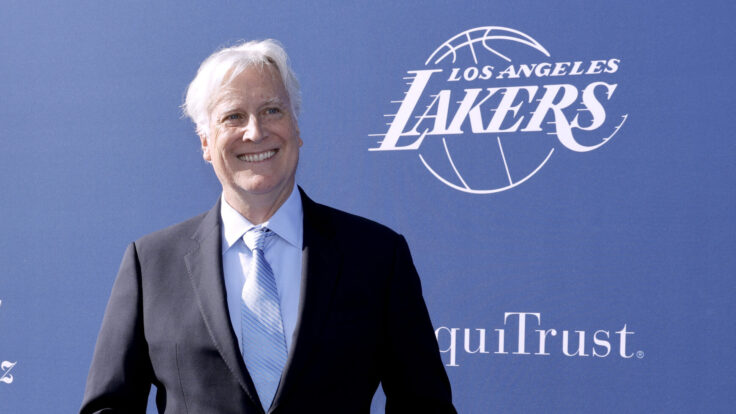
MSG split: Jim Dolan may be one of the least liked owners in the pro sports ecosystem, but he made a move today that may reverse that sentiment by making his partners and public market investors a lot of money. Dolan is spinning his MSG Sports into two separate entities—one built around the Knicks and the other around the Rangers, per S.E.C. documents filed Monday. Investors have been opining for years about how this sort of structure could unlock serious value for each
franchise, but particularly the Knicks—a long-suffering franchise that was incredibly valuable even as the team sucked for two decades and is now immensely valuable as it makes its second consecutive Eastern Conference Finals appearance. If the Celtics could trade for $6.1 billion, can you fathom the economic value of the Knicks, given its market dynamics? A Guggenheim report noted that the move will unlock value for each of the teams, “which have historically traded at significant
discount” compared to their intrinsic values.
- LIV’s Hail Mary: LIV Golf hired Ducera Partners to try to raise $250 million, telling prospective investors that the financially troubled league will become profitable within 20 months, per Dan Primack’s report at Axios. This sounds like a moon shot: Given that Saudi Arabia’s
Public Investment Fund is pulling its funding, LIV has to find new investors by October. LIV has also been telling prospective investors that there’s still a lot of potential money to come from “rising team values and a new media rights deal.” But, at least in the lucrative U.S. market, LIV’s tournaments have not drawn nearly enough TV viewers to justify a significant rights fee. I’ll take the under.
- Jerry Silbowitz pod: Friend of the pod
Jerry Silbowitz, the co-head of sports media at UTA, joined The Varsity on Friday to discuss the ever-changing landscape of the sports media creator economy—in particular, he cited Dave Portnoy and Barstool’s deal with Fox; Rich Eisen’s return to ESPN as a franchise partner via the NFL’s new equity deal with Bristol; and Netflix’s distribution deal with Bill Simmons and his Ringer network.
Ever the contrarian, I
noted that internet success doesn’t translate to cable or broadcast glory. Silbowitz, however, saw things otherwise. “I always thought it was so unfair the way people covered the success of Pat McAfee’s show on linear, because Pat never took a platform away, he only added a platform. He was adamant about serving the audience where they were historically accustomed to watching, but added a cable window,” Jerry told me. “So people say, ‘Oh, the ratings are down from First
Take,’ and I think that’s not really a fair statistic, because Pat’s show grew on all the other channels. We are in this in-between place where we have a variety of consumers watching content how they are accustomed to doing it, and they have a ton of choices. The success is the aggregate.”
|
And now for the main event… |
|
|
|
The French Open is underway, but the real action this week may be in a New York courtroom
3,500 miles away, where an upstart players union is making noise about the sport’s alleged anti-competitive, pay-suppressing practices. |
|
|
|
There was the French Revolution, and then there is whatever has been unfolding across big-money sports these
past few years: a rolling declaration of the rights of man—and athlete. Across collegiate sports, motor racing, and nearly every other corner of the sports industrial complex, the pattern is straightforward: First comes the antitrust lawsuit, then comes the renegotiation of the entire economic order.
Pro tennis has now entered its own age of revolt. The French Open begins today, but before a single ball is struck at Roland-Garros, the tournament has already become the backdrop for
what increasingly looks like a labor uprising. In New York federal court, leaders of the insurgent Professional Tennis Players Association have filed an emergency motion alleging that tournament officials denied them accreditation. The group, backed by players including Nick Kyrgios and Zheng Saisai, is now seeking a court intervention not only for the French Open, but Wimbledon as well. Without access, the PTPA argues, its representatives cannot monitor
conditions on behalf of players or protect members from being pressured behind closed doors into surrendering rights.
The fight traces back to the sweeping antitrust action that the PTPA launched in March 2025, which sought to fundamentally reshape the sport. At the center of the dispute is prize money—and, naturally, the players’ desire for more of it. Their argument is simple enough: In a world where Larry Ellison can pay $100 million for a
prestigious—but still second-tier—tournament like Indian Wells, why does tennis still have only four Grand Slams? The answer, according to the players, is coordinated restraint of trade.
The suit also attacks the ATP and WTA ranking systems, which the PTPA has argued operate like instruments of control. Under the current structure, players can lose standing not only for subpar play but due to injury, childbirth, death of a family member, and other circle-of-life events that might pull
them off the court for a sustained period of time. In short, the players have argued, they’d make more money and enjoy more autonomy if their professional leagues removed the restraints preventing tournaments from competing freely against one another and eliminated the ranking systems’ coercive leverage.
The immediate question is whether denying accreditation to the PTPA constitutes unlawful retaliation. The larger issue, however, is whether an American judge is willing to wade
into the governance of international tennis and actually do something about it. It’s one thing for a U.S. court to regulate an American league. It’s quite another to reach across the Atlantic and police red clay in Paris and manicured grass just outside of London.
The French Open and Wimbledon organizers—though notably not the Australian Open, which settled earlier this year and pledged cooperation with plaintiffs—are leaning heavily on that jurisdictional argument. In papers
filed today, they urged Judge Margaret Garnett to stay out of the mess altogether, contending that the connection to New York is simply too remote for an American court to interfere with accreditation decisions made overseas. They add the accreditation controversy involves PTPA staff, not the player-plaintiffs who are actually suing.
The PTPA has not yet responded, though its reply is expected shortly. And the contours of the argument are already visible from the group’s
opposition to the defendants’ broader motion to dismiss. Yes, Roland-Garros takes place in France and Wimbledon occurs in the U.K., but the business of tennis reaches deeply into the United States: giant outdoor viewing parties in New York parks; Wimbledon-branded strawberries-and-cream experiences and Pimm’s Cups sold stateside; and the roughly $650 million that TNT Sports is paying over a decade for U.S. broadcast rights to the French Open. This may be global tennis, but it is also undeniably
American commerce.
Since this arrives as an emergency motion, Judge Garnett will likely rule quickly. And while the dispute ostensibly concerns something as mundane as locker-room credentials, the decision may reveal far more about where the broader antitrust case is headed—and which side is closing in on match point. |
Speaking of legal disputes that travel quite literally, consider the predicament facing Spain as its national
team, fronted by teenage sensation Lamine Yamal, prepares for next month’s World Cup matches in Atlanta. This, too, has become a jurisdictional headache, though of a different kind.
Spain is staring at a $46.6 million arbitral award stemming from the wreckage of the global financial crisis, when the government rolled back renewable-energy subsidies after encouraging investors to pour money into green projects. One of the affected firms, private-equity-backed Blasket
Renewable, has spent years chasing payment around the world, including through U.S. courts. The dispute has now reached the U.S. Supreme Court, where Spain has asked the justices to clarify whether foreign sovereigns enjoy immunity from these kinds of collection efforts. The court has invited the Trump administration to weigh in.
Blasket, meanwhile, has no intention of waiting. The firm is pursuing aggressive discovery in search of attachable assets, and that effort has
now swept up Spain’s national football team. These subpoenas, targeting U.S. vendors like Hilton and Adidas, seek details including where the Spanish squad plans to stay in Atlanta, the travel arrangements of accompanying government officials, and even endorsement deals involving players. Spain has moved to quash this effort, arguing that the football federation operates independently from the government and that the discovery effort amounts to a harassing fishing expedition that could
jeopardize player safety. Blasket has countered that the federation is hardly independent in practice and that public money may be helping finance the U.S. trip. If so, the team and its cashflow becomes fair game for asset discovery.
A federal judge in D.C. has ordered the parties to meet and confer before returning later this month for a discovery hearing if no compromise has emerged. Which means that while four dozen national teams prepare for a World Cup stretching across the U.S.,
Mexico, and Canada, more than a few foreign ministries are probably wondering whether a trip to America also means wandering into the blast radius of U.S. judgment enforcement. |
Thanks, Eriq. See you all tomorrow.
John |
|
|
|
Join Puck’s chief political columnist, John Heilemann, as he roams the corridors of power and influence in America on this
twice-weekly interview show, taking you beyond the headlines with the people who shape our culture: icons and up-and-comers, incumbents and insurgents, moguls and machers in the overlapping worlds of politics, entertainment, tech, business, sports, media, and beyond. The conversations are rich and revealing, unrehearsed and unexpected… and reliably impolitic. A Puck-Audacy joint, new episodes drop every Wednesday and Friday. |
|
|
|
An essential, insider-friendly Hollywood tip sheet from Matthew Belloni, who spent 14 years in the trenches at The
Hollywood Reporter and five before that practicing entertainment law. What I’m Hearing also features veteran Hollywood journalist Kim Masters, as well as a special companion email from Eriq Gardner, focused on entertainment law, and weekly box office analysis from Scott Mendelson. |
|
|
|
Need help? Review our
FAQ page or contact us for assistance. For brand partnerships, email ads@puck.news.
You received this email because you signed up to receive emails from Puck, or as part of your Puck account associated with {{customer.email}}. To stop receiving this newsletter and/or manage all your email preferences, click here. |
Puck is published by Heat Media LLC. 107 Greenwich St., New York, NY 10006 |
|
|
|
|