 |
|
Welcome back to In The Room. I’m Dylan Byers.
|
|
Greetings from Washington, where I’m in town for source meetings, and, as chance would have it, now find myself en route to a welcome party for new Washington Post C.E.O. Will Lewis, hosted by the universally revered Patty Stonesifer and the paper’s erstwhile publisher Don Graham. This trip to the nation’s capital has been a study in contrasts: while listening to Post sources express cautious optimism for their beleaguered institution, my phone has been buzzing with dismal news from back home, where The Los Angeles Times appears to be in total free fall. I couldn’t help but juxtapose these two billionaire-backed mediacos—one of which hopes to be moving through a painful resizing and the other of which, candidly, seems like it’s got an unsavable alchemy of model, owner, mission, and market. And so, in tonight’s email, a tale of two city papers…
But first…
🎭 Jon Stewart returns: Jon Stewart will return to Comedy Central’s The Daily Show as executive producer through the 2024 election and as host of the Monday night broadcast—very welcome news for Shari Redstone’s Paramount, as well as the broad constituency of angst-ridden liberals seeking solace in this moment of national uncertainty. Comedy Central intends to play up Stewart’s reputation as a trusted newsman at a time when Americans’ trust in the media is at an all-time low.
Of course, news commentary and satire have changed markedly since Stewart left the show in 2015, so his success is by no means guaranteed. In any event, I’m bullish. His first show is on February 12, the day after the Super Bowl. You can be sure that CBS, which conveniently has the big game this year, will market the hell out of it.
A few knee-jerk observations on this move… 1. You can go home again. As one veteran media executive noted, the television industry is littered with marquee talents “who never, ever get back to their first and greatest glory.” Katie Couric, Bryant Gumbel, Brian Williams, Letterman, Leno, Conan, etcetera. But after a few years in the wilderness—a few swings, a few failures—Stewart is being given the rare chance to return to his former glory at the exact moment when, as the veteran exec noted, “his core audience craves his singular voice.” 2. On that note, Stewart probably didn’t need much convincing to come back and probably won’t need much convincing to stay, either. Indeed, he may continue to E.P. and even host the show well past 2024, especially if Trump wins the election. 3. Mondays are now Must-See TV for liberal audiences, and I can’t help but think Stewart & Co. are attempting to draft off the Maddow & Psaki lead-in from MSNBC.
For those interested in more on the 2024 Stewart surprise, my Puck partner Peter Hamby and I will be discussing all this and more on Thursday’s edition of The Powers That Be, available here.
💥 Abby vs. Olbermann: Speaking of MSNBC, and yesteryear talents who failed to recapture their former glory, Keith Olbermann leveled a broadside against CNN’s Abby Phillip last night that bears mentioning. On a panel, Phillip appeared to endorse Nikki Haley’s view that “nobody wants Trump, nobody wants Biden,” and “the first party to let go of their 80-year-old might be the victor.” On Twitter/X, Olbermann called on CNN to “address the reality that [Phillip] has been an absolute disaster,” and Phillip shot back: “Or, you can come to terms with the reality of your irrelevance and stop being a nasty social media troll. But that’s entirely up to you.”
Such adolescent squabbles aren’t usually worth noting here, but this one touched on a few themes familiar to readers of this email. First, Abby’s thesis about Olbermann is unequivocally correct, as evidenced here. Olbermann’s thesis about Abby’s tenure on CNN misses the mark, but grazes a broader truth that CNN C.E.O. Mark Thompson probably does need to address. Prior to Thompson’s arrival, CNN made Phillip and Kaitlan Collins pillars of the primetime lineup. Both of these thirtysomething journalists are very talented in their respective areas—Phillip as an insightful and refreshingly soft-spoken political analyst, Collins as a relentless interviewer and hard-charging correspondent—but neither arrived in primetime with anything near the typically requisite experience in the anchor chair. That may explain why, as the New York Post notes today, CNN’s primetime viewership ranked 10th among cable channels last week, behind The History Channel and a network called “INSP” that airs old Westerns.
Thompson has said that this newish primetime lineup “still needs time to bed in.” Moreover, he’s focused on transforming CNN into a digital-first business, and recognizes that primetime ratings are decidedly not the coin of the realm in the smartphone era. (He also probably doesn’t want to capitulate to a culture of ratings-rubbernecking Chicken Littles. Good luck, Mark…)
Nevertheless, many of the network’s linear natives do not understand his reluctance to fix the primetime lineup. Notably, Phillip’s headline-generating remark was made in her capacity as an analyst, not an anchor, and watching her on the panel—and seeing her admirably stand up for herself against Olbermann—I couldn’t help but wonder if Thompson would also be doing his own journalists a favor by returning them to the roles in which they can best exhibit their core competency.
👏 The slippery pole: Congratulations (and good luck!) to Brad Stone, the Bezos and Amazon chronicler who was today named executive editor of the now monthly Bloomberg Businessweek… and to Wikimedia Foundation chief Katherine Maher, who has been appointed C.E.O. of NPR.
🤨 And finally, the most stupefying thing I read this week…: As readers of this email well know, the inexorable decline of linear television is a preoccupation of mine, primarily because it’s a near-chronic preoccupation for the media executives—Bob, Brian, Zaz, Lachlan, Shari, etcetera—who are navigating the transition from the cable-bundle business model to streaming and mobile. One casualty of that decline—and another occasional preoccupation of mine—is cable news, a proud and self-important industry where the pangs of the Great Diminution are felt perhaps most acutely.
I therefore found myself contorting into an eyebrow-raised-spit take when I saw the latest missive from Politico media scribe Jack Shafer, declaring: “The Predicted Death of Cable News Is Dead Wrong.” His thesis: “Cable news possesses phenomenal staying power” because the older generations that make up cable news’ core audience are more actively engaged in politics. (The headline was later changed to: “Old People Love Cable News — and They Vote.”) Because of their engagement, Shafer argues, cable news will remain politically relevant, on linear or streaming, and “may well outlive its obituarists.” (Including, presumably, yours truly.)
I’ve long admired Shafer, with whom I worked at Politico a decade ago, and often find his nonconformist perspectives on the news industry refreshing. But this hypercontrarian spasm struck me as rather misguided, and ill-informed about the economic forces governing cable news’s past, present, and future.
First, older people may account for the bulk of the cable news audience, but they don’t pay its bills. Networks like Fox News, CNN, and MSNBC draw their revenue from carriage fees and advertising. As the pay TV audience continues its decline—from 85 percent of American households a decade ago, to just more than 50 percent today—these fees will no longer sustain the industry’s hefty talent salaries and production and newsgathering budgets. As for advertising, viewers above the age of 54—the vast, vast majority of the cable news audience—are highly undesirable to ad buyers and literally do not factor into the rates or CPMs charged for cable news ad spots. Moreover, advertisers dislike divisive content, and they abhor insurrectionist-adjacent content. If a foreigner watched a week of primetime programming on any of America’s top three cable channels, they’d walk away convinced the entire country suffers from erectile dysfunction and obesity.
Second, these older audiences, obviously, won’t be around forever. Needless to say (seriously, I can’t believe I have to say this), new technologies and platforms have given audiences—and particularly younger audiences—new means by which to consume the news. (And, I also can’t believe I have to say this: Google and Facebook and the streamers have absorbed the vast majority of the ad market.) And yet, Shafer seems to believe that, upon reaching the winter of their life, the audiences who today consume news via social media and mobile apps will find their way back to cable. “While it’s true the older demographic’s days are numbered,” he writes, “nature has a way of replenishing its ranks by turning people in their late 40s into cable news-friendly senior citizens.”
No, cable news isn’t going to evaporate. Like the radio or magazine industries, it will muddle along, become increasingly less profitable and enjoyable, and hopefully vector toward some reinvention on new digital platforms, likely led by a new generation of proprietors. But the business will get smaller and smaller as other platforms grow in importance and impact and vitality. And in order to remain relevant and competitive, the TV networks will need to pursue new multifaceted distribution models that cater to new consumer behaviors on new platforms—just as The New York Times migrated from a print newspaper business to the multifaceted mobile-social-newsletter-podcast-puzzles-and-consumer services business it is today. Indeed, that is precisely why Zaz hired Thompson, the former Times C.E.O., who is now attempting to transition CNN away from the linear business that he, too, knows is in decline. Of course, this lack of situational awareness may be the most baffling aspect of Shafer’s argument.
As brands, CNN and Fox and MSNBC will certainly continue to exist for the foreseeable future. But their longevity will depend on their pursuit of new format innovations, distribution methods, and business models, and their ability to wean themselves off of the very medium Shafer sees as somewhat impervious to broader technological and macroeconomic forces—despite all available evidence to the contrary.
And now, speaking of legacy media….
|
 |
| A Tale of Two City Papers |
| A talmudic reading of the agony and anxiety bubbling around the L.A. Times, and the cautious optimism brimming from Will Lewis’s post-layoffs Washington Post. |
|
|
|
| This week, as I was meeting with Washington Post sources in the nation’s capital, my phone kept buzzing with dismal—indeed, funereal—updates from my own hometown paper, The Los Angeles Times. Two weeks after the abrupt departure of executive editor Kevin Merida, and days after the subsequent evacuation of top editorial executives Shani Hilton and Sara Yasin, the paper was now embarking on a new round of layoffs targeting roughly 115 journalists, or 20 percent of the newsroom—and doing so in unpleasant fashion, with reporters and editors being informed of their terminations via Zoom, then immediately locked out of their email and Slack accounts.
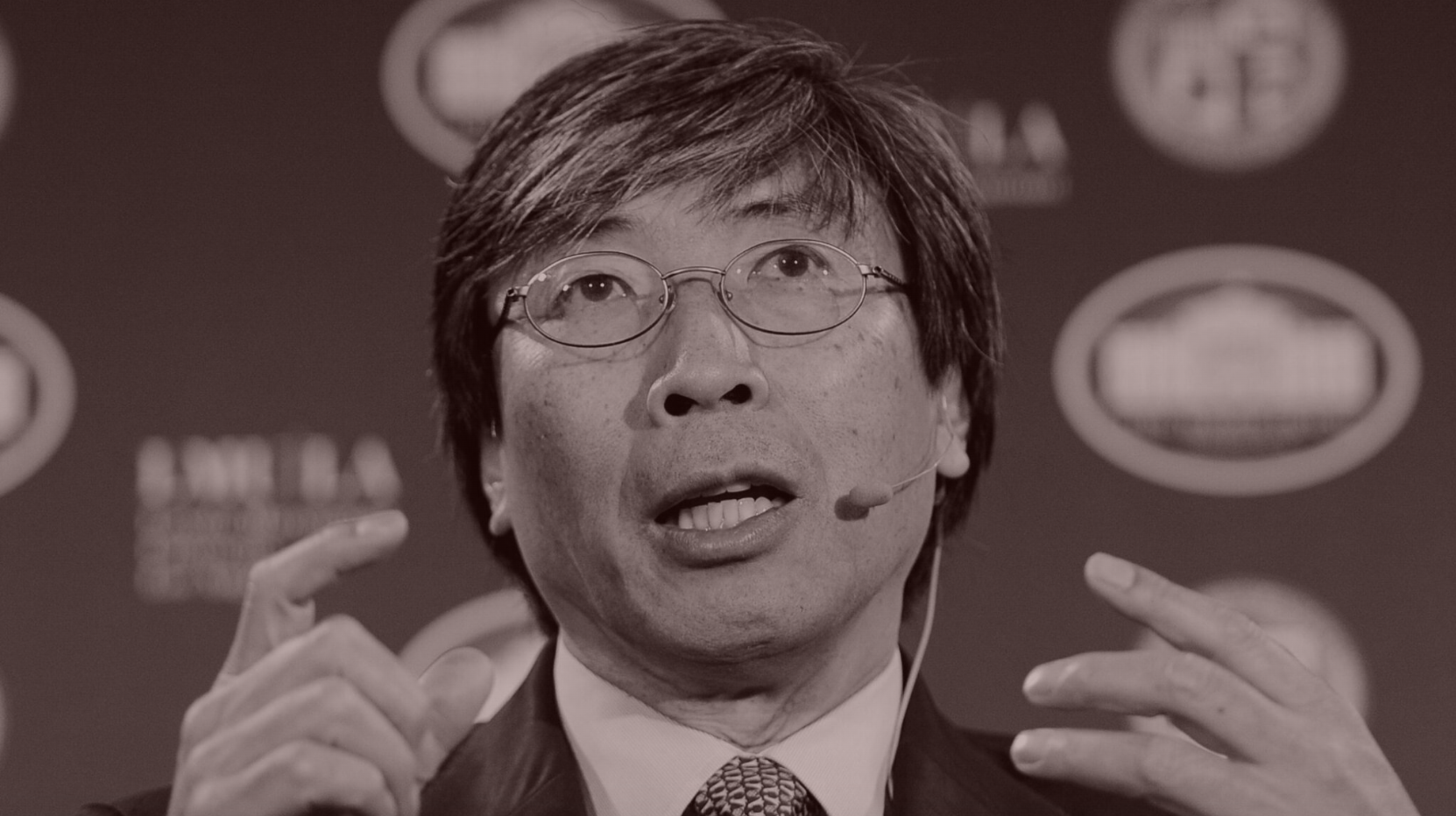
These cuts, staggering as they were, belied the true extent of the damage the paper has endured under Patrick Soon-Shiong, the billionaire doctor and scientist who acquired the paper and some affiliated outlets from Tribune in 2018 for $500 million. In the last year, the L.A. Times has laid off nearly a third of its journalists to counter roughly $40 million in annual losses. Notably, the most recent round of cuts has targeted many of the younger, digitally savvy journalists who were brought in to reinvigorate a beleaguered paper that had largely drifted into national—and arguably even local and regional—irrelevance.
On one level, the chaos at the L.A. Times is just the latest dark moment in a dark time for American news media: CNN, NBC News, ABC News, and ESPN have all endured mass layoffs recently amid linear television’s inexorable decline. News Corp. slashed more than a thousand jobs last year. Buzzfeed News shuttered, Vice Media filed for bankruptcy, Vox Media has endured multiple rounds of cuts and halved its valuation. The New York Times, one of the industry’s rare success stories, took stock of this “especially grim” moment in a quadruple-bylined item on Wednesday. Four reporters on one obvious story, itself, was a metaphor for the Times’ strength and the industry’s fractured model.
Sadly, there’s been more bad news. Both Condé Nast and Time announced layoffs in recent days, while Sports Illustrated has been effectively disemboweled. Pitchfork was just folded into GQ, shedding staff and identity along the way. G/O Media, itself always a halfway house of unloved brands, is now shopping its portfolio for parts. I’ve even heard that the Journal is about to make significant layoffs in its D.C. bureau. Alas, this is what happens when companies that rely on advertising inevitably miss their numbers in a post-ZIRP economy.
Of course, The Washington Post has epitomized this dark age. Facing a $100 million budget shortfall after years of subscriber churn and diminishing ad revenue, Jeff Bezos replaced his longtime publisher and C.E.O. Fred Ryan with interim leader Patty Stonesifer. Stonesifer quickly and judiciously balanced the books with 240 voluntary buyouts and then appointed Will Lewis, the longtime Murdoch lieutenant and former Dow Jones C.E.O. and Wall Street Journal publisher, as its new C.E.O., with a mandate to return the paper to profitability and, perhaps, restore some of the swagger from the Marty Baron era, when Trump angst fueled 50 percent year-over-year subscriber growth, and Bezos audaciously saw the Post supplanting the Times as America’s paper of record.
Some observers have lumped the Post’s and the L.A. Times’ concurrent struggles together. The Wall Street Journal sees evidence of “billionaire’s clipped ambitions” in the news space, while Semafor declared that the “the billionaire era in news is fizzling.” To be clear, the delta between Bezos’s $177 billion net worth and Soon-Shiong’s $5.5 billion puts them in decidedly different stratospheres. (The Post is truly parking meter money for Bezos. The Times sale represents 9 percent of its owner’s net worth.) Nevertheless, sure, the Post and the L.A. Times would appear to be in similar straits: proud legacy newspapercos in major markets, with wealthy private owners, staggering annual losses and, as of yet, no clearly articulated strategy for digging themselves out of their respective morasses—if one even exists. |
|
|
| As sad as the recent fates of these papers may be, they are hardly a surprise. Without oversimplifying egregiously, a familiar paradigm is playing out here, and it’s one that first surfaced in the original subscription media space: streaming. Nearly a decade after Netflix became the first mover in SVOD, the rest of the economy’s largest media companies came upon the collective epiphany that they also had to grow and evolve or face the potentially fatal consequences. Again, without over simplifying an already familiar narrative, everyone withdrew their content from other channels, piled into streaming, and focused on the laborious and expensive task of hyper-growth.
Years later, following steroidal investments and after some of the media prophecies of the Covid era proved false, many of these businesses were faced with another chilling realization. Their mega-investments had turned their P&Ls upside down, and yet they either still weren’t big enough or they had become too big to pivot to a different model. Meanwhile, consumers were faced with too much choice, a fair amount of confusion, and some not-great value propositions. There were some winners, to be sure, but many losers.
The fortuitous success of Mark Thompson’s New York Times, an early mover in the news subscription space, seemingly convinced every other once-proud so-called newspaper to increase its investment in talent, engineering, marketing, and product and go all-in on the same path. For a time, it worked. But after the haze of Trump faded, even rabid news consumers were laden with subscriptions to more news outlets than they could realistically consume—most of which, by the way, covered the same familiar mix of politics and opinion, and rarely as well as The New York Times, itself. The heightening churn rates during the past few years reflect, on some level, consumers figuring out which publishers were their Netflixes versus their AMC+s.
The L.A. Times and the Post are struggling to adapt to an industry that, like streaming, has largely become an economy of scale. Unless you’re playing at the New York Times level, it’s become near-impossible to sustain a business with national ambitions. The Post, which currently has 2.5 million digital subscribers and continues to produce award-winning politics and policy journalism, may still be able to play in this arena given the centrality of Washington in the national news cycle. The L.A. Times, which has just 550,000 digital subscribers, and has largely become an afterthought outside of its home market, almost certainly cannot. And it’s also got, in Soon-Shiong, a pissed-off owner who poured a half-billion into an asset and doesn’t want to throw good money after bad—legacy or moral high road be damned.
And yet to attribute these papers’ struggles to macroeconomic forces alone is to ignore the strategic ineptitude that got them here, as well as the opportunities still available. To wit, several sources I spoke to at the L.A. Times this week were quick to note that Soon-Shiong never even appointed a publisher-C.E.O. to run the business. Instead, he appointed an editorial leader (Merida, now gone), a revenue officer (Anna Magzanyan, who also served as his chief of staff), and a president and chief operating officer who controlled the purse strings (Chris Argentieri). All three reported to Soon-Shiong, who effectively acted as C.E.O.—even as he spent most of his time involved in other pursuits, in health care, civic leadership, etcetera. In the process, no one seems to have articulated a coherent strategy for revenue growth, while divisional managers were deprived of budgets and saw their efforts to push through new initiatives hampered by needless bureaucracy. Soon-Shiong is now seeking a replacement for Merida, but there is no indication that he intends to address the larger structural problem.
The Post endured its own lack of strategic vision in the latter Fred Ryan years, of course, as it failed to pursue an ambitious digital growth plan or diversify its product, à la the Times. As a result, subscribers churned, engagement plummeted, and advertising revenue dwindled, all while disruptors like Politico, Axios, and Punchbowl proved out viable models. But the transition under Stonesifer and the arrival of Lewis has given many Post staffers reason to be at least cautiously optimistic.
In the days ahead, I’m told, Lewis will lay out a broad strategic vision for how the paper can grow subscriptions at least modestly in the coming year, principally based on better packaging and distribution of its core journalistic offering of politics, policy, and investigations. He has hired a new growth officer—Karl Wells, whom he worked with at the Journal and had a brief stint at The Information—to replace Alex MacCallum, who decamped to CNN. On the culture front, his early moves to break down silos in the newsroom and entertain perspectives from employees across the organization—“Say It” meetings, they’re called—appear to have buoyed morale in a newsroom that has been reeling from the recent buyouts.
But morale, while critical, isn’t the real problem. If Lewis wants to say the truth out loud, he needs to fix the company’s model. After all, back of the envelope math suggests that eliminating 240 employees alone won’t fill the $100 million hole in the operating plan, not even close. In the Lewis playbook, the “Say It” exercises are intended to be followed by concrete efforts to address existing challenges (“Fix It”), launch new products (“Build It”), and, finally, bring them to scale (“Scale It”). It’s a tall order, and there’s a long way to go. |
|
|
|
| FOUR STORIES WE’RE TALKING ABOUT |
 |
|
 |
|
 |
| NYT’s Leak Saga |
| Anticipating the denouement of a legal soap opera. |
| ERIQ GARDNER |
|
 |
|
|
|

|
 |
|
|
|
Need help? Review our FAQs
page or contact
us for assistance. For brand partnerships, email ads@puck.news.
|
|
You received this email because you signed up to receive emails from Puck, or as part of your Puck account associated with . To stop receiving this newsletter and/or manage all your email preferences, click here.
|
|
Puck is published by Heat Media LLC. 227 W 17th St New York, NY 10011.
|
|
|
|