 |
|
Welcome back to In the Room. I’m Dylan Byers.
|
|
Happy February. I’ll be back and forth between Los Angeles and New York this month—a few parties, a few dinners, several source meetings and, of course, my Puck partner Bill Cohan’s highly anticipated, invitation-only The Powers That Be: Live event with Goldman Sachs C.E.O David Solomon at the Central Park Club. If you’re in town and it’s been a while, or if we haven’t yet had the chance to meet in person, please don’t hesitate to reach out. (Just hit reply to this email.)
In tonight’s issue, fresh reporting on Forbes’ return to the auction block. After last year’s $800 million offer fell through, the Hong Kong-based parentco is now marketing the storied business magazine not just as a survivor of legacy media, but a true success story. But there’s a catch.
But first …
🥊 Iger’s fighting words: Bob Iger’s proxy battle with Nelson Peltz & Co. grows more contentious by the day. Six weeks after Peltz enlisted ex-Disney C.F.O. Jay Rasulo to join his bid for board seats—and co-author a scathing indictment of company management—Iger and the Disney board are firing back in pithy fashion. In a new letter to shareholders, the board writes, “Mr. Peltz brings no media experience and has presented no strategic ideas for Disney, while Mr. Rasulo’s perspective is stale given he left Disney in 2015 and has not held any executive positions in the industry since.” As one media exec texted me, “This is tackle, not touch.” What’s next? Peltz now intends to put forward detailed strategic recommendations later this month, including a pitch to bundle ESPN+ with Netflix.
🔥 The Finkelstein fuck-up: One day after shutting down The Messenger and laying off its 300 journalists, Jimmy Finkelstein faces a class-action lawsuit from several staffers who allege that he violated New York’s Worker Adjustment and Retraining Notification Act, or WARN Act, which requires employers to give at least 60 days’ notice of termination. The journalists are now seeking proportional compensation—which, given their above-market salaries, would likely tally out to a pretty hefty bill, and perhaps a test of the company's insurance policies.
Meanwhile, The New York Times’ Ben Mullin reports that Finkelstein’s last best hope for emergency funding was an acquisition by The Los Angeles Times, which is itself in free fall. Patrick Soon-Shiong, the Times’ owner, may have been at least momentarily intrigued by the idea of using The Messenger’s clickbait strategy to drive traffic back to his beleaguered paper. But Soon-Shiong, who has had a painful time stewarding his asset, was likely too battle-scarred to take the bait.
🗞️ Tough day at WSJ: The Wall Street Journal has finally implemented the long-anticipated layoffs in its Washington bureau that I previewed last week. On Thursday, in a meeting lasting all of five minutes, managing editor Liz Harris offered a curt summation of the restructure and told staff they’d receive emails notifying them of their termination. (When Harris declined to take questions, a staffer shot back: “Hope you had a good time in Davos.”)
At least 16 reporters and several editors were laid off, including Brody Mullins, a Pulitzer winner, and Ted Mann, who led the paper’s reporting on Chris Christie’s Bridgegate scandal, and is married to the Times’ Annie Karni. In a subsequent email, WSJ executive editor Emma Tucker announced that the restructured bureau would focus on “politics, policy, defense, law, intelligence, and national security,” while all other D.C.-area beats (business, local, etcetera) would end. On Friday, Tucker told staff: “This isn’t about cost-cutting, this is about making sure we’ve got the right structures in place… to make sure we’re fit for the future.”
🎙️ Striking gold in Podland: Spotify is renewing with Joe Rogan in a deal worth as much as $250 million, per WSJ, while SiriusXM has signed a three-year, $100 million-plus deal for SmartLess, the hit interview podcast from Jason Bateman, Will Arnett, and Sean Hayes. Interestingly, both deals are only semi-exclusive: Rogan’s new multiyear deal allows him to distribute his show on other platforms, including YouTube, creating additional revenue streams. The SmartLess deal is a little more restrictive: SiriusXM will not only get first run of new, ad-free episodes before they appear on other platforms, but it will also become the exclusive archive for older episodes, which will disappear from Spotify entirely.
|
 |
| Capitalist Tools |
| Forbes, which is now up for auction one more time, has had a fascinating afterlife since the family sold their control. And it might be a harbinger for some legacy brands, but for one pesky detail. |
|
|
|
| Last year, the Russian investor and oligarch Magomed Musaev was caught on tape bragging about what he described as a stealthily executed media acquisition: “I just bought global Forbes,” he told associates on recordings obtained by The Washington Post. Technically, of course, he hadn’t, and things were a little more complicated. And they were about to get even more complicated, too.
Days earlier, Austin Russell, the 28-year-old American entrepreneur and C.E.O. of Luminar Technologies, an autonomous vehicle software firm, had announced that he and a group of investors were buying an 82 percent stake in Forbes Global Media for a whopping $800 million—more than three times what Jeff Bezos paid for the Post, and more than four times what Marc Benioff paid for Time. Musaev and Russell were close: Musaev had helped provide seed funding for Luminar, and he had personally brought Russell into the consortium that planned to buy the storied business magazine. On the tapes, Musaev claimed Russell was merely “the face” of the transaction and salivated over the influence that his own control of Forbes would confer: “When you have in your hands the key to the most authoritative global brand,” he said, “this key will give me access to anyone.”
Musaev’s estimation of Forbes’ influence seemed perhaps a tad rosy or anachronistic. The century-old business magazine and once-authoritative “capitalist tool” that B.C. Forbes and his son Malcolm had used to wield power in the mid-20th century had long since been sold and resold and transformed into something else entirely, and somewhat beyond recognition. Indeed, it appeared to have been a long and slow descent, even by the standards of the legacy magazine industry.
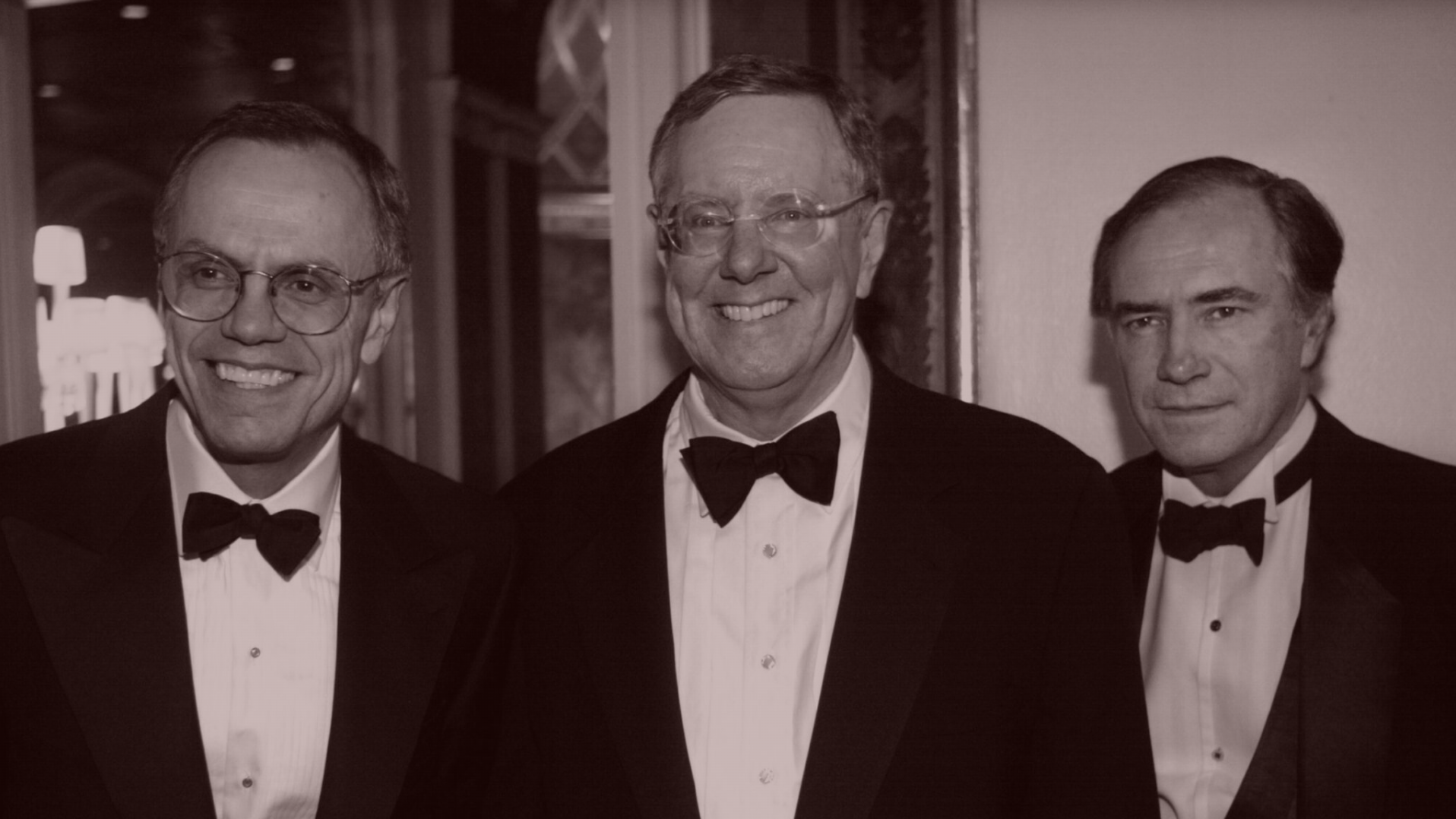
Steve Forbes, Malcolm’s son, had used the capitalist tool as a platform for his misbegotten, Connor Roy-style political fantasies, and his editor’s letters used to feature, without irony, listicles of his favorite restaurants. Later-stage Forbes became a strange bird. On one hand, its devilishly opportunistic innovation of the once-controversial native advertising business helped fuel the ascent of Meredith Kopit Levien, who would later become the head of advertising at The New York Times Company and now reigns as C.E.O. On the other hand, Forbes leveraged the cringeworthy tactic of contributor networks to achieve super-scale, and its 30 Under 30 lists tested the limits of gimmick elasticity. Anyway, these were dark days for publishing, and it was sort of extraordinary that Forbes continued to coast on the fumes of the sway it once held in corporate suites. The family sold its majority stake in 2014.
The Forbes empire, now under the control of Integrated Whale Media Investments, a horrifically named Hong Kong-based private investment firm, is really three different businesses: a shell of the once-illustrious media asset, now best known for ranking the world’s billionaires, valuating sports teams, and hyping overachieving twentysomethings (Elizabeth Holmes, Sam Bankman-Fried, Martin Shkreli…); an events and licensing arm; and a fast-growing financial advisory service (Forbes Advisor) and e-commerce site (Forbes Vetted), where the growth happens and the real money gets made.
In essence, Forbes today is NerdWallet plus Wirecutter plus brand extensions, but with the imprimatur of a legacy media brand that was once synonymous with wealth. (To some extent, with less success, Authentic Brands Group, is running a similar playbook with Sports Illustrated.) It’s a beast that the Forbes family may have never imagined, but the pivot to services and e-commerce at least aligned with the broader shifts in digital marketing. Unlike many of its midsized media peers, it still makes good money.
In any event, Musaev and Russell didn’t get the keys to the Forbes kingdom. In the wake of the Post report, the Committee on Foreign Investment in the United States, or CFIUS, found that Russell was “masquerading as the lead buyer” while in fact serving as “a conduit for larger foreign investors,” including the Sun Group, which had ties to the Kremlin, like Musaev himself. In November, Russell missed the closing deadline for the deal due to fundraising challenges, and the whole thing fell apart. |
|
|
| Now, inevitably, Forbes is back on the market. In December, I’ve learned, Integrated Whale began soliciting potential buyers by opening up its data room and publishing a prospectus detailing its 2022 financials: $285 million in annual revenue and $50 million in net income, and an annual earnings growth forecast at 25 percent. According to this rendering of the financials, Forbes isn’t merely a survivor of legacy media, it is a true success story—and perhaps a harbinger that U.S.-centric media brands can have a profoundly monetizable afterlife in overseas markets. It’s hardly the most authoritative global brand, but at least the purchase price began to make sense.
I’m told that several potential buyers have taken a look at Forbes, including Mathias Döpfner’s Axel Springer, which held some early-stage conversations but ultimately passed. Presumably, a more logical buyer might be a firm like Red Ventures, which owns CNET and Bankrate, or Dotdash Meredith, which owns People, Life, and Investopedia, though the multifaceted nature of the Forbes Global Media business model might make it an outlier in Barry Diller and Neil Vogel’s operation.
Unfortunately, there’s a rub, or what one source with knowledge of the deal described as “a poison pill.” It turns out Forbes only owns about 40 percent of its Advisor and Vetted businesses, which are collectively known as Forbes Marketplace. The rest is owned and controlled by a consortium of investors, including Marketplace and Advisor C.E.O. Ash Rahimi. And so, per the terms of the deal, whoever buys Forbes Global Media will in fact be only a passive investor to the primary growth engine. Unless, of course, the Marketplace consortium buys out the Marketplace business, which I’m told is a possibility.
A decade ago, the likes of McKinsey and BCG made a small fortune going into magazine companies and having their armadas of obnoxious business school graduates suggest seemingly absurd ways in which these entities could monetize the long tail of their brand equity. Some executives listened, and yet didn’t execute the strategies all that well. Meanwhile, others did nothing and either closed titles or shrunk them to oblivion or, in other cases, sold them at a distressed price to a billionaire. Forbes, for all the player hating that surrounds it in the industry, actually did change. And whatever Integrated Whale (again, what a horrific name) gets for it, you can imagine that there are a few billionaires dreaming up kooky extensions for their own legacy assets, which make about a quarter of that revenue. |
|
|
|
| FOUR STORIES WE’RE TALKING ABOUT |
 |
| Lord Byron |
| Inside Allen’s lofty $14.3B overture for Paramount Global. |
| MATTHEW BELLONI & ERIQ GARDNER |
|
 |
| Nowhere to Ronna |
| News and notes from the R.N.C.’s winter gathering in Vegas. |
| TARA PALMERI |
|
 |
| Some Like It Trott |
| A character sketch of Warren Buffett’s favorite banker. |
| WILLIAM D. COHAN |
|
 |
| Jimmy’s Quibi |
| On The Messenger’s tragic and predictable collapse. |
| DYLAN BYERS |
|
|
|

|
 |
|
|
|
Need help? Review our FAQs
page or contact
us for assistance. For brand partnerships, email ads@puck.news.
|
|
You received this email because you signed up to receive emails from Puck, or as part of your Puck account associated with . To stop receiving this newsletter and/or manage all your email preferences, click here.
|
|
Puck is published by Heat Media LLC. 227 W 17th St New York, NY 10011.
|
|
|
|