 |
|
Good evening, and welcome back to In The Room.
|
|
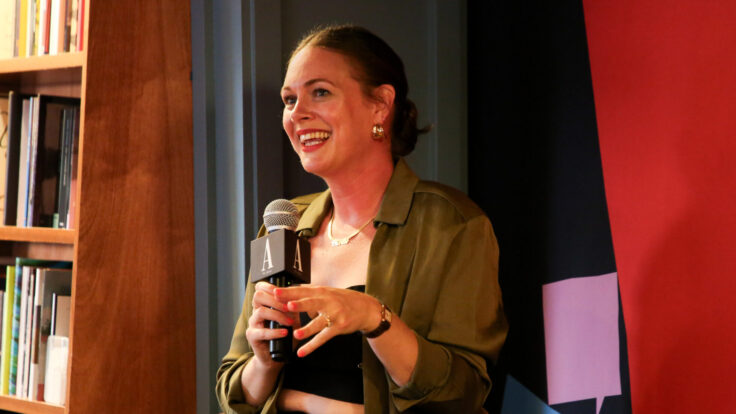
I’m en route to Cambridge for the Harvard Shorenstein Center’s annual fall gathering, where I’ll be joining Puck’s very own Peter Hamby and others for a panel on media and the 2024 election. If you’re in town for the event, drop by and say hello.
In tonight’s email, new intel on a Washington Post C.E.O. finalist, the Fred Ryan clean-up job, and a little CNN color.
|
 |
| A New Bezos Contender & More CNN Tea |
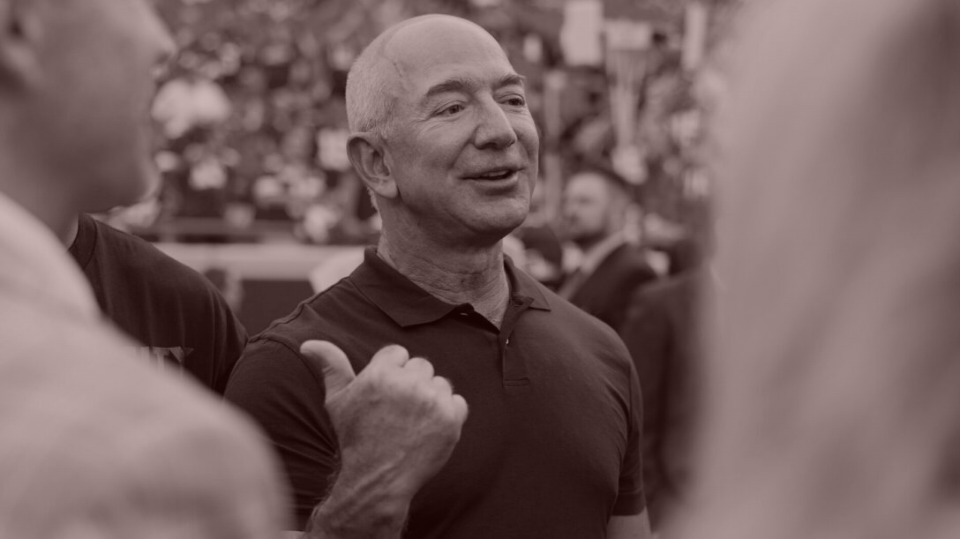
| Jeff Bezos is zeroing in on a new leader for The Washington Post, and it’s not one of the usual suspects. Plus, some news about the first days of the Mark Thompson era at CNN. |
|
|
|
| On Tuesday, Patty Stonesifer, the interim chief executive of The Washington Post, announced that the company would be cutting 240 positions, or roughly 10 percent of the staff, through voluntary buyouts. Her memo landed like a gut punch to Post staff and the broader news media industry, which is girding itself for the annual cost-cutting season that arrives every fall, sure as pumpkin spice lattes and autumn leaves, especially amid the post-Trump, post-ZIRP era.
Indeed, itinerant ABC News president Kim Godwin, who cut staff just over six months ago, will almost certainly be forced to do so again as part of a broader effort by Disney to fundamentally transform its business, I’m told—perhaps a sign of an impending sale, but probably merely a reflection of acute financial distress. At Condé Nast, C.E.O. Roger Lynch’s newly announced restructuring resulted in the departure of entertainment president Agnes Chu, and portends further staff reductions down the line. (Lynch noted in an all-hands memo that a full editorial restructuring will be announced later in the year—a statement which is sure to unnerve everyone from now through Thanksgiving.) Alas, there’s really only one way to cut costs in this business, and it isn’t via the T&E.
The Post, of course, is a bit of an outlier in this landscape. It is not facing the terminal decline of the linear television and magazine businesses, and it isn’t pivoting to video after pivoting away from it, yada yada. Also, it is backed by a $160 billion man in Jeff Bezos, who remains committed to its success. “This is a really good business,” Stonesifer said in an all-staff meeting Wednesday morning. The issue, she said, was that “we overshot on our expenses.” Indeed, as has been previously reported, the Post Company is expected to lose $100 million this year.
When Stonesifer first took the helm some four months ago, she was stunned by the lack of responsible financial management, sources familiar with her thinking told me. Among other things, she believed that her predecessor, Fred Ryan, hadn’t been transparent about the actual performance of the company and made unrealistic revenue forecasts, the sources said. (Ryan did not respond to a request for comment). Stonesifer conveyed those feelings in no uncertain terms in her buyout memo this week: “We have determined that our prior projections for traffic, subscriptions, and advertising growth for the past two years—and into 2024—have been overly optimistic.”
The Post’s struggles in the post-Trump era have been well documented here and elsewhere. In brief, Ryan’s biggest failure was his inability to leverage the Trump-era momentum to transform the business into an always-on news and lifestyle brand, à la A.G. Sulzberger and Meredith Kopit Levien’s New York Times, with a broader offering than just politics, policy and investigations. The Post remains strong on all three of those fronts—a highly anticipated Jim Jordan investigation by David Maraniss and Sally Jenkins is the buzz of the newsroom right now—but that alone can’t sustain a business.
In fact, Stonesifer disclosed to the staff on Wednesday that subscriptions have declined 15 percent since 2021, to 2.5. million. Print revenue is down 10 percent, digital advertising revenue is down 30 percent; and the overall audience size has diminished by around a third since Trump left office. When asked by one staffer why Bezos hadn’t been more hands-on during the Post’s down years, Stonesifer appeared to take yet another shot at Ryan: “I don’t know,” she said of Bezos. “He trusts his leaders to lead.” |
|
|
| Nevertheless, Stonesifer remains optimistic, and said the paper planned to grow to as many as 3.5 million subscribers in the year ahead. The big question on everyone’s mind, of course, is who she will pick to lead that charge.
In recent weeks, I’ve reported on contenders who either spoke to Stonesifer at one point about the position or received a call from the Sucherman search firm. The names were sort of what you might expect from the Washington media pond: The Atlantic C.E.O. Nick Thompson, Semafor’s Justin Smith, former Texas Tribune C.E.O. Evan Smith, Politico C.E.O. Goli Sheikholeslami, etcetera. All of the aforementioned either took their names out of the running or are no longer under consideration, and Stonesifer’s list has instead been whittled down to a very small group of finalists, some of whom don’t have broad name recognition in media and journalism circles.
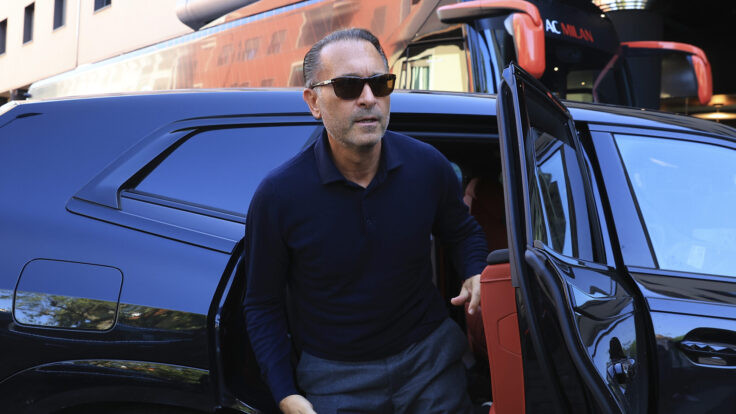
One of the top finalists under consideration, I’ve learned, is Josh Steiner, the investor and Bloomberg L.P. senior adviser. Steiner may not be an immediately obvious choice to the Post’s rank and file, but he does have extraordinary business and political qualifications—and experience operating at scale—that could make him uniquely well-suited to running the top media organization in the nation’s capital. Before joining Bloomberg, where he oversaw much of the organization’s non-Terminal business and high level strategy, Steiner was chief of staff at Treasury under Bill Clinton, and later became a managing director at Lazard. He was also an economic adviser to Obama during the 2008 White House transition.
He is, in other words, a full-blown banker and strategic thinker who is also a sophisticated creature of both Wall Street and Washington, with a nonprofit pedigree spanning the boards at Yale, the New York Public Library, the International Rescue Committee, and the Agora Institute at Johns Hopkins. Whether these experiences translate to an ability to manage the egos of a pressure cooker newsroom is, perhaps, an open question. But, crucially, he also has a lot of experience operating high-performing business units under the microscope of one of the world’s richest men.
Whoever takes the helm at the Post, likely in early 2024, will inherit a business very much on its back foot. After an exodus of top business leaders, Stonesifer has brought in a new chief technology officer (Vineet Khosla) and chief revenue officer (the incredibly well-liked Alex MacCallum) who have given the Post’s revenue team a renewed sense of optimism.
The editorial challenges remain tougher to solve. Sally Buzbee, the Post’s executive editor, has never matched the generational heft, visioneering, or talent magnetism of her predecessor, Marty Baron. Indeed, the Post has lost several of its most notable reporters in recent years—Steven Ginsberg, David Fahrenthold, Robert Costa, Carlos Lozada, I could go on…—and failed to draw free agents like Jonathan Swan and Jonathan Martin in the trade window. One of the big questions for the next C.E.O. will be whether to keep Buzbee in place.
Of course, the next C.E.O. is also likely to take their time. He or she will enter the job in the midst of a highly chaotic and consequential election season, and is likely to recognize that some of the real, substantive changes to the business can’t really get underway until the post-election season. But of course, Bezos has always been playing for the long term. In Wednesday’s meeting, Stonesifer said she had asked all candidates to explain, among other things, their five-year plan, and what they will have accomplished by 2029. |
| And Now for a Little CNN… |
|
| Back at CNN, Mark Thompson is now officially at work on his own five-year plan. On Monday, he sent a prerecorded video to the CNN staff in which he made it very clear that he intends to transform the global media company into a digital-first business, as I’ve reported here on several occasions. “From now on we must be committed to presenting the news in whatever form, in whatever product, makes most sense for audiences today,” he said. “Conventional TV will remain critical, but it can no longer define us. It’s one platform in a growing portfolio of platforms.”
Of course, this is the same playbook Thompson ran at The New York Times Company, and it will be interesting to see whether he can apply some version of it to a business that still relies on cable carriage fees, and one that has taken a significant reputational hit under Warner Bros. Discovery’s ownership. (The recent events in Israel and the Gaza Strip are giving CNN an opportunity to once again showcase its peerless global newsgathering prowess, especially as MSNBC leans on comparatively lackluster Sky simulcasts and gets chewed out by the ADL for being overly sympathetic to Hamas. The network’s coverage of Russia’s invasion of Ukraine, shortly after Jeff Zucker’s ouster, also highlighted this differentiating feature.)
Thompson will presumably move fast to implement digital initiatives. He noted in the video that “time is of the essence” when it comes to CNN’s digital transformation, and said that “despite some recent encouraging developments, like the launch of CNN Max, this company is still nowhere near ready for the future,” adding that CNN’s current digital offerings “lag well behind the current state of the art.”
In any event, CNN journalists and staff seem very receptive to his leadership so far. Late last week, Thompson was fêted at a dinner hosted by Jake Tapper at his home in Washington, and attended by most members of the interim leadership, as well as Wolf Blitzer, Abby Phillip, Laura Coates, and the like. Thompson impressed upon them his sense of optimism for CNN’s future, and seemed eager to get started. And indeed, his video to the entire staff seemed to telegraph a similar sense of urgency, and one not yet felt in the post-Zucker era. “We do need to pick up the pace now if we want CNN to be one of the winners in this era of news,” he said. |
|
|
|
| FOUR STORIES WE’RE TALKING ABOUT |
 |
|
 |
|
 |
| S.B.F. on Trial |
| An inside exchange on the financial trial of the century. |
| ERIQ GARDNER & TEDDY SCHLEIFER |
|
 |
|
|
|

|
 |
|
|
|
Need help? Review our FAQs
page or contact
us for assistance. For brand partnerships, email ads@puck.news.
|
|
You received this email because you signed up to receive emails from Puck, or as part of your Puck account associated with . To stop receiving this newsletter and/or manage all your email preferences, click here.
|
|
Puck is published by Heat Media LLC. 227 W 17th St New York, NY 10011.
|
|
|
|