 |
| Welcome back to In the Room. I’m Dylan Byers. |
| Greetings from Los Angeles. In tonight’s email, a scoop on The Daily Beast’s newest odd couple suitors, as well as news and notes on Mark Thompson’s ever-pending CNN reinvention, the CBS News streaming snow job and the existential challenges of reconfiguring the TV news business for smaller profits on smaller screens.
But first…
🗞️ Joe Kahn vs. The Times: New York Times executive editor Joe Kahn is seeking to reinforce the paper’s commitment to neutrality after internal protest over the paper’s reporting on the Israel-Palestine conflict. In an interview with The Wall Street Journal, pegged to a highly irregular internal investigation into leaks related to the paper’s Gaza coverage, Kahn said he was unwilling to tolerate such breaches of trust—an arguably uncomfortable position for an institution that relies on leaks from discontented staff at other public and private institutions. (The Journal reports that Kahn has enlisted Charlotte Behrendt, the Times’ resident J. Edgar Hoover, to conduct the investigation, which Vanity Fair first reported on six weeks ago).
More broadly, Kahn signaled to the Journal that he’d had it with the activist staff who are trying to apply ideological purity tests to the paper’s coverage. Of course, the Times is just one of several news organization trying to navigate this anxious, hyperpolarized moment in America—post Trump, post-George Floyd, post October 7—while keeping internal debates from spilling into public view. Earlier this week, the veteran NPR editor Uri Berliner accused the broadcaster of allowing the liberal bias of its staff and leadership to affect its coverage—a charge NPR leadership strongly rejected. Between that and the multivolume post mortems on the Times’ Tom Cotton op-ed from James Bennet and Adam Rubenstein, this is practically turning into its own literary subgenre.
🔮 VandeHei’s new yarn: Jim VandeHei, the reliably assertive Axios co-founder, C.E.O., and self-styled life coach to the masses—his next book drops at the end of the month—says he is pivoting his business model around the star journalists whose work can’t be replicated by A.I. Of course, most of Axios’s bullet-point-style summaries can be easily imitated by chatbots, and so VandeHei instead plans to build subscription services around talents like Dan Primack and Sara Fischer and obviously co-founder Mike Allen, who offer scoops and informed perspective, rather than mere aggregation. “The premium for people who can tell you things you do not know will only grow in importance, and no machine will do that,” VandeHei told The New York Times in an interview. This is also, obviously, the operating philosophy at Puck. It reminds me of what one famed journalist once told me about the enduring power of differentiated journalists in the age of A.I.: “The further up your own ass you are, the harder for the bot to find you.” Alas, Jim may have a reputation for self-righteousness, but he’s better served to pivot his business than hire lawyers and hope the tech giants do the right thing this time. Axios is still nimble enough to pull it off. |
 |
| Mark Mysteries & Daily Beast Micro Deal Heat |
| News and notes on three trending media mini-sagas: Mark Thompson’s inability to share his CNN reinvention, CBS News’ dreary ploy, and Joanna Coles and Ben Sherwood’s Daily Beast M&A effort. |
|
|
|
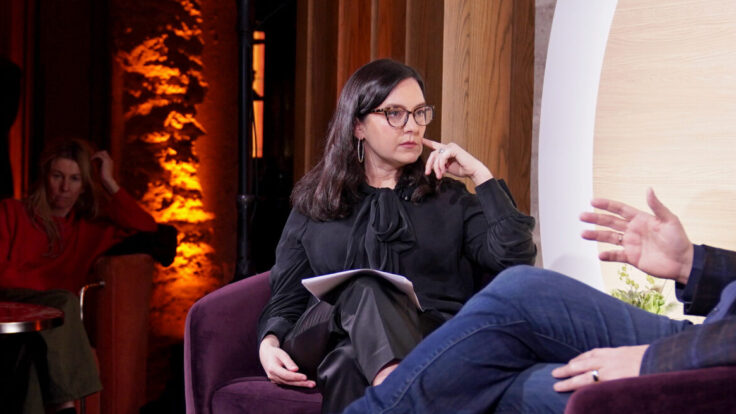
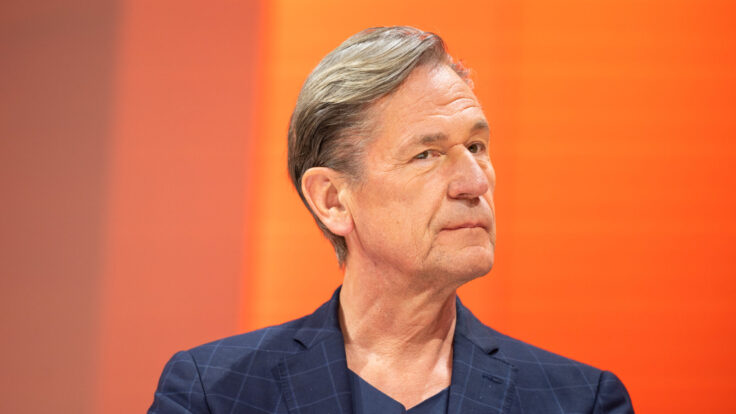
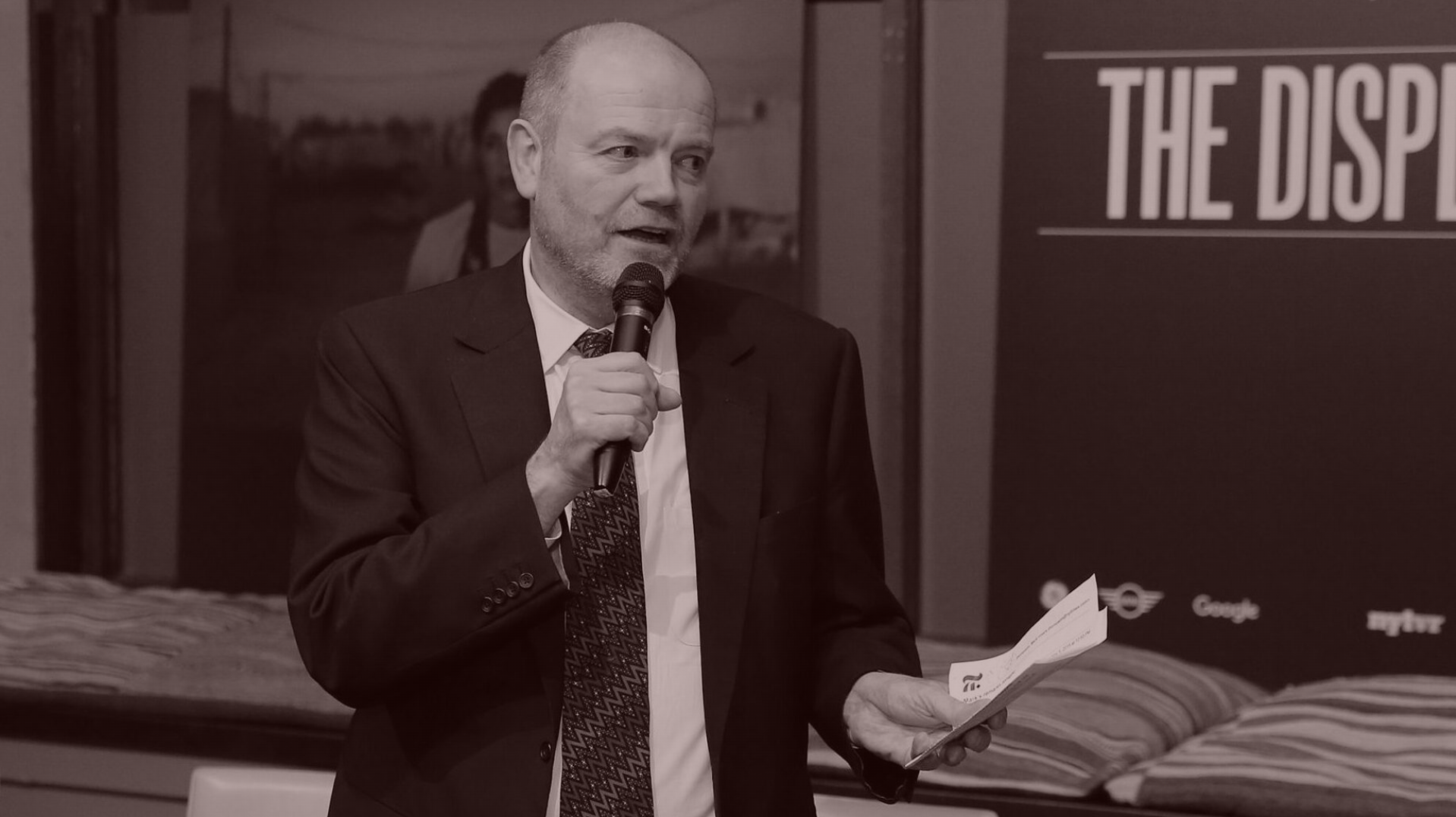
| On Wednesday evening, CNN chairman and C.E.O. Mark Thompson sat down for a tête-à-tête at the Century Association—that bohemian, mahoganied Midtown social club frequented by the city’s old literary guard; myriad quasi-eminent writers, editors, and artists; and perhaps a few too many Timesmen. In strictly off-the-record remarks before his fellow Centurions, in conversation with peppy Atlantic C.E.O. Nick Thompson, Mark held forth on the rapidly changing nature of the media industry, the state of the news trade, and the challenges and opportunities facing CNN in a post-linear landscape, yada yada.He also relayed a charming, made-for-stage anecdote that inadvertently emphasized the duality of his position as both an affable 66-year-old legacy media veteran and unlikely digital avant-gardist. After getting the call from David Zaslav, Thompson’s story goes, he opened up Perplexity A.I. and asked, “Should Mark Thompson be the chairman and C.E.O. of CNN?” The chatbot’s lengthy response was convincing enough, and so he said yes. (It’s more charming with Mark’s British accent, I’m sure.)
Predictably, Thompson outlined a broad conceptual philosophy for CNN’s digital future that alluded to a strategy without quite articulating one. Most notably, he posited that CNN’s digital success would rely on leveraging its advantage in live video. Too many television networks had modeled their digital assets on the text-heavy sites launched by newspaper companies, he said. The CNN experience should instead emphasize live video, which is ultimately the real advantage that TV news networks have over rivals like the Times—where Thompson stewarded a digital reinvention a decade ago. This observation is both obvious and yet entirely significant. Despite all its setbacks and unforced errors in recent years, CNN’s true differentiator is its unparalleled global live video infrastructure.
Anyway, the live video bit can only solve so many challenges. As with the Times, Thompson recognizes that he must extend audience engagement beyond the core offering by making CNN a fixture in people’s lives across more platforms—the CNN app; the Max streaming service, where the most popular hours of CNN’s linear feed are now simulcast; etcetera—for more hours of the day. Of course, contrary to the Times, this is a uniquely difficult challenge for a mass-market, general interest television network with lots of linear muscle memory and one that, moreover, is owned by a debt-saddled parentco perpetually in search of cost savings (perhaps by gingerly nudging Thompson to lean on the off-brand lifestyle content that tumbles off the Discovery+ conveyor belt).
In any event, exactly how Thompson intends to rethink CNN video and reallocate resources remains a legit mystery, an evergreen source of anxiety among CNN’s linear veterans, and, of course, the thing that keeps Alex MacCallum, his executive vice president of digital products and services, up at night. On Friday, the network announced the relaunch of 5 Things with Kate Bolduan, a show that launched in 2022 as part of the inaugural CNN+ slate, and which will now stream on CNN Max. As with Thompson’s decision to rehire MacCallum, an original architect of CNN+, the show’s relaunch seemed to do nothing so much as emphasize a lack of creativity, as well as highlight how much time the network lost in Chris Licht’s saeculum obscurum. Many inside Hudson Yards are quietly hoping that Thompson is still holding his cards close to his vest since, they fret, these early bread crumbs can’t be part of the plan, right?
Still, at least Thompson and MacCallum are invested in determining a more dynamic, multiplatform strategy—which is more than can be said for many of the network’s rivals in the space. To wit: This week, for seemingly no reason whatsoever, CBS News once again rebranded its streaming service, as CBS News 24/7, with an unveiling of more new shows that effectively replicate, at a lower cost, the anchor-behind-a-desk linear experience. Wendy McMahon, the CBS News president and C.E.O., called it “a decidedly ambitious evolution of our streaming efforts,” adding that “audiences crave” the service’s breaking news and live coverage.
The investment is not at all ambitious, of course—indeed, it is not all that significant an evolution from the CBSN streaming service that McMahon’s predecessor David Rhodes put in place nearly a decade ago, long before the advent of NBC News Now or CNN+. Instead, it is, as one veteran media executive put it, “a disaster-planning exercise disguised as a forward-thinking strategy.”
In the very likely eventuality that linear television crumbles, news networks need to have these streaming outfits up and running, if only to sustain smaller businesses that will never be as big, successful, and important as their glorious linear past. If anything, the constant rebranding and reprogramming of such services seems designed to reassure anxious anchors and producers that they are still important to the business and that they are being factored into the network’s future—even if, in this case, that’s literally impossible to predict as Shari Redstone shops Paramount Global to Skydance and Apollo.
Meanwhile, at 30 Rock, NBC News leadership prides itself on the growth of NBC News Now, which is certainly a shinier and more compelling product than the current CBS News offering, but nevertheless reflects a similar strategy predicated on the false belief that the problem is the platform, rather than the product, and that a generation of Instagram and TikTok addicts would watch old-fashioned TV news if only it were available on an app. “Is the reason nobody watches cable news anymore because it’s on ‘cable television,’ or because people no longer have a need to watch anchors sitting behind desks reading headlines because there are more efficient ways to consume news?” one veteran media executive asked rhetorically. “I’m not sure I understand the underlying customer problem they’re trying to solve or how this translates into a sustainable business.”
Both CBS News 24/7 and NBC News Now “are poor man’s ‘cable’ networks trying to convince ‘the youngs’ to watch anchors read headlines, and pick up on video programmatic advertising demand,” this person continued. “What is the business model for these things? What happens to all the sunk OPEX if the ad market shifts?”
That question highlights the true challenge for the aforementioned streaming services, which is that none of them have established direct, monetizable relationships with their customers. The only one that has is Fox Nation, which offers the Fox News faithful an unrelenting diet of Hannity and Watters and Gutfeld’s anti-liberal bluster, Bible reenactment fantasies, true crime docuseries, World War II history, and Kevin Costner hagiography, along with other red-state lifestyle content. Make of that slate what you will, but the core audience likes it. Fox Nation, which charges $6 a month, now has more than 2 million paying subscribers. Its relative success is, of course, a testament to the power of Fox’s brand loyalty among a certain kind of conservative—the kind of paying loyalty the Times has established on a far bigger scale, but that CNN and NBC News and CBS News are still chasing. |
|
|
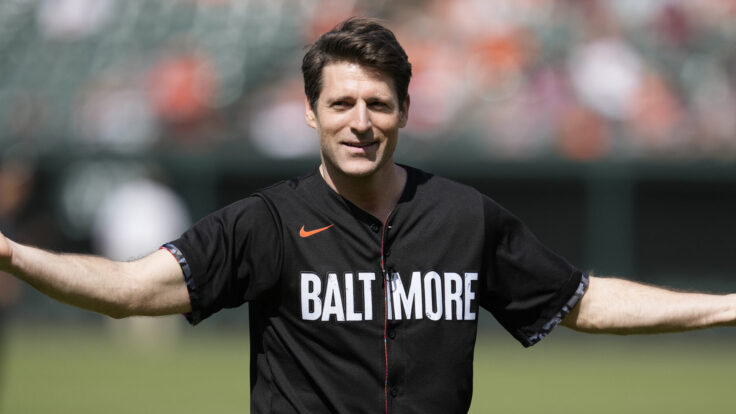
| Back in the salt mines of digital media, Ben Sherwood, the former Disney-ABC Television president and ABC News chief, and Joanna Coles, the former Hearst Magazines chief content officer and onetime Cosmopolitan editor and So Cosmo star, are raising money to acquire The Daily Beast from Barry Diller’s IAC, according to two sources with knowledge of the matter. Once acquired, their plan would see Coles running the company in a C.E.O. or editorial director capacity, and serving as its public face, while an editor-in-chief would be hired to run the newsroom. (The salary offer for the E.I.C. is only $300,000, I’m told, so let’s see who they get.)Of course, The Daily Beast has been an abysmal business for some time. The brand has lost whatever luster it had in the early Tina Brown days, and it’s become a money-losing, low-eight-figure business with union headaches and talent leakage. The Beast’s former top editors, John Avlon and Noah Shachtman, left for CNN and Rolling Stone, respectively. Heather Dietrick, its former C.E.O., left for another opportunity last year at Outside Interactive, the Sequoia-backed outdoorsy media roll-up play.
Not surprisingly, Diller has been a motivated seller for some time, and his banker, the well-liked and smart Jason Rapp at Whisper, has been marketing the asset for ages. At one point there was an acqui-hire concept in the works wherein IAC would bring in Janice Min, the former Hollywood Reporter editor, to run the business and also manage The Ankler, where she is C.E.O. It didn’t work out.
Sherwood and Coles are perhaps more logical suitors, even if the title still seems a bit beneath their stations. Both are longtime media veterans who love the news game and no doubt see the distressed asset as a path back into the arena without having to outlay substantial investment. After leaving Disney in 2019, Sherwood launched a youth sports app that he recently sold to TeamSnap. Following her exit from Hearst, Coles tried her hand at Hollywood production and various SPAC launches but couldn’t get much off the ground. (She remains on the Snap board.) All the while, like Iger in the interregnum, one senses they never really left their old worlds behind.
Both Sherwood and Coles are not answering their phones, and Diller did not respond to an email. |
|
|
|
| FOUR STORIES WE’RE TALKING ABOUT |
|
|
|
 |
 |
|
|
| Need help? Review our FAQs
page or contact
us for assistance. For brand partnerships, email ads@puck.news. |
| You received this email because you signed up to receive emails from Puck, or as part of your Puck account associated with . To stop receiving this newsletter and/or manage all your email preferences, click here. |
| Puck is published by Heat Media LLC. 227 W 17th St New York, NY 10011. |
|
|
|