{{ 'now' | timezone: 'America/New_York' | date: '%b %d, %Y' }} |
|
|
|
Greetings from Los Angeles, and welcome to the inaugural Monday edition of In
the Room. This marks the beginning of ITR’s expansion to three days a week—and, frankly, I could not be more fired up. I’ll also be in your inbox on Wednesdays and on Fridays, when my brilliant partner and Grill Room co-host Julia Alexander will be contributing her indispensable insights. Tell your friends, tell your neighbors, and tell them they can subscribe here.
In
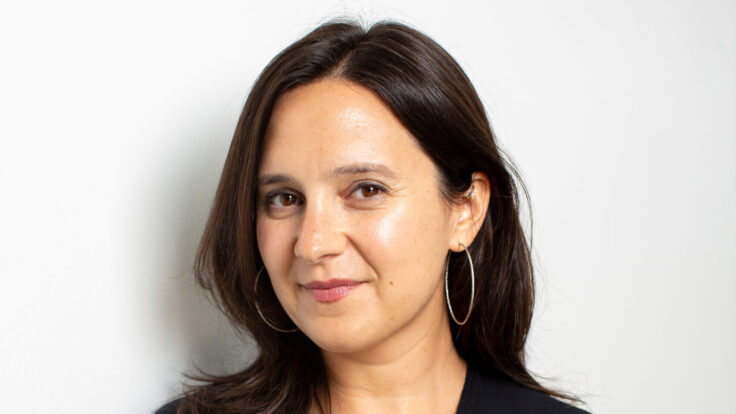
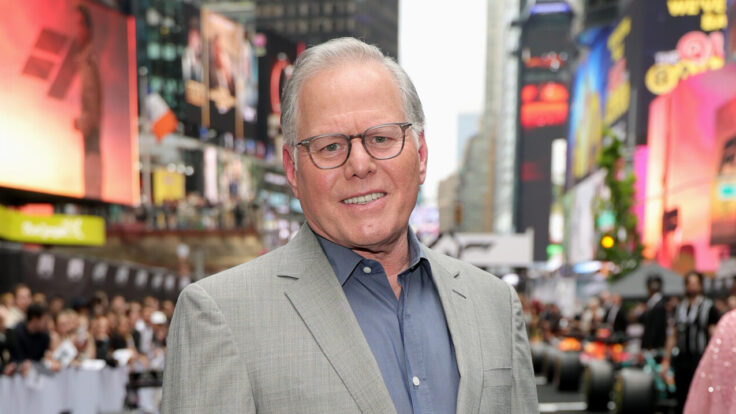
tonight’s issue, a look inside Paramount Skydance, where David Ellison’s inner circle has started having informal discussions about changing Bari Weiss’s mandate at CBS News—and, eventually, CNN—to refocus her energy around digital and give her less control over the linear product. In that dynamic, Bari would need to be paired with a business leader who has the TV experience that she lacks. But who?
🎙️ Plus, on tomorrow’s episode of The
Grill Room, Sources founder Alex Heath joins the pod to discuss the novel ways he’s incorporating A.I. into his tech reporting, and what it takes to go it alone in media. We also assessed the state of the A.I. race, Meta’s layoff strategy, and Google’s dominance ahead of this week’s highly anticipated I/O developers’ conference. Follow The Grill Room on Apple, Spotify, or wherever you prefer to listen.
Also mentioned in this issue: Nick Kristof, Anderson Cooper, Jeff Zucker, Jeff Shell, David Rhodes,
Tony Dokoupil, Bill Owens, Sharyn Alfonsi, Tom Cibrowski, Roy K. Altman, Mark Thompson, Katherine Maher, and more… |
-
An Amazon bomb: Amazon has started restructuring its affiliate commissions business in recent months, a move that could have potentially devastating effects for The New York Times’s Wirecutter, New York’s Strategist, and other product-recommendation sites that receive commissions for driving traffic. Adweek’s Mark Stenberg reported that Amazon has slashed affiliate commissions to partners by as much as 50 percent, forcing some review sites to drastically revise their revenue forecasts. Of course, coming as it does after Google’s pivot to A.I. summaries decimated organic traffic, it serves as yet another reminder of publishers’ vulnerabilities to platform tweaks. Indeed, the recent split of Vox, fire sale of BuzzFeed, and hemorrhaging of Business Insider are all examples of the dark
fates awaiting mediacos that do not connect to their end users.
- NPR buyouts: National Public Radio C.E.O. Katherine Maher is offering buyouts to employees in an effort to fill the $8 million gap in the organization’s annual budget caused by the elimination of federal subsidies and revenue declines tied to station fees and corporate sponsorship. NPR reports that Maher will offer the buyouts to 300 employees and will accept as many as
30.
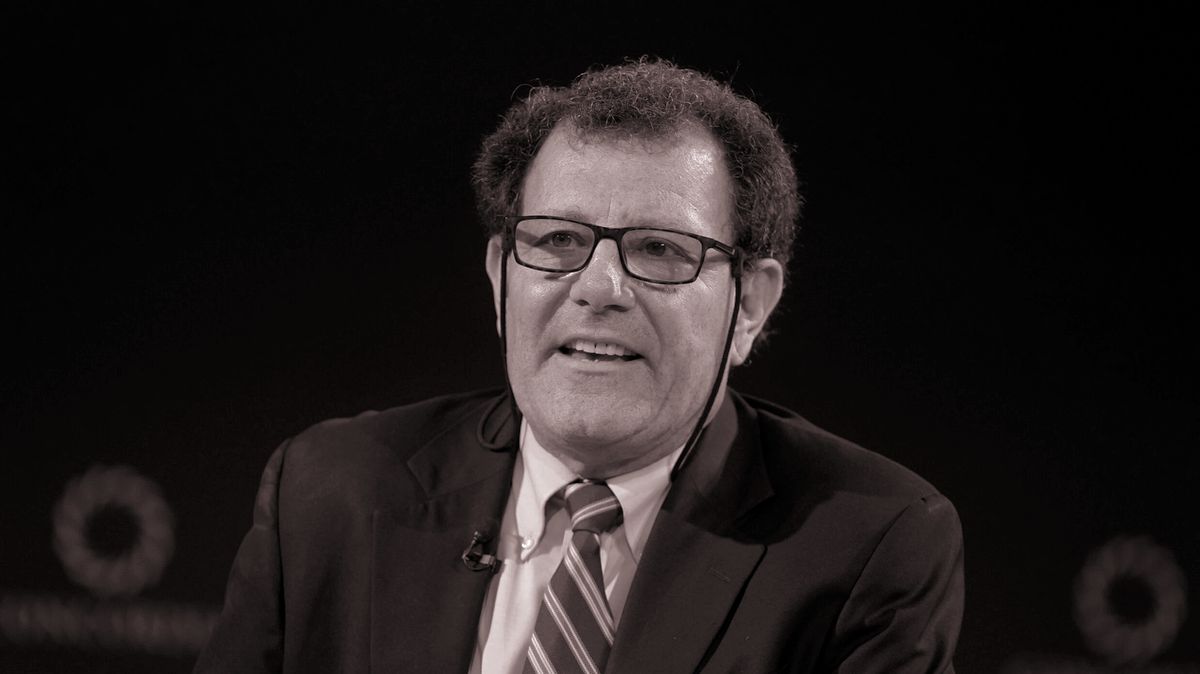
- And finally…: Bari Weiss’s Free Press is continuing to have a field day with Nick Kristof’s controversial column from last week—which, as you know, leveled disturbing allegations about the rape of Palestinian prisoners by Israeli prison guards. The company has published at least half a dozen essays
refuting or condemning the piece, including a lengthy one on Monday from Roy K. Altman, a federal district court judge in the Southern District of Florida, who accused Kristof and the Times of “a disregard of basic evidence-gathering norms,” an “unwillingness to investigate the opposing side’s position,” and an “inversion of common
sense” that “violates the fundamental rules of fairness and due process that have, for centuries, served as the bulwark of our democracy.” (As I noted last week, the Times maintains that Kristof’s piece was rigorously fact-checked and contains no factual errors.)
The Free Press’s barrage against the Times is hardly surprising. I saw it coming from almost the
moment the Kristof column dropped. But it will be interesting to see if and how CBS News engages in this discourse now that Bari is calling the shots.
|
|
|
|
As it closes in on its acquisition of Warner Bros. Discovery, Paramount leadership
has had informal discussions about changing Bari Weiss’s mandate at CBS News (and, eventually, CNN) in ways that would give her less control over TV. |
|
|
|
On Sunday, Anderson Cooper, one of the last veritable stars of TV news, bid
farewell to 60 Minutes with an elegant and emotional retrospective on his 20-plus years at the newsmagazine. While reflecting on his myriad adventures around the globe, Anderson demonstrated the charisma, empathy, authenticity, and gravitas that established his place in the television news firmament.
But he also took a moment during the 17-minute segment to subtly critique the show’s direction under its new owner, David Ellison, as well as its new leader,
Bari Weiss. “I hope 60 Minutes remains 60 Minutes,” he said. “There’s very few things that have been around for as long as 60 Minutes has and maintain the quality that it has. Things can always evolve and change, and I think that’s awesome, and things should evolve and change. But I hope the core of what 60 Minutes is always remains.”
Sure, the Bill Owens–Sharyn Alfonsi resistance set might have
preferred a touch less diplomacy. But given Anderson’s blue-blood decorum and aversion to conflict—and, perhaps, the knowledge that he may wind up working with Bari down the road at CNN—this was about as forceful a critique as the anchor was likely to give. In any case, his decision to leave the network was message enough. And yet, because Anderson is genuinely famous—not just TV news famous—the dig hit hard, and got a fair deal of traction in both the tabloids and the
trades.
Needless to say, this was merely the latest wave in a deluge of Licht-ian bad press that Bari has weathered. After seven months in the job, her exploits at CBS News remain the obsession of the industry and its chroniclers (yes… including myself). But the attention has also been inevitable, particularly given her inelegant attempts to tack the network toward an ostensibly centrist course (which remains a source of anxiety for network veterans) and, most
importantly, the ratings declines and high-profile blunders that have laid bare the corrosive effects of her inexperience in television news. To wit, last week CBS failed to secure a travel visa for Tony Dokoupil ahead of President Trump’s historic trip to Beijing, which resulted in an eleventh-hour pivot to Taiwan, where an exhausted cameraman collapsed while Tony was live on air—one of the many indignities Tony’s suffered since taking the Evening News
chair.
At the same time, Bari has endured her role as media punching bag with relative aplomb, refusing to betray exhaustion or vulnerability while seeming to plow ahead with her plans to overhaul the network. Meanwhile, Ellison and the Paramount brass have afforded her ample leeway because they genuinely like her, endorse the editorial pivot, and, frankly, have far bigger priorities than the news division. But there are signs that the dynamics are starting to shift.
|
As Paramount closes in on its acquisition of Warner Bros. Discovery, I’m told that members of the
senior leadership team have had informal discussions about changing Bari’s mandate at CBS News—and, eventually, CNN—in ways that would give her less control over the linear product. Paramount would look to bring in an executive who could manage that business.
No plans have been telegraphed or formally enshrined, and it’s unclear how involved David himself has been in the discussions. But sources with knowledge of the conversations said that Bari would likely cede day-to-day control over
Evening News, CBS Mornings, and 60 Minutes to this more experienced, as-yet-unnamed executive, shifting her focus to the news division’s digital growth while maintaining broad editorial influence across all the company’s platforms.
The conversations, I’m told, reflect Paramount leadership’s newfound acceptance that Bari was given too broad a mandate for someone without previous experience in television, as well as some irritation with the ceaseless barrage of
negative press. After all, before founding The Free Press—which Paramount acquired last year for a handsome $150 million—Bari had only ever served as an editor and writer. Nevertheless, David put her in charge of the news division, with a direct reporting line to him, while entrusting that network president Tom Cibrowski, a TV news veteran, would pick up the slack. But even with Tom in place, sources inside CBS News and 60 Minutes complain that Bari is
drastically overstretched, and lacks the experience and managerial skills necessary to run the network.
For now, it’s unclear whether leadership would enlist current CNN C.E.O. Mark Thompson for the linear role, though David has met with him in recent days, I’m told. Sources said it was unlikely that David would elevate Cibrowski, a capable broadcast manager but not necessarily the right fit for a combined mandate across CBS and CNN. Meanwhile, it remains very possible
that they could bring in someone from outside the building. As you’ll recall, former Paramount president Jeff Shell had informal conversations with former CBS News president David Rhodes about serving in a similar role. Many CNN veterans still fantasize about the second coming of Jeff Zucker, who has quietly advised Bari at times, but most doubt that David would want to risk antagonizing Trump by hiring his old nemesis. In any event, as one
source noted, David & Co. have come around to the view that they need to “let her be her.”
Bari has her supporters and detractors, to be sure, but it would be entirely unfair to pin this misadventure solely on her. She took a nine-figure deal that most people in their right minds would have accepted and held her head mostly high amid an unprecedented situation. Ellison is also concurrently trying to close his $111 billion WBD deal in order to stand up a bona fide media kingdom —and may
have been working through his own learning curve during this experiment. In this sort of dynamic environment, big decisions have been made quickly, even if they need to be undone relatively quickly too.
That said, it’s hard to imagine that the pace of change is going to slow down anytime soon—not at CBS News or Paramount Skydance or, eventually, WarnerMount. Closing this merger will require a massive pro forma-ing of thousands of people and finding billions in synergies. In a
way, this potential new role could be a gift for Bari. Despite all the headaches she’s had to manage, the next person is going to have to deal with much worse. |
|
|
|
A professional-grade rundown on the business of sports from John Ourand, the industry’s preeminent journalist,
covering the leagues, players, agencies, media deals, and the egos fueling it all. |
|
|
|
Join Puck’s chief political columnist, John Heilemann, as he roams the corridors of power and influence in America on
this twice-weekly interview show, taking you beyond the headlines with the people who shape our culture: icons and up-and-comers, incumbents and insurgents, moguls and machers in the overlapping worlds of politics, entertainment, tech, business, sports, media, and beyond. The conversations are rich and revealing, unrehearsed and unexpected… and reliably impolitic. A Puck-Audacy joint, new episodes drop every Wednesday and Friday. |
|
|
|
Need help? Review our FAQ page or contact us for assistance. For brand partnerships, email ads@puck.news. You received this email because you
signed up to receive emails from Puck, or as part of your Puck account associated with {{customer.email}}. To stop receiving this newsletter and/or manage all your email preferences, click here. |
Puck is published by Heat Media LLC. 107 Greenwich St., New York, NY 10006 |
|
|
|
|