Welcome back to The Varsity. I’m John Ourand, in New York this week for
a bunch of meetings with one specific media company. Let the guessing begin!
Wemby is pretty much all anyone wants to talk about today. Yes, last night’s performance was otherworldly; my text conversation with Peter Hamby during the game featured a lot of exclamation points. But the Angels’ improbable win over the A’s last night
also deserves some attention. A’s pitcher J.T. Ginn took a no-hitter into the 9th, when he promptly gave up a single and a walk-off home run. Talk about a hard-luck loss for a franchise that’s endured more than their fair share!
Before we begin, I want to acknowledge Mac Nwulu, who was part of ESPN’s most recent round of layoffs after 30 years doing P.R. for the network. You won’t be able to find one person who has anything negative to
say about the guy. He shouldn’t be a free agent for long.
Mentioned in this issue: Mark Shapiro, Lee Ann Gliha, RJ Luis Jr., Adam Schwartz, Rita Ferro, and more… |
- Merger mania: With Paramount’s $111 billion acquisition of Warner Bros. Discovery working through the final approvals, it shouldn’t be long before TNT starts carrying UFC matches. During an appearance at J.P. Morgan’s Global Technology, Media, and Communications conference this week, TKO chief (and fractional Raiders owner) Mark Shapiro spoke effusively about the likelihood that UFC and Zuffa Boxing fights would soon appear on Paramount
networks, plus TNT, CBS, and HBO. “Then you throw Bleacher Report in there,” he added. (Be still my heart…)
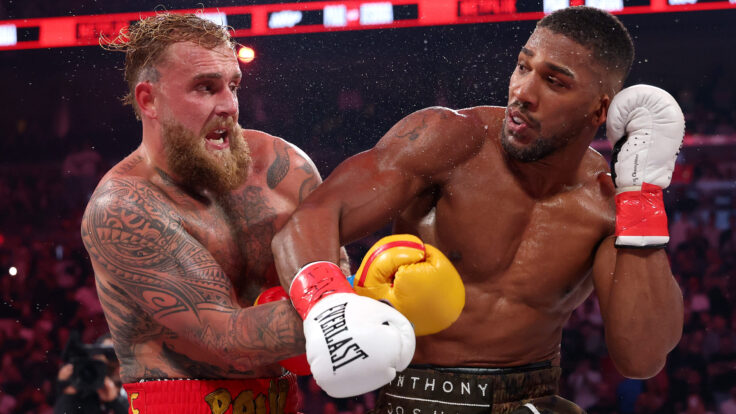
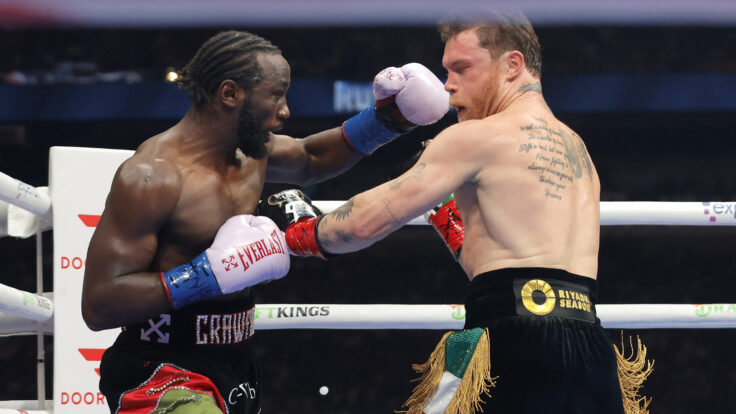
Shapiro also broke the news that Zuffa, which had its first card just four months ago, is already profitable. “We’re just in a good place,” Shapiro said. “We’ve already signed over 100 fighters. We have our deal with Paramount, which is multiyear. We have our deal with Sky. … And we’re in the space of building firm value. As we hit certain milestones, we earn more equity, and we’re
just about to earn into our second tranche of equity.” When it launched in January, Zuffa planned for around 16 events per year, a number that Shapiro said Zuffa’s Saudi partners want to ramp up. - The NFL tsunami: One recent leitmotif of The Varsity has been the scramble to assess the blast radius of new NFL media deals, which are widely expected to suck billions out of the pool of money available for lesser sports properties, not to mention Hollywood
entertainment budgets. At the JPM conference, one of the most insightful comments on the topic came from Lee Ann Gliha, an E.V.P./C.F.O. for Nexstar, which owns more than 200 local broadcast stations across the country.
Gliha told the audience in no uncertain terms that any increase in sports rights fees likely would come out of the broadcaster’s entertainment budgets, per quotes compiled by Cablefax. But it’s not all bad news. “We’re not entirely worried about
that incremental cost on the sports rights coming back to us dollar for dollar because there are other things that the network is providing to us that are maybe less valuable,” she said.
In fact, Gliha sees The CW, for example, as a potential beneficiary, both because it can pick up rights from smaller properties that don’t get competitive bids from companies like CBS, ESPN, Fox, or NBC, and via networks looking to simulcast some of their bigger purchases. Last week, ESPN agreed to
sublicense ACC games on The CW. “We’re continuing to provide a variety of sports programming that is not the top-tier sports programming, but very watchable and with dedicated audiences,” she said. - College sports chaos: Just as I was reading a report this morning that the House would not vote on the SCORE Act, which would set federal standards for college athlete compensation and revenue sharing, another report caught my eye: LSU has signed
RJ Luis Jr., the former St. John’s star and Big East Player of the Year.
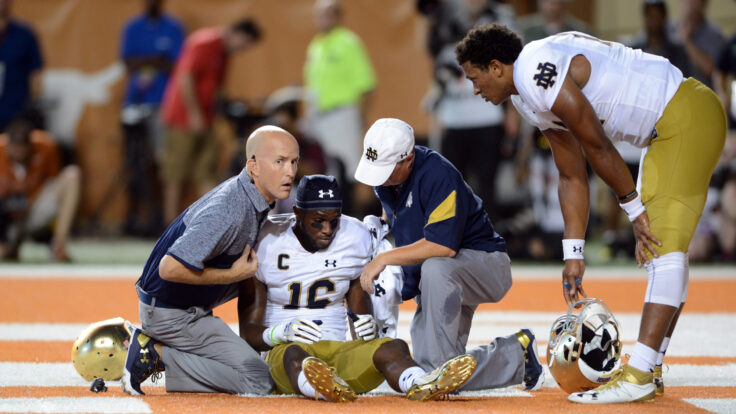
A quick refresher: Luis declared for the 2025 draft, went unpicked, signed a two-way contract with the Utah Jazz, was later traded to the Boston Celtics and then waived—all before appearing in a single NBA or G League game. Obviously, it seems that Luis will not receive the eligibility needed to play for LSU, but he is expected to file a lawsuit to explore the option. The Tigers’ openness to this
tactic underscores the NCAA anarchy of our moment. As written, the SCORE Act wouldn’t have even addressed such an eligibility mess, but the lack of a unified move forward means that the chaos is going to continue.
|
And now for the main event… |
|
|
|
Horizon Media’s Adam Schwartz on the amplifying value of a Super Bowl ad, MLB’s
events strategy, and why the 30-second spot is still the backbone of television advertising. |
|
|
|

| John Ourand
|
|
|
|
The first Super Bowl spot that Horizon Media executive Adam Schwartz ever bought
was in 2006—a half-minute that cost $3.5 million. A little more than 20 years later, Rita Ferro, Disney’s head of ad sales, was at upfronts last week disclosing that the cost for a 30-second spot in next year’s ESPN-broadcast Super Bowl has climbed to $10 million. Schwartz knows that’s crazy, but still sees it as absolutely worth every penny.
Horizon oversees close to $1 billion in ad spending, and Schwartz remains a big believer in the power of live sports for
the brands that he represents. In 2026, that means developing a coordinated campaign that includes linear television, streaming, digital, social, you name it. And there’s still nothing that ties it all together like a Super Bowl campaign. Schwartz joined the Varsity podcast this week to discuss the changes that he’s seen since he first got his start in the market back in the aughts. The following is a transcript from that podcast, which posts tomorrow morning, tastefully condensed and
edited for clarity. |
A
Full Super Bowl Program
|
John Ourand: Disney is officially in the market
selling Super Bowl ads for $10 million per 30-second spot. How are those negotiations going?
Adam Schwartz: Let me start by saying $10 million is insane. I told this to Disney executives as well, but the number doesn’t surprise me. The value of the Super Bowl has just continued to increase. Ten years ago with the Super Bowl, the spot itself was the basis of everything. There were other opportunities, but they weren’t as mature as they
are today, in terms of putting together a full Super Bowl program that could take advantage of the one-day lift and create a headline.
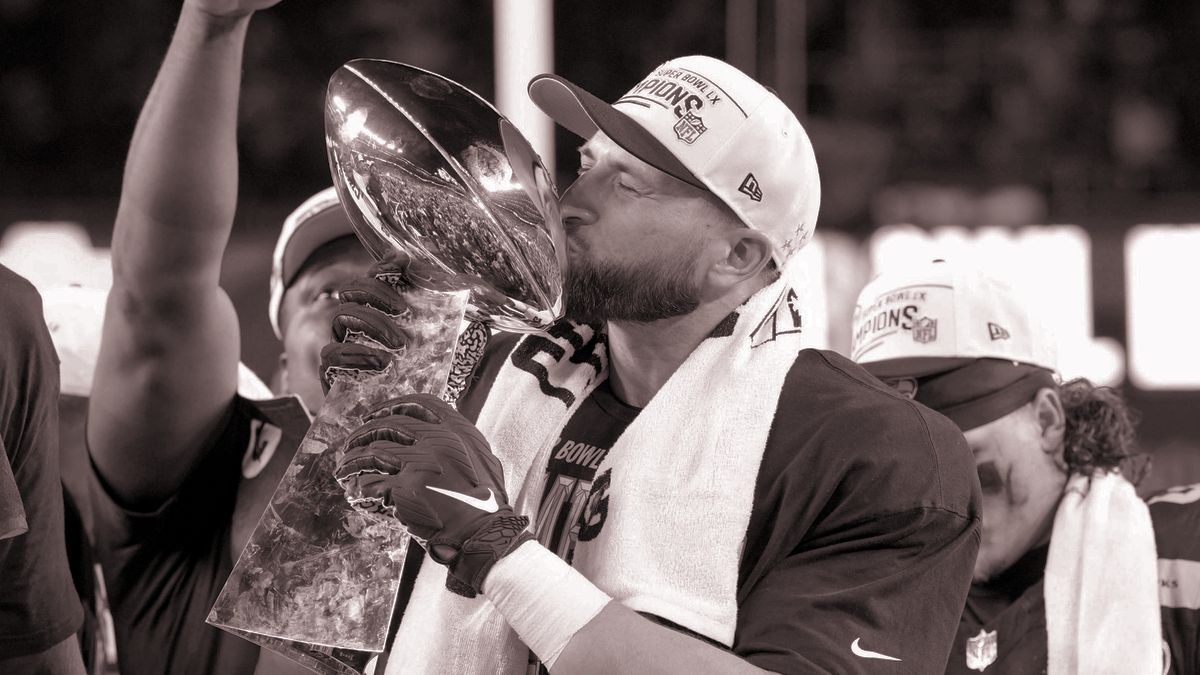
The days of holding out and waiting for a more opportunistic deal closer to the game are gone. The last three or four years, the demand for the Super Bowl has been absolutely outrageous. It’s been selling out quicker and quicker each year. It provides unmatched reach at scale. There’s nothing like it, there’s nothing that’s going to compete with it. I like
to say the NFL is in a league of its own, but the Super Bowl is in a whole other world of its own. It’s the only place where ads are the actual content. The amount of earned media and social amplification that you can do around the Super Bowl is exponential.
If I managed a big brand, you’d have to convince me that spending so much money on a Super Bowl ad would be worthwhile.
If you’re launching a product and you just need to get
in front of people, there’s no better way to do it than the Super Bowl. Everyone is searching for ways to surround those culturally relevant moments. The Super Bowl is culturally relevant every year. People are going to talk about the creative, the halftime show, and everything else that goes along with it. While it’s expensive, and there probably are cheaper ways to reach your target audience, you’re just not going to be able to re-create the moment in the same way that the Super Bowl can. The
truth is that it’s showing no signs of stopping.
I’ve always viewed the NFL’s conference championship games as the hidden gem for advertisers. They produce the second- and third-biggest TV audiences of the year, and ad rates are a fraction of the Super Bowl.
We’ve seen more and more of that. The NFC and AFC Championships are generating the highest eyeballs you’re going to get across the landscape outside of the Super Bowl. It also
works, by the way, if you’re setting up a Super Bowl spot. A lot of people like to start teasing things out around the NFC and AFC Championship games. It gives you that two-week path leading into the [Super Bowl] itself.
Let’s move to baseball. The regular season is so long, but the league has tried to develop tentpole events to attract advertisers. Has that worked?
It has. In a typical year, MLB’s tentpoles are the Home Run Derby
and the All-Star Game. The league has done a good job of creating new opportunities, like the Field of Dreams game or the international games. Because they have so many regular-season games, they can test and learn a lot easier than some of the other leagues. Baseball doesn’t have a lot of competition on July Fourth or Labor Day—unique days that have been underutilized in the past. But they are something that the league definitely has their eyes on moving forward.
The Home
Run Derby is moving to Netflix this summer. As an ad buyer, does the move from ESPN to streaming change how you view that event?
I’m not sure the value of it changes. What I worry about is promotion. Disney is an MLB partner, so there’s a certain level of promotion that goes along with the event that we are used to. Netflix is a little bit different. I’m looking to see how they promote that game to their own subscribers. Is Netflix going
to get casual viewers to match what we’ve seen previously on ESPN? I think we are going to see a little bit of a new audience, and hopefully that’ll help grow the game.
You have said you’ve seen more changes in television advertising over the past 10 years than we’ve seen in the previous 40. The 30-second spot was created when we had three networks. Why are we still using it? Is there an end date to the way we watch television
advertising?
I don’t think there’s an end date to the 30-second commercial, per se. I think it’s going to act as an anchor and backbone moving forward, and that’s kind of what it is now. These companies need to become a little bit more nimble. I think you’re going to continue to see new and unique opportunities—L bars, double boxes, six-second commercials—while the 30-second spot remains the backbone. You’ll see advertisers coming up with little
snippets to get a little bit of their message to resonate, and then drive people into the formal process of a 30-second commercial, where they can really explain what it is that you’re trying to sell. |
On the future of pickleball: “Reading your pickleball drivel reminded me to jump on Kalshi
or Polymarket and take a position (a.k.a. placing a bet for you heathens) against that activity ever making it as a real TV property. Give me a break. Mahjong is having a moment, too, these days but all the sancerre in the world ain’t getting me to watch that on TV either. Some things are just fun to do but not watch—no matter how hard anyone would want to eventize (drink! And barf!) them as a regular event.” —A media executive
On MSG finances: “Jim Dolan may be
a dick, but he’s always been good for shareholders. It’s hard to track exactly (at least for me) because they’ve spun companies a few times but he’s probably tripled the share price over the last decade.” —A sports business veteran
On the NFL and NBC: “You have mentioned that the NFL was irritated by how much NBC decided to pay [for] the NBA deal. If that’s the case, have you heard any confirmation or rumblings that the league showed that frustration when giving the
Sunday Night Football games to NBC?” —A college student
[Ed. note: We didn’t see that irritation show up in the schedule release at all. After all, primetime Sunday night is an important window for the league. I expect to see signs of it during the media rights negotiations.]
On the NFL schedule release: “What a surprise! Every network is thrilled with their schedule and got exactly what they hoped for! Who could have guessed?”
—A media executive |
See you all on Thursday,
John |
|
|
|
Puck sports correspondent John Ourand and a rotating cast of industry insiders take you inside the executive suites
and owners boxes where the decisions that shape the entire sports business are made. You’ll hear interviews with players, network execs, and everyone in between. The Varsity is an extension of John’s private email for Puck by the same name. New episodes publish every Wednesday and Sunday. |
|
|
|
The industry’s go-to source for unflinching reporting on the trillion-dollar business of artificial intelligence -
perhaps the single most important technology of our time. Ian Krietzberg, the powerhouse journalist behind The Deep View, delivers twice-weekly insights into the latest dealmaking and breakthroughs in A.I., and how the intersecting worlds of finance, entertainment, media, and politics are being transformed in its wake. |
|
|
|
Need help? Review our FAQ page or contact us for assistance. For brand partnerships, email ads@puck.news. You received this email because you
signed up to receive emails from Puck, or as part of your Puck account associated with {{customer.email}}. To stop receiving this newsletter and/or manage all your email preferences, click here. |
Puck is published by Heat Media LLC. 107 Greenwich St., New York, NY 10006 |
|
|
|
|