Welcome back to The Varsity. I’m John Ourand, back in D.C. after a
quickie New York trip, where Puck hosted a dinner for a bunch of league and sports media pooh-bahs at the Golden Swan in the West Village—a restaurant that none of them would have been invited to without the power and elan of yours truly. (Someone spotted Marchand across the street with a pair of binoculars… poor guy.) Our Puck author trading cards proved to be a big hit. I fully expect Bill Cohan’s card—“C.E.O.s return his calls faster than their
assistants’”—to be on eBay any day now.
Okay, let’s get to it… |
Player of
the Week: Dick Vitale
|
It’s hard to be a college basketball fan in the endless-portal days. When my Terps suit up against
Georgetown tomorrow night, they’ll have 15 new players and an entirely new coaching staff. That’s why it was so great to see Dick Vitale, who has been battling cancer for four years, return to ESPN’s airwaves.
Of course, he rejoined his colleagues for the inaugural Dick Vitale Invitational tournament in Charlotte, calling the opening night game between the No. 6 Duke Blue Devils and the Texas Longhorns. It was no surprise to see the Spectrum Center crowd give the
legendary broadcaster a wall-to-wall standing ovation. The announcer continues to represent an oasis of sanity in this untamed economic landscape, and his V Foundation has raised more than $105 million for pediatric cancer research. |
Down to the
J.V.: Jay Snowden
|
The unwinding of gambling outfit Penn Entertainment’s 10-year, $2 billion ESPN deal after just two
years marks the second awkward setback in C.E.O. Jay Snowden’s quest to launch an online sports betting megabrand. You’ll remember that Penn paid $551 million for Barstool Sports in 2020, only to sell it back to Dave Portnoy for $1 in 2023. Peter Kafka had the best summary:
“Both bets were based on the same logic: grab a loud media brand and hope bettors follow. They didn’t.” |
- Big Noon Kickoff’s big leap: I’m not going to draw any hard-and-fast conclusions about the impact of the YouTube-Disney fight on ESPN ratings. We only have one weekend’s worth of numbers, and ESPN’s college football lineup competed against a World Series Game 7 for the ages. Even with the blackout, Disney’s college football showing was respectable this weekend—ABC’s Georgia-Florida game had the largest football audience of the day.
But dayside College
GameDay posted its lowest audience of the season on Saturday, and it seems like some viewers migrated to Fox’s Portnoy-featuring Big Noon Kickoff, which enjoyed boosted pregame ratings despite a dreary Ohio State–Penn State bloodbath. One source also found that the show’s YouTube TV viewership almost tripled. Prior to the weekend, Big Noon Kickoff averaged 167,000 viewers via YouTube TV. Last weekend, that figure jumped to 491,000. - Disney-YouTube’s
unintended consequences: Just hours after I wrote on Tuesday that local broadcast groups were frustrated by the Disney blackout on YouTube TV, Sinclair C.E.O. Chris Ripley publicly called on regulators to step in. “Disney/ABC and other networks should not be able to dictate to us whether we can or cannot distribute content to YouTube TV or even Hulu and Fubo, which, coincidentally, are now also
owned by Disney,” Ripley said on his third-quarter earnings call. Apparently we’ve entered the stage of the standoff where everyone hates everyone else. These dramas will only become more acrimonious in the future.
- Highway to N.I.L.: The College Sports Commission released its latest N.I.L. Deal Flow Report today, a
recurring snapshot of third-party name-image-likeness activity across Division I sports. Since launching in June, NIL Go, the platform through which deals are submitted, has approved 12,175 deals worth $87.5 million. A total of 394 deals, worth $10 million, were not cleared. According to the report, 3,363 N.I.L. deals worth a total of $24.95 million were cleared in the month of October. While many were concerned about the efficiency of NIL Go at its onset, the report notes that 53 percent of
submitted deals were resolved within 24 hours, and 74 percent within seven days.
Indeed, this is only the tip of the iceberg in the N.I.L. era, but these numbers underscore the size and power of the market. For the latest example, look no further than today’s announcement that USC women’s basketball superstar JuJu Watkins
has joined the investor group for Boston Legacy Football Club, the National Women’s Soccer League expansion team. - The WBD bidding scrum: On Tuesday, my partners Dylan Byers and Julia Alexander welcomed veteran LightShed media analyst Rich Greenfield on their brilliant podcast, The
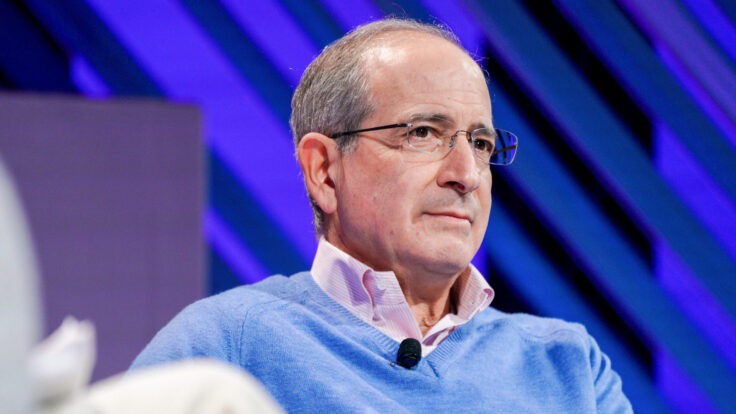
Grill Room, to assess the ongoing WBD bidding war. While Paramount remains the presumed frontrunner, Comcast has recently emerged as a serious contender. As Greenfield noted, there’s a heightened sense of urgency for president Mike Cavanagh and C.E.O. Brian Roberts to make a move. Comcast’s stock is sitting at a 13-year low, with many investors heading for the exits.
Here’s Greenfield on what a WBD–NBCUniversal merger could look like: “If you
were to take the studio, the theme parks, and the broadcast network only, and probably Bravo, and combine that with WBD’s HBO business and the Warner Bros. studio—it sounds like that’s a merger Comcast is interested in. Structurally, that would create a business that looks a lot like Disney without ESPN. … [NBC would still] have the broadcast network, but it’s basically a sports-driven network. As you’ve seen with Sunday Night Football, Sunday Night Basketball, Sunday
baseball—it’s heavy on the sports angle, in terms of what’s left at NBC.” - Is the tush push a federal issue?: Listen, you meatheads, my partner Peter Hamby published a very consequential interview with Pennsylvania governor and likely ’28 presidential candidate Josh Shapiro earlier tonight. (You should all subscribe to The Best & The Brightest, Puck’s daily political product—it’s your civic duty!) The conversation touched on number of topics, from Newsom to Israel. But I wanted to leave you with one I know you’ll all care about: the tush push. Peter asked Shapiro, a huge Eagles fan, whether the NFL should ban the controversial play.
Here’s Gov. Shapiro: “Hell no! And by the way, it’s absolute bullshit that these other teams who can’t
guard Jalen Hurts—who do not have an offensive line like the Eagles have built under Howie Roseman’s incredible leadership—that now they want to ban it. I mean, it’s ridiculous. If they want to be successful, maybe they should go out and draft a great quarterback like Jalen Hurts. Frankly, I’m also sick and tired of Jalen Hurts not getting the respect that he is due. I think he deserves respect. The Birds deserve respect, and moving to ban the tush push is
merely an excuse for not having a good enough team to do it.”
|
And now, on to the main event… |
|
|
As the YouTube TV–Disney rights feud stretches into its second weekend, a talmudic
reading of the legacy behemoth’s leverage, the challenges posed by Google’s dry powder, and the various ways this battle could influence the next skirmish. |
|
|

| John Ourand
|

| Julia Alexander
|
|
|
|
It’s somewhat surprising that the YouTube TV–Disney standoff remains unresolved. But as the impasse
drags on, it’s becoming clear that this isn’t your typical carriage dispute. With Google’s $3 trillion market cap, YouTube can afford to play the long game. Meanwhile, Disney continues to bleed cash from its linear business.
On the latest episode of The Varsity, Puck’s resident streaming expert, Julia Alexander, joined me to break down the competing hands at play. Julia argued that Disney’s leverage lies not just in ESPN, Monday Night Football, the NBA,
etcetera, but across YouTube itself—not only the live TV service. In this insightful conversation, we explored the asymmetry of power between Big Tech and traditional media, the role of sports as a negotiating weapon, and why legacy players may need to start thinking much more creatively about how to fight in a YouTube-dominated world. As always, this convo has been slightly edited for length and clarity. You can also listen to the conversation in its entirety
here. |
John Ourand: It appears that YouTube has the will, the money, and
the lack of commitment to content—they’re all tech guys over there. This could be a fight that goes on for a while. How are you viewing this?
Julia Alexander: Carriage disputes have always been relatively equal playing fields in terms of the value of content on the business. With YouTube TV and YouTube at large, that’s just not the case. We’re talking about a product under Google, a $3 trillion company that posts more than $102 billion
in revenue in one quarter and makes the vast majority of its advertising revenue—outside of Google Search—through YouTube, the main platform. YouTube TV is a nice component to owning the consumer journey, but they don’t necessarily need this piece of the puzzle. They could have this fight go on and on.
Disney knows that YouTube and YouTube TV are going to have more leverage because they’re making more money at the same time Disney and others are losing more money on the pay TV
side. But thinking outside a traditional carriage dispute, isn’t it time for Disney to consider its approach to YouTube? How about going dark on YouTube while pulling content from YouTube TV? That’s where the legacy industry needs to get more creative. They can’t view YouTube TV as a standard carriage dispute—because it’s not.
YouTube can withstand a lot of consumer defections, but how much does ESPN depend on those 8 million subscribers? I’m looking at whether the leverage is
slightly changing: Does ESPN need YouTube more than it needed Comcast or Charter in the past?
There are so many different potentials in this scenario. It’s easier to cancel your virtual TV service, like YouTube TV, than it was to exit out of a Charter plan back in the day. It’s easy for people to say, I’m going to cancel YouTube TV and sign up for the ESPN app. Or they might say, I’m going to keep my YouTube TV and sign up for a
one-month trial and see whether this lasts that long. Consumers in streaming are extremely intelligent. They’re frustrated and fragmented, but they’re smart, and they know that these things will probably resolve. So how impactful this will be on anyone’s bottom line is to be determined.
YouTube just had this problem with Fox. They had NBC, who fights with nobody, putting out messages to consumers saying, We might go black. Consumers
might be looking at YouTube TV and saying, These guys are game for a fight, and they’re using us as pawns. I’d rather go to a DirecTV stream or Hulu+Live TV and take my chances there.
I’m curious to see whether the data reflects that consumer distrust. I don’t see it currently. If you look at how more people are engaging with sports in general, it’s not that they’re not watching live sports or don’t want to. People
absolutely want to watch live sports. Increasingly, though, sports fans are willing to fill in the time with shortform content, and that happens on YouTube.
In the first half of 2025, close to 80 percent of U.S. views for sports-related content on YouTube came from YouTube Shorts. That’s a space where YouTube lags behind the competition, and they know it’s a place where they want to grow. These sports uploads are coming from leagues, teams, and fans—but they’re also coming from
ESPN.
I agree that they need the money coming in from YouTube TV. And YouTube TV absolutely wants to work with Disney in some capacity. But Disney’s leverage, like all the other content creators, is not just on the live TV platform—it’s also on the V.O.D. platform. If you can go in and say, We need to attack where we have our leverage across this entire ecosystem, then it becomes a really interesting play for Disney and others—understanding that, while YouTube is core to the
future of their business, it doesn’t mean they have to play by YouTube’s rules all the time. |
Jimmy, call the I.T. guys: “I wish you and Julia had spent more time on the pod talking
about how often the Disney apps crash! I would gladly give my money to ESPN, but it’s impossible to watch games on their app. It feels like they’re missing such a great opportunity with D.T.C. right now.” —A media executive
On streamers’ younger audience: “Focusing on audience composition instead of demo growth is a clever parlor trick designed to drive a narrative. The goal should always be to increase the amount of younger fans viewing, composition be damned.”
—A sports media researcher
On Canada’s ESPN: “I have to take umbrage with your description of my friends over at Rogers Sportsnet as ‘Canada’s ESPN.’ We at Bell Media have TSN, which is the home of—wait for it—SportsCentre (see what we did there?). ESPN even has a minority stake in TSN. We also have the NFL in Canada, the CFL, the NBA (shared with Rogers), half the Raptors and Leafs games, F1, Grand Slams, the Masters, the Hockey World Juniors (trust me, they’re
a big deal), and a plethora of regional NHL rights (e.g., the Habs and the Sens). And next year we have 100 percent of the FIFA World Cup. I like to think we hold our own here at Bell Media.” —A Bell Media executive
On the Varsity’s NESN deal: “You’re putting The Varsity on two R.S.N.s? Talk about a limited audience! Do you have extended family living in those markets?” —A cable guy |
Have a great weekend. See you Monday,
John
This issue was assembled with the help of
Curtis Rowser. |
|
|
Puck sports correspondent John Ourand and a rotating cast of industry insiders take you inside the executive suites
and owners boxes where the decisions that shape the entire sports business are made. You’ll hear interviews with players, network execs, and everyone in between. The Varsity is an extension of John’s private email for Puck by the same name. New episodes publish every Wednesday and Sunday. |
|
|
Ace media reporter Dylan Byers brings readers into the C-suite as he chronicles the biggest stories in the industry:
the future of cable news in the streaming era, the transformation of legacy publishers, the tech giants remaking the market, and all the egos involved. |
|
|
Need help? Review our FAQ page or contact us for assistance. For brand partnerships, email ads@puck.news. You received this email because you
signed up to receive emails from Puck, or as part of your Puck account associated with {{customer.email}}. To stop receiving this newsletter and/or manage all your email preferences, click here. |
Puck is published by Heat Media LLC. 107 Greenwich St., New York, NY 10006 |
|
|
|