Hello and welcome back to What I’m Hearing+, the Shai Gilgeous-Alexander of the WIH pickup basketball team.
Speaking of sports, a little news before we start: Josh Pyatt, the co-head of WME’s sports group and one of the key agents helping athletes like Peyton Manning and LeBron James become meaningful Hollywood producers, is leaving the agency, I’m told. Not a shocker, considering WME, which is now privately owned by sports player Silver Lake, recently offloaded its basketball representation business to TKO’s Ari Emanuel and Mark Shapiro, and its football group to ex-Endeavor leader Patrick Whitesell. WME, in a statement to me, called Pyatt a “great agent” but said it was “unable to come to terms on a new deal.” Pyatt, a 22-year WME veteran, told me he’s under contract until the end of the year and is weighing a couple options. (Usual disclosure: WME reps Puck but not me personally.)
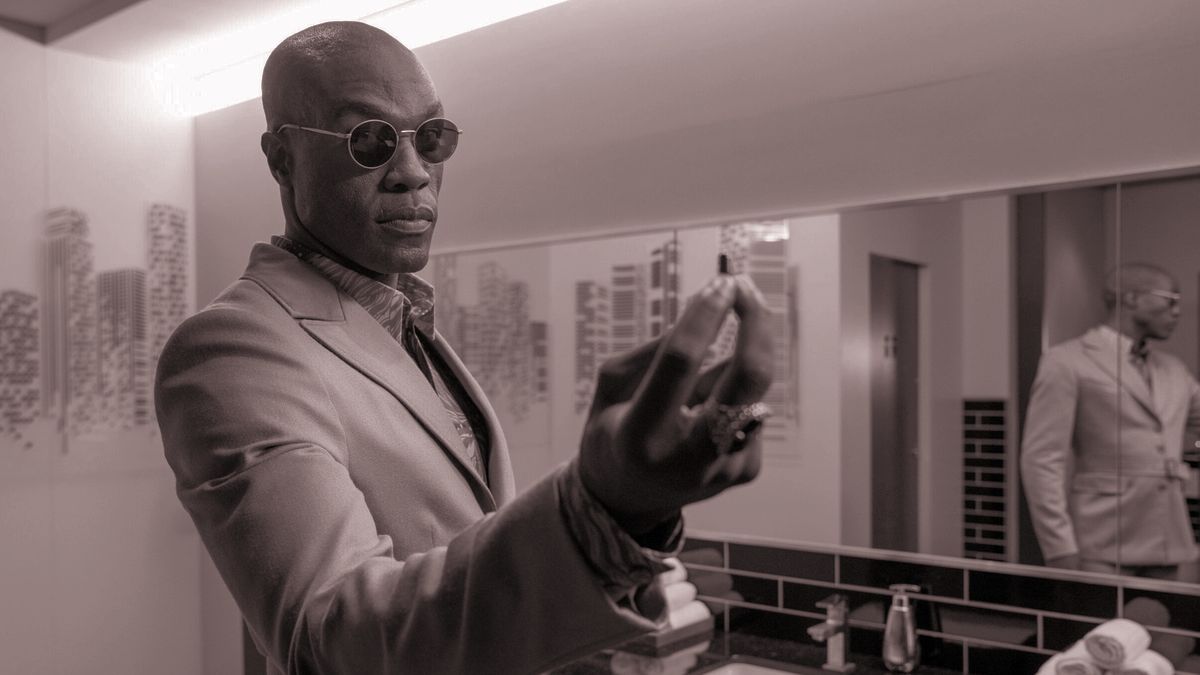
Anyway, tonight, Eriq Gardner is back with more on the Village Roadshow film library sale, why Warner Bros. is objecting, and how the fate of sequels to hits like The Matrix and Miss Congeniality hangs in the balance. Plus an update on the NFL antitrust litigation over Sunday Ticket, and the latest political machinations at Trump’s F.C.C.
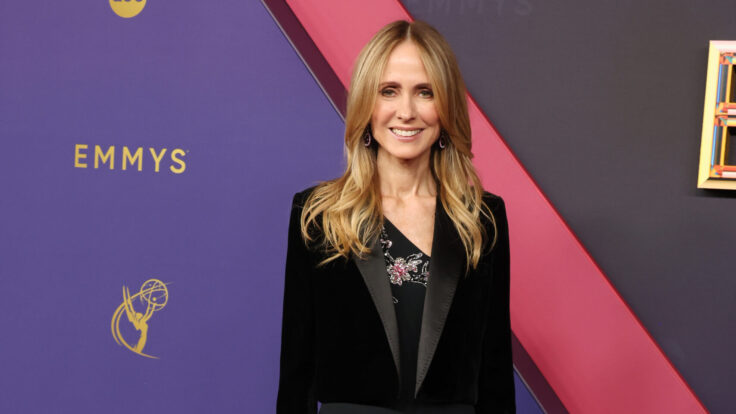
And for those attending the UCLA Entertainment Symposium on June 27, stay after the Dana Walden keynote and see Eriq’s defamation panel with Ted Boutrous, Camille Vasquez ( Johnny Depp’s lawyer), and ABC News senior counsel Selina MacLaren. Should be fascinating. Tickets are here.
Okay, all yours, Eriq…
|
|
|
 |
Eriq Gardner |
|
Tuesday Thoughts: Over/Under Edition
|
Recently on The Town, Matt Belloni and Bloomberg’s Lucas Shaw played the overcovered/undercovered game, assessing the Hollywood storylines they believe received a little too much and too little coverage so far this year. Let’s keep it going from the legal angle. Here’s my list…
|
- Overcovered: How Republican lawmakers are feeling about Donald Trump’s latest extension of the TikTok ban deadline. Yes, they voted for the ban, and yes, Trump is now openly flouting it. But at this point, it’s clear they’re going to do nothing more than grumble, and pretend this is all within presidential discretion. The story’s exhausted.
- Undercovered: How Republican state attorneys general are reacting to Trump’s TikTok pivot. Unlike their congressional counterparts, some of these officials—like Texas A.G. Ken Paxton and South Carolina’s Alan Wilson—are waging aggressive lawsuits against the Chinese-owned platform, seeking major penalties for child privacy violations and more. If Trump cuts a deal to keep TikTok ticking, does someone like Paxton, who’s leading in his Senate primary race, publicly break ranks with his party’s president?
- Overcovered: A judge ruled that Blake Lively must turn over texts with Taylor Swift related to her allegations against Justin Baldoni. Okay… so what? I’ve seen the headlines, the Reddit threads, and even the TikTok legal pundits with the skin-smoothing filters. But no one’s explained why Baldoni’s discovery “win” actually matters—or whether we’ll ever see these texts.
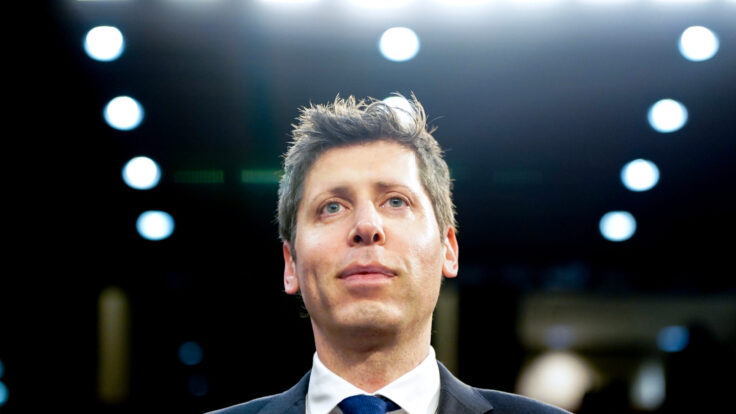
- Undercovered: A magistrate judge ruled that OpenAI can’t delete user chats during its copyright fight with the media. That’s a big deal, and a logistical nightmare for the company—OpenAI has told the court that the order will impose obligations requiring months of engineering time and substantial costs. It’s rare for a C.E.O. to publicly gripe about a preservation order, but Sam Altman took to X to argue that The New York Times’ request is a threat to user privacy. OpenAI has appealed the ruling to Judge Sidney Stein, who’ll hear arguments on Thursday—after a tech tutorial, of course.
- Overcovered: The theory that Shari Redstone could face bribery charges when—ok, if—CBS pays to settle Trump’s lawsuit to grease the Skydance-Paramount merger. I first raised the bribery charge possibility months ago, and the chatter has only grown louder, especially with Sens. Elizabeth Warren and Bernie Sanders piling on. Still, I’d be stunned if any settlement triggered criminal charges. There’s just too much fog.
- Undercovered: The idea that Redstone’s windfall could be targeted through civil forfeiture. Do I think authorities will seize the billions of dollars put in her bank account from the deal? No. But it’s not a tinfoil-hat scenario, either.An ambitious state A.G.—or, say, a future Alexandria Ocasio-Cortez administration—could pursue forfeiture of assets derived from an allegedly corrupt act. And civil forfeiture doesn’t require a conviction. At the very least, this deserves to be part of the conversation.
|
|
|
|
Here are a few other stories that should be getting more attention…
|
|
|
|
News and notes from around the entertainment law universe: The looming battle over the F.C.C.’s ability to deregulate media ownership; the latest twists in the NFL’s ongoing antitrust drama over Sunday Ticket; and the lingering derivative rights questions following Alcon Entertainment’s deal to acquire Village Roadshow’s film library for $417.5 million.
|
|
|
Most obituaries will remember Fred Smith, who died this week, as the FedEx founder who created the modern framework for global logistics. But in Hollywood, Smith’s legacy is intertwined with The Blind Side, The Book of Eli, and Blade Runner 2049—titles backed by Alcon Entertainment, the studio he co-founded and helped fund with a rare combination of big money and creative patience.
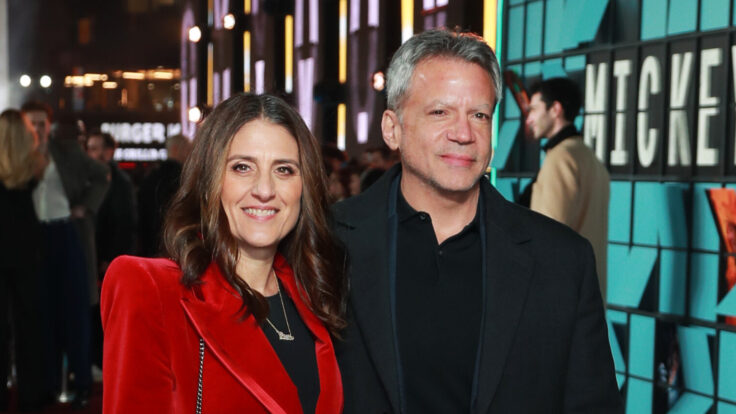
Fittingly, Alcon and its leaders, Andrew Kosove and Broderick Johnson, now find themselves at the center of a Hollywood power play. This week, the company announced a deal to acquire Village Roadshow’s film library for $417.5 million, after a bankruptcy judge signed off on last month’s auction. It’s a splashy move for Alcon. But while the trade headlines were upbeat, they mostly left out the messier details: Warner Bros. objected to the sale after losing in the auction, and there’s still a $100 million arbitration hanging over Village. In the bankruptcy proceedings, Warners was recently likened on the record to the chocolate cartel from Wonka—you know, the villains who watered down their product and barred a singing Timothée Chalamet from setting up shop.
Then there’s the deeper battle over what Alcon is actually buying. The films? Yes—about 100 of them, including co-financed titles like The Matrix, Ocean’s Eleven, and Joker, and as much as a 50 percent stake in some cases. The backend? Sure. But what about the right to make sequels? Spinoffs? Remakes? That’s where things get litigious.
As my partner Matt Belloni has reported, Village Roadshow’s implosion began with The Matrix Resurrections, which then-WarnerMedia C.E.O. Jason Kilar sent right to HBO Max during the height of Covid. Frustrated by the decision, Village refused to pay its share of the production budget, and got slammed in arbitration. The final damages could total $110 million, although the amount hasn’t been finalized, with Village maintaining that Warners can’t prove that Keanu Reeves fans won’t eventually make the final installment profitable. Meanwhile, Village filed for Chapter 11, which paused the dispute, and opened the door for a library sale to Alcon. Warners, worried about new audit demands from a new co-owner, balked. But after striking an agreement with Alcon over films that now mostly live on HBO Max, and agreeing to mediate with Village next month, the studio let the deal proceed.
The elephant in the room, however, is derivative rights. Last week, Warners told the court that its long-standing co-financing agreement with Village was “inherently personal.” That is, sequels and spinoffs couldn’t simply be inherited by Alcon in the bankruptcy. In other words, if someone else wanted to join the party for The Matrix 5 or I Am Legend 2, they would have to be invited by Warners.
Naturally, Alcon and Village see things differently. Village has argued that co-ownership of the films confers certain rights under copyright law, including derivative rights, and that the only thing stopping Alcon from unilaterally producing new entries in the franchises is a contract. And if that contract isn’t transferable, or can be rejected under bankruptcy law, that might free up Alcon to go its own way. Sure, they probably couldn’t strike a deal with Netflix for a new Ocean’s Eleven without a fight—but maybe there’s a legal opening.
Warners, for its part, told me that it considers the contract already largely performed, and not subject to rejection—at least not without heavy financial penalties. The studio sees zero chance that Alcon takes Miss Congeniality, Happy Feet, or Speed Racer to Disney and lives to tell the tale. And yet, that’s precisely what the coming courtroom showdown is about. A hearing is scheduled for next week in Delaware bankruptcy court, where lawyers will argue over just how much creative freedom that $417.5 million buys.
Keep in mind that Alcon is no pushover. It has quietly amassed a colorful legal history, from Michael Oher’s dispute over The Blind Side, to Alcon’s ongoing lawsuit against Elon Musk for allegedly using an A.I.-generated image that looked a bit too much like it was ripped from Blade Runner 2049. Now, with Village Roadshow’s assets in play, Alcon may find itself at the center of another precedent-setting showdown.
|
The F.C.C. & The Conservative Media Machine
|
Now that the F.C.C. has a Republican majority, thanks to the Senate’s confirmation of Olivia Trusty, the Brendan Carr–led agency is wasting no time dusting off some unfinished business from the early Trump years. First up: hitting “refresh” on an 8-year-old docket item to repeal the rule that prevents any single broadcaster from owning stations that reach more than 39 percent of U.S. households. Once Carr and Trusty cast their votes, two things are all but assured: a legal challenge, and, assuming the courts don’t get in the way, a fresh wave of local-TV consolidation. Nexstar, already the nation’s largest station group, is poised to go shopping, with Sinclair and others not far behind.
Of course, deregulating media ownership has long been a pet cause of the broadcast lobby—and a reliable item on the G.O.P. wish list. And the history here guarantees legal fireworks. Back in 2003, a Republican-led F.C.C. tried to raise the cap from 35 to 45 percent. But then something remarkable happened: Ted Stevens, the late Republican senator from Alaska, broke ranks, siding with Democrats, and slipped a rider into an omnibus spending bill that rolled the cap back down. A minor political melodrama ensued. George W. Bush threatened a veto, a compromise was struck, and what emerged was today’s 39 percent threshold.
Because Congress ultimately set that figure, cable operators, public interest groups, and just about every other media watchdog insist that the F.C.C. can’t unilaterally change the rule without a new act of Congress. That argument will anchor an inevitable lawsuit, and put Republicans in the awkward position of defending a federal regulator’s authority to rewrite rules. (The same constitutional grey zone helped doom a similar push during Trump’s first term.)
Further complicating the picture is the so-called “UHF discount,” a Reagan-era artifact that lets broadcasters undercount the audience reach for stations that transmit over ultrahigh frequencies. (Never mind that digital TV effectively leveled the playing field years ago.) Trump’s F.C.C. revived the discount in 2017, and it’s still on the books, which effectively lets broadcasters exceed the cap already. A nod from Carr would blow the door wide open.
Naturally, the broadcasters have their script ready. They’ll argue that consolidation is essential in the age of streaming, and that scale is needed to compete with tech giants. But that’s only part of the story. There’s a clear ideological subtext here, too: Carr and his allies would very much like to see more muscular conservative stations negotiating with the supposedly liberal, coastal media establishment that owns CBS, NBC, and ABC. Expect more deregulatory moves from the F.C.C. in the months ahead—each one designed to give local station groups, and the conservative media machine they increasingly support, a broader national footprint.
|
When it comes to the future of television, changes in media ownership might matter—but not nearly as much as whatever Roger Goodell decides before breakfast. The NFL commissioner presides over the last bastion of appointment viewing: live football. By deciding who gets to watch his league, where they watch, and when, he has an outsize role in shaping consumer behavior.
That’s why it was surprising, this past week, when the networks—CBS, NBC, and ABC, plus ESPN—were talking as if they held the cards determining the fate of American sports viewership, instead of the leagues they all pay handsomely. In a filing to the Ninth Circuit Court of Appeals, the broadcasters insisted they would never— never!—share their live NFL feeds with direct competitors. Except, of course, they kinda already do.
The comments came as part of the league’s ongoing antitrust drama over NFL Sunday Ticket, a case that’s been lumbering through the legal system for more than a decade. Last summer, a California jury delivered a stunning $4.7 billion verdict against the league, finding that its 32 franchises had conspired to bundle and overprice the package of out-of-market games—first via DirecTV, now through YouTube TV. The plaintiffs made the novel argument that the NFL didn’t need to function as a monolithic broadcast czar, and that individual teams should be allowed to license their own rights: Let Jerry Jones cut his own deal to air the Cowboys in Manhattan.
The jury bought in before the judge threw it out, citing questionable testimony from the plaintiffs’ economic experts. Now, the case is back on appeal, with the Ninth Circuit again being asked to decide whether the NFL’s centrally controlled media operation is a savvy commercial enterprise, or a slow-motion cartel. I wouldn’t underestimate the possibility that the court reverses the decision, exposing the NFL—and, by extension, its media partners—to massive financial and structural risk.
The league is taking no chances, and has mobilized the full machinery of third-party support. Criminal justice reform advocates, and tech industry types, have filed amicus briefs—not because they care about out-of-market Ravens games, but because, they claim, they’re worried about what bad expert testimony could do in their own legal realms.
Meanwhile, the stakes are also high for broadcasters, who have spent decades paying enormous sums to produce NFL games, only to see those same games repackaged and redistributed internationally on RedZone, and through Sunday Ticket. Now, in their amicus brief, they insist there’s a red line: If teams ever started cutting independent deals, particularly with rival networks or streamers, it would undermine the entire business model. “The only way for broadcasters to protect their investments,” they wrote,
“is to maintain exclusivity—and it is hard to imagine anything more injurious to exclusivity than competing against a direct competitor airing one’s own broadcast.”
Will the Ninth Circuit bite? Probably not. But if the plaintiffs prevail, the case could be heading for a second act at the Supreme Court. The justices passed on it once before, but Justice Brett Kavanaugh has signaled he’s intrigued by the idea that the NFL is a lawful joint venture that lives and dies by the coordination of its teams and their media partners.
The networks, for their part, are emphasizing the complexity of the whole operation—their investments, the logistics, the scheduling, and the sacred distinction between “in market” and “out of market.” For the moment, the NFL is happy to let them do the talking, play up their indispensable role, and gesture at shared vulnerability. It’s all a performance, of course. Everyone knows who calls the plays.
|
|
Thanks, Eriq. I’ll see everyone on Thursday.
Matt
|
|
|
|
Puck founding partner Matt Belloni takes you inside the business of Hollywood, using exclusive reporting and insight to explain the backstories on everything from Marvel movies to the streaming wars.
|
|
|
|
Unique and privileged insight into the private conversations taking place inside boardrooms and corner offices up and down Wall Street, relayed by best-selling author, journalist, and former M&A senior banker William D. Cohan.
|
|
|
Need help? Review our FAQ page or contact us for assistance. For brand partnerships, email ads@puck.news.
You received this email because you signed up to receive emails from Puck, or as part of your Puck account associated with . To stop receiving this newsletter and/or manage all your email preferences, click here.
|
|
Puck is published by Heat Media LLC. 107 Greenwich St, New York, NY 10006
|
|
|
|