{{ 'now' | timezone: 'America/New_York' | date: '%b %d, %Y' }} |
|
|
Welcome back to What I’m Hearing+. This morning, as I was braving LAX, I
broke the news that I teased in WIH last night: Paramount will indeed release Brett Ratner’s Rush Hour 4 at Donald Trump’s request. What a time for democracy. And speaking of failed experiments, Warner Bros. Discovery is busy evaluating sale offers, and Eriq Gardner is here with a legal lesson from past media M&A that
may become very relevant very soon…
All yours, Eriq…
Discussed in this issue: Mark Pogachefsky, Sylvia Desrochers, Devin McRae, Kevin Spacey, Arun Subramanian, Brendan Carr, David Ellison, Steve Sunshine, Arthur Burke, Kyle Mach, David Zaslav, Sumner
Redstone, Barry Diller, John Malone, and more…
Not a Puck member yet? Just click here. Got a news tip or an idea for me? Just reply to this email, text me, or message me on Signal at 310-804-3198.
Let’s begin… |
|
|

| Eriq Gardner
|
|
- Battle of the publicity-seeking
publicist lawsuits: When Hollywood reps jump ship—taking clients, trade secrets, and the office espresso machine—the litigation is rarely pretty. And when the poaching happens among publicists, the legal battles tend to become especially performative. Take MPRM, which sued 42West after the larger P.R. firm absorbed its entire leadership team in September. In court filings, MPRM hinted darkly at a conspiracy “underway for some time”—one that allegedly “demolished the decades of
investment” that president Mark Pogachefsky poured into building a firm trusted by Netflix, Disney, and indie filmmakers. “The fix was already in,” the filing argues, claiming that former executive Sylvia Desrochers and others “conspired to raid MPRM’s employees and clients while they were still employed by MPRM. They concealed their movements until they were ready to hatch their plan.”
Now 42West has fired back with a scorched-earth
response. They called the lawsuit a rush job that was blasted to all the Penske trades before service was even attempted. (The nerve—publicists doing publicity!) In a demurrer, they argued that MPRM’s claims are legally flimsy and factually unsupported. And, for good measure, they tossed in some sharp-elbowed character assessments, accusing Pogachefsky of “mismanag[ing]” the firm, fostering a “toxic work environment,” and draining its “rapidly diminishing cash reserves
to fund his lavish lifestyle.” (MPRM attorney Devin McRae told me 42West’s response was a “waste of time.”)
Is any of that relevant to whether the poaching was unlawful? Not really. But that’s not the point, right? - Are Spacey’s suicidal thoughts inadmissible?: A trial date is quietly set for next month in Media Rights Capital’s lawsuit against Fireman’s Fund over the insurer’s refusal to pay the producer a claim
over Kevin Spacey’s unavailability during Season 6 of House of Cards. MRC is seeking up to $150 million in punitive damages. Netflix, notably, will get half of whatever comes out of the trial. One unremarked detail: Spacey stated in a sworn deposition that, at the nadir of his career, he seriously contemplated suicide.
You may recall the backstory. About a year ago, Spacey reached a
quiet settlement with MRC, wiping out nearly all of the $31 million he owed for breaching his contract via on-set sexual misconduct. He’d pay just $1 million, and, in exchange, agree to testify in MRC’s insurance battle with Fireman’s Fund. Ahead of next month’s trial, Fireman’s Fund is making a final push to kill the case by arguing that Spacey’s story doesn’t hold together: He
claimed in a previous arbitration that, despite checking himself into a sex addiction clinic, he was capable of returning to House of Cards. Now he’s saying he was too mentally unwell to perform. That’s too much of a contradiction, they say.
If the trial proceeds, Fireman’s Fund wants to preclude certain “prejudicial” bits of Spacey’s recent declaration that he wasn’t fit for duty, including a passage that would certainly support MRC’s version of events: “If I had gone back to
work, I would have been unable to perform as a result of my sicknesses and illnesses,” Spacey testified. “I continued to have suicidal thoughts, and even went so far as determining how I was going to commit suicide.” The Oscar winner goes on to credit his time in rehab with possibly saving his life. - Disney dinged by Dish: For the second year running, Disney has lost a key legal battle in the sports streaming wars. Last year, FuboTV successfully
enjoined the launch of Disney’s planned joint streaming venture with Fox and Warner Bros. Discovery—leading Disney to acquire FuboTV and pivot toward ESPN Unlimited. This time, playing offense, Disney tried—and just failed—to stop Dish’s daily and weekend-long “Sling TV passes.” The entertainment giant’s dire warning that daily passes would upend its entire business model didn’t sway Judge Arun Subramanian. (See my
earlier piece about this case.) Crowing over its win in court, Dish dropped the price of a Sling TV day pass from $4.99 to $1 until November 30.
If you haven’t seen Subramanian’s full opinion, it’s worth a read—not just for the parsing
of what qualifies as a “subscription,” but the rare treat of unredacted details. Among them: Dish doesn’t owe license fees for users not subscribed on the 21st day of the month. Subramanian’s response? Tough luck—next time, write a better contract. We also learn that other distributors have asked Disney for similar day-pass rights. So far, Disney hasn’t granted them. But after this ruling, they may not need to ask.
Subramanian, incidentally, is also the judge overseeing the D.O.J.’s
high-stakes antitrust push to break up Live Nation and Ticketmaster. A summary judgment motion just landed there—heavily redacted, naturally. - Nexstar’s wish list for Chairman Carr: As the holiday season approaches, I can’t help but wonder what’s on Nexstar’s wish list. After all, Santa Claus—er, F.C.C. chairman Brendan Carr—has been in an especially giving mood. Just look at the F.C.C.’s November 19
public notice, which invites comment on the power dynamics between national networks and their local affiliates. Lest there be any confusion about where Carr’s sympathies lie, the notice frames the inquiry as a necessary step in assessing whether CBS, NBC, and ABC are “exerting undue influence or control” over the folks downstream.
So what will Nexstar ask for? First and
foremost, a long-coveted gift: the end of local ownership caps, which would allow it to gobble up Tegna and boost its reach to 56 percent of U.S. households—well above the current 39 percent threshold. (For what it’s worth, Trump now says he’s against lifting the cap.) Throw in a few dual-station markets, a little extra leeway on programming control (see: Jimmy
Kimmel), and perhaps, if we’re dreaming big, a limit on those contractual “reverse retrans” fees that affiliates send upstream to the networks.
But if Nexstar is feeling really bold, what’s the local-broadcaster equivalent of a Red Ryder carbine-action 200-shot range model air rifle? My money’s on streaming. During a prior quadrennial ownership review, Nexstar griped that networks were dumping next-day airings onto their own streaming platforms—cannibalizing
local exclusivity. It also flagged the growing migration of NFL and MLB games to digital services. And that was before Comcast locked a playoff game behind Peacock and Disney simulcast the Super Bowl on Hulu.
Now Carr is publicly mulling those very issues and inviting formal comment. Nexstar has until December 10 to respond.
|
|
|
Now on to the main event… |
|
|
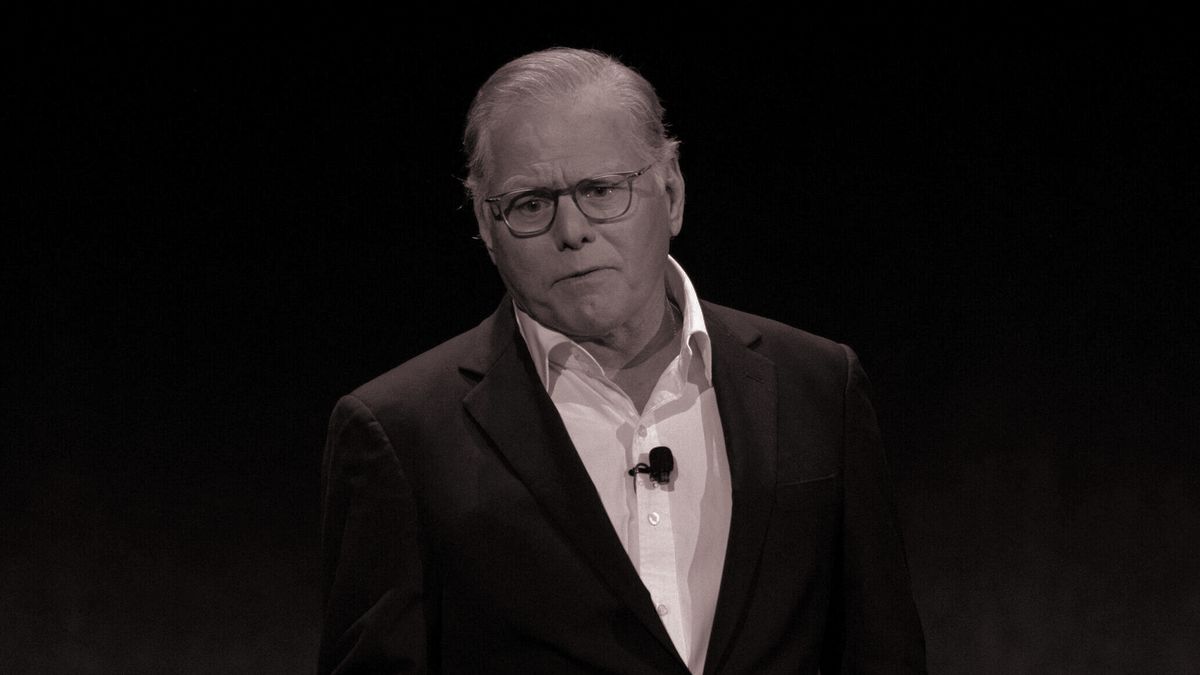
Echoes of the Diller–Redstone Paramount brawl and potential Delaware court battles are
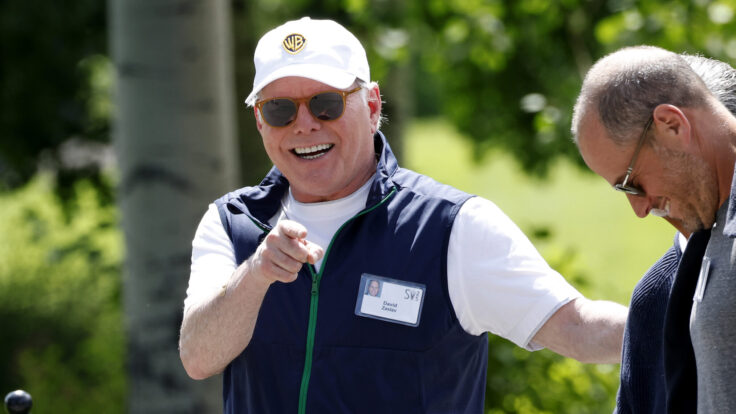
beginning to haunt the long road to resolution for David Zaslav’s sale of Warner Bros. Discovery. |
|
|
Has there ever been a merger subjected to as much preemptive public hand-wringing as the bidding war for
Warner Bros. Discovery? What should be a straightforward auction process has been transformed into a political saga filled with Trump palace intrigue, personal vendettas, and endless media kremlinology surrounding which acquirers might have a regulatory advantage.
The bidders, for their part, are all playing these games too. David Ellison’s Paramount Skydance, which appointed former Trump antitrust chief Makan Delrahim as its chief legal
officer, has made the promise of fast-track approval a central part of its pitch. Netflix has signed Steve Sunshine, the Skadden antitrust savant whose recent wins for Apple and Activision Blizzard have enhanced a reputation for defying gravity. (Sunshine, I’m told, has been telling Netflix that the D.O.J. is eminently beatable these days.) Comcast, meanwhile, has dusted off Davis Polk’s Arthur Burke, who guided its NBCUniversal, Time Warner Cable, and Sky
acquisitions through the regulatory gauntlet. Comcast has also hired Sullivan & Cromwell’s Kyle Mach, who was deputy director of the F.T.C.’s Bureau of Competition under Biden. |
|
|
A MESSAGE FROM OUR SPONSOR |
Transform Movie Fandom into Business Impact 🎬
The real magic of movies goes far beyond the screen, extending to purchasing behaviors beginning during the pre-release excitement and ending in ongoing fandom. New research from Amazon Ads and Crowd.DNA reveals the untapped potential of this, finding that fans maintain 10+ year connections with their favorite films and 81% actively participate in
movie-related purchases. These purchases aren’t limited to merchandise or music from the film. Moviegoing is driving cross-category spending, from dining to retail and beyond. Amazon Ads full-funnel solutions allows brands to engage fans all along the journey, creating opportunities for content
discovery, engagement, and continued fandom. Visit Amazon Ads to learn more. |
|
|
But for all the chatter about D.C., there’s a more combustible front that deserves attention: the Delaware Court of Chancery. Specifically, a potential showdown over David Zaslav and the WBD’s board duties as they enter Revlon mode, the long-settled M&A law that obligates them to secure the best deal reasonably attainable for shareholders.
And yet that’s where things get complicated. After all, what counts as the
highest bid when bidders are effectively offering to buy different versions of the company? Paramount Skydance wants the whole enchilada—WBD intact, Turner, CNN, and all. The others mostly want the Streaming and Studios assets, with Comcast happy to fold HBO into the mix. The result is a menu of fundamentally different deal structures. Plus, there are the finer points—reverse termination fees, legacy liabilities, and the treatment of whatever assets WBD may be left with to spin off on
its own. All of that could widen the delta in perceived value.
The WBD board is, of course, entitled to exercise its best judgment, and any deal would still require a shareholder vote. But several variables could make this deal irresistible to Chancery lawyers in bespoke suits. For one, there’s already a nagging sense in some corners that Zaslav may privately prefer a sale to Netflix or Comcast—outcomes perceived, rightly or wrongly, as more personally advantageous. Multiple sources have
texted me about his freshly tweaked employment agreement, which appears to reward him for certain spinoff configurations. That kind of timing is the sort of thing that tends to resurface in shareholder litigation. (Disclosure: As a result of our recent acquisition of Air Mail, Zaslav has become a de minimis shareholder in Puck.)
Then there’s the Ellison factor. If there’s even a whiff of procedural unfairness, he could stick around and quietly prod WBD’s biggest
investors to make their displeasure known. And if the Trump administration also decided to kick sand on the closing of Zaz’s deal, some of those shareholders might be willing to take the cue. Even if the D.O.J. face-plants, a regulatory quagmire still plays well in a Chancery complaint. |
As Zaz tries to figure out how to author the (potentially) last chapter in his abbreviated dream of Hollywood
moguldom, it’s worth a look back at September 12, 1993, when then-Viacom chairman Sumner Redstone announced the planned merger of Paramount and Viacom as a “marriage made in heaven” that would “never be torn asunder.’” Only a “nuclear attack” could stop the deal, he said. Those quotes resurfaced more than a year later in a Court of Chancery ruling
finding a likely breach of Revlon duties by Viacom’s board. The Paramount–Viacom transaction was put on ice. |
|
|
A MESSAGE FROM OUR SPONSOR |
Transform Movie Fandom into Business Impact 🎬
The real magic of movies goes far beyond the screen, extending to purchasing behaviors beginning during the pre-release excitement and ending in ongoing fandom. New research from Amazon Ads and Crowd.DNA reveals the untapped potential of this, finding that fans maintain 10+ year connections with their favorite films and 81% actively participate in
movie-related purchases. These purchases aren’t limited to merchandise or music from the film. Moviegoing is driving cross-category spending, from dining to retail and beyond. Amazon Ads full-funnel solutions allows brands to engage fans all along the journey, creating opportunities for content
discovery, engagement, and continued fandom. Visit Amazon Ads to learn more. |
|
|
Redstone, of course, eventually got his prize, but only after going a few bruising rounds with Barry
Diller, backed by John Malone, who also had designs on Paramount and who would soon become a mentor to Zaz. Back in the 1970s and early ’80s, Diller had famously turned Paramount into the number one studio in town, before clashing with corporate chief Martin Davis and leaving. When Diller later wanted back in, the story goes, Davis rebuffed him and made a deal with Redstone. So Diller made his hostile bid, and the fight moved to a Delaware
courtroom.
The Chancery Court, chastising the board for being “patently unreceptive” to alternative offers, enjoined the deal and even blocked a “poison pill” that tried to thwart Diller’s offer. After an appeals court affirmed the decision, open bidding began. Fortified by the cashflows from newly acquired Blockbuster (talk about another era!), Redstone ultimately outlasted Diller, who enlisted Comcast as a late-stage ally.
Will history repeat itself? That largely depends on what
happens next. Zaslav’s lawyers surely know Paramount v. QVC Network by heart and will be keen to avoid its traps. Unlike in the Diller–Redstone saga, though, WBD’s board is at least performing the rituals of openness—entertaining multiple bids, preparing for successive rounds. And thanks to the Delaware Supreme Court’s decision in C&J Energy
Services, it may be harder for shareholders to halt a deal outright: The court reiterated there is no affirmative duty to shop a company before moving toward a transaction. On the other hand, C&J also reaffirmed QVC’s bedrock principles: Board resistance to a competing bid, or any scent of an entrenching motive, can still trigger a Revlon problem.
The PSKY folks surely think they’ve put forward the strongest offer so far. And while the Trump 2.0
regulatory cloud hanging over a Netflix–WBD or Comcast–WBD pairing may be overstated, they also believe the regulatory risk—deal certainty, in banker speak—should count in the evaluation of who is bringing the most to the table.
Soon enough, we’ll see how the board weighs it all. Will Ellison leave feeling as rebuffed as Diller once did? Will Zaslav keep his
studio perch? What indemnification armor will be stitched into the final merger agreement? Each answer will shape the next chapter of this saga, and hopefully, nobody curses themselves by invoking the specter of nuclear war. |
Thanks, Eriq. I’ll see everyone next Monday. Happy Thanksgiving,
Matt |
|
|
Puck founding partner Matt Belloni takes you inside the business of Hollywood, using exclusive reporting and insight to explain
the backstories on everything from Marvel movies to the streaming wars. |
|
|
Ace media reporter Dylan Byers brings readers into the C-suite as he chronicles the biggest stories in the industry: the future
of cable news in the streaming era, the transformation of legacy publishers, the tech giants remaking the market, and all the egos involved. |
|
|
Need help? Review our FAQ page or contact us for assistance. For brand partnerships, email ads@puck.news. You received this email because you signed up to receive emails from Puck, or as part of your Puck account associated with {{customer.email}}. To stop receiving this newsletter and/or manage all your email preferences, click here. |
Puck is published by Heat Media LLC. 107 Greenwich St, New York, NY 10006 |
|
|
|