|
Welcome back to WIH+, the Beverly Hills of WIH’s Real Housewives franchise. Tonight, Eriq Gardner is back with a surprising update on the Housewives legal issues. Plus a new take on Shari Redstone’s settlement talks with Trump, a high-profile producer settlement, and… Flamin’ Hot Cheetos. All yours, Eriq…
|
|
|
|
A MESSAGE FROM OUR SPONSOR
|
|
“Rian Johnson and Natasha Lyonne's murder mystery is a gift for TV lovers everywhere"
|
|
“A magnetic performance from Natasha Lyonne, clever writing, and a laundry list of comedic guest stars”
|
|
“Season 2 of might be the most purely enjoyable show on TV”
|
[WATCH] Natasha Lyonne talks ‘Poker Face’ S2
Natasha Lyonne joins TODAY to talk about the second season of her hit Emmy Award-winning series “Poker Face” where she plays Charlie Cale, an ex-casino worker-turned-detective who happens to be a human lie detector.
|
|
For more on POKER FACE, visit PeacockFYC.com
|
|
|
 |
Eriq Gardner |
|
Paramount’s Trump Settlement Calculus
|
Donald Trump wants more than $25 million to settle his lawsuit against CBS and 60 Minutes. Paramount Global, for its part, is reportedly offering around $15 million—about what Disney paid to resolve its George Stephanopoulos headache. On paper, that doesn’t seem like a huge gulf, especially given that Paramount’s $8 billion merger with David Ellison’s Skydance Media ostensibly hangs in the balance. So what’s actually holding up a deal?
Is it fear that the payoff will look like a bribe? Doesn’t seem like Shari Redstone particularly cares about the optics at this point—especially since the collapse of the sale could be financially calamitous for her. Concern over potential shareholder lawsuits? Wasn’t that why she negotiated in the revised deal that Ellison and RedBird would help cover her legal bills? Perhaps it’s something less discussed—like the risk that admitting fault could justify more regulatory scrutiny from F.C.C. boss Brendan Carr, or even invite follow-up defamation suits from 60 Minutes producers who might be portrayed as having acted unprofessionally.
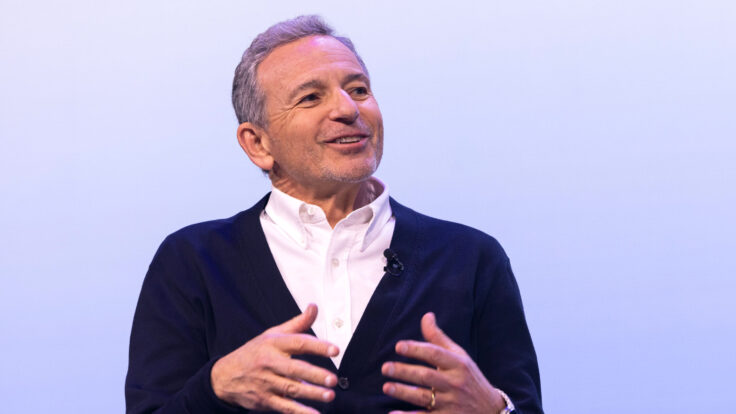
My read is that Paramount’s board, and the supposedly recused Redstone, aren’t losing sleep over any of those scenarios, but they still want a settlement that looks defensible—a sum in line with the Bob Iger market rate. Trump, however, may think that he has leverage here. Iger got the early-bird discount, and he was likely decluttering the path to the Fubo acquisition rather than an existential sale/merger. Still, the president would be wise not to overplay his hand.
Trump may not be listening to the lawyers (or humble reporters) who have pointed out that his lawsuit—based on alleged election interference over an edited Kamala Harris interview—would almost certainly get tossed on First Amendment grounds. But he does tend to care when things get personal. In fact, Trump often settles just before discovery gets uncomfortable:
financial disclosures, sworn depositions, that sort of thing. The smart money says the two sides have yet to settle simply because Trump hasn’t felt the demands and costs of pursuing this case just yet. That’s coming.
It’s worth noting that this isn’t just about one lawsuit. Trump is currently on the defensive in several civil matters, from how Truth Social went public to his latest comments regarding the Central Park Five. In those cases, plaintiffs are pointing to the pending CBS suit to argue that Trump shouldn’t be able to invoke presidential immunity selectively, pausing only the litigation he finds inconvenient.
Last week, a Florida appeals court sided with Trump on that question in his 2022 defamation suit against the Pulitzer Board, effectively ruling that he can pick and choose. But other rulings are pending in Delaware and Pennsylvania. The more engaged Trump becomes in this CBS case, the more opportunities he creates for a court somewhere else to call his bluff.
|
- The NYT-Amazon A.I. gambit: One significant and underappreciated aspect of the Times’s new A.I. licensing deal with Amazon is that it’s likely to become a benchmark in the growing wave of litigation over A.I. companies training their models on copyrighted journalism. In fact, it’s a safe bet that part of the Times’s calculus here was to strengthen its legal position in its ongoing lawsuit against OpenAI by establishing clear market harm—namely, what a company like OpenAI denied the Times by refusing to strike a similar deal. The financial terms of the Amazon deal have yet to be disclosed, but I expect that to change when the Times lawsuit heads to trial and both sides begin zeroing in on damages.
- Trump weighs in on copyright case: Should internet service providers like Cox be required to terminate the accounts of users flagged for music piracy, or else risk liability for enabling copyright infringement? Sony, and the wider entertainment industry, have long argued that providers like Cox benefit financially from users pirating music, and should be held accountable. Back in 2019, after all, Sony won a $1 billion verdict in favor of record labels and music publishers against Cox, on just this question. Last year, however, the 4th Circuit partially overturned that verdict, sending it back for a new damages trial. The Trump administration is partial to Cox’s point of view, and is now urging the Supreme Court to review the matter.It’s hard to recall the last time a U.S. administration declined to support the creative industries in a major copyright case. In fact, Trump’s solicitor general, D. John Sauer, backed Cox by advancing the tech-friendly position that contributory copyright liability should require showing “culpable intent.” The administration’s position here doesn’t bode well for entertainment companies as A.I. copyright battles work their way up the appellate chain.
- Who owns Jumanji?: One more copyright item: While Warner Bros. isn’t fighting Stephen King’s termination notice on The Shawshank Redemption—like me, they probably see no reason to remake a near-perfect original—the same can’t be said for Jumanji, the Sony franchise that’s spawned three successful films, including two Dwayne Johnson–fronted blockbusters in the past decade.Chris Van Allsburg, author of the original 1981 children’s book of the same name, is seeking to reclaim the rights, I’ve learned. Sony is pushing back, arguing that it acquired the rights directly from the publisher, and that Van Allsburg’s termination notice is also premature by a couple of years. The author has retained counsel, so stay tuned…
- When Hollywood bromances go bad: The legal war between tobacco heir John P. Middleton and producer Roy Lee appears to be over. The two have been locked in litigation for more than six years over the collapse of their business relationship, with Middleton claiming that Lee owed him unpaid fees and movie credits, and Lee portraying Middleton as a hard-partying dilettante who walked away from his financial obligations. This past week, on the eve of trial, the pair informed a Los Angeles judge that they’d reached a settlement. While terms haven’t been disclosed, the outcome likely favors Lee. His claims were still active, while Middleton’s had been tossed after he cycled through lawyers and got timed out.
- Fritos prevails: Former Frito-Lay janitor Richard Montañez’s lawsuit against the company for denying that he invented Flamin’ Hot Cheetos fizzled this past week after a judge threw out his complaint. (Here’s the ruling.) Truth be told, it might have made for a decent defamation case if Montañez had filed back in 2021, when the Los Angeles Times published a widely circulated story stating “the facts do not support the urban legend” that Montañez conceived the billion-dollar snack. But Montañez waited too long, and the statute of limitations ran out on what was likely his strongest claim. (In any event, the L.A. Times story didn’t stop the 2023 release of Searchlight’s Flamin’ Hot, which largely adhered to the janitor-invents-billion-dollar-snack narrative.)
The case drew headlines when Montañez sued last year, but most missed that Montañez was really motivated by the Oscar-winning documentary studio Lightbox (Man on Wire, Searching for Sugar Man) backing out of a film project about the Flamin’ Hot origin story. Montañez inferred that Frito-Lay had repeated its original denials, giving him a new window to sue. The problem? He didn’t have specific details about why the Lightbox guys actually passed, which proved fatal to his case.
|
|
|
|
Just goes to show you these industry fights often live and die on nuance, which brings me to this week’s main story…
|
|
|
|
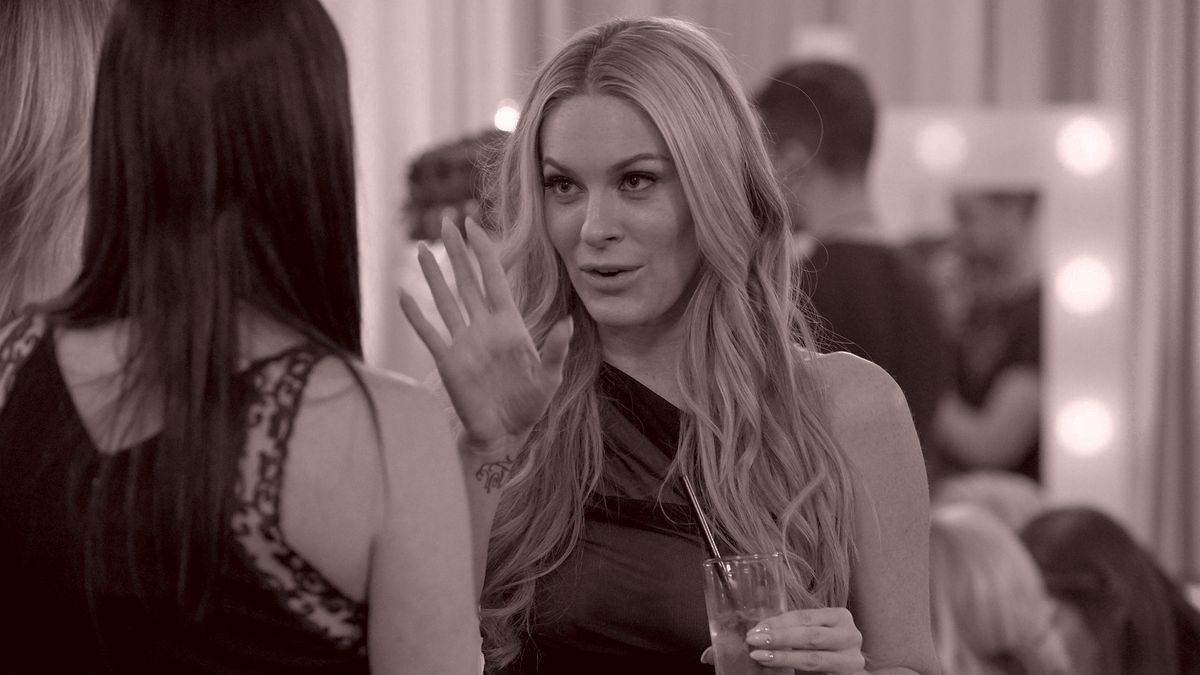
Former ‘Real Housewife’ star Leah McSweeney has amended her lawsuit to accuse Bravo’s Andy Cohen of orchestrating a smear campaign against her—a claim that mirrors the allegations in the Blake Lively–Justin Baldoni saga. The same judge is overseeing both cases… and his decision in one could have major repercussions for the other.
|
|
|
If you’re searching for an entertainment lawsuit that checks all the boxes—a legitimate business problem, a thorny law school exam hypo, and a ready-made TMZ headline—look no further than Leah McSweeney v. NBCUniversal. As I’ve previously reported, the former Real Housewives of New York City star is suing Bravo’s parent company over alleged mistreatment when she was a castmember during seasons 12 and 13. The show “weaponized” her alcoholism, she wrote, and exploited her relapse for a storyline. The case has already delivered one ruling for the books: Back in March, U.S. District Judge Lewis Liman held that Bravo’s casting choices—yes, even an alleged preference for heavy drinkers—are protected by the First Amendment.
That meant no go on McSweeney’s disability discrimination claim, which argued that her struggle with alcoholism should have shielded her from being cast as a party girl. But Liman let part of McSweeney’s suit proceed—specifically, that she endured a hostile workplace, as well as her claim that producers failed to reasonably accommodate her request to attend Alcoholics Anonymous meetings.
|
|
|
|
A MESSAGE FROM OUR SPONSOR
|
|
“Rian Johnson and Natasha Lyonne's murder mystery is a gift for TV lovers everywhere"
|
|
“A magnetic performance from Natasha Lyonne, clever writing, and a laundry list of comedic guest stars”
|
|
“Season 2 of might be the most purely enjoyable show on TV”
|
[WATCH] Natasha Lyonne talks ‘Poker Face’ S2
Natasha Lyonne joins TODAY to talk about the second season of her hit Emmy Award-winning series “Poker Face” where she plays Charlie Cale, an ex-casino worker-turned-detective who happens to be a human lie detector.
|
|
For more on POKER FACE, visit PeacockFYC.com
|
|
|
Then things got weirder. In a subplot fit for reunion night, McSweeney had alleged in her original complaint, filed in February 2024, that Housewives impresario Andy Cohen was using cocaine behind the scenes. Cohen strenuously denied the claims, and within days, his attorney—Gibson Dunn’s Orin Snyder—fired off a letter demanding a retraction and threatening legal consequences. Instead of backing off, McSweeney doubled down, amending her lawsuit several times (most recently last week) to cite supposed corroboration for her accusations against Cohen from Kathy Griffin and various Housewives veterans. She also accused Snyder of retaliatory conduct—namely, leaking his demand letter to the press.
McSweeney’s latest filing claims a coordinated smear campaign was unleashed at Cohen’s direction. The alleged strategy called for enlisting 24 Bravo personalities to denounce her and destroy her credibility. The result, according to McSweeney: reputational damage, lost sponsorships, and a once-viable reality career torched by Bravo, the same network that made her famous.
Now the matter returns to Judge Liman, who must decide whether McSweeney’s new version of her awsuit—centered on her supposed blacklisting—has legal legs. Does she have a case? Or might there be other reasons for McSweeney’s lack of TV offers—like, say, her public declaration of alcoholism, paired with a high-profile lawsuit against her employer, or the fact that few housewives have found material crossover success after leaving the series? Whatever the answer, Liman’s prior rulings offer a roadmap.
|
Liman, of course, is also the judge presiding over the Blake Lively– Justin Baldoni dispute, another case involving behind-the-scenes drama, strategic media leaks, and tricky legal questions about the boundaries of protected speech when explosive allegations are funneled through court filings. There, too, Liman is having to sort valid legal arguments from noise.
Liman’s résumé may help explain his growing relevance as a go-to judge for high-profile entertainment litigation. He’s the brother of filmmaker Doug Liman ( The Bourne Identity) and the son of legendary attorney Arthur Liman, who led high-profile investigations of both the Attica prison riots and the Iran-Contra affair. A graduate of Fieldston (alma mater to Robert Oppenheimer, Jeffrey Katzenberg, Stephen Sondheim, A.G. Sulzberger—and yes, classmate Orin Snyder), Liman went from Yale Law to Big Law, and ultimately to the federal bench in 2020, as part of a Schumer- Trump deal that the former president may now regret. (Just last week, Liman blocked Trump’s push to kill New York’s congestion pricing plan.)
Liman’s March opinion in the Cohen-McSweeney case is telling. He was notably skeptical of McSweeney’s claim that Snyder’s demand letter constituted retaliation against her. “Context matters,” Liman wrote. Lawyers issue threats all the time; it’s practically part of the job. And McSweeney, who had her own legal team, wasn’t helpless in the face of legal bluster.
Liman also didn’t buy the claim that Snyder crossed a line simply by warning McSweeney that her drug-use allegations against Cohen could be defamatory. It’s hardly news that false smears can lead to legal trouble. Nor did he find much traction in the idea that litigation privilege automatically shielded her. If a lawsuit was maliciously instituted not to vindicate rights, but purely to create headlines, Liman suggested privilege wouldn’t save her.
What of Snyder’s own media play, allegedly leaking his letter to Variety and The Hollywood Reporter? Was this the kind of “adverse act” meant to chill someone from speaking up about workplace concerns? Liman acknowledged that reputational attacks can cross the line—especially if they affect a person’s job prospects—but noted that issue typically arises when, say, an ex-boss badmouths someone to a future employer. In this case, Cohen’s letter didn’t come with a clear explanation for how it would harm McSweeney’s career. That claim fell short. Hence, McSweeney’s new efforts to recast the letter as part of a broader scheme that included Bravo personalities aiming to discredit and blacklist her from the reality TV world. Sarah Matz, her attorney, clearly took Liman’s direction, and decided to make this the new center of gravity in the case.
It’s becoming clear from these decisions that Liman is a bit of an institutionalist, not interested in drama for its own sake. He respects legal privilege, but doesn’t treat it as a hall pass for media warfare. He knows the difference between aggressive lawyering, and strategic defamation. And he’s not likely to greenlight claims that feel more like press releases than pleadings—all of which foreshadow his approach in the Lively-Baldoni squabble.
Lively’s camp says her claims of sexual harassment were made directly to law enforcement, and should be protected. Baldoni’s team argues she acted in bad faith, and that leaked allegations don’t enjoy immunity. Liman is imminently due to rule on several motions to dismiss in the case, and that will set the stage for the summary judgment round later this year, and then a possible trial as early as next March. I’d expect Liman to trim the fat, tossing out the more theatrical claims, but allowing the meat of the case— i.e., Lively’s claim of sexual harassment and retaliation, Baldoni’s claim of defamation—to go forward. In Bravo parlance: This one’s not getting canceled anytime soon.
|
|
Thanks, Eriq. I’ll see everyone on Thursday.
Matt
|
|
|
Need help? Review our FAQ page or contact us for assistance. For brand partnerships, email ads@puck.news.
You received this email because you signed up to receive emails from Puck, or as part of your Puck account associated with . To stop receiving this newsletter and/or manage all your email preferences, click here.
|
|
Puck is published by Heat Media LLC. 107 Greenwich St, New York, NY 10006
|
|
|
|


_01JWC49GNG5SS1N1A6JTA5N10G.jpg "Poker Face - Peacock")
_01JWC49DKFBMQJ41TA7QMMDAY6.jpg "Poker Face - Peacock")