Welcome back to What I’m Hearing+, where I’m happy to report that Eriq
Gardner has won the annual Puck fantasy football league. (I don’t play.) He’s also back today with a smart analysis of how a government case against Netflix buying Warner Bros. might play out, with possible shades of Hollywood antitrust battles of decades ago (and tech wars today). Over to you, Eriq…
Not a Puck member yet? Never too late. Just click here.
Mentioned in this
issue: Ted Sarandos, Julia Louis-Dreyfus, Jon Voight, John Goodman, Brad Smith, Greg Peters, Donald Trump, Bob Iger, Josephine Staton, Rupert Murdoch, Elon Musk, Miles Teller, John Momtazee, Taylor Swift, Jeff Bridges, and
more…
Let’s begin…
|
|
|
 |
Eriq Gardner |
|
- A Moelis dealmaker
wants $50 million L.A. fire payout: Tomorrow marks the one-year anniversary of the Palisades fire, the blaze that scorched some of Southern California’s most rarefied enclaves, killed 12 people, and incinerated roughly 18,000 structures—including the homes of stars like Jeff Bridges, Julia Louis-Dreyfus, Miles Teller, Billy Crystal, and John Goodman. Scores of residents, famous or otherwise,
escaped with their homes intact, or arguably salvageable. And on that “arguably,” of course, courtroom dramas are made.Enter one of Hollywood’s top dealmakers, John Momtazee, co-founder and chairman of Moelis & Company, who disagrees with his insurer’s argument that his home, which is technically still standing, could be cleaned up and made livable. Instead, Momtazee wants his house declared a total loss, and a $50 million payout.
And so Momtazee, who was
part of the investment banking team that advised Netflix in its play for Warner Bros. Discovery, has spent the past few months skirmishing with Federal Insurance Company. He also hired three big law firms, including Quinn Emanuel, which also happens to be accusing WBD of rigging its sales process in favor of Netflix. So far, Federal has offered to pay for environmental remediation—cleaning up any contamination, removing hazardous substances from the soil and groundwater, etcetera—but
Momtazee has said that the scientists he hired have concluded that even a rebuild wouldn’t prevent recontamination.
This isn’t just any coverage dispute, at least according to Momtazee. In filings, he frames the case as part of what he calls Federal’s “decades-long effort to corner the insurance market among high net-worth individuals” through deceptive practices. He and the Quinn Emanuel team are claiming not only breach of contract but also fraud, false advertising, and even RICO.
Federal isn’t rolling over, of course, and has directed the court’s attention to an email Momtazee sent to one of his investment advisors last January, in which he vowed to engage in “armed combat … to maximize [his] recovery and lifestyle.”
So far, U.S. District Judge Josephine Staton hasn’t bitten. The “promises” Federal made to its wealthy clientele, she noted, may amount to nothing more than classic puffery. And she dismissed an unfair-competition claim on
Monday. But the case lingers, and in the background, so do larger questions about how the insurance industry manages billion-dollar liabilities from climate-fueled disasters—especially when the policyholders are rich, connected, and armed with elite litigators. Call it a scorched-earth strategy, in every sense.
- Toberoff no longer clowning around in Elon case: I wonder what Elon Musk made of a recent Business Insider headline noting
that one of his lawyers is—quite literally—a clown. That would be Jaymie Parkkinen, until recently an associate at Marc Toberoff’s boutique firm, and the lawyer who’s been doing much of the heavy lifting in Musk’s case against Sam Altman, as well as that surprisingly spicy battle over who really co-wrote Top Gun: Maverick.I say “until recently” because Parkkinen is now exiting the firm—just days after
earning press for moonlighting as a “Clown Cardio” instructor. Parkkinen’s departure was confirmed Monday via filings in the aforementioned cases. Did the spotlight have anything to do with the exit? Or was it due to something else, like Friday’s
copyright termination loss in another Top Gun case? Toberoff—whose secret weapon, I’ve heard, is a kind of Moneyball approach, hiring talented but less pedigreed associates—tells me it’s unrelated. “J.P. had left the firm over two months ago,” he tells me. “Kinda silly.”
|
|
|
And now, this week’s main event…
|
|
|
If the streaming giant wins Warner Bros., the feds will almost
certainly present their next hurdle. And the Trump Justice Department might ask some questions that Netflix would like to avoid.
|
|
|
Everyone in the entertainment business remembers how the Trump
administration stood aside when Bob Iger and Rupert Murdoch cut their giant deal, in 2017, delivering most of 21st Century Fox to Disney for $71 billion. But here’s a detail from that regulatory review that hasn’t been reported: Disney, in an effort to smooth approval, told regulators it would divest Hulu, the streamer it then co-owned with rival studios. The Department of Justice rejected the offer and insisted that Disney keep Hulu. Why? Trump 1.0
viewed a muscular Hulu as a necessary counterweight to Netflix’s growing dominance in streaming. (Disney, of course, then bought out Comcast’s stake.)
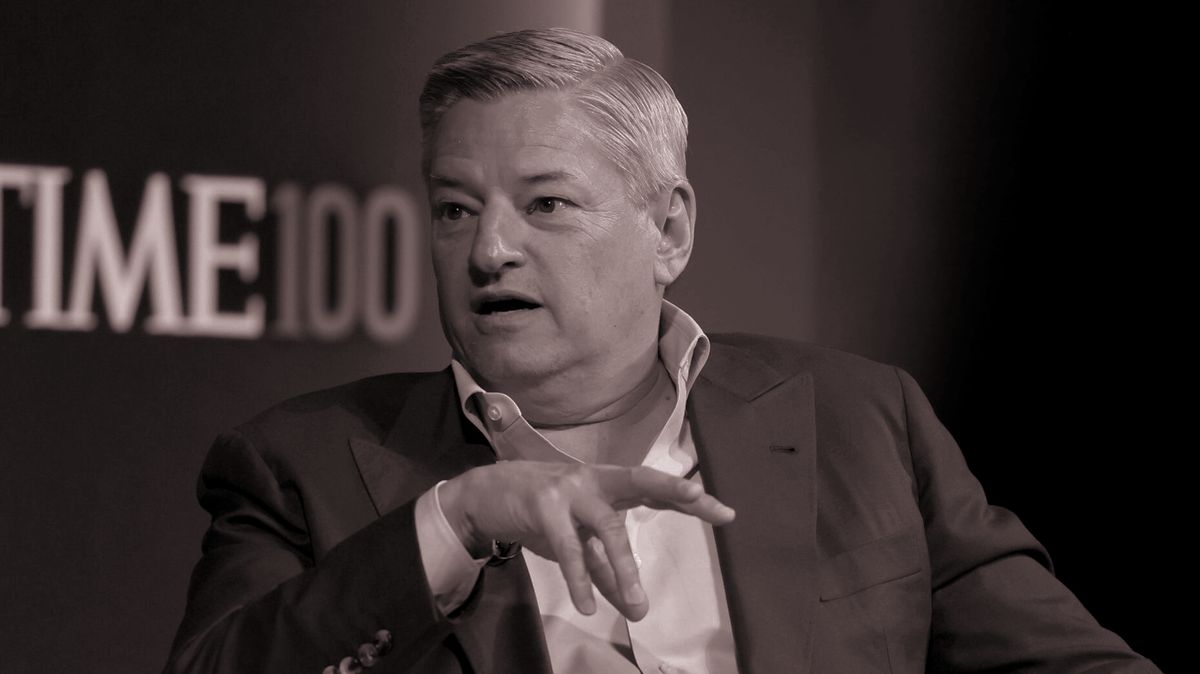
Now, with Netflix moving to acquire Warner Bros. and HBO Max, another Trump administration is again reckoning with an even mightier Netflix. Although co-C.E.O. Ted Sarandos projected confidence after his meeting with Trump last month, I’ll go out on a limb and suggest we may see a landmark U.S. v. Netflix this
year. Provided, of course, that Paramount doesn’t up its ante to $34-a-share nosebleed territory, as my Puck colleague Bill Cohan has gamed out, or that Trump doesn’t post on Truth Social that he’s ordered the D.O.J. to stand down. But what kind of case would U.S. v. Netflix actually be? Whether they know it or
not, Netflix has a lot riding on the answer.
|
|
|
A MESSAGE FROM OUR SPONSOR
|
ONE BATTLE AFTER ANOTHER is “Propulsive, Hilarious, and
Overwhelmingly Tender" - Winner of Critics Choice Best Picture
Becoming Willa - Lead Actress Chase Infiniti crafted a resilient and vulnerable breakout performance at the heart of One Battle After Another
(Watch Now)
|
|
|
Most observers assume the government’s play would be a straightforward Section 7 Clayton
Act challenge, aimed at blocking the acquisition. But I’d like to raise the under-discussed, unlikely-but-still-conceivable possibility that the Trump administration goes much harder against Netflix than anyone is anticipating. What if the government frames the deal as exclusionary conduct designed to maintain monopoly power, and brings a Section 2 Sherman Act case that puts Netflix’s entire business under the microscope? That would allow prosecutors to tell a larger story: not just
about this acquisition but about a pattern of self-preferencing by a dominant gatekeeper now seeking to lock up one of Hollywood’s deepest libraries and top TV brands.
If that’s the ambitious direction that the D.O.J. takes, the remedies might not stop at “deal blocked.” They could be structural, behavioral, and far-reaching—the kind that outlive any single transaction and redefine how the entire industry operates.
|
As the government mulls over its next move, it’s worth recalling that the feds tried to
keep the huge studios in check during Hollywood’s midcentury golden age. The so-called Paramount Consent Decrees arose from a sweeping antitrust investigation into the studio system’s cartel-like control over both the production and exhibition of films. To settle the government’s Sherman Act case, which reached the Supreme Court in 1948, the Big Five (Paramount, Loew’s, Warner
Bros., Fox, and RKO) agreed to spin off their theater chains and abandon tactics like block-booking (forcing theaters to license films in bundles), unreasonable clearances (exclusive rights for overly broad territories), and circuit dealing (bulk licensing across commonly owned venues).
These reforms helped independents gain traction. But starting in the Reagan era, deregulation crept back in, and consolidation surged. During Trump’s first term, the D.O.J. convinced a
federal judge to scrap the Paramount Decrees, arguing that they’d outlived their usefulness in an era where digital companies like Netflix, Amazon, and Apple were creating and distributing content outside the traditional system. The philosophy was that looser rules would encourage innovation. And, sure enough, some experimentation occurred: Taylor Swift cut a direct theatrical deal with AMC for the Eras Tour concert film; Sony picked up the Alamo
Drafthouse chain.
But a vocal contingent, especially within labor, has called for reviving some version of the restrictions. Jon Voight’s plan to “save Hollywood” famously included tax incentives (Trump floated tariffs instead), but also pushed for a reboot of the “fin-syn” rules—the TV version of the Paramount Decrees, which barred the major networks from owning
the programming they aired. (For a compelling argument that streamers are effectively engaging in modern block-booking—forcing consumers to take the mediocre with the must-see—have a look at a recent BYU Law Review article, “ The Mansion That Disney Built.”)
So what could the government seek from Netflix in a prospective case? One road map is the D.O.J.’s
recent Section 2 monopolization case against Google. After prevailing at trial, the government didn’t settle for a wrist slap. A D.C. District Court judge barred Google from exclusive contracts across several products—Search, Chrome, Assistant, and Gemini—and ordered it to make certain search index and user-interaction data available to rivals.
Google was also forced to syndicate its search and search-ads technology on fairer terms, to level the playing field.
Now swap out “search” for “streaming.” What would the Netflix analogue look like? Start with mandatory licensing of content—think The Sopranos or Stranger Things appearing on a rival service like Peacock or Paramount+—on FRAND (fair, reasonable, and non-discriminatory) terms. Then maybe add a ban on exclusive windows for marquee shows, restrictions on how
Netflix bundles its studio output with third-party content, and firewalls between studio-side dealmaking and the algorithms that determine content promotion. Maybe even transparency mandates on how Netflix prioritizes its originals over licensed fare.
|
|
|
A MESSAGE FROM OUR SPONSOR
|
ONE BATTLE AFTER ANOTHER is “Propulsive, Hilarious, and
Overwhelmingly Tender" - Winner of Critics Choice Best Picture
Writer/Director Paul Thomas Anderson on how inspirations ranging from “The French Connection” to “Les Misérables” helped shape his most personal film
(Watch Now)
|
|
|
Netflix, of course, would fight like hell to avoid that fate. Sarandos and co-C.E.O.
Greg Peters should hope the government decides this is just a splashy merger and not a move by a dominant player to supercharge its capacity to foreclose rivals.
|
For now, Netflix seems willing to tempt fate in Washington, perhaps with good reason. As
many observers have noted, any government challenge may first turn on market definition and Netflix’s post-merger share. Once a deal plausibly pushes merging companies past roughly a 30 percent share in a market, courts traditionally treat it as presumptively unlawful (though rebuttable). As that share approaches or exceeds 50 percent, judges may infer monopoly power.
Whether Netflix clears those bars depends almost entirely on how the lines are drawn—if you include YouTube and
TikTok, Netflix isn’t even close. Limit the market to paid streaming services offering long-form scripted content, and a Netflix-WBD combination would reach an estimated 400 million global subscribers, which begins drifting into choppy waters. Factor in actual consumer engagement—say, share of first-run scripted viewing—and the numbers could jump into the danger zone.
That’s why the market framing matters so much. There are
options, and some theories seem more plausible than others. Despite what Hollywood’s guilds might like, it’s probably unlikely that Trump’s regulators frame this as a “creatives” case, focusing on the merger’s impact on writers, directors, and actors selling their talents to
a diminished number of studio buyers—even though the D.O.J. would have some wind at its back after its 2022 victory blocking Penguin Random House’s acquisition of Simon & Schuster. Still, there may be some appeal in a vertical theory that focuses on streaming and its production supply—especially in
a Trump 2.0 environment animated by concerns about conservative voices being suppressed on platforms perceived to be controlled by a liberal media establishment. That kind of grievance doesn’t map neatly onto price effects, but it fits comfortably within a Section 2 narrative about control, foreclosure, and gatekeeping.
A lot of the bullishness around Netflix’s ability to fend off a challenge rests on courts accepting YouTube as a market peer, an argument that has some support in the
F.T.C.’s recent loss challenging Meta’s acquisition of Instagram. In that case, a federal judge accepted that YouTube was a reasonable substitute for Facebook and Instagram, immediately diluting the government’s market share claims. Regulators may thus try to move beyond market share and focus on Netflix’s ability to dictate take-it-or-leave-it licensing terms that starve movie theaters, and raise prices and increase ads without suffering churn. It wouldn’t be surprising to see them collect data
to quantify what economists call the “power to exert.”
In the meantime, Netflix might want to lean on Microsoft president Brad Smith, a Netflix board member who, after all, bears scars from his days steering the software giant through its bruising battles with the government. When the feds come ringing, it helps to have someone around who’s already taken that call.
|
Thanks, Eriq. We’ll be back tomorrow with Scott Mendelson’s full
box-office analysis for 2025.
Matt
|
|
|
Puck founding partner Matt Belloni takes you inside the business of Hollywood, using exclusive reporting and
insight to explain the backstories on everything from Marvel movies to the streaming wars.
|
|
|
Ace media reporter Dylan Byers brings readers into the C-suite as he chronicles the biggest stories in the
industry: the future of cable news in the streaming era, the transformation of legacy publishers, the tech giants remaking the market, and all the egos involved.
|
|
|
Need help? Review our FAQ page or contact us for assistance. For brand partnerships, email ads@puck.news.
You received this email
because you signed up to receive emails from Puck, or as part of your Puck account associated with {{customer.email}}. To stop receiving this newsletter and/or manage all your email preferences, click here.
|
Puck is published by Heat Media LLC. 107 Greenwich St., New York, NY 10006
|
|
|
|