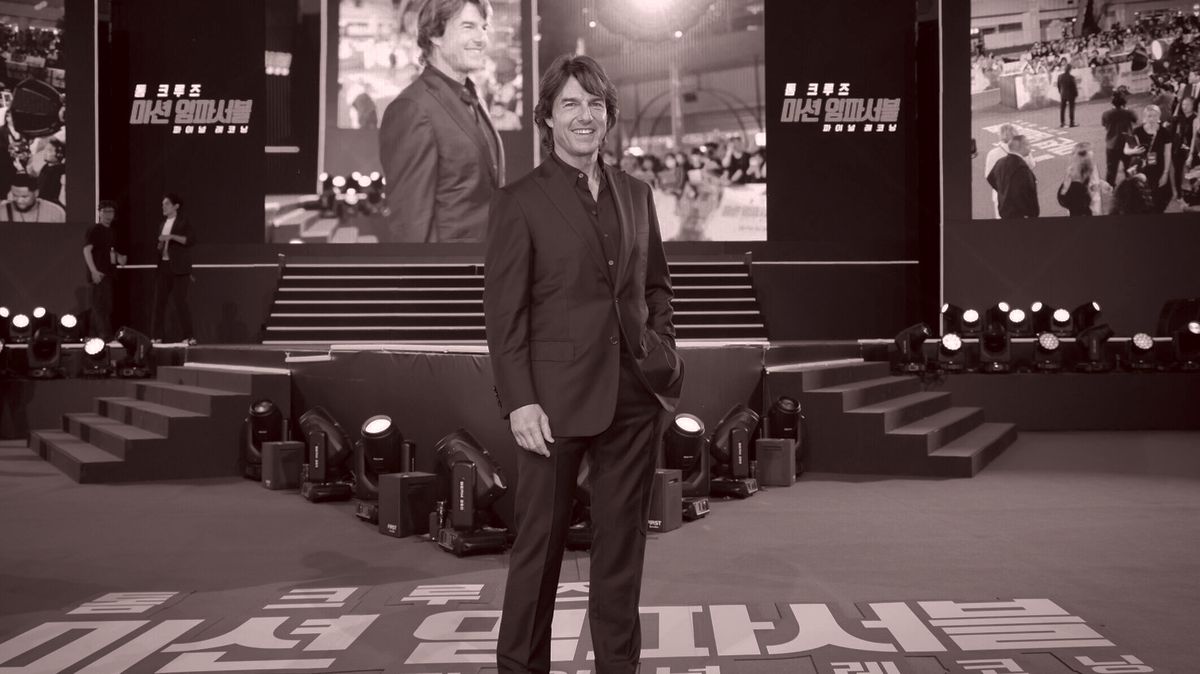
Welcome back to What I’m Hearing+, the movie star headlining the WIH play (yes, I’m seeing Clooney in Good Night, and Good Luck tonight). Today, Eriq Gardner is here with a look at the likelihood of every producer’s dream coming true: the return of the so-called “fin-syn” rules on ownership of films and TV shows. Plus, his take on the Copyright Office firing, an amusing political trademark fight, and a very N.S.F.W. request by media groups covering the Diddy trial.
🚨🚨 More event news!: I’m happy to announce the actors participating in Puck’s big Stories of the Season Emmys event on May 20 in Hollywood. We’ll have illuminating chats with Jason Segel ( Shrinking) and David Oyelowo ( Government Cheese), in addition to Parker Posey ( The White Lotus) and my live recording of The Town with John Mulaney ( Everybody’s Live). Guild and TV Academy members can email Fritz@puck.news to reserve a spot.
|
|
|
 |
Eriq Gardner |
|
- Murder, A.I. wrote?: Shira Perlmutter, the U.S. Register of Copyrights, is out—and if your inbox looked anything like mine this past weekend, you know exactly why Donald Trump’s latest firing is making waves. Trump dismissed Perlmutter less than 24 hours after her office dropped its long-awaited report on the legality of generative A.I. training. The report concluded that using copyrighted works to train A.I. is presumptively infringing, even if there’s room for a fair use defense. It’s a position friendly to copyright owners—and kryptonite to tech overlords neck-deep in A.I. development.Hill Democrats like Rep. Joe Morelle immediately accused Trump of firing Perlmutter to please Elon Musk, punishing her for not greenlighting a copyright free-for-all. “No coincidence,” Morelle told Politico. But some of the plugged-in folks I’ve talked to think the firing bears the fingerprints of Tom Jones and his American Accountability Foundation, a Leonard Leo–adjacent group that’s been compiling hit lists of so-called “deep state” bureaucrats pushing D.E.I. and other progressive initiatives. Jones and his foundation have been gunning for Perlmutter and her boss, Librarian of Congress Carla Hayden, for months—going so far as to launch a site called Libs of the Library of Congress to stir up MAGA ire. One plausible theory: The A.I. report wasn’t the reason she was fired—instead, her office rushed the report out because they heard the wolves at the door.Either way, this isn’t over. For one, the Copyright Office is part of the legislative branch, meaning Trump doesn’t technically have firing authority. Expect Perlmutter’s dismissal to be challenged in ways that go beyond the standoff between DOGE and Capitol Police on Monday.
Also: While this 108-page report isn’t binding, it will show up in ongoing lawsuits over A.I. training—regardless of whether it gets pulled or revised under new leadership. You can download it here… before it disappears.
- A California Democratic slogan slugfest: While the rest of the party waits to see if Kamala Harris will run for California governor, the White House, or neither, two Democratic candidates seeking Gavin Newsom’s office are lawyering up with Hollywood’s finest to battle over… trademarks.Stephen Cloobeck, the Vegas timeshare magnate who recently popped up in my partner Leigh Ann Caldwell’s newsletter, has filed for trademarks on everything from the populist-sounding “California Has Been Fucked With Long Enough” to the word salad “Here’s the Hard Truth, The Same People Who Got California Into This Mess Are Not Going to Be the Ones That Get Us Out of It.” Not to be outdone, former L.A. mayor Antonio Villaraigosa adopted the comparatively pithy “Proven Problem Solver” as a campaign motto. This prompted Cloobeck, who had claimed the phrase too, to sue for infringement and hire big-ticket trial attorney Patty Glaser. Villaraigosa promptly hired Eric George for the defense.
(Fun twist: Both Glaser and George are Republicans, although maybe less so in the Trump era.) Villaraigosa’s counterclaim accuses Cloobeck of committing fraud on the U.S. Patent and Trademark Office, alleging that Cloobeck and his advisors know phrases like “proven problem solver” are political speech, not commercial marks, and therefore fully shielded by the First Amendment. I try not to call winners this early, but it’s not hard to see Villaraigosa schooling Cloobeck in this fight. By the way, one phrase I’ll never use in this newsletter? “We are lawed out.” Cloobeck filed for that one, too.
- Sleeper ruling in the FTX celeb case: It’s been less than three years since FTX collapsed, but it feels a lot longer, especially since Sam Bankman-Fried is already serving a 25-year sentence, and most of the litigation around the scandal has faded into the background. But last week, U.S. District Court Judge K. Michael Moore finally issued his ruling in the civil case against FTX’s celebrity endorsers, and I think people may be sleeping on it.On its face, the decision is a bit of a split verdict. As expected, the Miami court dismissed most of the consumer-protection claims filed by FTX customers against the likes of Tom Brady, Larry David, Shohei Ohtani, and various YouTubers. Judge Moore wasn’t buying the idea that the celebs knowingly participated in a fraud, or intended to deceive customers. On the other hand, the judge is allowing one key claim to proceed—that the stars may have aided in FTX’s sale of allegedly unregistered securities. Plaintiffs can also take another swing at some of the dismissed claims with an amended complaint.But the real headline is how Judge Moore, flagging the rise of “mass-influence campaigns,” punted on the question of whether the stars were functioning as agents of FTX. That’s a distinction with potentially major ramifications. Sure, Larry David did just one Super Bowl ad for FTX (a $13 million one), while Kevin O’Leary was a full-blown brand ambassador. But the fact that these kinds of promo deals survived a motion to dismiss should give pause to agents negotiating them on behalf of high-profile talent.
- DiddyGPT: The Sean “Diddy” Combs trial is shaping up to be a watershed moment for American law—and not just because the 55-year-old music mogul is staring down life in prison on sex-trafficking charges, and mounting a defense that boils down to: “Sure, domestic violence, maybe—but let’s not get crazy with the racketeering.” (Teny Geragos, Diddy’s lawyer, told jurors that his team takes “full responsibility that there was domestic violence in this case,” but that “domestic violence is not sex trafficking.”)No, what really makes this case historic is what’s happening outside the courtroom. Law&Crime is using A.I. to re-create the proceedings, potentially rendering judicial camera bans obsolete. This was always coming—I said a year ago that CNN missed a major opportunity by not deploying A.I. to visualize Trump’s criminal trial—and now the genie’s out. There’s no going back.The open question is how the courts will respond. Will judges treat these reconstructions as impermissible broadcasts? Will they sanction journalists for skirting the rules? That could set up a fascinating First Amendment showdown: Is an A.I.-rendered trial “coverage”?
Meanwhile, speaking of First Amendment friction, a coalition of major media outlets—including ABC, CBS, and The New York Times—is now petitioning Judge Arun Subramanian to let the public (or at least a press pool) view the infamous “Freak-Off” videos. These are the reportedly videotaped, drug-fueled sex marathons Combs is alleged to have orchestrated. So far, no decision. But let’s just say I doubt Law&Crime’s A.I. is gearing up to re-create those scenes.
|
|
|
|
Trump is considering a plan to revive the Nixon-era rules that once barred CBS, NBC, and ABC from owning the programs that they aired—and adding streamers like Netflix to the sanctions list. The president probably doesn’t have that power, but as his former antitrust chief told me, “Has that ever stopped Trump?”
|
|
|
|
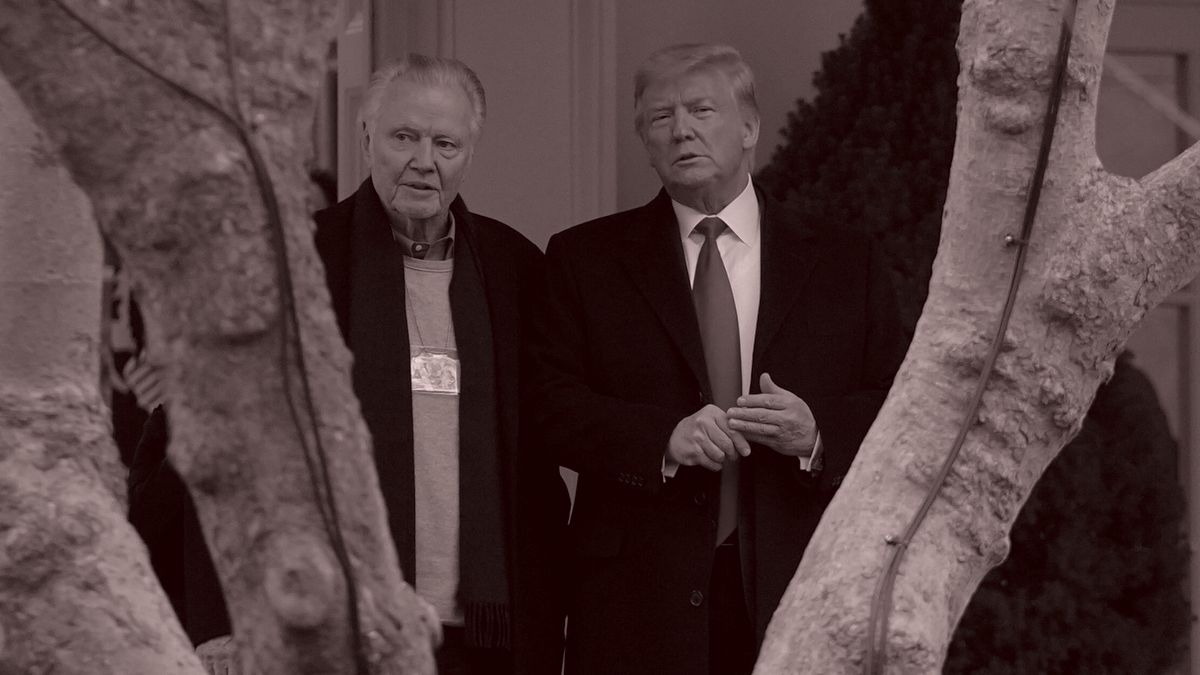
When I first read Jon Voight’s plan to rescue Hollywood, I’ll admit that I felt some shock. Not because he’s stumping for pie-in-the-sky tax incentives for domestic production—everyone in town wants that. Nor because he’s calling for tariffs, which might be ludicrous, but nevertheless rest comfortably beside Diet Coke and gauche interior design on Donald Trump’s shortlist of enduring passions. No, what stopped me was Voight’s call to revive the long-buried “fin-syn” rules.
For those not fluent in 1970s broadcast regulation, the “Financial interest and Syndication Rules” once barred CBS, NBC, and ABC from owning programs they aired—a modest attempt to rein in their then-monopolistic power. These restrictions were dropped once pay TV and home video took the stage—and once Rupert Murdoch and his then-burgeoning Fox network made a compelling enough argument that deregulation was the future. But not only does Voight want to revive fin-syn, he wants to expand it.
The plan, co-authored by his manager, Steven Paul, makes the case that streamers such as Netflix and Max should be forced to share ownership of content with independent producers, allow secondary licensing after exclusivity windows expire, and split profits on sequels and remakes. It’s a radical shake-up, to put it mildly.
Had Kamala Harris won in 2024, I’d have bet the mortgage on the talent community making this exact play. The ghosts of backend participation still haunt agency hallways and dusty Ferrari dealerships. Labor unions perpetually bemoan vertical integration. When Amazon acquired MGM, the WGA practically begged the F.T.C. to remember what fin-syn once meant for creative leverage.
The twist, of course, is that it’s now a conservative whispering in Trump’s ear about reviving a regulatory relic—and in a Republican administration that claims to loathe bureaucracy. That may explain why some in Hollywood are scoffing at Voight’s plan, shrugging it off with the excuse that streaming regulation would require an act of Congress. And let’s be honest: Who’s betting on Congress getting anything done?
But the more I ask around, the more plausible this all seems. Tariffs are abstract; fin-syn has bite. Even Makan Delrahim, the D.O.J.’s antitrust chief during Trump’s first term, surprised me with his openness to the idea. “One way to do it is to provide preferential tax treatment,” he told me, “for productions that follow some prescriptive, pro-producer formula. Of course, the administration could issue an executive order as well—directing the F.C.C., the Department of Commerce, and even the Library of Congress to examine how to implement.”
I asked if the Library of Congress was even within Trump’s jurisdiction. “Has that ever stopped President Trump? No law says he can't.” Delrahim replied. Trump fired the Librarian of Congress later that afternoon.
|
Why would Trump get behind an inside-baseball scheme like fin-syn? It’s hard to picture him losing sleep over Shonda Rhimes’ backend, or worrying about Disney showrunners getting their fair cut. Hollywood, after all, is a town he famously sees as enemy territory, not one worth championing.
Some say the president could be flattered into giving Hollywood what it wants—call something the “Trump Production Credit,” slap his name on the end credits of the next Star Wars movie, and voilà. (On Monday, the MPA and the writers, actors, and directors guilds signed a letter, alongside Voight et al., petitioning the president for tax breaks.) But I suspect the real driver for Trump is grievance, not glory. His endorsement of movie tariffs likely had less to do with rescuing the industry than punishing foreign governments for poaching American production. Viewed through that lens, fin-syn’s appeal may lie in its punitive potential.
It tracks historically, too. The original fin-syn rules were established under Nixon, another president fueled by animus toward the media. Back then, the White House was obsessed with disciplining the “liberal press,” and the F.C.C. was practically a flaming sword of retribution. Nixon’s people even flirted with revoking station licenses if coverage skewed unfavorably. The fin-syn rules arrived alongside other efforts, like the Prime Time Access Rule, which required networks to cede a nightly hour in the biggest markets—supposedly to give local stations and independent producers a fighting chance, but conveniently limiting the influence of the Big Three.
It’s not hard to imagine Trump, a Nixon admirer with a far looser devotion to norms, seeing a similar appeal. Picture someone like Sylvester Stallone—one of Trump’s “Hollywood ambassadors,” alongside Voight and Mel Gibson, with a noted history of fighting studios in court—explaining that the streamers have amassed too much power, and need to be cracked open for outsiders. And if not Sly, then perhaps Ari Emanuel? The Endeavor boss has a foot in Trumpworld, and if anyone could deliver a pro-fin-syn message with just the right blend of populism and business savvy, it’s him.
The question is whether Hollywood’s guilds will march behind Voight. Would SAG-AFTRA, or the WGA, be willing to push past the political discomfort and engage with a Republican president who, however erratically, seems willing to challenge Big Tech? It’s hard to picture their leaders doing the Teamsters routine—backslapping with Trump and tailoring their rhetoric to match. (Catch Sean O’Brien’s love letter last week?)
But there’s room for reflection. After all, it was Jimmy Carter who began the rollback against fin-syn—and Bill Clinton who finished the job. Back when vertical integration picked up speed under Obama (see Comcast-NBCU) and Biden (Amazon-MGM), the guilds’ appeals fell on deaf ears.
|
If Trump opens the fin-syn Pandora’s box, it will be fascinating to watch who resists. Back in the 1990s, when Fox maneuvered in ways that ultimately doomed the fin-syn regime, the loudest outcry came from the Motion Picture Association. The MPA warned that repealing the rules would lead to TV network “blackmail,” with movie producers, in the words of the late Jack Valenti, forced to “do [the networks] bidding.”
These days, it’s hard to imagine the MPA throwing its weight behind any revival of the old rules. Since fin-syn was tossed on the regulatory scrap heap, studios like Paramount and Universal have been combined with broadcast networks; CBS and ABC elbowed their way into the lucrative syndication game (see my recent piece on Jeopardy!); and the industry underwent a wave of integration that would have once seemed unimaginable. (I reached out to the MPA for comment. No response.)
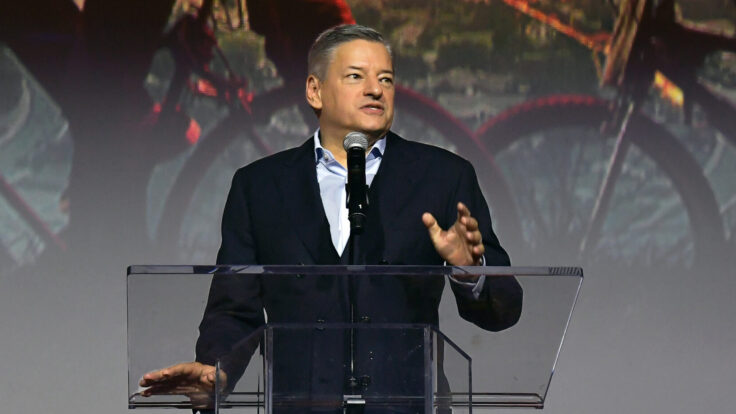
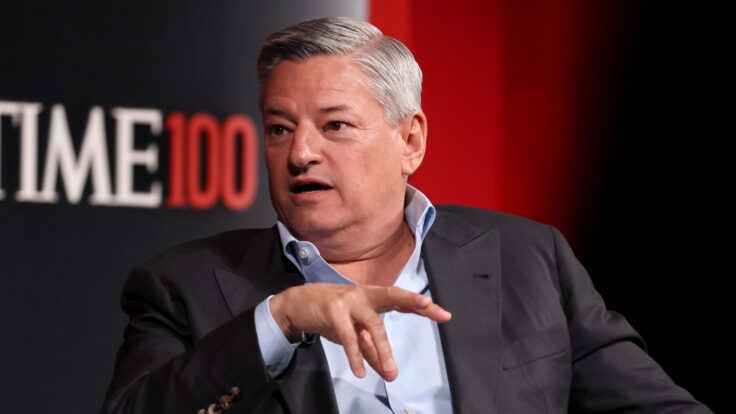
If Trump picks up Voight’s banner, the biggest pushback would most likely come from Netflix, which has built its empire on owning many of the shows and movies it distributes globally. And while Netflix has never had the lobbying muscle of the legacy studios, the streamer has spent the past few years bolstering its influence—joining the MPA in 2019, backing the Streaming Innovation Alliance in 2023, and, just last month, hiring seasoned trade attorney Clete Willems as its chief global affairs officer. At a recent Semafor summit in Washington, co-C.E.O. Ted Sarandos nodded toward what he said were Netflix’s massive contributions to the U.S. economy—$125 billion between 2020 and 2024, he said. The company is on track to nearly double its usual lobbying spend this year.
Meanwhile, I wouldn’t be surprised if the idea of reviving fin-syn picks up momentum. It would create uncertainty, instability, and elite hand-wringing in the entertainment sector—all things this White House might not mind at all. As one veteran put it to me, there’s support in principle, but not a lot of faith in the execution. Ken Basin, a seasoned attorney who’s held posts at Paramount and Amazon and wrote The Business of Television, put it best: “Just gotta hope the good from it is substantial enough, and comes fast enough, to outweigh the inherent harm done by chaos.”
|
|
Thanks, Eriq. See everyone on Thursday.
Matt
|
|
|
|
Puck founding partner Matt Belloni takes you inside the business of Hollywood, using exclusive reporting and insight to explain the backstories on everything from Marvel movies to the streaming wars.
|
|
|
|
A professional-grade rundown on the business of sports from John Ourand, the industry’s preeminent journalist, covering the leagues, players, agencies, media deals, and the egos fueling it all.
|
|
|
Need help? Review our FAQ page or contact us for assistance. For brand partnerships, email ads@puck.news.
You received this email because you signed up to receive emails from Puck, or as part of your Puck account associated with . To stop receiving this newsletter and/or manage all your email preferences, click here.
|
|
Puck is published by Heat Media LLC. 107 Greenwich St, New York, NY 10006
|
|
|
|