 |
|
Welcome back to What I’m Hearing+, live from Brooklyn where I’m shifting from compulsively watching football on Sundays to finally catching up on television. First up: HBO’s fourth season of True Detective, and then FX/Hulu’s very expensive-looking Shogun series. (Email me if you know the budget…)
Tonight, more data and analysis on the new DIS-FOX-WBD sports bundle—hereafter lovingly referred to as “Spulu.” The new package would give Disney audiences five different potential options to stream sports: Spulu, ESPN+, ESPN O.T.T., Hulu (NHL games), and Hulu+Live TV. This… doesn’t make sense, so let’s examine Disney’s likely strategy.
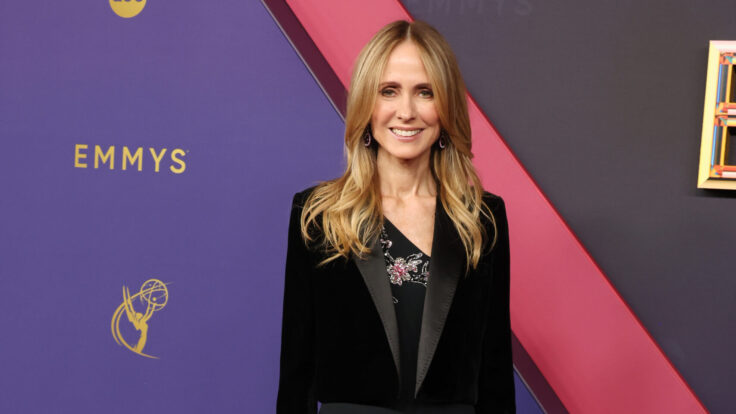
Speaking of which, here’s Dylan Byers with a scoop on the Spulu executive search…
|
Plus a few notes of my own on Microsoft’s big video game news...
- Microsoft is getting ready to announce that some of its first-party games—titles created and published by its owned-and-operated studios—will soon be available on Sony PlayStation and Nintendo Switch, according to The Verge. For those who may not follow gaming, distributing content outside the company’s so-called walled garden is huge. It’s also the latest iteration of what has officially become a trend: media companies wrestling with whether to prioritize exclusivity or reach.
In this instance, Microsoft came to the same conclusion that Spotify did in its recent non-platform-exclusive deal with Joe Rogan. After years of using I.P. to build an audience, both tech giants realized they could ultimately optimize revenue across multiple platforms. By contrast, Apple and Amazon are seemingly using exclusive MLS games and content broadcast by Diamond Sports’ regional networks, respectively, to acquire subscribers for their streaming services. (Also, of course, this is not a perfect comparison: Apple and Amazon do not own the games they broadcast. But you get the point… in media these days, you’re either an arms dealer or an arms buyer.) Whether or not Amazon chooses to distribute the games it acquires through its Diamond investment via other distributors remains to be seen.
Microsoft’s decision heralds a somewhat retro era. Back in the day, Hollywood and the gaming industry used to prioritize a project’s total addressable market above all else—this was the genesis, after all, of the four quadrant movie. Then nearly everyone shifted to trying to maximize subscriptions on their own direct-to-consumer, owned-and-operated platforms. Now we’re seeing strategic reversals, more proof that success is more complicated than ever. As with the push toward “co-exclusive” licensing among streamers, expect more gaming companies to follow Microsoft’s lead. —Julia Alexander
|
 |
| Iger’s ‘Spulu’ Starter Marriage |
| It’s been a week since ESPN, Fox, and Warner Bros. Discovery announced their enigmatic three-headed sports skinny bundle. The industry is overwhelmed with questions, but one thing seems certain: this thing isn’t here to stay. |
|
|
|
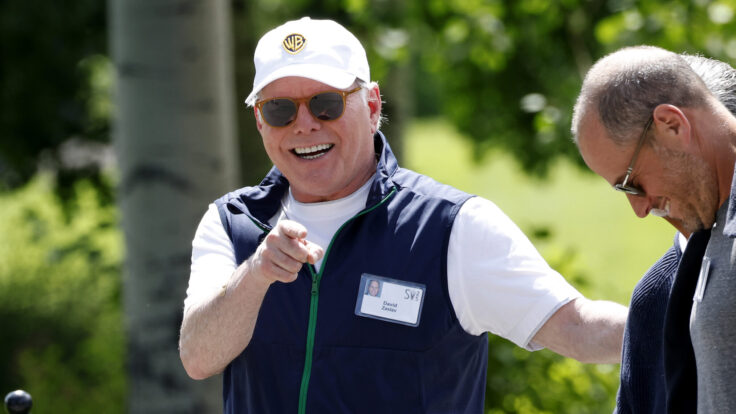
| One week ago, frenemies Bob Iger, David Zaslav and Lachlan Murdoch dropped a post-market-hours bomb in the form of their new partnership—a sports streamer that combined collective rights to games from all the major leagues, including the NFL, NBA, NHL, and MLB. The news seemed suspiciously timed to front-run Disney and Fox earnings calls, but everything else was utterly mysterious: what was this thing called, what would it cost, and who was really in charge? And, as I noted last week, which company was creating the underlying technology?
My Puck partner John Ourand also reported that not only were the leagues and rival broadcasters caught off guard, but NFL commissioner Roger Goodell even had his lawyers pull up the contracts. (It’s all kosher.) Ourand also noted that ESPN C.E.O. Jimmy Pitaro, one of the more likable executives in the business, didn’t give Goodell a heads up until mere hours before the announcement. (Yes, yes, the NDA, but still…)
During the past week, this three-headed “skinny bundle” monster—nicknamed “Spulu” for its Hulu-like similarities by former Fox executive Jon Miller—has come up in virtually every conversation I’ve had in my day job at Parrot Analytics. But the most vexing question isn’t even about who knew what and when, or what it’s going to cost. Instead, it’s simpler: who is this for?
After talking to people across the industry, I can tell you the answer isn’t what you think. This unnamed service may be ostensibly geared towards the never-cord consumer or the post-cord consumer or the cable-frustrated consumer, but it’s really an R&D lab for its proprietors, especially Iger. |
|
|
| When the news of this consortium first arrived in my inbox, I was particularly surprised about what it meant for Disney. After all, Burbank currently operates three other sports operations: Hulu + Live TV (a virtual cable replacement); ESPN (the cable version, with its streaming app); and ESPN+ (its streaming sister service). You could even add a fourth in the form of Hulu, which broadcasts NHL games. And yet, literally one day after the news, Iger announced that ESPN would offer another stand-alone streaming app in 2025.
You’d be forgiven for not fully understanding the difference between all of these products. Even Iger struggled to articulate the distinguishing aspects of the new ESPN app, which he promised would include “many more features and provide a much more immersive experience” than the triple-play bundle, such as “ESPN Bet and fantasy sports, e-commerce features, and a deep array of sports stats.” That’s a smart play to grab eyeballs and engagement, even when ESPN doesn’t have every game. I’d argue it’s exactly what the future of sports media should be. Similar to Apple’s innovations with the Vision Pro or YouTube TV’s impressive (and near flawless) multi-view feature, the focus on tomorrow’s consumer means working for where they’ll be, not where they are, and certainly not trying to appeal to an audience of yesterday. In the interim, however, the number of sports streaming options makes the balkanized sports viewing experience even more incomprehensible and annoying. In an effort to solve customers' frustration, we’ve only made it more frustrating.
Spulu embodies this problem as much as it solves it. Indeed, there is a clear logic to what these executives are calling the sports-centric skinny bundle—last year, a study from LG’s Advertisement division found that the number one barrier to entry for streaming customers was too many content choices, according to 45 percent of respondents. (The second-biggest barrier was confusion about where to find content.) As Disney’s own portfolio suggests, there are currently too many different channels and platforms with live sports, and some form of consolidation would appear to be a net positive for customers. The sports streaming conundrum is becoming even more pressing as media companies race to lure younger, more cost-conscious, and more technologically savvy audiences. They have the least affinity for legacy platforms, the least attachment to legacy leagues, and little compunction about illegal downloads.
But the vast majority of NBA, NHL, and MLB games are broadcast locally, not nationally, and this is where it gets confusing. Most intense fandoms, after all, are local. Some of these games air on local ABC and Fox affiliates, which means they could be made available via the new three-headed skinny bundle. But others air on NBC and CBS affiliates, or on regional sports networks like YES (the Yankees, the Nets, the Liberty), Bally Sports Midwest (the St. Louis Cardinals, the Blues), and Spectrum SportsNet LA (Dodgers), which means they won’t. More than any other league, MLB relies on these RSNs to reach fans, and Disney exited that business in 2019, when it acquired the assets of Fox. Zaz is exiting it now.
Spulu may be trying to capture audiences departing the cable universe, but those customers are better served by products that already exist, like YouTube TV or Iger’s own Hulu+Live TV, which also grants them access to local games via RSNs. One comment I heard over and over last week was “I’d rather pay $100 for everything than $45 for most things.” This is common knowledge among sports media executives: The diehard fans are well served by cable, and the casual fan doesn’t necessarily want to spend an additional $45 on something they may use from time-to-time.
Here’s another secret: It hasn’t yet been proven whether the audience between those two poles—“cord nevers” who are also hardcore sports fans—really exists in large numbers. This is the inherent issue with not having good data for streaming audiences, especially where sports are concerned, and the value of local vs national comes into light. Consumer activity has shifted so frequently over the past five years that everything is guesswork until there’s enough consistent data to make informed decisions.
The Spulu execs hope they’ll get enough data on the shared product for their own internal strategies, but for now, the fear is that while cable was expensive, it included everything. And while vMPVDs like FuboTV are expensive compared to entertainment-focused streamers like Netflix or Max, they cater to the sports fans who didn’t need the entire Pay TV bundle.
Last week, Iger even acknowledged that the new skinny bundle “competes with Hulu + Live directly, but it doesn’t compete with Hulu because this will be bundled with Hulu. So, if you’re a Hulu subscriber and you want to get this new sports service, you can buy that as an add-on to Hulu.” Confused? You’re not alone. |
|
|
| Unspoken in the announcement is the reality that Spulu is an experiment, not an end state, as all three companies adjust their offerings for the streaming future. In fact, I expect we will see more of these types of rollups as the still-crowded streaming industry is eventually reduced to three or four major players. I’d also assume that a deal of this magnitude will allow the C.E.O.s to do a little housecleaning, which might also help the higher calling of cashflow optimization and debt management.
Similarly, I expect that Disney will likely sunset a couple of its streaming options over the next few years. ESPN+ will likely disappear into the stand-alone ESPN app, probably rebranded as a lower-priced tier within that offering. It’s also likely that Disney will eventually be forced to change the value proposition of Hulu+Live TV, which is gradually losing market share to YouTube TV. Disney executives haven’t announced anything yet, but they seem to be moving in that direction.
Of course, it’s not just Disney that’s figuring this out on the fly. Max subscribers currently have access to the inelegantly named “B/R (Bleacher Report) Sports Add-on,” which presumably would include a third of the games available via the DIS-FOX-WBD skinny bundle (although the latter doesn’t come with HBO). An existing Max subscriber could add the B/R sports bundle for $9.99/month instead of the estimated $40-$45 cost of the forthcoming skinny bundle, but then what’s the point of B/R for sports fans except as a lower-priced, but even slimmer alternative? B/R for sports theoretically allowed fans to subsidize some of the cost for general entertainment fans, and the cost of maintaining it might be relatively low, but in an effort to mitigate churn and focus on customer satisfaction, I wouldn’t be surprised if B/R’s add-on disappeared, too.
The future of media is obviously bundling. The cost of running a service, buying up as many sports rights as possible, and reducing churn through supplementary content will never outpace revenue. Netflix, for its part, bundled games; Warner Bros. Discovery bundled sports and news; Paramount+ bundled Showtime. Disney tied up Disney+ and Hulu into a single app. But while the forthcoming stand-alone ESPN app could move the experience of sports viewership and fandom forward by creating a one-stop shop for betting, fantasy, merchandise, and viewing, this new skinny bundle just moves audiences laterally. It’s basically rearranging deck chairs.
Iger has said that he’d rather disrupt than be disrupted in this space. And while that may mean integrating gaming and other fandom features, consumers really just want something simpler: to know how to watch a game. It seems nearly impossible that all players will come together, nicely, to create a super-platform. It seems much more likely that not all of these players will want to operate their own direct-to-consumer offerings, and that’s where Disney really has the potential to shine.
It’s why I’m not surprised that the ESPN app is being set up as the eventual crown jewel in Disney’s sports-streaming empire. In the meantime, the deal with Fox and WBD is a holdover exercise, a low-risk investment to practice hammering out key rights negotiations and collect more data on sports viewers’ behavior to ensure the strongest potential for ESPN’s digital future. Most importantly: As companies like Disney and WBD move their best entertainment programming to streaming, finding ways to create new bundles for in-demand entertainment and sports gives them a vantage point over cable, where the networks exist but entertainment content is lacking. (Yes, this is where I can see some outcry of anti-competitive behavior and more pushes for deals similar to Charter and Disney+’s arrangement.)
The skinny bundle works for now; it’s certainly not going to work forever. And by then, who knows what Fox and WBD even look like. |
|
|
|
| FOUR STORIES WE’RE TALKING ABOUT |
 |
|
 |
|
 |
| Musk vs. Iger |
| Assessing Carano’s Musk-backed case against Disney. |
| ERIQ GARDNER |
|
 |
|
|
|
|
|
 |
|
|
|
Need help? Review our FAQs
page or contact
us for assistance. For brand partnerships, email ads@puck.news.
|
|
You received this email because you signed up to receive emails from Puck, or as part of your Puck account associated with . To stop receiving this newsletter and/or manage all your email preferences, click here.
|
|
Puck is published by Heat Media LLC. 227 W 17th St New York, NY 10011.
|
|
|
|