 |
|
Welcome back to What I’m Hearing+, coming to you from Brooklyn, where the weekend flood alerts are ruining everyone’s Hamptons plans. A special thank you to Puck’s Inner Circle members who attended my off-the-record call last week about the latest trends in streaming, plus some informed hypotheses about the future of the business. (Message fritz@puck.news if you want to upgrade your membership…)
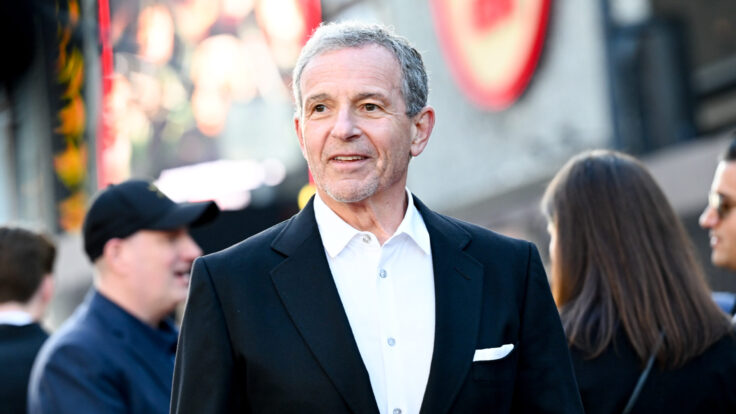
Bob Iger has been in the middle of a media maelstrom since last week’s Sun Valley interview with David Faber, which was either refreshingly candid or entirely tone deaf, depending on which side of the picket line one finds themself. Either way, Iger laid bare that Disney needs to adjust to the industry’s new era of capital efficiency. This week, I look at a few ways that Iger can optimize Disney’s position. Let’s get right to it…
|
 |
| The Iger Streaming Beta Blocker |
| Disney needs to both cut its losses and grow its appeal outside of its core franchises. Herewith, a few ideas for how Iger can turn things around. |
|
|
|
| It’s hard to relive the past decade of the media business without cringing a little at how the biggest players handled the innovator’s dilemma of streaming. As cord-cutting unequivocally became the future, legacy media companies staved off their own putative Blockbuster dystopia by franchising their content, at enormous premiums, often to a new generation of rival streamers. Some may have laughed at the size of the checks they deposited, but soon enough it was clear, to paraphrase Disney C.E.O. Bob Iger, that they had been supplying third world countries with nuclear weapons.
Then, of course, they found religion and reversed course. But the streaming journey has been humbling and expensive. Disney lost $659 million in its most recent quarter on its direct-to-consumer business (and that was a 26 percent improvement over the previous quarter). Warner Bros. Discovery finally exited its revenue hole on the D.T.C. front, posting adjusted EBITDA of $50 million last quarter compared to a loss of $227 million the year before. Comcast is projecting a “peak” loss of $3 billion in 2023 for Peacock. These companies are trying to cling to the profits of the Pay TV era, but those are declining faster and faster each quarter. It was Iger himself who said that companies tied to the linear and satellite businesses were in real trouble, but those pivoting to streaming sure aren’t in the clear, either.
Disney+ was initially hailed as one of the next streaming giants, but now Disney and Iger are at the center of every debate about what the companies that pivoted got wrong. Was D+ criminally underpriced? Did Rupert Murdoch dupe Iger into paying $71 billion for the Fox assets? Should Disney buy out Comcast from Hulu at a minimum of $9 billion next year? Should it sell or spin ESPN? And what to do about those Pay TV assets?
While all of this is happening, the actual content from Disney seems to be slowing down: Demand for Disney originals fell from third place to fourth place this quarter, according to data from Parrot Analytics, where I work as director of strategy. More concerningly, the demand share for Disney+ originals has remained relatively stagnant in the U.S. New data from Nielsen shows that while Disney+ saw a slight uptick in viewership in June from the month prior, thanks to popular kids shows like Bluey, its viewership is flat year-over-year, hovering at the 2 percent of all viewing time share.
The data suggests that Disney needs to cut its losses and find avenues to grow its appeal to subscribers outside of its core franchises (Marvel, Pixar, Star Wars). Below are a few ways that Iger could differentiate the Disney offering—and expand upon the idea of what Disney is in 2024 versus what it was in 2004. |
| 1. A Simple, Unified D.T.C. Product |
|
| Disney has its hands full with streaming. Individual domestic subscribers to Disney+ and Hulu have slowed tremendously over the past three quarters, and demand for Disney+ originals outside of Marvel and Star Wars has actually decreased. Slowdowns at the box office (where Disney animated films, like Elemental and Strange World, underperformed) may also carry through to viewership on Disney+.
Meanwhile, global subscription is growing, but the company is running out of countries to launch its service, thereby suggesting a smaller total addressable market for the product than previously imagined. Disney+ currently has just over 150 million subscribers around the world, but growth in core markets like the U.S. has become stagnant in the past year. Also, HotStar, with its average revenue per user of 59 cents, makes up nearly 50 percent of all current Disney+ subscribers.
For Disney, the path forward starts by unifying its own products into one easy-to-use, harder-to-cancel service and looking at strategic partnerships within the D-to-C space that can offer more than what the company can on its own. There are some data points to suggest this approach. A combined Disney bundle drives the lowest churn rate in the industry, according to data from Antenna, largely because of its perceived value from combining complementary services: Disney+ (with its franchises); Hulu (a general entertainment competitor to Netflix); and ESPN+ (which skews older and male). On some level, this is part of the strategy. Disney prices ESPN+ at $10 per month, in part, to push the value of an overall D+ subscription that includes ESPN+, for $20 per month ad-free. This helps explain why 80 percent of subscribers to ESPN+—which offers possibly the worst value as a standalone of the three—access the product via the overall Disney bundle, according to MoffettNathanson data.
Streaming needs to be simple. Once Disney fully acquires Hulu, the next stage will be consolidating all its content into one app. Part of this is about being economically practical. Right now Disney runs three different services, which requires three different teams for advertising, product, and customer service. (That’s one reason that Disney likes to plug its total subscriptions rather than total subscribers.) One of the biggest challenges that arose when media companies became direct-to-consumer businesses was that they took on all the costs associated with being a technology distributor as well as a content supplier. Disney effectively did so threefold.
In strong markets like the U.S., Disney needs to reduce churn and figure out how to raise its prices, and general entertainment will play a key role. Part of the issue facing Disney is that none of its TV series outside of Star Wars or Marvel are differentiated enough to convince customers to move over from Netflix or Max. Willow, an expensive continuation of the film title from Lucasfilm, was pulled from Disney+ after just one poorly-received season.
Disney acquired ABC/Capital Cities in 1995 in part to expand in overseas television markets. Disney also wanted to be in more homes and needed a distribution channel to do so. But that move brought with it the stability of the cable bundle and strong advertising revenue. Disney’s acquisition of BAMTech and subsequent launch of Disney+ was a fresh way to take advantage of new distribution channels, too; but with streaming, the platform was forced to be everything for everyone, and that was costly—especially when it was so easy for customers to churn.
Fast forward to today. Sure, what differentiated Disney at the box office or on linear television a decade ago isn’t holding as true in streaming—for evidence, just look at Dancing with the Stars’ rocky transition from ABC to D+—but a larger bundle can cut down churn among the individual streaming platforms. If Disney can strategically lower churn across its streaming assets (about 5 percent on average) to around 2 percent (lower than Netflix’s 3.6 percent), the company can maintain the revenue necessary to execute on new growth initiatives.
This strategy would require a fresh look at ESPN. The brand’s streaming arm, ESPN+, currently has only 5 million standalone subscribers. That may sound low, but recall that ESPN+ is the province of second tier sports and shows like Peyton’s Places, a doc vehicle for Peyton Manning’s media ambitions. It doesn’t make sense to expect an over-the-top ESPN product to scale at the level needed, and at the level of investment that executives feel comfortable with. As Iger signaled in Sun Valley, he needs a partner for ESPN, but he also needs a partner for ESPN+. (Unless, of course, that becomes another product sent to the Disney Graveyard.)
Bundles matter. And Iger would be wise to simplify the bundle of his core assets, Disney+ and Hulu, while exploring a new partner for his sports assets. This could reduce churn and provide subscribers with most of what they want. Perhaps Amazon, with its emerging sports platform, comes in with a revenue-sharing strategy to use ESPN+ to lure people to Prime. Similarly, Comcast wants to strengthen its entire D.T.C. offering as Pay TV falls off the cliff. And there are plenty of other strategic suitors, especially as ESPN begins to move its top tier sports rights to streaming. |
|
|
| Should Iger sell ABC and FX, as he dangled in Sun Valley? The reality is that audiences have been trained to expect linear and Pay TV to get worse as prices go up. Virtual TV providers, like YouTube TV and Hulu with Live TV, keep getting more expensive while the content offered on those platforms moves to streaming. Trying to pivot interest back to linear at this point doesn’t work, and therefore arguing it still has value becomes much, much more difficult. Just look at what happened to newspapers and digital media over the past 20 years, as revenue went down and private equity came in.
Perhaps the most obvious cautionary tale is ABC News. As my colleague Dylan Byers recently pointed out, Robin Roberts, George Stephanopoulos and Michael Strahan are being paid a combined $75 million a year to work within a model of news that is in decline. As I noted in a recent piece, news is becoming more passive, more intimate, and more micro-community based. There are news organizations that appeal to specific audiences, and journalists that speak to specific industries. (Puck is a case in point.)
This doesn’t mean macro news organizations are going away, but they’re morphing into larger lifestyle brands (The New York Times) or developing new products to increase participation amongst audiences (Twitch). The type of news that exists in Pay TV will inevitably disappear with the audience watching it (Baby Boomers and older Gen X). The need for global and local news doesn’t go away, but the approach and distribution changes.
Disney executives should sell networks like ABC, even at a potentially humbling loss, before it gets much worse. In the most recent quarter, Disney saw its linear networks revenue decrease by 7 percent while its operating income dropped a whopping 35 percent. The silver lining, as Iger presumably knows, is that writing down losses demonstrates action and vision to Wall Street. (This is one reason why David Zaslav took a hammer to CNN+ mere weeks into its life.)
FX, however, is a more complicated story. It offers slightly more differentiated content than general ABC or Freeform. But is owning FX more valuable to Disney’s future D.T.C. business than selling it and re-investing the cash into individual projects for D+? It’s a question without a clear answer. FX content has exclusively streamed on Hulu for more than a year now, but Hulu isn’t seeing the level of growth each quarter to make it stand out as a differentiated partner, even with hits like The Bear.
Divesting the content from the distribution channel, if possible under the terms of any potential sale, would be crucial for Disney to keep its prestige brand. Rolling it into Hulu exclusively would hurt in the short term but keep the brand active and forward thinking in the long term. Think Showtime, but with more attention on its series. Recall that HBO, the crème de la crème of these networks, hit a subscriber ceiling. That’s why being bundled with cable was crucial to HBO. It was always a channel on top of everything else—the cherry on top—and that’s how it exists now within Max.
FX plays a similar role within Hulu and, especially as the company is determining what content to license and what to keep exclusive on its platform. FX’s content is an example of what’s worth keeping, even if the channel isn’t. |
|
|
| Iger never quite figured out how to get video games right during his first stint as Disney C.E.O., so he did the next best thing: He licensed his most lucrative I.P. to some of the best gaming publishers and studios in the world.
These days, though, gaming is not a space where big companies can kick the can and accept passive cash. Gaming is one of the most valuable video categories ($200 billion), it has the fastest growing consumer base, the youngest consumer base globally, and the most sought after I.P. among studios and production companies. The Super Mario Bros. movie is the only film in 2023 to cross $1 billion at the box office, and The Last of Us is HBO’s biggest show since Game of Thrones.
The reason that Comcast and Electronic Arts (EA) explored a merger is because Comcast understood where the audience was headed and where the next big I.P. would come from, and EA understood what having access to properties like Jurassic World, Minions, and The Fast and Furious could do for AAA and mobile gaming. Analysts love to hypothesize about a Netflix-Microsoft merger (not likely to happen soon, or in this lifetime) for similar reasons.
Disney currently doesn’t own much of the attention share outside of its film and TV series. The biggest entries in the Star Wars universe have played out on console and PC games, but this hasn’t broadened Disney’s Star Wars audience on the passive entertainment side. Those audiences are stagnant at best, and contracting at worst. Disney licenses top Marvel character skins to Fortnite, but box office attendance isn’t up because of it. Disney is helping EA and Epic Games grow, but that return isn’t being seen in its own products. It’s only a matter of time until Disney+ integrates with games in some way (like what Netflix is attempting to do) via mobile or cloud gaming.
Let’s take the hypothesis one step further, though. Iger’s first tenure as C.E.O. was defined by deals. Some, like Marvel and Lucasfilm, were extremely successful. Others, like Disney’s investment in Maker Studios, weren’t. But the difference in attention share for gaming between 2014 and 2023—especially with living games, like Roblox and Minecraft, or Fortnite, where kids are just hanging out with each other—can’t be understated.
So Disney has two options. In better economic times, Disney could attempt to buy a company like EA, but it’s hard to see Iger wanting to scrape its free cash flow and take on more debt to buy a business it has failed at in the past. That said, a strategic partnership feels like a necessary step. The best Disney projects in recent years across its core franchises haven’t occurred in film or television, but in games. Disney earns licensing revenue for the I.P., but that’s it.
More realistically, Disney needs to bring some of these interactive experiences into its app. Netflix is chasing games, but unlike Disney, it doesn’t have much I.P. Keeping attention share beyond film and television requires creating a platform ecosystem that allows for further fandom development and occurs in one system where Disney controls all. Streaming is still the dominant form of video entertainment online, but with advancements in cloud gaming and the sophistication of platforms, gaming will be crucial to the streaming experience of tomorrow. It won’t just be passive entertainment. If Disney doesn’t get in that space now, it’ll find itself chasing after Netflix… again. |
|
|
|
| FOUR STORIES WE’RE TALKING ABOUT |
|
|
|
|
|
 |
|
|
|
Need help? Review our FAQs
page or contact
us for assistance. For brand partnerships, email ads@puck.news.
|
|
You received this email because you signed up to receive emails from Puck, or as part of your Puck account associated with . To stop receiving this newsletter and/or manage all your email preferences, click here.
|
|
Puck is published by Heat Media LLC. 227 W 17th St New York, NY 10011.
|
|
|
|