{{ 'now' | timezone: 'America/New_York' | date: '%b %d, %Y' }} |
|
|
Welcome to an extra-spicy edition of What I’m Hearing+. Today, Eriq
Gardner is back with an update on what could be one of the wildest Hollywood trials in years, with Kevin Spacey possibly testifying that he would have died by suicide if he’d been brought back for the final House of Cards season. Also, a breakdown of what the Ellisons actually want from their Warner Discovery lawsuit, and Kevin Hart really doesn’t want you to think he’s a big poker player. Over to Eriq…
Not a
Puck member yet? Never too late. Just click here.
Mentioned in this issue: Kevin Spacey, David Zaslav, David Fincher, Ted Sarandos, Barry Diller, Robin Wright, Bryan Noon, Scott Tenley, Michael Robbins, Mark Epstein,
Leon Gladstone, Michael Kump, Kevin Hart, Tom Goldstein, Jeffrey Toobin, Donte Mills, David Ellison, John Malone, and more… |
|
|
A MESSAGE FROM OUR SPONSOR |
"A film you don't just watch; you breathe it in." |
[EXPLORE] The Story Behind the Story Clint Bentley & Greg Kwedar’s journey to writing the screenplay for TRAIN DREAMS, adapted from the beloved novella by Denis Johnson, started much like the book did all those years ago: in a quaint cabin next to the Moyie River… |
|
|

| Eriq Gardner
|
|
- Ellisons using Malone tactics on Malone’s Warner Discovery: Paramount Skydance is now officially in court over its bridesmaid status in the Warner Bros. Discovery sweepstakes. And while the new case filed yesterday in Delaware Chancery may look like a garden-variety disclosure action, it signals that David Ellison is thinking long-term—with one eye on the possibility of further injunctive relief. That could mean enjoining a shareholder vote, stopping a Netflix
transaction in its tracks, or even trying to reopen the auction process.
If that all sounds familiar, it’s because Ellison is deploying John Malone’s own playbook against the company he helped create. In the 1990s, Malone was a key backer of Barry Diller’s hostile bid to acquire Paramount—which he lost to Sumner Redstone’s
Viacom, despite Diller’s QVC successfully attacking the Paramount board in Chancery for being “patently unreceptive.” This one seems headed down the same road.
The immediate issue is whether WBD must disclose its internal valuation of the Global Networks unit and other material facts that Paramount claims the company has obscured. David Zaslav & Co. will respond in court any moment. Expect WBD to emphasize that it isn’t staring down a shareholder vote over a merger, but
merely a January 21 deadline for shareholders to tender their shares. It will likely argue that this less consequential event triggers narrower disclosure obligations, and that none of the alleged omissions are legally material.
Paramount wants expedited discovery and a fast preliminary hearing before January 21. (A telephonic hearing has just been scheduled for tomorrow at 12:45 p.m.) If the court does order supplemental disclosures, WBD will almost certainly have to extend the tender
deadline, whatever the parties claim about flexibility. But don’t rule out a real trial this year over whether WBD’s board breached its fiduciary duties—one that picks apart the sales process and possibly sets the tone for whatever Ellison has planned next. - Is Kevin Hart “John Doe 2”?: Throughout NFL wild card weekend, Kevin Hart was all over TV pitching DraftKings to football fans. But when it comes to his own high-stakes betting
history, Hart seems far less eager to speak—at least under oath. Will he be forced to anyway?
This week, SCOTUSblog founder Tom Goldstein is going on trial in Maryland on federal tax evasion charges. Among the witnesses is a celebrity poker player known in court filings only as “John Doe 2.” While the name is redacted, the breadcrumbs are not exactly subtle. According to prosecutors, Doe 2 lost $200,000 to Goldstein in 2016—a detail that also appeared in a recent New
York Times Magazine profile of Goldstein by Jeffrey Toobin that named Hart as a fellow player. The filings describe a series of rematches in which the Jumanji star clawed back his losses and eventually cleaned out Goldstein. A year ago, PokerNews
reported a marquee match at Hart’s 2024 birthday bash in Greece.
Whoever the A-lister is, he’s not bluffing about wanting to avoid the witness box. At Friday’s final pretrial conference, a trio of motions was heard: one to let the star proceed pseudonymously, another to keep his lawyer’s identity under wraps, and a third to quash the
subpoena entirely. Reporters were kicked out of the courtroom during the arguments. In filings, though, the unnamed witness questioned the need to testify and complained that traveling to this D.C. suburb would impose an “undue burden.” Prosecutors counter by noting that Doe 2 managed to make an appearance at a highly publicized event in D.C. in the past month. (Hart co-hosted the World Cup draw at the Kennedy Center on December 5… hmmm.)
Hart’s publicist didn’t return a request for
comment. Neither did attorney Donte Mills, who very recently represented Hart in a different matter—and, wouldn’t you know it, appears in this case as counsel for “John Doe 2.” - More… the Toobin twist…: At Goldstein’s pretrial hearing, Toobin’s Times article wound up becoming a big discussion point. Prosecutors want to use Goldstein’s own admissions from the article as evidence; defense lawyers objected, calling it classic
hearsay. That prompted a somewhat surreal exchange. The judge appeared to agree that the article itself was inadmissible, but floated a work-around: Why not subpoena Toobin, the famed legal journalist and CNN contributor, to testify and confirm what Goldstein told him? Prosecutors didn’t love that idea and countered with a suggestion of their own—maybe the Times Magazine fact-checker could vouch for the accuracy instead. Yes, that’s the Trump Justice Department
leaning on the Times to validate its case.
|
|
|
You know who else is due on the witness stand at a high-stakes trial?… |
|
|
The disgraced actor is soon expected to sit for a brutal cross-examination in the
rare Hollywood insurance dispute that has actually made it to trial. A potentially huge payout hinges on whose version of House of Cards’s ending prevails. |
|
|
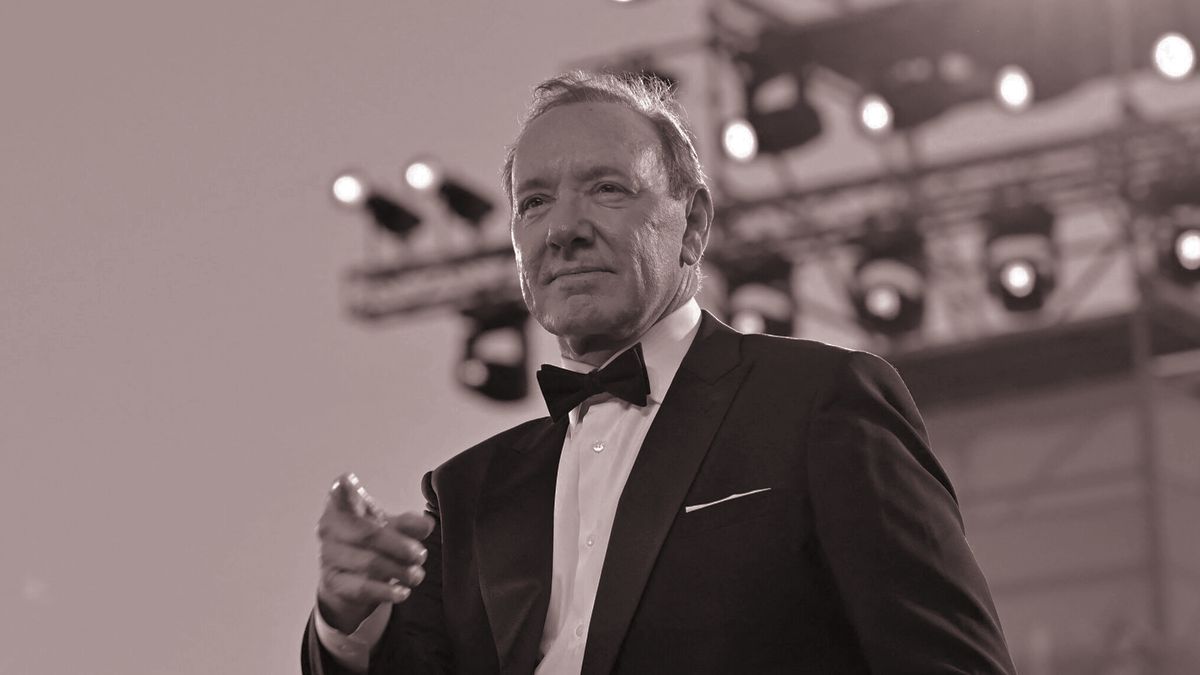
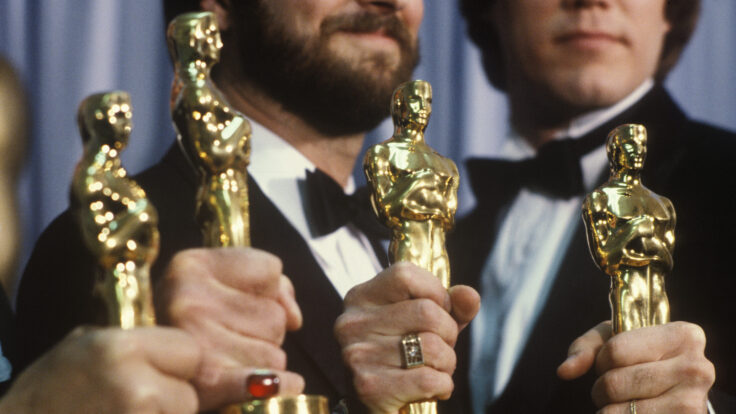
Sometime in the next few weeks, two-time Oscar winner Kevin Spacey likely will
take the stand in Los Angeles Superior Court and tell jurors that he would have killed himself if he’d had to return for the sixth and final season of House of Cards. His testimony figures to be the centerpiece of a six-week insurance trial set to begin on January 20.
At stake is the huge payout that Media Rights Capital, the production company behind the first Netflix hit series, is seeking from its insurer, Fireman’s Fund. MRC argues that Spacey’s sex addiction caused trouble
that led to his unavailability, which should have triggered its insurance policy, and that having to rewrite and produce the sixth season without the show’s leading man, as well as supposedly losing three proposed spinoffs, cost the company about $80 million in license fees and lost profits. MRC had promised to split any proceeds with Netflix.
Apart from the potential courtroom theatrics—recall Spacey’s ominous YouTube “cooking” video in the aftermath of his dismissal, which has 14 million views—the trial marks an unprecedented moment for Hollywood. Film and TV insurers have squabbled over just about everything—on-set deaths, natural disasters, Covid, even whether a missile fired into Israel counts as war. But as far as anyone in the industry I’ve spoken to can recall, no major entertainment insurance dispute has ever made it to trial. If MRC prevails, expect this
victory to be treated as a legal watershed that encourages producers to push harder and forces insurers to rethink the fine print. |
There’s no doubt that House of Cards was a huge success story, essentially inventing the
idea of binge-watching when Netflix dropped the entire first season in 2013. Critical acclaim was immediate: David Fincher executive produced the adaptation of a U.K. political thriller and directed the first two episodes, and Spacey’s villainous Frank Underwood became iconic. Then in 2017, crewmembers on House of Cards accused Spacey of sexually aggressive behavior. As the scandal swelled, he checked into a $28,000-a-month rehab facility, and Ted
Sarandos, then Netflix’s content chief, insisted Spacey be fired. The showrunners dutifully killed off Underwood during the break between Seasons 5 and 6, leaving his widow, played by Robin Wright, to prop up the show’s abbreviated final season.
Cue the lawyers. At the center of the current case is a provocative question: Is sexual compulsion a “sickness”? MRC’s insurance policy covers illnesses that render key castmembers
unavailable, but doesn’t actually define “sickness.” As such, each side will present dueling psychological experts to weigh whether sex addiction is a legitimate condition.
There’s also the question of what really killed House of Cards. Was it Spacey’s condition, whatever the diagnosis may be, or was it Netflix’s aversion to bad headlines? If the jury believes Sarandos and Netflix were simply doing damage control, they may conclude that crisis management, rather than Spacey’s
alleged mental state, was the proximate cause of the Season 6 debacle. Fireman’s Fund will in all likelihood push that defense, which certainly puts a unique spin on the #MeToo movement.
Sarandos won’t appear at trial, but his documented insistence that Spacey be cut from the show will figure prominently. So will the testimony from former Netflix executive Bryan Noon, MRC chief Scott Tenley, and Michael Robbins, the outside
investigator that MRC hired to go to the Baltimore-based production and evaluate allegations against Spacey. |
As I previously reported, the trial represents a remarkable gamble for MRC. After prevailing against Spacey in arbitration, the company was due $31 million in damages from him. (Spacey claims he’s broke; he recently popped up in Tel Aviv doing a cabaret act, so he may be telling the truth.) But to pursue the much larger claim against
Fireman’s Fund, MRC forgave all but $1 million in exchange for the actor’s medical records and cooperation. With Spacey now on board, MRC is chasing not only $80 million in lost revenue and profits, but as much as $50 million in interest. |
|
|
A MESSAGE FROM OUR SPONSOR |
"A film you don't just watch; you breathe it in." |
[EXPLORE] The Story Behind the Story Clint Bentley & Greg Kwedar’s journey to writing the screenplay for TRAIN DREAMS, adapted from the beloved novella by Denis Johnson, started much like the book did all those years ago: in a quaint cabin next to the Moyie River… |
|
|
In one respect, MRC’s remarkable settlement with Spacey has already paid dividends. L.A. Superior
Court Judge Mark Epstein was initially skeptical of MRC’s claims against Fireman’s, twice dismissing them as too thin. But when the producers proffered medical records, the judge agreed to send the case to trial. Spacey’s penance isn’t over. He still must take the stand, with his testimony previewed in a deposition last year. That transcript remains under seal, but it prompted Fireman’s Fund, on the eve of trial, to cry foul over Spacey’s newly emphasized account that the
workplace allegations left him suicidal and unable to continue on the show. In a January 5 ruling, Judge Epstein said he’d ask everyone to avoid gratuitous detail but declined to ban the word “suicide” outright.
The larger trial issue is that Spacey once insisted he was perfectly capable of performing in another House of Cards season—and now insists the opposite. The trial is almost certainly heading toward a brutal cross-examination in which Spacey is confronted with his own
prior statements, his on-set behavior, and his post-series grievances, all sharpened into a portrait of contradiction. Expect the insurers, represented by Leon Gladstone of Gladstone Weisberg, to underline, repeatedly, that Spacey is a gifted actor and that this, too, is just another performance. (Michael Kump of Kinsella Holley will lead the trial team for Media Rights Capital.)
Ultimately, jurors will have to decide whether he’s believable. Or, as
Spacey-as-Frank Underwood told the camera in one of his YouTube videos, “You never actually saw me die, did you?” |
Thanks, Eriq. Julia Alexander will be here tomorrow and I’m back on Thursday.
Matt |
|
|
Puck founding partner Matt Belloni takes you inside the business of Hollywood, using exclusive reporting and insight
to explain the backstories on everything from Marvel movies to the streaming wars. |
|
|
Unique and privileged insight into the private conversations taking place inside boardrooms and corner offices up and
down Wall Street, relayed by best-selling author, journalist, and former M&A senior banker William D. Cohan. |
|
|
Need help? Review our FAQ page or contact us for assistance. For brand partnerships, email ads@puck.news. You received this email because you signed up to receive emails from Puck, or as part of your Puck account associated with {{customer.email}}. To stop receiving this newsletter and/or manage all your email preferences, click here. |
Puck is published by Heat Media LLC. 107 Greenwich St., New York, NY 10006 |
|
|
|