 |
 |
|
Welcome back to What I’m Hearing+, and hello from New Orleans, where I’m delivering a keynote at the Realscreen Summit on unscripted entertainment. If you’re in town and want to grab a coffee around Bourbon Street, shoot me an email.
Also: If you’re in New York on Valentines Day, a reminder that Puck is partnering with Netflix to present selections from the Maestro soundtrack, performed by the New York Philharmonic, at Lincoln Center at 8 p.m. Puck members can get in for free, but as of now, only waitlist is available. Still, click here to RSVP! Sounds like a good time.
Also also: In case you missed it, my new partner John Ourand, who will be covering the business of sports for Puck, sent his first dispatch this evening breaking the news that The Orioles are being sold to an investor group led by private equity billionaires David Rubenstein and Mike Arougheti. (There could be some major impacts on the Mid-Atlantic Sports Network…) If you missed his email, click here to sign up for The Varsity, his excellent new biweekly newsletter.
Tonight, an unflinching look at the state of the uber-trendy sports docuseries: what’s working, what’s not, and what’s next as streamers try to attract actual sports fans without paying out the nose for live sports rights. (Plus, a first look at some exclusive new data that I’ll be presenting at Realscreen.) The big question: Is the sports-buying spree a bubble, and is it about to burst?
But first…
- Did ‘Ted Lasso’ get a Messi bump?: In a surprise to everyone, likely including Apple executives, Nielsen crowned Ted Lasso as the most streamed original title in the U.S. in 2023, with more than 16.9 billion minutes streamed, beating out hits like Netflix’s The Night Agent and Amazon’s Jack Ryan. Yes, there are caveats: For one, the average episode length for Lasso’s final season nearly doubled, from 30 minutes to 55 minutes (Nielsen measures total minutes streamed). And the report doesn’t tell us how many minutes were attributable to just the final season.
Nevertheless, this feat is remarkable, especially considering that Apple TV+ only has about 20 million domestic subscribers, according to third-party estimates, or about one-fourth Netflix’s total. (Apple has never broken out how many subscribers its service has.)
Does that math add up? Well, if we assume the third season accounted for the vast majority of U.S. viewership, that would imply some 25 million accounts streamed Ted Lasso in full. So either 1) Apple TV+ subscribers have surpassed 25 million domestically, 2) the first two seasons saw significant replay in the lead-up to the final episodes, or 3) every single Apple TV+ subscriber is a superfan of Ted Lasso. My guess is that it’s the three factors combined.
But here’s another theory: Lasso likely got a pretty significant Lionel Messi bump. Recall that subscriptions for Apple’s Major League Soccer package surged by 110,000 on the day of Messi’s first game with Inter Miami, a 280 percent increase over the first day of the 2023 season, according to Antenna. And there’s significant crossover appeal. There were probably a bunch of soccer fans interested in the Jason Sudeikis comedy, but maybe not quite enough to subscribe to Apple TV+. With the discounted MLS Season Pass + Apple streaming bundle, however, the value of both products went up. Maybe Messi, who has a unique revenue-sharing deal with Apple, should have also asked for backend on Ted Lasso, too.
As always, I hope Apple reveals more first-party data. Until then, this is certainly a P.R. win: Apple TV+ is being watched… or at least, one show is.
|
 |
| Are We Living In a Sports Content Bubble? |
| Conventional wisdom, spurred on by Netflix, suggests that it is smarter to invest in sports-adjacent documentary content than exorbitant and ephemeral sports rights packages. But, obviously, it’s much more complicated. |
|
|
|
| Live sports and the development of consumer media have been intertwined for the better part of a century. Radio grew alongside baseball, whose leisurely pace made it a natural fit. Football, on the other hand, was perfect for television—with the line of scrimmage perfectly framed onscreen and, just as importantly, advertising-friendly pauses baked into the action. The rise of cable TV was facilitated by networks gaining exclusive rights to various leagues. Ted Turner’s TNT superstation was built around an Atlanta Braves broadcasting license, for instance. So it’s only fitting that live sports appears to be the final frontier on the long journey from pay TV to streaming.
The large streamers don’t need to be convinced about the value of live sports. NBCUniversal paid $110 million for an exclusive NFL wild card game that reportedly brought in nearly 3 million new subscribers and 25 million viewers to Peacock (and linear in the local markets). Paramount is simulcasting the Super Bowl on CBS and Paramount+. Disney has turned ESPN+ into the home of UFC, and the main network’s streaming future seems predicated on arbitraging live sports opportunities. Amazon has Thursday Night Football on Prime Video and just invested in RSN owner Diamond Sports Group. |
|
A MESSAGE FROM OUR SPONSOR
|
 |
| |
|
|
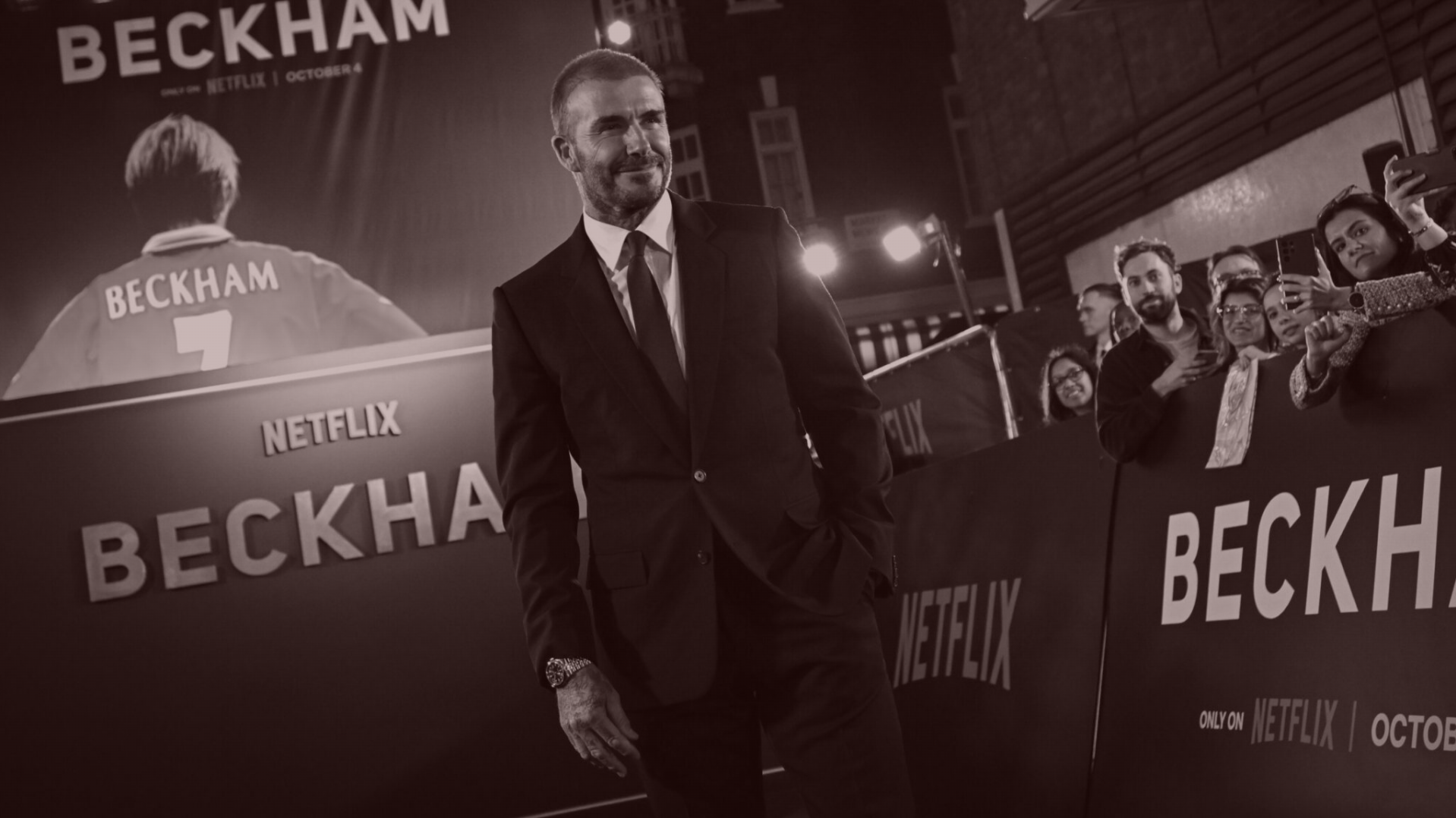
| Sports are important, of course, but they’re expensive, and getting even more expensive. That explains why Netflix has invested heavily in sports-adjacent content like Full Swing and F1: Drive to Survive, or the recent hit Beckham, for which Netflix reportedly paid $20 million. (Co-C.E.O. Ted Sarandos hailed it as providing the “drama” of sports without the sticker shock.) Others have followed suit: HBO produced The Day Sports Stood Still about the NBA during the pandemic. Prime Video highlighted NFL star Jason Kelce in Kelce, which the company claimed in October was its most-watched documentary in the U.S., although it didn’t share any actual numbers. Hulu offered its own spin on the genre with Welcome to Wrexham. Most recently, Apple announced a documentary series about Lionel Messi, a series on the New England Patriots, and reportedly paid $30 million for the Steph Curry Underrated documentary.
But are sports docs really worth breaking the bank, or is this the latest example of streaming groupthink? Sports docs and sports-related titles accounted for just under 365 million hours (not exactly a Wednesday, but not totally disappearing into the ether) viewed globally between January and June 2023, according to Netflix’s inaugural data dump. Only two titles generated more than 50 million hours viewed globally—Drive to Survive season four and Full Swing season one. Past seasons of Drive to Survive and Last Chance U also did well within the allotted period, which is an important detail for Netflix’s sports-adjacent strategy, with past seasons of the aforementioned shows still finding audiences alongside new seasons.
Notably, however, very few of these series charted on Nielsen. (Quarterbacks, which premiered after the data dump, was the only show that made its streaming top 10 listings.) It’s enough to wonder whether this is a content bubble on the verge of bursting. |
|
|
| As usual, it’s complicated. For the newer players, consumer demand for sports docs already seems to be in decline. The Last Dance, which landed at Netflix during the pandemic, fueled the idea that sports docs might provide a substitute for a fraction of the cost. But in the U.S., the level of audience demand (audience interest) for sports docs is already nearly on par with the level of supply (number of titles in the market), according to Parrot Analytics, where I work as director of strategy. This reality is manifesting across different platforms. Despite substantial investments, Apple TV+, Prime Video, and Disney+ have all seen lower demand for their sports-adjacent programming relative to the number of titles available. The average hit rate therefore decreases on those platforms. The programming simply isn’t as interesting to consumers as executives may have hoped.
Indeed, sports docs are actually a microcosm of the streaming industry writ large, where the U.S. and Canadian markets are already oversaturated, and the largest opportunity is international. Amazon carries a series called All or Nothing that follows various teams across different leagues including the NFL and Premier League. These teams have fan bases, but that concentrated level of interest doesn’t travel. (And All or Nothing’s attempt to mimic HBO’s Hard Knocks, with a preseason and in-season NFL concept, never quite took.) Brazil, Spain, and South Korea, however, are territories where the demand for sports-adjacent content vastly exceeds the current supply. This tracks with supplementary data showing demand increases for unscripted programming by original language. Portuguese, Spanish, and Japanese had the highest level of demand growth between Q1 2019 and Q4 2023, but they represent some of the lowest levels of supply for unscripted projects. |
|
|
| But whereas Netflix wants more international unscripted content—which Sarandos has noted during past earnings calls—other platforms are simply looking to make a dent in the U.S. market. And that market simply doesn’t have much more room for growth, especially outside of the core sports, including football and basketball, both of which are already set up at Netflix in different capacities.
I talk often about how Netflix’s global ambitions are the best indicator that it is playing a different game than its competitors, and sports has become the latest example. Netflix may not technically be in live sports yet—yes, the WWE, its new $5 billion prize, is scripted—but its global footprint is precisely what every league increasingly covets. The NFL plays games in England and Germany. The NBA travels to Mexico City for games aired on Prime Video. German network RTL began to carry NFL games this season, and attendance for the 2022 game between the Buccaneers and Seahawks in Munich sold out. Meanwhile, MLB will bring the Dodgers and Padres to South Korea (not Japan, despite superstar Shohei Ohtani’s move to the Dodgers) for a two-game series in March.
It’s an evolving, symbiotic relationship: The Leagues need access to global streaming platforms, alongside local broadcasters, to expand audiences and fandoms. Streamers need access to international sports rights in order to juice acquisition and improve retention, especially as they expand globally. And sports docs (among other supplementary content) have a role here, too. As streaming penetrates second-tier markets, including EMEA and APAC, and as the globalization of sports fans continue thanks to the internet, meeting viewers on the platforms where they are migrating—and hopefully turning them into higher paying fans in other areas (merchandise, ticket sales)—requires combining audience interest in live programming with sports-adjacent content to support that newfound love year-round.
There’s still no replacement for live sports, nor is there any one-to-one measure in value. Owning exclusive sports rights is still vital to many of the players who want to remain distributors beyond 2024. What’s become increasingly clear is that many of those current partners—NBCUniversal, Paramount Global, Warner Bros. Discovery, Fox—may not be able to compete as distributors. Netflix, Apple, Amazon, and Google likely will. But as those rights become available, it’s prudent for streaming partners to better understand the role they may play as potential equity partners and owners, and building up interest in supplementary sports entertainment (like the WWE) or gathering data through lower-risk investments (like sports docuseries) seems like a smart path—with one major asterisk attached.
Media businesses have proven the power law distribution hypothesis time and time again: A tiny percentage of titles make up the vast majority of consumption. This is true on streaming services like Netflix where most titles failed to generate more than 100 million hours streamed. It’s also true in music, where a handful of titles secured more than a billion streams, but more than 40 million titles saw no streams, as reported by Bloomberg. As engineer Michael Tauberg noted in 2018, this is true across publishing, gaming, and more.
The power law distribution hypothesis also applies to sports. This is why the NFL feels like a monolith in the U.S.. There are a limited number of sports that consistently deliver high viewership numbers, and there are therefore even fewer sports docs that will deliver the level of engagement needed on average, across a slate, to justify the investment. As always, there are opportunity costs elsewhere, and chasing sports-adjacent content because it seemingly works for Netflix doesn’t guarantee success everywhere else.
The data reiterates that the U.S., a core market for most studios and networks pursuing sports docs, is hitting a saturation point. The international markets show increased demand, but there are fewer global distributors looking to broaden their businesses outside of Netflix, Amazon, and Google. And in an age of Instagram Stories and constant TikToks, access to star players has never been more affordable or available. The bubble isn’t going to burst yet, and there are opportunities to find sports-adjacent content that thrives on the drama. But they are far and few between. Remember: An average NFL game receives tens of millions of views. Hard Knocks doesn’t do a tenth of that. Now apply that same logic to sports beyond the NFL. The question becomes, is it an area that needs more investment or are there better opportunities elsewhere? |
|
|
|
| FOUR STORIES WE’RE TALKING ABOUT |
 |
| Leather Heads |
| On the unassailable fashion dominance of Hermès. |
| LAUREN SHERMAN |
|
 |
|
 |
| The Apprentice |
| A definitive ranking of the Trump’s V.P. option pool. |
| PETER HAMBY |
|
 |
| The Jamie Switcheroo |
| JPMC’s executive shuffle, Paramount tea leaves, Elon’s stock rant. |
| WILLIAM D. COHAN |
|
|
|
|
|
 |
|
|
|
Need help? Review our FAQs
page or contact
us for assistance. For brand partnerships, email ads@puck.news.
|
|
You received this email because you signed up to receive emails from Puck, or as part of your Puck account associated with . To stop receiving this newsletter and/or manage all your email preferences, click here.
|
|
Puck is published by Heat Media LLC. 227 W 17th St New York, NY 10011.
|
|
|
|