• Washington
  • Wall Street
  • A.I.
  • Hollywood
  • Media
  • Fashion
  • Sports
  • Art
  • Join Puck Newsletters What is puck? Authors Podcasts Gift Puck Careers Events
  • Join Puck

    Directly Supporting Authors

    A new economic model in which writers are also partners in the business.

    Personalized Subscriptions

    Customize your settings to receive the newsletters you want from the authors you follow.

    Stay in the Know

    Connect directly with Puck talent through email and exclusive events.

  • What is puck? Newsletters Authors Podcasts Events Gift Puck Careers
Welcome back to What I’m Hearing+, my weekly deep dive into the data and dealmaking behind the entertainment business. Tonight, a conversation with streaming savant Matthew Ball, the author/investor/consultant/producer/metaverse guru and former head of strategy at Amazon Studios, about how the industry is getting squeezed, the future of gaming, and why the most valuable content to sell is the most valuable content to keep.
 ‌ ‌ ‌ ‌ ‌ ‌ ‌ ‌ ‌ ‌ ‌ ‌ ‌ ‌ ‌ ‌ ‌ ‌ ‌  ‌ ‌ ‌ ‌ ‌ ‌ ‌ ‌ ‌ ‌ ‌ ‌ ‌ ‌ ‌ ‌ ‌ ‌ ‌  ‌ ‌ ‌ ‌ ‌ ‌ ‌ ‌ ‌ ‌ ‌ ‌ ‌ ‌ ‌ ‌ ‌ ‌ ‌  ‌ ‌ ‌ ‌ ‌ ‌ ‌ ‌ ‌ ‌ ‌ ‌ ‌ ‌ ‌ ‌ ‌ ‌ ‌  ‌ ‌ ‌ ‌ ‌ ‌ ‌ ‌ ‌ ‌ ‌ ‌ ‌ ‌ ‌ ‌ ‌ ‌ ‌  ‌ ‌ ‌ ‌ ‌ ‌ ‌ ‌ ‌ ‌ ‌ ‌ ‌ ‌ ‌ ‌ ‌ ‌ ‌  ‌ ‌ ‌ ‌ ‌ ‌ ‌ ‌ ‌ ‌ ‌ ‌ ‌ ‌ ‌ ‌ ‌ ‌ ‌  ‌ ‌ ‌ ‌ ‌ ‌ ‌ ‌ ‌ ‌ ‌ ‌ ‌ ‌ ‌ ‌ ‌ ‌ ‌  ‌ ‌ ‌ ‌ ‌ ‌ ‌ ‌ ‌ ‌ ‌ ‌ ‌ ‌ ‌ ‌ ‌ ‌ ‌  ‌ ‌ ‌ ‌ ‌ ‌ ‌ ‌ ‌ ‌ ‌ ‌ ‌ ‌ ‌ ‌ ‌ ‌ ‌ 
What I'm Hearing +

Welcome back to What I’m Hearing+, my weekly deep dive into the data and dealmaking behind the entertainment business. Tonight, a conversation with streaming savant Matthew Ball, the author/investor/consultant/producer/metaverse guru and former head of strategy at Amazon Studios, about how the industry is getting squeezed, the future of gaming, and why the most valuable content to sell is the most valuable content to keep. But first…

Amazon’s “Rings of Power” Gut Punch
If you’re reading this email, there’s a good chance you’ve already seen Kim Masters’ reporting on the strategic confusion and excess spending at Amazon Prime Video. The story is full of eye-catching details, like eight-figure deals for Phoebe Waller-Bridge and Lena Waithe that yielded nothing, or the incredible price tags attached to projects like The Nolans’ The Peripheral, which was renewed despite lackluster engagement. But perhaps the most shocking nugget is the reported audience “completion rate” for Rings of Power, the streamer’s billion-dollar Lord of the Rings spin-off: 45 percent overseas, and only 37 percent in the U.S.

It’s hard to talk about completion rates without good comparisons or a benchmark for success. Netflix’s Resident Evil had a 45 percent completion rate and was canceled after one season, for example, while the animated series Arcane, with a completion rate of 60 percent, was renewed. Of course, those are Netflix series, not a billion-dollar franchise play.

Other contextual factors are missing, too. How much did Rings of Power drive audiences to Prime Video versus other series? How much did it increase customer acquisition overseas, especially in emerging territories where the Prime e-commerce business isn’t as established? Are the new subscribers highly engaged with the service, or more likely to churn? Did people who watched Rings of Power go on to buy something on Prime?

Completion rates are important markers of engagement, of course, and especially valuable for advertisers. If you purchase a pre-roll ad on the sixth episode of a series and 63 percent of the initial audience doesn’t get that far, the impact is far lower. Not great! But as someone who spends every day in the data mines, I can say with authority that we don’t have enough information to declare Rings a flop. (The streamers have no reason to release better data, so why should they?) Yes, the headline number doesn’t look good for Amazon, but it’s actually a perfect example of why the economics of streaming are so complicated.

The Great Streaming Money Squeeze
As Hollywood retrenches from its cash-burning, everything-at-the-wall, win-at-all-costs era, streaming guru Matthew Ball weighs in on the industry’s shrinking margins, a new Netflix competitor, and why gaming is merging with traditional entertainment.
JULIA ALEXANDER JULIA ALEXANDER
Perhaps the best part of analyzing (and consulting on) Hollywood’s decade-plus transition to streaming is that few people really know how it’s going to play out, or which business model will prove to be the right one in the end. Netflix, the original pure-play streamer, has jumped into advertising and live TV. Warner Bros. pivoted from debuting movies in theaters to dumping them onto streaming and back again. Disney, which has an option to buy out Hulu from Comcast, can’t seem to decide whether to keep it or sell. Studio veterans have adapted the industry jargon of “LTV” and “churn” while ex-tech executives have enrolled in a crash course on the high-touch art of talent management.

Among the most prophetic analysts of this new regime is Matthew Ball, an investor, former head of strategy for Amazon Studios, metaverse guru to executives around the world, and a renowned essayist and futurist. Ball recently published a mini-book detailing the three eras of streaming: the early adaptation era, in which Netflix and Hulu were first-movers, focused on educating consumers and stealing market share from cable; the present content era, in which film and TV costs have spiked as streamers compete for subscribers; and the dawning platform era, in which the market becomes oversaturated and companies focus on new formats, such as gaming or merchandising.

I caught up with Ball, who’s an investor and advisor to Parrot Analytics, where I work as director of strategy, as well as a fellow Canadian and friend, to talk a little more about this next era for streaming. Our conversation has been lightly edited for length and clarity.

Julia Alexander: I want to start with one of the big questions bouncing around corner offices at the moment: Will the streaming marketplace ever reach the size that was hypothesized during the pandemic—the great “pull forward,” as it was known. Or is the market maxed out, at least in the U.S.?

Matthew Ball: The answer is different for each subset of the market. It’s worth highlighting that SVOD (subscription video-on-demand), FAST (free ad-supported TV), and user-generated content have not reverted to their pre-Covid trendlines, or even pulled back as the pandemic eased. E-commerce penetration in 2023 is almost exactly where we would have predicted back in 2019 (i.e. without Covid). In 2022, the U.S. gaming market experienced its first year-over-year decline since the dot-com crash, falling 6 percent despite 6.5 percent inflation. But over-the-top (OTT) video generates more revenue and has more subscribers than ever—and well more than it would have without the pandemic. The challenge with a sustained “pull forward” is that, by definition, it makes future growth more scarce—and this challenge is occuring at a time when streaming losses, debt loads, interest rates, and churn are all at their peaks.

Still, there is a lot in front of us. One thing I highlight in my mini-book is that we tend to use the wrong time horizon when talking about streaming video—we’re talking too narrowly. The first cable (i.e. Pay-TV) system launched in 1948, but it didn’t pass its predecessor, broadcast, until 2002. That’s more than half a century!

Some date the streaming wars as having started in 2019, or 2007 with Netflix and Hulu, or 2002 with MLB.TV/BAMTech (which provided the backend infrastructure for HBO Now, among other platforms, and is now owned by Disney). But streaming video is more than 30 years old now—it’s as old as the World Wide Web. And only last year did it pass cable TV networks for watch time, with a third, but it remains well short of Pay-TV delivery (i.e. broadcast and cable networks), which have 55 percent combined. A lot of time is left to shift.

This is particularly true internationally. There are about 800 million homes, not including China, which pay for video—but most of them don’t have an SVOD subscription, and those that do use only one or two services. Furthermore, this sum is growing by tens of millions a year. A decade ago, fewer than four in ten Japanese households paid for video; now eight in ten do.

Right—even as the streaming business pivots and adapts, it’s clear that audiences are moving inexorably away from cable and toward more direct-to-consumer options. In hindsight, what are some of the biggest challenges the industry has faced while making its ascent?

This decade was always going to be profit-light for the streamers in aggregate. For most of the past twenty years, U.S. network television EBITDA margins have been in the top decile of all industries in the U.S., alongside categories such as Oil & Gas and Renewable Energy, which needed those high margins to pay for extraordinarily capital-intensive facilities and infrastructure. That’s crazy and probably not sustainable (there’s a general business adage that over the long-run, margins go to 10 percent). Furthermore, at-home leisure has never been as competitive as it is today—and it will forever get more competitive.

The “streaming wars” narrative tends to obscure the fact that for nearly a century, TV had a near monopoly on at-home leisure. Now, of course, there’s social media, gaming, user-generated video, etcetera—all of which compete for time and user leisure dollars. Streaming has also brought an end to the bundle, while shifting each player to standalone competition with one another. This meant the glory days of guaranteed revenues and distribution were over, and at least for a while, acquisition costs would inevitably encroach upon a user’s lifetime value. Furthermore, the video business has never competed with entities that neither needed, nor necessarily sought direct profits (i.e. Amazon and Apple) because their video business was primarily in support of a core business that, well, generates more revenue than the entire paid video business globally.

Still, I think timing made things worse. Nearly every pre-streaming player, plus Roku and Apple with their originals, came to market during a 16 month period starting in November 2019. This escalated acquisition costs, while forcing down prices and eradicating profit hopes. When Comcast unveiled Peacock, in January 2020, it promised that annual losses would never exceed $1 billion and that cumulative losses would never exceed $2 billion. And yet market forces had other ideas: Peacock lost $663 million in its first six months, $1.7 billion in 2021, $2.5 billion in 2022, and forecasts $3 billion in 2023, for a cumulative loss of more than $10 billion.

This is an extreme example, but it’s not that atypical (see Paramount, WarnerMedia, etcetera). Making matters worse, competitive intensity led the major “legacy” players to speed up their cannibalization of linear revenues, and to a lesser extent, theatrical channels, reducing consolidated profits. If everyone burns the boats, you gotta burn your boats, and thus everyone burns them faster.

Virtually every streamer is now in some form of strategic retreat—paying less, focusing more on average revenue per user, and capital efficiency. As you’ve pointed out, it’s difficult to add consumer value when pulling back on content spend, even if that’s the rational thing for streamers to do now. One solution we’re seeing right now, as the streamers focus on monetization, is a shift back toward licensing content after a years-long focus on exclusivity. How do you see this playing out? Is it smart business or will it further blur brand distinctiveness?

The return to licensing, and the enormity of these deals, have different drivers by company, and I think it’s important to differentiate them. Warner Bros. Discovery, for example, needs licensing revenues in order to pay down its $45 billion-ish debt load. Lionsgate is licensing because its D2C platform, Starz, can’t adequately monetize most of Lionsgate’s top properties. After flipping the John Wick spinoff series The Continental from Starz to Peacock, Starz C.E.O. Jeff Hirsh said the move was 7-8x more valuable to Lionsgate’s shareholders. (At least for now.) Disney finds that it has extraordinary unused capacity that its streaming services don’t need. Disney’s streamers also aren’t great fits for huge portions of the company’s decades of adult-focused dramas, especially those inherited from the 21st Century Fox deal.

There is also the distinction between the sale of new content in a franchise (e.g. the J.J. Abrams and Matt Reeves Batman animated series), sale of old content in a franchise (e.g. licensing of The Dark Knight) and selling content with no particular corporate alignment (the recent last minute license of Disney’s Arrested Development to Netflix after Netflix announced it was leaving). All of these have different implications for a service’s economics, attractiveness to consumers, and brand confusion. It’s also worth noting that there’s a bit of a Catch-22: the most valuable content to sell is the most valuable content to keep!

Something I’ve been thinking quite a bit about is the future role of the smaller community-driven subscription services, like Crunchyroll, Criterion, or Shudder. In a world of bundling and consolidation, do these niche players have an advantage as standalone platforms or do they just become irresistible acquisition targets, as Crunchyroll was for Sony.

Honestly, I’m not convinced there’s a lane for “niche” SVODs beyond Crunchyroll. This isn’t a new position for me, but there was certainly a time when it looked otherwise. But both anime and Crunchyroll are so extraordinarily unique. The latter, especially alongside Sony Japan and Funimation, which Sony also owns, have a corner on the anime market in a way that isn’t possible in other genres (mystery, horror, indie film, etc). Crunchyroll is also 17 years old, and was once the third largest SVOD in the world. And anime extends into other categories, such as commerce, theatrical, video games, podcasts, conventions, etc, in a unique way, too.

A good example is Demon Slayer, a seven-year-old manga franchise developed by Sony Music Entertainment Japan. Since 2016, Demon Slayer has amassed nearly $9 billion in gross revenues—making it the youngest franchise to reach that mark, while also passing tentpoles such as Sesame Street, Minions, The Simpsons, and Power Rangers. In 2019, a Demon Slayer anime series debuted, while the 2020 anime film won the global box office crown with over $500 million in grosses—even though it was released in October of that year, rather than during the pre-pandemic window that included Sonic the Hedgehog and Bad Boys 3. The film also has Japan’s all-time box office record, beating Frozen, Spirited Away, Avengers: Endgame, Your Name and more. The Demon Slayer I.P. has also been adapted to hit video games, stage plays, and novels and has appeared on several national music charts.

The last chapter of your book focuses a lot on how gaming will become even more integrated with traditional entertainment. Sony, for example, has a really exciting path ahead of them. Same with Microsoft. That’s in contrast to Disney, for example, which has had more success partnering with publishers, like EA. Do you think that companies with in-demand I.P. can reach this next platform by continuing to license out and build games outside of their core platforms, or will they need to bring gaming in-house?

Certainly, companies such as Warner Bros Discovery and Sony are unique—outstanding at film, TV, direct-to-consumer distribution, and interactive. But I don’t believe you need to own the end-to-end interactive product to achieve platform status, it’s just trickier without it. But the rise of cloud game streaming and “metaverse platforms,” such as Roblox and Fortnite—not to mention shared technology stacks across both (i.e. real-time 3D engines)—will provide more flexibility. I also suspect that collaborations with licensees will grow, as will cross-account authentication.

Thanks, Matt. It’s increasingly clear that everything we thought we knew about the evolution of entertainment is cloudier than even the sharpest minds could anticipate—which is exactly what makes watching, analyzing, and writing about the streaming wars so compelling. Streaming, as we currently define it, is going through a series of shifts, rapidly sped up by technological advancements. I’ll check in with you later this year to see where we stand—I’m certain the landscape will be meaningfully different.

FOUR STORIES WE’RE TALKING ABOUT
Elon’s Blue Period
Elon’s Blue Period
A close look at Elon’s pay-for-Twitter-verification scheme.
BARATUNDE THURSTON
Dimon Diplomacy
Dimon Diplomacy
Notes on “the Jamie and Janet Show,” Zaz’s incentives, and Elon’s fuzzy math.
WILLIAM D. COHAN
Online Luxury Wars
Online Luxury Wars
A final pre-launch preview of Puck’s fashion industry newsletter.
LAUREN SHERMAN
DeSantis Campaign Secrets
A rollicking chat with Florida’s most plugged-in political insider.
TARA PALMERI
Puck
Facebook Twitter Instagram LinkedIn

Need help? Review our FAQs
page
or contact
us
for assistance. For brand partnerships, email ads@puck.news.

Puck is published by Heat Media LLC. 227 W 17th St New York, NY 10011.

SEE THE ARCHIVES

SHARE
Try Puck for free

Sign up today to join the inside conversation at the nexus of Wall Street, Washington, A.I., Hollywood, and more.

Already a member? Log In


  • Daily articles and breaking news
  • Personal emails directly from our authors
  • Gift subscriber-only stories to friends & family
  • Unlimited access to archives

  • Exclusive bonus days of select newsletters
  • Exclusive access to Puck merch
  • Early bird access to new editorial and product features
  • Invitations to private conference calls with Puck authors

Exclusive to Inner Circle only


Latest Articles from Hollywood

MELANIA documentary
Matthew Belloni • April 5, 2023
Can ‘Melania’ Open?
On top of the $40 million Amazon ponied up for Brett Ratner’s docu-hagiography, the studio is spending another $35 million to open it in 27 countries, including a splashy Kennedy Center premiere to be attended by top executives. But for all the expense, Melania is for an audience of one.
Ted Sarandos
Matthew Belloni • April 5, 2023
Movie Theaters Want a Ted Sarandos Blood Oath
Regal’s Eduardo Acuna goes public with his pitch for Netflix to sign a 10-year binding pledge with the Trump D.O.J. (and other ideas), ensuring Sarandos won’t go back on his recent promise to give Warner Bros. movies a 45-day window. Offering Greta Gerwig’s ‘Narnia’ a wide release would help, too.
Ted Sarandos
Matthew Belloni • April 5, 2023
How Netflix’s Sony Deal Explains Its Warners Pursuit
The streamer's new global agreement with the studio, valued at up to $8 billion, puts a public value on its slate. Now apply that math to its potential Warners takeover.


Kathleen Kennedy
Matthew Belloni • April 5, 2023
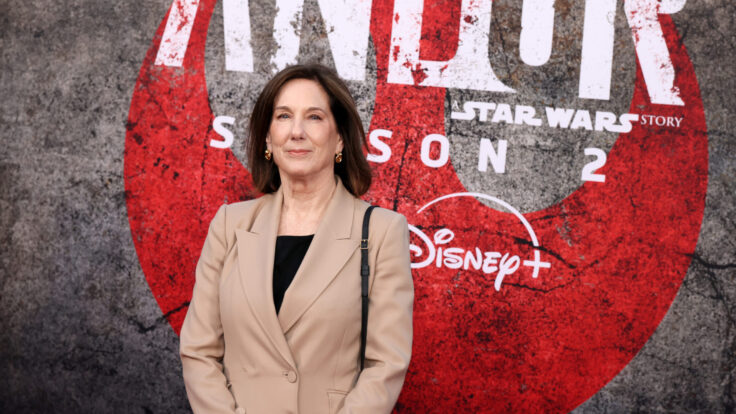
Kathleen Kennedy’s Final Episode
As president of Lucasfilm, the producer oversaw five Star Wars films, a wave of TV shows…. and a galaxy’s worth of abandoned projects and jilted filmmakers. With her exit finally official, is the franchise better off now than it was 14 years ago?
Bob Iger
Julia Alexander • April 5, 2023
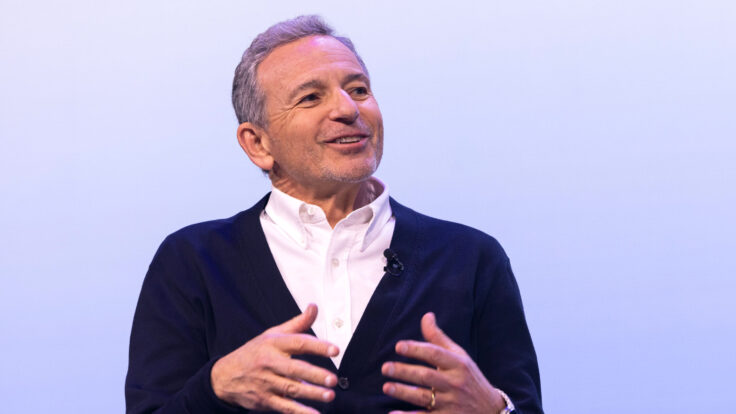
The Math Behind Combining Hulu and Disney+
The long-ordained integration of Disney’s two streaming services is being heralded inside Burbank as a transformational moment for both. But will the merged platform really be more than the sum of its parts?
Kevin Spacey
Eriq Gardner • April 5, 2023
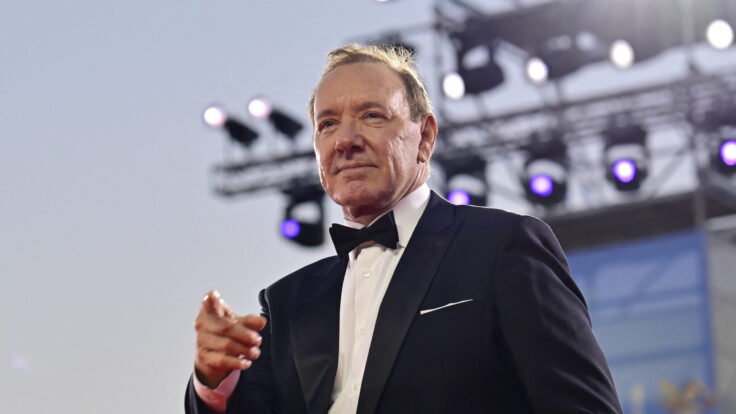
Kevin Spacey’s $80M Legal House of Cards
The disgraced actor is soon expected to sit for a brutal cross-examination in the rare Hollywood insurance dispute that has actually made it to trial. A potentially huge payout hinges on whose version of House of Cards’s ending prevails.


John Landgraf
Kim Masters • April 5, 2023
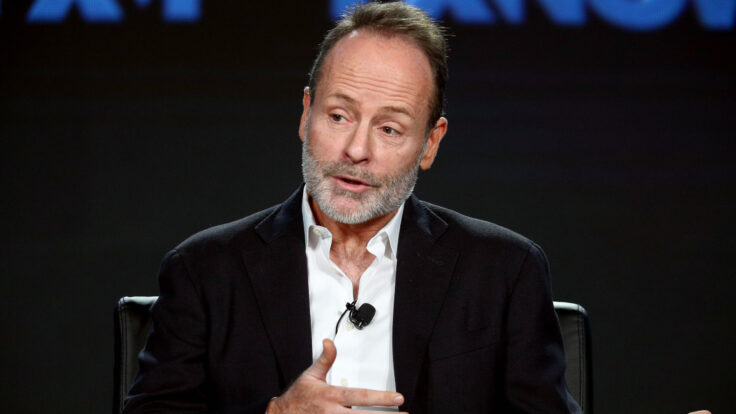
Can John Landgraf’s Slow TV Model Survive?
The oracle of Peak TV is at an inflection point as Disney+ absorbs Hulu and the chase for prestige gives way to the tonnage model.


Get access to this story

Enter your email for a free preview of Puck’s full offering, including exclusive articles, private emails from authors, and more.

Verify your email and sign in by clicking the link we just sent.

Already a member? Log In


Start 14 Day Free Trial for Unlimited Access Instead →


Latest Articles from Hollywood

Dana Walden
Matthew Belloni • April 5, 2023
20 Surefire, 100 Percent Probable Hollywood Predictions for 2026 (Part Two)
StrikeWatch ’26, a bizarre Michael Jackson record, and the future of Disney’s Dana Walden (if she’s C.E.O. or not) in the second act of the town’s favorite prognostication of the year ahead.
a minecraft movie
Scott Mendelson • April 5, 2023
It Was One Box Office Battle After Another in 2025
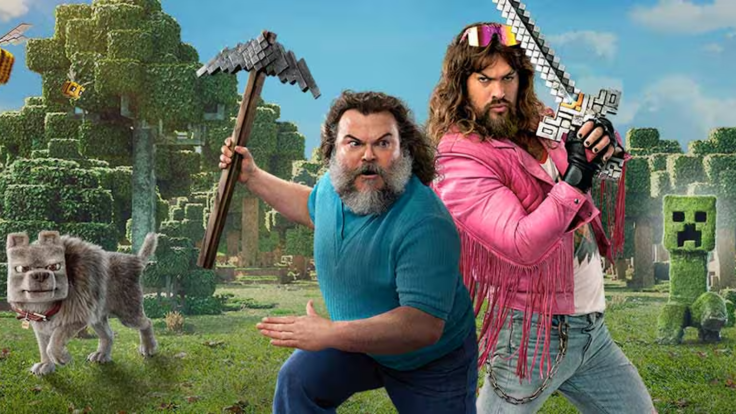
With Hollywood’s annual output back to resembling its pre-pandemic levels, some clear trends emerged: Kids showed up, horror hit more often than it didn’t, and the superhero slump is real. How might it all apply to 2026 and beyond?
Ted Sarandos
Eriq Gardner • April 5, 2023
Netflix’s Game of Antitrust Chicken
If the streaming giant wins Warner Bros., the feds will almost certainly present their next hurdle. And the Trump Justice Department might ask some questions that Netflix would like to avoid.


Sydney Sweeney
Matthew Belloni • April 5, 2023
20 Surefire, 100 Percent Probable Hollywood Predictions for 2026 (Part One)
The town’s favorite year-ahead forecast returns, with input from some of my best sources—plus a few celebrity Puck friends. The future of ‘Star Wars,’ Instagram Reels, ‘Rush Hour 4,’ and Sydney Sweeney foretold in the first of two parts…
Bryan Lourd caa
Eriq Gardner • April 5, 2023
The CAA-Range Finale, Zaz’s $500M Beef & Trump’s Media Damages Calculator
A look ahead at the most consequential media lawsuits and legal crises that will come to their conclusion in 2026.
Pam Abdy, Mike De Luca
Matthew Belloni • April 5, 2023
Hollywood’s Heroes of the Year Are… The Warner Bros. Duo
In 2025, Mike De Luca and Pam Abdy went from dead executives walking to a six-month stretch of blockbusters and Oscar contenders that silenced the town and offered a middle finger to their boss, David Zaslav. In an era when I.P. has taken over Hollywood, and their studio has been sold to Netflix (or Paramount?), they decided to go out swinging…


sam altman
Matthew Belloni • April 5, 2023
Hollywood’s Villain of the Year Is… Sam Altman
A year before the OpenAI C.E.O. gets the ‘Social Network’ movie treatment, the slop-ification of entertainment took a major leap in 2025 thanks to a copyright infringement hub called Sora 2 and Altman’s brazen courtship of Disney.
Get access to this story

Enter your email to get access to one article and free previews of our private emails from Puck authors and editors.

OR

Already a Member? Sign in


Latest Articles from Hollywood

Oscars
Matthew Belloni • April 5, 2023
The Oscars-YouTube Brand Problem
The streamer’s bold bid to host the Academy Awards offers maximum reach for a show that was becoming minimally niche, but mixing prestige and base populism has its potentially problematic downsides.
Ted Sarandos
Kim Masters • April 5, 2023
Does Anyone Believe Ted Sarandos on Theaters?
As the streamer’s winning bid to secure WBD faces regulatory scrutiny and a hostile offer from Paramount, Ted Sarandos insists that Netflix is committed to a standard theatrical window for Warner Bros. movies. Is it enough to earn Hollywood’s loyalty?
bob iger
Eriq Gardner • April 5, 2023
Disney’s Sora Wager & Hollywood’s Next A.I. Legal Battles
A field guide to the A.I. cases and deals that will shape 2026, including Disney’s recent peace treaty, the Elon-Altman feud, the next round of labor negotiations, the whole ScarJo voice issue, and many more…


david zaslav
Matthew Belloni & William D. Cohan • April 5, 2023
Who Wants Warner Bros. More?
Battle lines have been drawn over David Zaslav’s Warner Bros. Discovery, and both Netflix and Paramount think they have the winning formula. Will the Ellisons get to $34 a share? Can Netflix counter? Is Larry really “backstopping” all the equity? Or is the game already rigged?
Alan Horn and Rob Reiner
Kim Masters • April 5, 2023
Alan Horn Remembers Rob Reiner
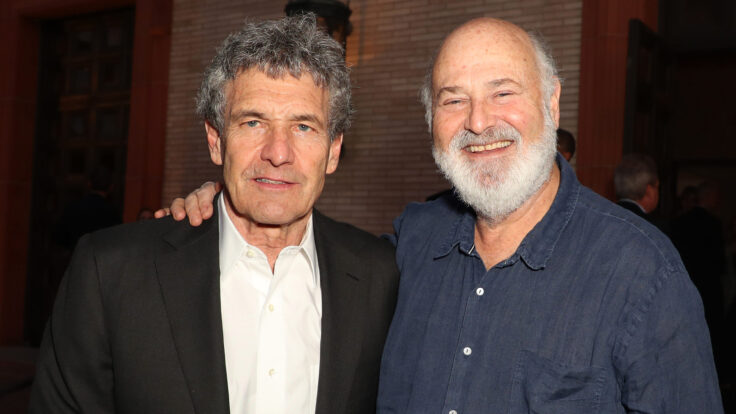
The longtime exec paid tribute to Reiner, his onetime partner in Castle Rock Entertainment, and explained why the director dedicated their first movie together to his father.
Ted Sarandos, Greg Peters
Julia Alexander • April 5, 2023
Why Netflix Needs Warner Bros.
Prior to its $83 billion deal to acquire the studio and HBO Max, the streamer had never spent more than $700 million on an acquisition. But Netflix saw an opportunity to own, not license, a significant chunk of its content—and, perhaps more importantly, to block David Ellison from taking it away.


wicked cynthia erivo
Matthew Belloni • April 5, 2023
Can Media Coverage Buy an Oscar?
Every year, awards contenders and pretenders have been mounting unbridled and financially unchecked press campaigns in the hopes of boosting their chances. A new data analysis reveals that they maybe shouldn’t have bothered.


  • Terms
  • Privacy
  • Contact
  • FAQ
  • Careers
© 2026 Heat Media All rights reserved.
Create an account

Already a member? Log In

CREATE AN ACCOUNT with Google
OR YOUR EMAIL

OR

Use Email & Password Instead

USE EMAIL & PASSWORD
Password strength:

OR

Use Another Sign-Up Method

Become a member

All of the insider knowledge from our top tier authors, in your inbox.

Create an account

Already a member? Log In

Verify your email!

You should receive a link to log in at .

I DID NOT RECEIVE A LINK

Didn't get an email? Check your spam folder and confirm the spelling of your email, and try again. If you continue to have trouble, reach out to fritz@puck.news.

CREATE AN ACCOUNT with Google
CREATE AN ACCOUNT with Apple
OR USE EMAIL & PASSWORD
Password strength:

OR
Log In

Not a member yet? Sign up today

Log in with Google
Log in with Google
Log in with Apple
Log in with Apple
OR USE EMAIL & PASSWORD
Don't have a password or need to reset it?

OR
Verify Account

Verify your email!

You should receive a link to log in at .

I DID NOT RECEIVE A LINK

Didn't get an email? Check your spam folder and confirm the spelling of your email, and try again. If you continue to have trouble, reach out to fritz@puck.news.

YOUR EMAIL

Use a different sign in option instead

Member Exclusive

Get access to this story

Create a free account to preview Puck’s full offering, including exclusive articles, private emails from authors, and more.

Already a member? Sign in

Free article unlocked!

You are logged into a free account as unknown@example.com

ENJOY 1 FREE ARTICLE EACH MONTH

Subscribe today to join the inside conversation at the nexus of Wall Street, Washington, A.I., Hollywood, and more.

START 14-DAY FREE TRIAL

  • Daily articles and breaking news
  • Personal emails directly from our authors
  • Gift subscriber-only stories to friends & family
  • Unlimited access to archives
  • Bookmark articles to create a Reading List
  • Quarterly calls with industry experts from the power corners we cover