 |
|
Happy Tuesday, and welcome back to What I’m Hearing+, my weekly dispatch on the streaming industry and the analytics behind it all. If this email was forwarded to you, click here to subscribe.
Before we get started, a quick reminder for Inner Circle members: On Thursday I’ll be chatting about this article and more in a private, off-the-record call with Puck’s executive editor Ben Landy. The conversation kicks off at 4 p.m. ET. Upgrade your membership to I.C. ahead of the call to join—hope to see you there!
Tonight, a closer look at the next phase of the streaming arms race and Hollywood’s new fixation on “capital efficiency.” But first…
|
| About Those Yellowstone Cancellation Rumors... |
|
| Rumors about Yellowstone’s potential demise—which is inevitable, one day, but may be part of a Kevin Costner renegotiation strategy—present, at the very least, an interesting thought exercise. There’s an argument that by sunsetting the series, Paramount can move the streaming rights for the show, as well as the new spinoff, to Paramount+, keeping the franchise front and center on C.E.O. Bob Bakish’s platform, and defanging NBCU’s Peacock in the process.
On the one hand, Peacock benefits greatly from Yellowstone. It’s the only Peacock show in Nielsen’s Top 10 streaming list, and it remains one of Peacock’s most in-demand titles every month. It’s also a major annoyance for Paramount that its hottest show is on a rival streamer. On the other hand, the notion that Paramount would just kill its cash cow to elbow Peacock out of a streaming list feels ludicrous. Also, a new Yellowstone spinoff is not Yellowstone, even if it has Matthew McConaughey. And even if Yellowstone is past its prime, just take one look at The Walking Dead or The Big Bang Theory and remember that shows will go as long as people are watching. And that’s where the thought exercise ends. |
 |
| Streaming’s “Capital Efficiency” Wars |
| Hollywood’s “arms race” era, when everyone was singularly focused on building up their own exclusive libraries, is over. Welcome to the age of “capital efficiency.” |
|
|
|
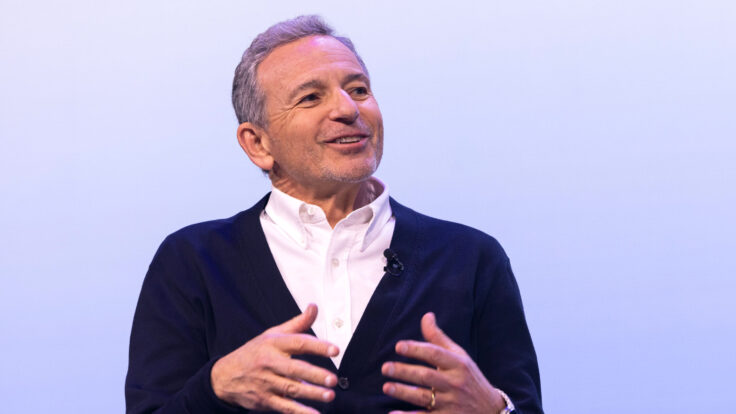
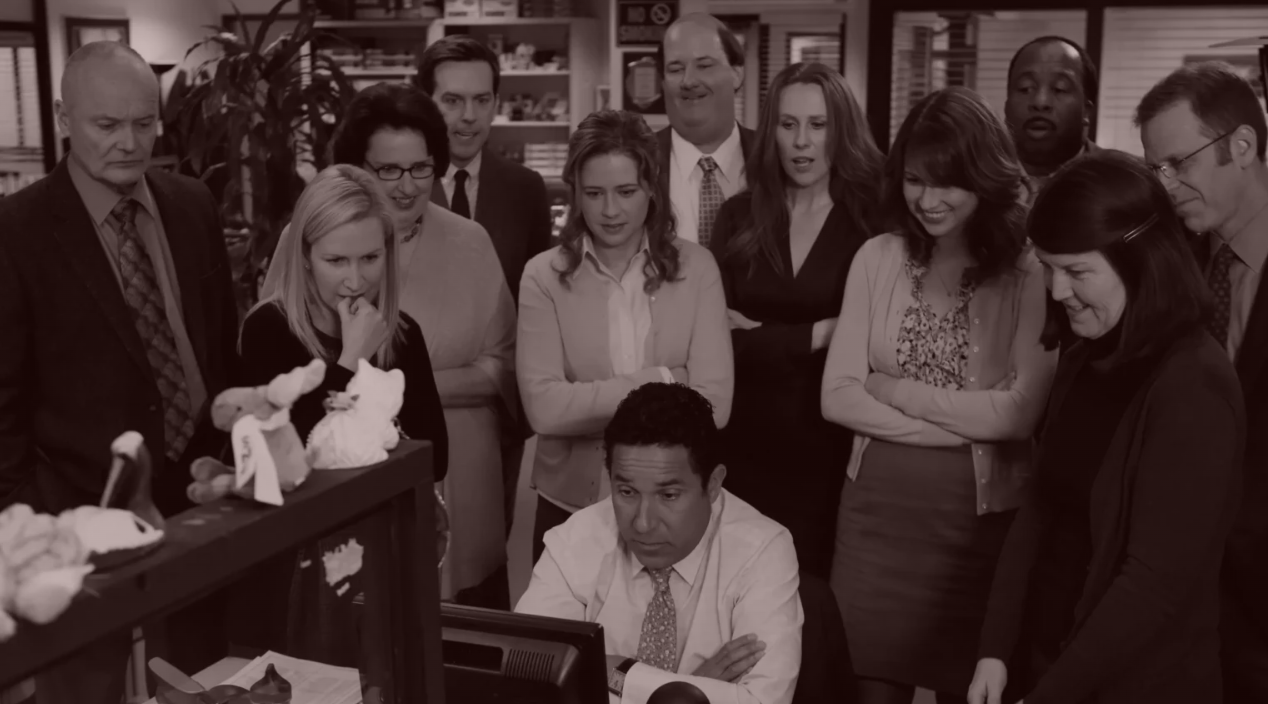
| The conventional wisdom in the streaming business is a bit like the Mark Twain joke about New England weather: if you don’t like it, wait 15 minutes. In the beginning, the thinking in Hollywood was that there were only a few big streamers, Netflix, Hulu, and Prime Video, none of which yet posed an existential threat, so why not license them The Avengers or The Office and enjoy the hundreds of millions of dollars in fees? This era, of course, was followed by a mad scramble by virtually all the major players—Disney, WarnerMedia, NBC Universal, Paramount—to launch their own platforms and claw back hits to out-walled-garden each other. As Bob Iger famously put it, “We had been selling nuclear weapons technology to a third world country, and they were now using it against us.”
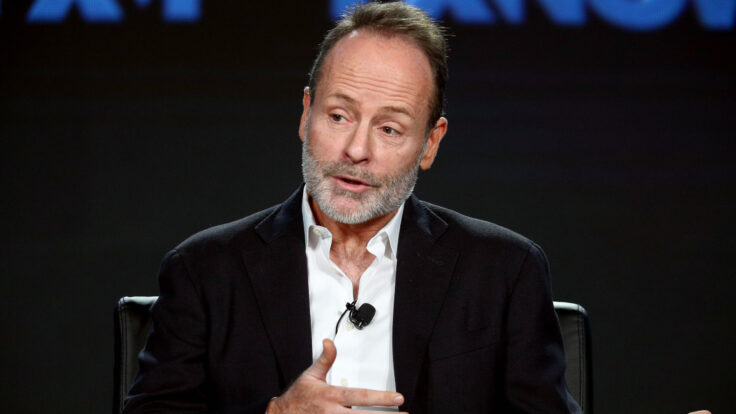
Now, in this post-Covid, post-correction, belt-tightening era, Hollywood has realized that winning market share is hard, and the streaming business is expensive and comparatively low-margin. So another, David Zaslav-articulated pivot has begun: spend less but also efficiently monetize each piece of content based on its inherent value. Suddenly every executive that I talk to is surveying their overflowing vaults to determine which titles should remain exclusive and which have more value if they’re rented out or sold entirely to third parties. And just as meaningfully, many are wondering if they can strip-mine assets without supercharging competitors, as HBO did by licensing Westworld to Tubi, or Peacock accomplished by selling Girls5Eva rights to Netflix. They’re trying to feverishly make the numbers work without harming their brands.
If the past few years were an arms race, this next phase is all about free trade—or, as C.F.O.s like to call it, capital efficiency. So how should companies rejigger their content strategies now that the rules are being re-written again? It likely comes down to four issues that will define the era as the streaming economy contracts. |
|
|
| Call this the “churn chapter” of the streaming wars, a moment defined by the effort to keep customers happy and engaged, all while prices are increasing, content is oversaturated, and cancellation is easy. Churn rates have increased from an average of 3 percent in January 2019 to just over 6 percent as of September 2022, according to Antenna. Not every title accomplishes the same goal, of course, and not every title is equally valuable to the same platform. But for the highest-performing work, the fundamental question is whether a piece of content can bring new consumers in, or keep them engaged.
The answer may be different for each streamer, based on its own strategy and demographics. Euphoria, for instance, is an award-winning hit series that would succeed on many platforms, but it was particularly vital to HBO Max at a time when the company was trying to engage a high-value audience (young women) that was spending more time on Hulu and Netflix. While Euphoria saw a smaller premiere (2.4 million viewers, per HBO) than Boardwalk Empire in 2010 (HBO’s third largest, interestingly enough) and January’s The Last of Us (second largest), the show represented a different audience opportunity.
I bring up Boardwalk Empire because it was the quintessential series for the old-school audience that has long been loyal to HBO on cable TV; Euphoria became a quintessential series for the next-generation HBO Max streaming audience. The Euphoria audience is 73 percent female, with more than 80 percent between the ages of 13 and 30, according to data from Parrot Analytics, where I work as director of strategy. Boardwalk Empire skewed 61.5 percent male, with more than 75 percent of the audience between 30 and 40+.
Sure, Euphoria would be a hit on Netflix, too, but Netflix already has a ton of global series that appeal to young women: Elite, Never Have I Ever, 13 Reasons Why, etcetera. As a result, Netflix can focus on creating new teen dramas that target sub-demographics that it isn’t yet engaging, like Latin audiences or LGBTQ+ communities.
There’s also the flipside to the equation—will a series retain a high-risk churn audience? Take CBS’s Criminal Minds. The show is key to a platform like Paramount+ thanks to its multigenerational, engaged audience. But that CBS audience is also already well served on Paramount+. So the executive team can feel comfortable distributing Criminal Minds exclusively or non-exclusively at a higher rate to a platform that covets the show’s audience and attributes.
Criminal Minds offered outsize value to Netflix in particular when it was available. The show’s audience on Netflix included a significantly high number of at-risk churn customers, according to Parrot Analytics content valuation data. Criminal Minds also has a strong viewership overlap with other Netflix titles, and Netflix hasn’t created a long-running procedural series of its own that the show might cannibalize. Criminal Minds consistently tops Nielsen’s end-of-year lists for most watched series on Netflix, and its hundreds of episodes—as well as its multi-generational audience, which is used to the linear experience—creates value in the form of subscriber retention and, now, advertising revenue. |
| II. The Overkill Third Rail |
|
| Is it possible to have too much of a good thing? In streaming, yes.
In 2022 alone, there were three Star Wars live-action series alongside four Marvel live-action projects that all debuted on Disney+. The average price of a Star Wars live-action series is north of $15 million an episode. A show like Andor or The Mandalorian is going to run about $100 million a season. It’s expensive to make so many shows and arguably overserves the Disney+ audience—the service only added a few million subscribers in the U.S. and Canada in 2022 from all this I.P.
While the glut prevents churn from its core subscriber base, the efficiency suffers. If the four Marvel shows were cut to two and supplemented with additional, cheaper content that addresses potential new demos, efficiency could be improved without sacrificing that core base. Marvel diehards aren’t going to cancel Disney+ because there are a couple fewer shows, and more casual fans will appreciate having a wider breadth of content.
This emphasis on per-title economics means optimizing the value of every piece of content so that spending is less wasteful and budgets can align more tightly with growth. It’s what Wall Street analysts are demanding now as the sector ossifies, and they aren’t satisfied by Oscar nominations or opening week numbers. As Zaz noted, the industry has spent too much and made too little. The new era of discipline focuses on new ways of measuring value.
To wit: at some point in the content cycle, a series stops being as valuable to a platform. Once that series is fully amortized, it makes sense to seek out new, even non-exclusive homes for those titles. Series like Daredevil and Jessica Jones may be more valuable to a free, ad-supported service (FAST) like Tubi, which can offer up Marvel content to its customers for free and charge stronger ad rates. In the process, Disney would likely monetize the content more efficiently via a third party than it would by housing it solely on Disney+, beneath all its newer and more exciting stuff. Disney isn’t ever going to debut a new Marvel series on Pluto TV, of course, but it shouldn’t hoard content that can be of greater value elsewhere. |
| III. Managing the Catch-22 Dance |
|
| This really is a Catch-22 moment: The shareholders of legacy companies want to know when they’ll start making a profit on their streamers. Yet these same companies have demonstrated financial success in offloading the content that could help their streamers become profitable to other outlets—all to generate money to invest back into growing their streaming slates. These days, as I’ve noted above, everyone can be a seller, but they all need to do so in a way that doesn’t devalue their own service too much. This is exceptionally difficult, and requires an advanced level of intra-company coordination.
The inherent downside to licensing your content is that it teaches audiences to expect series and films outside your streaming ecosystem, thereby making it harder to keep customers or raise prices. Data can help manage the risk by determining two factors. First, asking which series and films can bounce off one another to keep multiple audiences engaged at the most cost-efficient level. Second, diving deeper into those affinity (overlap) profiles to understand what those audiences will want to watch after a new series or film, thereby increasing the perceived value of the service.
If audiences are signing up for Hulu for a specific show, chances are they’re going to see less than 10 percent percent of the 3,000 shows available to them. We also know that audiences operate in clusters, meaning that a grouping of certain programming is beneficial to various interest cohorts. There are series that don’t fit within these areas, or that are more valuable to other platforms running the same traps. Disney has legacy content from Fox that it doesn’t necessarily need. That content can find a more monetizable home on Amazon and Netflix, which use catalogs to supplement originals.
Content slate building is like a really expensive Lego set. It’s figuring out what pieces will help get to the final product that people want to buy in droves, and knowing there are always extra pieces you don’t need. (This is where I imagine development executives may debate me.) Much like Lego, customers won’t care about those extra pieces if the final product brings them the joy they expected upon purchase. Identifying those pieces means looking at three key checklists: Does this hurt my brand identity by not having it? Does this train audiences to expect my content elsewhere, thus hindering subscription growth? And will this ultimately benefit a competitor in a way that further harms me? If the answer to those three questions is yes, it’s not a piece worth selling. |
| IV. The Consumer Awareness Question |
|
| There is a limit to all this game theory of capital efficiency. Disney won’t start selling off WandaVision anytime soon, nor is Netflix going to move Stranger Things off the platform. Brand awareness is harder to achieve when the market is saturated with more content than ever, and when everyone has their own turn at a popular franchise—which is why it’s so vital to protect once it’s achieved. In an era of renewed content licensing, brand management is more important than ever.
Netflix’s deal with Moonbug for Cocomelon episodes is a prime example of efficient strategy. Although Netflix has just a limited number of episodes, they consistently appear on Nielsen’s Top 10 list. Cocomelon was the third most streamed streaming program in the U.S. in 2022, according to Nielsen, racking up 37.8 billion minutes viewed over just 18 episodes—that’s about 35 million streams per episode. It also keeps entire households engaged (parents trust Netflix more than YouTube, where Cocomelon streams for free and is still immensely popular) and therefore helps reduce churn. Instead of tripling down on Cocomelon style shows, however, Netflix focuses its investment on other areas. Pre-schoolers are well served by Cocomelon and the smattering of other series at a low cost point—and families associate their household entertainment needs with Netflix.
Importantly, you can’t have a successful general entertainment service without kids and family content. Former Disney C.E.O. Bob Chapek noted last year that the company was losing out in the preschool space. While Marvel and Star Wars were running up the spending, Disney had largely forfeited early childhood to newcomers like Moonbug. Searches for Cocomelon are triple any Mickey Mouse show, according to Google Trends. It wasn’t until September 2022 that Bluey, a BBC series that started streaming on Disney+ in 2020, overtook Cocomelon in search. Bluey also started appearing on Nielsen charts. Over-serving one audience can often neglect another crucial audience. Bluey becomes a key title for Disney to have as part of its brand, even if it’s a BBC original.
Finally, there is the bigger question of who can buy all this content that is now up for grabs, and there’s no obvious answer. The reality is that different content works for different audiences, and different platforms are trying to identify the audiences they need against the audiences they have. Starz, the cable channel/streamer owned by Lionsgate, has now taken on castoffs from HBO Max (Minx) and Showtime (Three Women). FAST platforms like Tubi and Pluto TV need additional content to boost monthly active users and increase ad rates. But neither Fox nor Paramount nor Lionsgate has an endless stream of cash.
Netflix, the third world country that became a superpower, would love to recapture more legacy studio content, but competitors don’t want to supply the frontrunner with more ammo. Pay-1 and Pay-2 deals may make more sense for a film slate, but TV shows are more likely to be sold in multiple territories to different players all looking for a piece of the world’s attention. The TV landscape may soon start to look a lot more familiar to anyone who remembers the all-in, all-encompassing, pre-streaming era of five years ago. |
|
|
|
| FOUR STORIES WE’RE TALKING ABOUT |
 |
| The Kamala Question |
| News and notes on what keeps Biden’s team up at night. |
| TARA PALMERI & PETER HAMBY |
|
 |
| Shari’s Secret Letter |
| What do two lawsuits and a “careless” private email reveal about Paramount’s M&A ambitions? |
| ERIQ GARDNER |
|
 |
|
 |
| Late Night Endgame |
| A candid conversation with Grammys executive producer Ben Winston. |
| MATTHEW BELLONI |
|
|
|
|
|
 |
|
|
|
Need help? Review our FAQs
page or contact
us for assistance. For brand partnerships, email ads@puck.news.
|
|
|
|
Puck is published by Heat Media LLC. 227 W 17th St New York, NY 10011.
|
|
|
|