|
Hello and welcome back to What I’m Hearing+, the One Shining Moment of the WIH March Madness tournament. Today, Eriq Gardner is back with an update on the trillion-dollar question plaguing Hollywood: Should A.I. training on copyrighted materials count as fair use? The answer isn’t as simple as you’d think. Plus, a Star Wars salary dump may be coming, and the latest on the Google antitrust suit. All yours, Eriq…
|
|
|
 |
Eriq Gardner |
|
- More TikTok nonsense: I can’t decide what’s stranger—that political leaders in D.C. and Beijing apparently got close to a partial sale of TikTok, or the fact that the deal fell apart just as Donald Trump imposed market-battering tariffs. I’m leaning toward the latter, if only because Trump has now signed an executive order extending TikTok’s operations for another 75 days—a moratorium announced on Truth Social, of course—even though the divest-or-be-banned law that Joe Biden signed last year makes no provision for such a delay. That alone is going to keep legal historians busy.Those historians may also laugh at the government’s hands-on role negotiating the sale of a private company—which, whenever it comes, will likely leave Chinese stakeholders still holding a stake in TikTok and, most crucially, its algorithm, without which its real value to an American owner is dubious. All this, despite the law’s clear mandate that there no longer be any “operational relationship” with ByteDance, TikTok’s current Chinese parentco. Who needs laws when we’re making up the rules as we go?
- A ‘Star Wars’ lawsuit update: A magistrate judge has ordered Disney to hand over a spreadsheet detailing the compensation of various Star Wars actors—Pedro Pascal, Rosario Dawson, Diego Luna, and the full contract of the late Carl Weathers, among others—to former Mandalorian star Gina Carano. The actress, who claims Disney wrongfully terminated her over politically charged social media posts, successfully argued that she needs the information to help establish what she could have expected to earn had she not been fired. These salary figures would presumably be revealed at trial as part of her damages case.Then again, this Elon Musk–funded lawsuit may never reach a jury. On March 31, a judge dismissed a strikingly similar case brought by Grant Napear, the former Sacramento Kings radio play-by-play announcer, who was fired after tweeting “All lives matter” in the week following George Floyd’s killing. Although Napear initially survived a motion to dismiss—offering a roadmap for Carano and her attorneys—U.S. District Judge Dale Drozd ultimately ruled that forcing the broadcaster to retain an announcer would violate its free speech rights. Drozd also found that Napear hadn’t made a strong enough case to invoke California’s laws barring employers from retaliating against political activity. Here’s the opinion, which I suspect will become a frequently cited precedent in upcoming Hollywood speech disputes.
- Boies’s Google prediction: We’ve reached a pivotal moment in the government’s campaign to dismantle Big Tech. The F.T.C.’s case seeking to force Meta to divest WhatsApp and Instagram has a final pretrial conference in D.C. on Wednesday. Then, on Thursday, the Department of Justice will appear at the same courthouse for its monopolization suit against Google over its dominance in web search. Last year, a judge ruled against Google in the liability phase; a trial to determine the appropriate penalty begins next week.For what it’s worth, David Boies told me he doubts a judge will actually order Google’s breakup. A quarter-century ago, of course, Boies famously led the federal government’s landmark browser monopolization case against Microsoft—an effort that nearly resulted in a forced breakup, before an appeals court reversed the remedy. These days, Boies has no fondness for Google—by his own count, he’s spearheading 95,000 ongoing lawsuits against the company (a story for another day)—but he believes U.S. District Judge Amit Mehta will see the futility of forcing Google to spin off Chrome. More likely, he predicts, is a behavioral remedy—such as requiring Google to end its practice of paying Apple to keep Google as the default search engine on the iPhone. (Google reportedly paid Apple as much as $20 billion a year, as recently as 2022.)
In the background looms the larger question of how this eventual ruling will shape Google’s ambitions in A.I. As for Boies, he’s already turned his attention there, leading class actions against both Meta and OpenAI/Microsoft for allegedly using copyrighted books to train their A.I. models.
|
|
|
|
OpenAI just won the ability to consolidate dozens of lawsuits into a single case, but the judge overseeing it isn’t exactly sympathetic to its plight. Meanwhile, Meta and Anthropic are fighting their own court battles over training A.I.s with unlicensed data. Insiders wonder if Congress will step in to broker a compromise—or if creators are destined for a less satisfying conclusion.
|
|
|
|
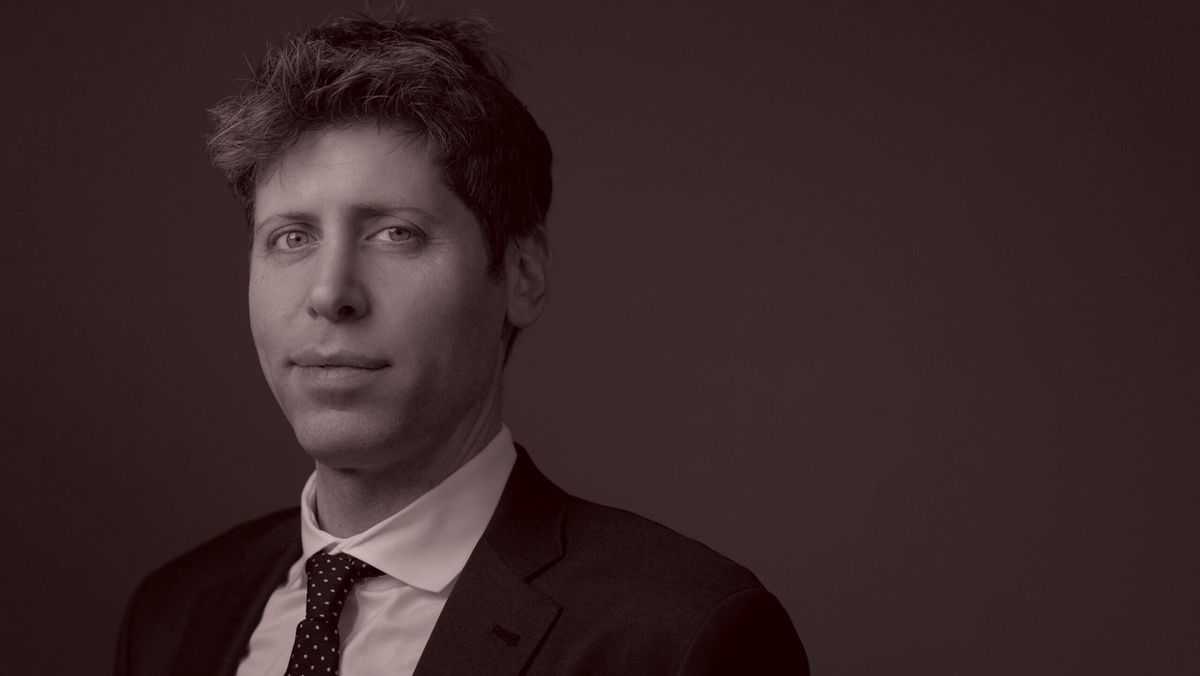
You win some, you lose some, and then there are the occasions when the scorecard isn’t entirely legible. To wit: On April 3, creators suing OpenAI for allegedly committing copyright infringement on a grand, epoch-defining scale received word that all litigation against the company would be consolidated. OpenAI, for its part, had warned that the very future of artificial intelligence hung in the balance—and that conflicting rulings from courts across the nation would only sow chaos. After hearing arguments in North Carolina, a judicial panel agreed to Sam Altman’s company’s call for
centralization. From here on out, a single federal judge will oversee discovery, class certification, and the question of whether cases are ripe for trial. This includes a class action seeking to represent anyone in Hollywood and beyond who has ever uploaded a video to YouTube only to find their work transcribed and then used as training data.
Ah, but the identity of that judge. Here’s where the creators may have lost the skirmish, but advanced in the broader war. OpenAI had lobbied for California—preferably San Francisco, a jurisdiction more attuned to the needs of the tech set. Instead, the panel tapped U.S. District Judge Sidney Stein of New York.
|
|
|
|
A MESSAGE FROM OUR SPONSOR
|
The Emmy award-winning series, Hacks, returns this Thursday. The new season follows Deborah Vance making a move from her Vegas residency to Hollywood show biz. Tensions rise as Deborah and Ava try to get their late night show off the ground, and make history while doing it. Starring Jean Smart and Hannah Einbinder, Hacks Season 4 is streaming Thursday, April 10th, exclusively on Max.
LEARN MORE
|
|
|
Who is Stein, and why should authors, journalists, and assorted copyright holders be quietly raising a glass? For starters, he’s 79 years old—a man, one imagines, with little patience for Silicon Valley parlor tricks. More to the point, he’s the same judge who refused to let Richard Prince off the hook in that splashy copyright case involving Instagram photos that were turned into high-priced gallery art. Prince, represented by Elon Musk’s go-to lawyer Alex Spiro, cried fair use. Stein disagreed. The case settled just before trial, with Prince shelling out $650,000 to two photographers, and agreeing never to reproduce or sell the images again.
Still not convinced? Take a look at Stein’s opinion, released Friday, rejecting OpenAI’s motion to dismiss claims brought by The New York Times, the Daily News, and the Center for Investigative Reporting. Most notably, he greenlit a contributory copyright claim—citing Times-provided examples of ChatGPT users accessing paywalled articles. (A California judge, by contrast, recently tossed that same claim in a case brought by music publishers against Anthropic.)
As for OpenAI’s fallback defense—that generative A.I. is capable of substantial non-infringing uses, à la the Betamax VCR—Stein wasn’t having it. That device, he wrote, “was not a product that itself was built on purportedly appropriated works, as are defendants’ products here.”
This ruling suggests these cases are likely to eventually survive summary judgment and make it to trial. And it raises a question: Who might be next to hop aboard, now that the train has a conductor and a semblance of a timetable? Broadway playwrights? Video game publishers? Studio Ghibli—the Japanese animation house whose aesthetic was mimicked last week by ChatGPT’s new image-generation tool? Time will tell. But don’t be surprised if this party train gets crowded.
|
Even if Judge Stein now holds the gavel on more A.I. copyright cases than anyone else, his won’t be the only word that matters. Consider Thomson Reuters v. Ross Intelligence. As you’ll recall, this one pits Westlaw’s parent company against a scrappy rival accused of using proprietary judicial opinion “headnotes” to train a natural language search engine. Back in February, in Delaware, U.S. District Judge Stephanos Bibas stunningly reversed his own earlier ruling and rejected Ross’s fair use defense. And rather than proceed to trial on the remaining issues, Bibas has authorized an immediate appeal to the 3rd Circuit—just one rung below the Supreme Court. Procedurally ahead of the pack, Thomson Reuters v. Ross may become the bellwether for all that follows.
Meanwhile, dozens of other A.I.-related copyright cases against non-OpenAI defendants are also barreling ahead. Two notable cases involving well-known creators are unfolding in San Francisco, and both have reached the all-important summary judgment stage. One is the putative class action led by the likes of Ta-Nehisi Coates and Sarah Silverman against Meta. Another cluster of literati, led by authors Andrea Bartz and Charles Graeber, has brought a case against Anthropic. Different judges, different attorneys, and potentially, different outcomes. What unites them is a difficult question: Does training A.I. on published works qualify as non-infringing fair use? The answer may turn on a not-so-simple and divisive query: What is the market for these authors?
Forget, for a moment, that generative A.I. can spit out prose that can compete with books written by human authors. Instead, think of other ways that A.I. is being used: to help biologists design new drugs, to assist government agencies in mining vast archives, or to translate menus and museum signs for American tourists in Kyoto. Most creators don’t object to these use cases. But what if such applications are only possible because copyrighted material was consumed during the R&D phase? If a model was fed 20 seasons of Grey’s Anatomy to teach it bedside manner, does that require a license?
Meta and Anthropic argue it does not. In their summary judgment motions (read here and here), they point out that no licensing market currently exists for this kind of use. They say they’ve made overtures—tepid ones, by the sound of it—but that the publishers didn’t engage. Some publishers, for what it’s worth, may not even have the contractual authority to negotiate on behalf of their authors. So, the tech firms turned elsewhere: in Meta’s case, to illicit torrent networks, where they vacuumed up millions of books like a cyberpunk anteater.
But the lack of a licensing market doesn’t mean the law should pretend one can’t exist. Five years ago, the Supreme Court grappled with this issue in Google v. Oracle, a case about Google’s use of Java code in the design of smartphone interfaces. The Motion Picture Association, seeing an opportunity to sway the justices in a landmark copyright dispute, weighed in with an amicus brief supporting Oracle and urging the court to recognize a copyright holder’s right to develop new markets. The court ultimately sided with Google on fair use—though Justice Clarence Thomas, in a sharp dissent, took an expansive view of a copyright owner’s right to exploit a potential market, noting at one point that book authors needn’t personally adapt their works to be in the movie business. They could license such authority to someone else, as Oracle could have theoretically done with its Java code.
|
|
|
|
A MESSAGE FROM OUR SPONSOR
|
The Emmy award-winning series, Hacks, returns this Thursday. The new season follows Deborah Vance making a move from her Vegas residency to Hollywood show biz. Tensions rise as Deborah and Ava try to get their late night show off the ground, and make history while doing it. Starring Jean Smart and Hannah Einbinder, Hacks Season 4 is streaming Thursday, April 10th, exclusively on Max.
LEARN MORE
|
|
|
Then came last year’s Warhol v. Goldsmith decision, where the Supreme Court—this time, in an opinion by Justice Sonia Sotomayor—put a finer point on it. Forget the artist’s intentions, she wrote. If the new use occupies the same market as the original—if both, say, are meant to illustrate a magazine story—then that’s not transformative. That’s a substitute.
And so we arrive at the trillion-dollar question: Will judges view A.I. training as the lawful progress of science and useful arts, akin to Google using Java? Or will they see it as a Warholian misstep—no transformative gloss, clear market harm, and no free pass? If the courts choose the latter, copyright owners could suddenly find themselves holding all the leverage. Not just in terms of damages, but in laying the groundwork for the licensing regime to come.
|
There are those who claim to see the endgame: the emergence of licensing markets that would allow A.I. companies to train on copyrighted material—legally, and with real money flowing back to the original creators. I’ve spoken with a few of these prophets, and even among the faithful, there’s a divide. Some believe Congress will be forced to step in and broker a compromise—one that balances Silicon Valley’s insatiable appetite for data with fair compensation for authors, journalists, and other creatives. This casts OpenAI’s blushing courtship of the Trump administration—couched in the language of national security and technological supremacy—in a rather strategic light.
Others, with less faith in Washington’s ability to pass anything more complex than a bill renaming a post office, see a more likely path: settlement. A throwback, even. Think 1940s, when the Department of Justice struck consent decrees with ASCAP and BMI and created a framework that allowed radio to flourish without having to negotiate the right to play every individual song. Frankly, it was a solution born of legal exhaustion, not legislative foresight.
If that’s the road ahead—and let’s be honest, gridlock is the closest thing Congress has to a bipartisan tradition—then expect some push and pull before equilibrium arrives. Copyright owners may be the ones doing the suing today, lambasting the unauthorized use of their work, but give it a few years, and they could find themselves playing defense. Especially if their licensing efforts start to resemble coordination. Don’t be surprised if we see antitrust suits brought by tech companies and consumers aimed at trade associations, guilds, and unions looking to carve out their slice of the A.I. economy.
I suspect this may turn into a simulacrum of the legal mess entangling college sports at the moment. After the landmark Supreme Court decision in 2021 against the NCAA, when amateurs won the unfettered right to license their names and images, the organization has been taking body blows in court, and is desperately eager to settle and move on, even though college athletes still face roadblocks in securing a piece of the broadcasting pie. A.I. companies may soon find themselves in the role of the NCAA—battered in court, desperate for closure, and turning to Congress for a legislative lifeline. And creators? They may end up in the position of college athletes—grateful, in theory, to be paid, but bogged down in the minutiae of implementation. How does one determine the value of a single A.I. input among billions? No one knows. I’ve asked.
What’s clear is that we’re in the early innings. The recent consolidation of cases is merely a prelude. The rulings will matter more, but even those won’t offer finality. We’re looking at years of legal maneuvering. And for now, A.I. isn’t bearing any of the cost of sorting this all out. The humans are doing all the work. And getting paid.
|
|
Thanks, Eriq. I’ll be back on Thursday evening. See you then.
Matt
|
|
|
Need help? Review our FAQ page or contact us for assistance. For brand partnerships, email ads@puck.news.
You received this email because you signed up to receive emails from Puck, or as part of your Puck account associated with . To stop receiving this newsletter and/or manage all your email preferences, click here.
|
|
Puck is published by Heat Media LLC. 107 Greenwich St, New York, NY 10006
|
|
|
|