 |
 |
|
Hello and welcome back to What I’m Hearing+, the frosting on top of WIH’s Tom Cruise coconut bundt cake. Speaking of the cake, thanks to the readers who offered to send me all or part of their special holiday gift. I accepted one offer and will review the cake in a future issue, once it arrives and I’ve spent some time with it. In the meantime, Eriq Gardner is back today with an interesting analysis of the legal claims from voice actors against A.I. companies. But first, a few news items…
|
|
|
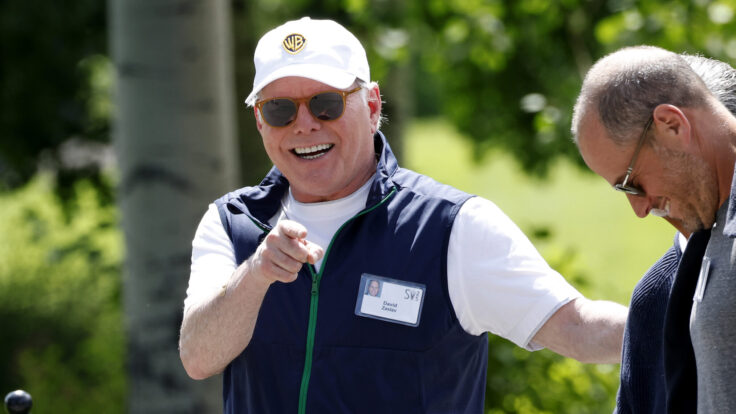
- Malone gasses up for Liberty sale?: Unless you’re a racing fan or Drive to Survive devotee, you may have missed that Formula 1 is adding an American team, Cadillac, sponsored by General Motors. This isn’t just a milestone for the rapidly growing sport; it seems to be the first inroad that Trump 2.0 has made on the antitrust front, while also signaling a significant media deal to come.
Liberty Media, which owns the commercial rights to F1, had previously blocked a proposed new team from Michael Andretti, sparking a Department of Justice investigation into possible antitrust violations, pushed by Republican lawmakers including Reps. John James and Jim Jordan. Now the air seems to have cleared: The Cadillac team will be operated by execs tied to Andretti’s camp, if not the former racing legend himself.
Liberty’s newfound flexibility likely has something to do with the election of Donald Trump. The Andretti family is close with Don Jr., for starters, and sources tell me that Liberty chairman John Malone wants to clear potential regulatory obstacles as he explores a sale of the company, which also has sizable stakes in Live Nation and SiriusXM. Making nice with the D.O.J. is a smart play. Meanwhile, Liberty C.E.O. Greg Maffei—instrumental in the company’s 2017 acquisition of F1 and regarded as the staunchest opponent to Andretti’s team—is leaving.
The F1 shake-up comes as Michael Jordan’s NASCAR team fights over that circuit’s closed charter system. The NBA Hall of Famer, who has powerhouse sports antitrust attorney Jeffrey Kessler leading the charge, was recently denied a preliminary injunction. But I wouldn’t be surprised to see the feds take a closer look at exclusionary practices across the sports and media landscape. Having ties to Trump’s inner circle might just offer a competitive edge. —Eriq Gardner
|
|
A MESSAGE FROM OUR SPONSOR
|

|
|
|
- Bryan Freedman’s Twitch sitch: On Monday, Kai Cenat’s 30-day Twitch livestream, featuring celebrity drop-ins by the likes of Kim Kardashian, Lizzo, Snoop Dogg, and Miranda Cosgrove, wrapped. The record-breaking event, which gained the 22-year-old over 700,000 subscribers, featured fireworks, a carnival, and multiple weddings. But even as Cenat bid an emotional farewell, complete with a tribute during Monday Night Football, a legal drama has been unfolding.
For his marathon livestream, Cenat leased Maison du Soleil, one of Los Angeles’ most storied mansions. Designed by architect Paul Williams, the 14-bedroom estate was previously owned by Oscar-winning writer Sidney Sheldon, by the late fashion magnate Max Azria, and, most recently, by billionaire investor Ron Burkle. On the market for $55 million, the spread boasts a Moroccan bathhouse and 6,000-square-foot movie theater.
Shortly after Cenat moved in, however, the leasing company, Million Dollar Luxe, sued the Twitch star, claiming that a continuous, monthlong party would dissuade potential buyers, including one unnamed celebrity, rumored to be Jennifer Lopez. If the rap concert with a 200-person marching band didn’t cross the line, handing party guests flamethrowers probably did. Bryan Freedman, the litigator for Cenat, responded that Luxe knew his client’s reputation, that he was a lawful tenant, and that claims of harm to the property were speculative.
Last week, Los Angeles judge Mark Epstein ruled that Cenat likely violated the law by hosting events without proper permits or insurance. The judge ordered security cameras, which Cenat had disabled, to be reinstalled, but declined to evict him, noting that the lease would expire in days, anyway. The suit against Cenat alleging property damage continues. —E.G.
- McDonald’s grilled in Byron Allen case: Comedian-turned-media mogul Byron Allen hasn’t sailed very smoothly in recent years. His high-profile media bids—$30 billion for Paramount Global this year, $10 billion for ABC and other Disney networks last year—weren’t taken seriously, and his Allen Media Group is grappling with layoffs amid looming debt obligations. But over the weekend, Allen scored a quiet win when a federal judge ruled that his 2021 racial discrimination lawsuit against McDonald’s could head to trial.
Allen, who previously lost a $100 million fraud lawsuit against the fast food giant, alleges that Mickey D’s bypassed advertising on his TV networks by steering him toward its Black-focused ad agency, which had a smaller budget, rather than the general market agency with more resources. McDonald’s countered that both agencies evaluated Allen’s networks. California federal judge Fernando Olguin has determined that Allen presented enough evidence to move forward. (Read the ruling.)
While Allen has settled several discrimination cases in the past, including a case with Comcast that went all the way up to the Supreme Court, this is the closest he’s come to taking one to trial. If it proceeds, it could become one of the most high-profile advertising-discrimination cases ever, taking place amid a political backlash to corporate diversity programs. —E.G.
- Shaboozey’s record label blues: Shaboozey, whose “A Bar Song (Tipsy)” has just tied Lil Nas X’s “Old Town Road” for longest run atop the Billboard Hot 100, is headed to mediation with his former record label. Shaboozey and Kreshendo Entertainment agreed to part ways in 2019, with Kreshendo taking a 50 percent stake in his songs for the remainder of their agreement. But when “A Bar Song” exploded, Shaboozey (real name: Collins Obinna Chibueze) stopped making payments, prompting Kreshendo to claim breach of contract. Meanwhile, Shaboozey filed his own case, alleging that he has the right to speed up the deal’s expiration, and reclaim full ownership of his catalog, by repaying 110 percent of his advance from Warner-Tamerlane, the publishing administrator.
Usually, I wouldn’t highlight a mediation, but there’s a bit more going on here: Both parties have agreed to pause their lawsuits and postpone deadlines, signaling a serious attempt to settle. If they succeed, it might just call for a double shot of whiskey. —E.G.
- The latest from the eBay-C.I.A. front: Readers may recall the wild tale of the husband-and-wife journalists who were allegedly stalked by eBay with the help of a former C.I.A. operative. That case is nearing trial, but eBay just moved to suspend proceedings, seeking to immediately appeal a key issue related to whether David and Ina Steiner can pursue their $466 million punitive damages claim. That nine-figure decision should be coming from a trial judge shortly. —E.G.
|
| And now for this week’s spotlight… |
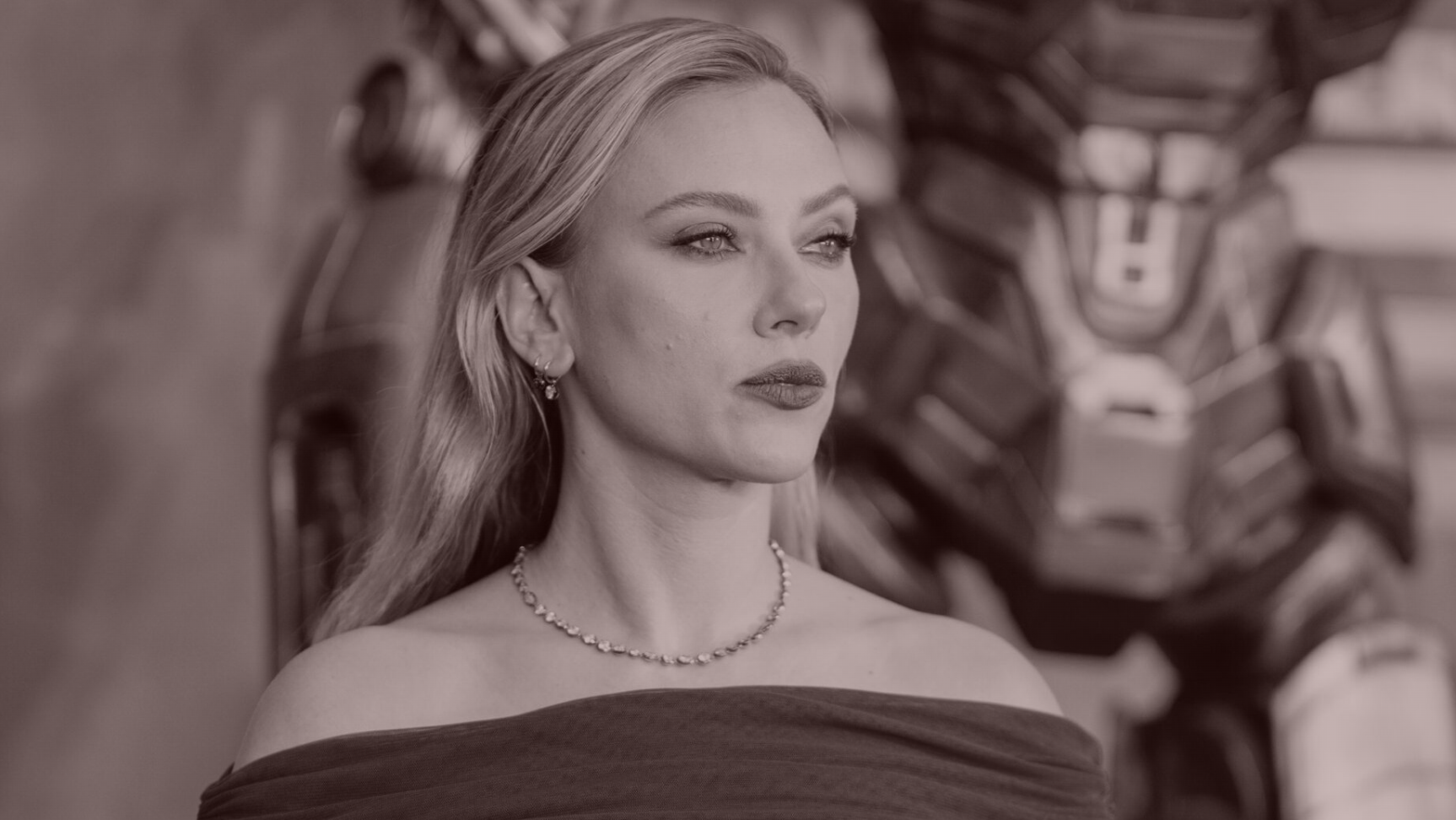 |
| ScarJo’s A.I. Legacy |
| Scarlett Johansson’s legal dustup with OpenAI last May opened the gates for voice-stealing claims from other actors. Now the fate of an entire entertainment sector may hinge on a pair of imminent decisions. |
|
|
|
| Decades from now, Scarlett Johansson’s legal threat against OpenAI may stand out as a defining moment in Hollywood’s relationship with artificial intelligence. You’ll no doubt recall how a single cease-and-desist letter over the imitation of her voice landed the Marvel star on Time’s “100 Most Influential People in Artificial Intelligence” list, even though Sam Altman’s company quickly denied the accusation. At the time, it wasn’t clear whether Johansson had standing to sue over the alleged use of her voice from the movie Her—and she has yet to actually sue—but the letter ignited a discussion about digital replicas, spurred legislative initiatives, and encouraged others to file lawsuits of their own.
Voice actor Paul Lehrman, for instance, is now fronting a class-action lawsuit in New York against Lovo Inc., an A.I. voice generator, for allegedly cloning his voice, alongside those of Barack Obama, Conan O’Brien, Elton John—and, yes, Johansson. This case, the first of its kind, just might force a court to reckon with the issues Johansson teased.
Back in 2020, a Lovo employee cloaked as “User25199087” navigated the freelance marketplace Fiverr.com to recruit actors. Lehrman, whose résumé includes bit parts in TV shows like Blue Bloods and New Amsterdam, recorded 104 snippets for Lovo for $1,200, under the pretense of “academic research.” Lehrman wanted to know more, of course, but was told, he says, “It’s a confidential work in process sorry haha.” |
|
|
| Lehrman didn’t think anything of the gig until 2023, when he heard his own voice on a podcast exploring A.I.’s role in the Writers Guild strike—specifically, his voice in a conversation with ChatGPT. Later, the shocked actor pieced together what had happened: The podcast host had typed answers into Lovo’s A.I.-powered text-to-speech software and selected “Kyle Snow” as the default option to read them aloud. “Kyle Snow,” of course, was Lehrman’s voice. Other options included “Barack Yo Mama,” “Elton John Cena,” “Cocoon O’Brien,” and “Samantha OS” (Johansson, whose Her character was named “Samantha”).
Lehrman sued alongside fellow actor Linnea Sage, attaching declarations from various industry professionals including Tim Friedlander, president of the National Association of Voice Actors, and Ed Lewis, a casting director. They testify that Lehrman has a unique, identifiable voice, that Lovo replicated it, and that the sale of synthetic clones pose an existential threat to actors’ careers. On Thanksgiving eve, Lovo filed a dismissal motion. A judge will now decide whether the case moves forward. |
|
|
| Lehrman’s suit tosses out legal claims like so much spaghetti against a wall, and most—conversion, consumer fraud, breach of contract, copyright infringement, etcetera—are unlikely to stick. (Read Lovo’s dismissal brief, which does a good job of arguing the shortcomings.) That leaves two avenues open.
The first is the right of publicity, which is meant to protect someone’s name, portrait, picture, likeness, and voice. Had ScarJo sued, her case likely would have drawn from previously successful lawsuits over “soundalikes”—see: Bette Midler v. Ford Motor, Tom Waits v. Frito-Lay. But this latest case hinges on New York’s narrow version of likeness protection, which is limited to advertisement and trade within the state and within a small window of time, too. New York courts haven’t been particularly eager to expand this ambit. (See, for example, when Lindsay Lohan saw a Grand Theft Auto V character that looked and sounded like her and sued.) Interestingly, upon the early emergence of deepfakes, the New York state legislature amended the law in 2021 and gave the heirs of dead people the ability to control digital replicas, but that doesn’t look to be particularly helpful for living actors like Lehrman.
More promising is Lehrman’s assertions under the Lanham Act, a federal law aimed at protecting brands by guarding against consumer confusion about the source of a product or service. Lovo points out that Lehrman doesn’t own a trademark and doubts whether a voice alone can be protected under federal law. However, as long as something is distinctive enough to potentially have secondary meaning, there doesn’t seem to be any good legal reason why a voice couldn’t be trademarked. That said, such a voice would have better chances if it were undeniably distinct, à la James Earl Jones or Christopher Walken. Indeed, in the past, corporations have attempted to protect sounds. Think, for instance, of the MGM lion’s roar.
The tougher question is whether Lehrman can tie the alleged deception to loss. The declarations from Friedlander and Lewis may bolster his claims of false advertising and unfair competition, but Lovo noted that Lehrman hasn’t claimed that he’s actually lost work due to his A.I. doppelgänger. Is it plausible that his voice carries enough recognition in the $2 billion voiceover industry that the existence of “Kyle Snow” threatens to muscle him out? We’ll soon find out.
If Lerhman doesn’t succeed, the lesson may be that it’s difficult to apply old laws to new technology. After all, it’s hard to protect something as intangible as a voice—it’s not exactly a physical asset, nor does it fit neatly in the old intellectual property paradigm. One can make a recording of a voice, and protect that recording, but only under certain circumstances. Alas, without policy changes, actors like Lehrman may have to play whack-a-mole on A.I. replication. They’ll scrutinize old contracts to guard against unauthorized use of old performances and hope for changes that will create a more favorable legal environment.
Could that environment change? Well, in New York, lawmakers unanimously passed a bill in the wake of Johansson’s dustup that requires clear contracts for the creation and use of digital replicas, nullifying any agreement for someone’s voice or likeness—such as those buried in the fine print of social media services—that doesn’t specify intended use and isn’t negotiated by legal counsel. I’ve heard the bill landed on Governor Kathy Hochul’s desk over the weekend, and she has 10 days to sign it, or else it dies. Her office didn’t respond when I inquired after her intentions. |
|
|
That’s all for today. I’ll see you on Thursday.
Matt |
|
|
|
| FOUR STORIES WE’RE TALKING ABOUT |
 |
| LVMH Spy Games |
| A twist ending to Bernard Arnault’s courtroom appearance. |
| LAUREN SHERMAN |
|
 |
|
 |
|
 |
|
|
|
|
|
 |
|
|
|
Need help? Review our FAQs
page or contact
us for assistance. For brand partnerships, email ads@puck.news.
|
|
You received this email because you signed up to receive emails from Puck, or as part of your Puck account associated with . To stop receiving this newsletter and/or manage all your email preferences, click here.
|
|
Puck is published by Heat Media LLC. 227 W 17th St New York, NY 10011.
|
|
|
|