{{ 'now' | timezone: 'America/New_York' | date: '%b %d, %Y' }} |
|
|
Welcome back to What I’m Hearing+, where we are not covering
Trump’s $15 billion lawsuit against The New York Times, except to say that every time another media company is targeted by the president, it should extend a massive middle finger to Disney, Meta, and that first round of defendants who paid to settle cases they should have fought, and thus taught Trump that he could make money off bogus litigation.
Anyway, speaking of Trump, Eriq Gardner is back tonight with a fascinating and frightening
analysis of whether the president could commandeer Hollywood intellectual property to train A.I. models. Plus, media mogul Jay Penske’s fight over Google summaries, and why the legal battles over the Hulk Hogan sex tape have officially outlived Hulk himself.
Go for it, Eriq… |
|
|

| Eriq Gardner
|
|
-
Penske v. Google’s A.I. summaries: Let’s get past the irony of Jay Penske, who owns nearly every entertainment trade publication in town, crying foul over monopolies. (Disclosure: I wrote for The Hollywood Reporter briefly under Penske.) Don’t discount his newest antitrust case, which targets how A.I.-generated summaries present key facts while discouraging clicks on actual articles—a phenomenon known in media circles as “Google Zero.” Penske may take heart from a
federal judge’s recent ruling against Google for maintaining an illegal monopoly in online search. Leading the case on his behalf is Susman Godfrey, the firm behind Dominion’s $787 million settlement victory over Fox News and the pending $1.5 billion settlement won by authors against Anthropic.
Penske’s complaint hinges on the theory that Google’s dominance in
search coerces publishers into handing over their content to train Google’s L.L.M.s—essentially seeding A.I. Overviews—without a real opt-out. Notably, this argument is framed as a competition issue, not a copyright one. Reciprocal dealing isn’t the most straightforward legal avenue, but it’s plausible enough, and perhaps easier than showing copyright protection for facts contained in, say, a news report on a Leo DiCaprio movie—especially when Penske’s own overlapping media
brands often publish nearly identical news articles on the same underlying facts. (Penske’s Deadline, in particular, rarely credits or links to other outlets that first report the facts in its articles.)
The fate of Penske’s case may be tied to an earlier Susman-led matter, filed by Chegg, the educational publisher, which raised similar arguments. Google has moved
to toss that one, insisting it’s not in the same market, that “coercion” is implausible, and that publishers voluntarily index their content. The ruling in that case will set the tone—and likely the settlement math—for Penske’s play. Because let’s be honest, regardless of the outcome, the lawsuit may speak to the health of the entertainment trade business. - The ghost of Gawker returns to court: Nearly a decade after Hulk Hogan’s
takedown of Gawker, we’re still litigating that sex tape. The latest fight is over a documentary, Video Killed the Radio Star, which revisits the publication of Hogan’s infamous private video. The documentary was slated to hit streaming platforms last Friday, until Nick Hogan, son of the late wrestler also known as Terry Bollea, sued to block the release. A judge agreed.
Technically, the lawsuit is aimed at radio provocateur Bubba the
Love Sponge, who secretly recorded the tryst between his then-wife and his then-buddy back in 2007. Hogan initially extracted a settlement from Bubba, who relinquished any claim to the tape, before Hogan sued Gawker, with backing from Peter Thiel, and won the $140 million settlement that sank the company.
Hogan’s heirs are attempting to block the release of the new documentary by accusing Bubba—or Todd Clem, as he’s legally known—of breaching his own agreement
with Hogan. U.S. District Judge Tom Barber appears receptive. Woltz Films, the producer of the documentary, insists that Clem neither owns the company nor controls its content, and that the documentary’s 38 seconds of sex tape footage was pulled from publicly available news broadcasts. A hearing is scheduled for tomorrow. - Anderson in the hot seat: CNN is staring down the barrel of another defamation trial in Florida. Nine years
ago, a West Palm Beach heart surgeon named Michael Black sued the network for defaming him in a report about infant deaths at his hospital. CNN won a summary judgment, but a state appellate court has overturned the decision and ruled that a jury must decide whether the coverage implied something defamatory. One judge encouraged the trial
court to take another look at Anderson Cooper’s role in the broadcast—was he merely reading a script, or did he bear responsibility as a producer? (As I reported back in 2022, Cooper sat for a deposition in the case.) No trial date has been set, but it comes after CNN settled the Zachary Young case after an adverse verdict sent
the trial to the punitive damages phase. It’s a reminder that defamation claims have a long shelf life in Florida.
- ‘The Pitt’ and the legal pendulum: Congrats to actor and executive producer Noah Wyle for a great night at the Emmys: He won best actor, and the HBO Max medical drama won best drama series over Severance. Alas, the limelight ensures there will be more scrutiny of the Michael Crichton estate’s suit alleging that the series is an ER knockoff in violation of a decades-old deal. A Los Angeles judge has already ruled the case has merit, citing evidence of a failed ER reboot to raise legitimate questions about The Pitt’s origins. Warner Bros. TV, which produces The Pitt, is due to file its opening appellate brief on October 2.
- Hollywood v. Chinese A.I.: Disney, Universal, and Warner Bros. Discovery joined forces today on a copyright lawsuit against MiniMax, the Chinese company behind Hailuo AI, which allows users to insert characters like Darth Vader, the Minions, and the Joker into videos. Perhaps most damning, the company appears to openly advertise that very feature. On paper, at least, the copyright claims look pretty compelling.
Will MiniMax even respond? And if it
does, what guarantee is there that the company would actually comply with an injunction issued by a California federal judge? That’s where diplomacy typically comes into play—and perhaps where this endeavor begins to wobble. Trump, currently knee-deep in trade negotiations with China, is particularly keen to keep TikTok alive. It’s hard to imagine his administration picking a high-profile fight over stolen I.P. at the same time, especially given the president’s own permissive
stance on training A.I. with copyrighted content. (Sources familiar with the companies’ thinking here express optimism that the White House wouldn’t tolerate foreign plagiarism. They also note MiniMax’s $4 billion I.P.O. and foreign business plans.)
Then there’s the conspicuous absence of the Motion Picture Association’s other members. (The MPA itself put out a bland statement of support for the lawsuit a short time ago.) Where are Sony, Netflix, Paramount, and Amazon? All four have their
own A.I. agendas, to be sure—for one, Paramount is now owned by the Ellison family, and Larry Ellison’s Oracle is one of the TikTok suitors. But this feels like a moment when industry-wide lobbying muscle might actually matter. And in the end, the true measure of success is what the plaintiffs actually get. A default judgment with no practical enforcement mechanism wouldn’t mean much.
|
|
|
As the president expands his legal assault on the media, a former N.S.A. general
counsel has argued that the White House should declare a national emergency to seize Hollywood’s I.P. for an A.I. arms race with China. Is it a total fantasy or just a new normal in these strange times? |
|
|
Last week, I stumbled upon one of the more absurd arguments I’ve encountered this year: a Lawfare
column by Stewart Baker, the former general counsel for the National Security Agency, essentially proposing that the U.S. government enlist James Bond, Indiana Jones, and Luke Skywalker in the A.I. arms race with China. Baker, a veteran Republican policy hand, was apoplectic that Anthropic,
the big A.I. company behind the Claude chatbot, had agreed to shell out $1.5 billion to settle a copyright infringement class action brought by a group of authors whose books had been pirated to train its large language models. But Baker wasn’t just worried that more litigants would emerge from the woodwork, demanding ever more extravagant payouts. He was worried that the piddling complaints of the entertainment industry could put America’s entire national security at risk.
The
problem, Baker argued, is twofold. Artificial intelligence companies need to ingest massive amounts of data to train their L.L.M.s—a voracious hunger that has compelled a few of them, like Anthropic, to allegedly cut some corners when it comes to securing copyrights. But China, our ostensible rival for A.I. world domination, isn’t limited by those kinds of pesky legal concerns. To fight back, Baker wrote, Donald Trump should invoke the Defense Production Act, a Cold War–era law,
to compel Disney and other content owners to license their catalogs to Washington on “reasonable” terms. “This is the only expeditious way out of the current mess,” he declared.
It’s sort of hard to imagine that OpenAI or Anthropic really need access to Hollywood I.P. to achieve superintelligence before the Chinese. Nonetheless, he’ll likely get a warm reception from the likes of Sam Altman, Marc Andreessen, A.I. czar David
Sacks, and other Silicon Valley heavyweights who have been prodding the administration to bless A.I. training as “fair use.” Trump stopped just shy of doing so in his so-called A.I. Action Plan, but it’s easy to imagine that each courtroom win by Hollywood and the media companies will trigger a fresh lobbying surge on Pennsylvania Avenue.
Naturally, one wonders how far Trump might go if his tech allies keep asking him to push the envelope. I
recently noted the president’s attempted power grab at the Copyright Office, and speculated that his team might try to rewrite registration rules—perhaps extracting royalties for Washington whenever Hollywood sought to protect any film or
show produced with the help of A.I., similar to the kickback he demanded from Nvidia for selling its chips to China. That gambit may be less likely now that Shira Perlmutter’s firing as register of copyrights has been put on ice, thanks to an appeals court ruling last week. But those machinations reveal how Trump and his aides are thinking. No lever of power is off limits—not even declaring a national emergency to let Elon Musk upload Mickey Mouse onto Grok.
|
I Want YouTube for U.S. Army
|
While it’s true that presidents from both parties have stretched the Defense Production
Act—accessing rare earth minerals, telecom software, meat and poultry production during the pandemic, etcetera—Baker is effectively proposing that the nation conscript Disney characters, Stephen King novels, and Taylor Swift songs to ensure our models reign supreme. But does American technological hegemony really hinge on the ability to train models on Paw Patrol data? No job is too big, no pup is too small… but my guess is still
no.
Look, even if you take Baker seriously, the flaw in his argument is evident in his selective reading of the case law. The Anthropic settlement that provoked him was a legal unicorn, shaped by the company’s admitted use of a pirated library. And the other big decisions aren’t really indicative of where everything is going either. Kadrey v. Meta went Mark Zuckerberg’s way, but might have swung differently with sharper lawyering. And in Thomson
Reuters’s copyright infringement suit against Ross Intelligence—also for allegedly using copyrighted material to train its A.I. models—the judge first ruled one way, then essentially threw up her hands, leaving the matter for appeal.
Baker sighs that we’re a long way out from anything resembling consensus. That was always the point. Fair use is fact-specific; a court might deny it to a consumer A.I. model, and grant it to the Pentagon in the name of national defense. And even if the next
three dozen A.I. cases all break for copyright holders, nothing prevents the one after that from turning out differently. Besides, Disney, WBD, and Universal can always go on the legal attack against Chinese A.I., as they did today in a new lawsuit against MiniMax.
Meanwhile, by my count, the docket of A.I. lawsuits has swelled past 50. Yet the A.I. companies continue to raise obscene sums at equally obscene valuations—profits optional. So why imagine that a single administration, even an
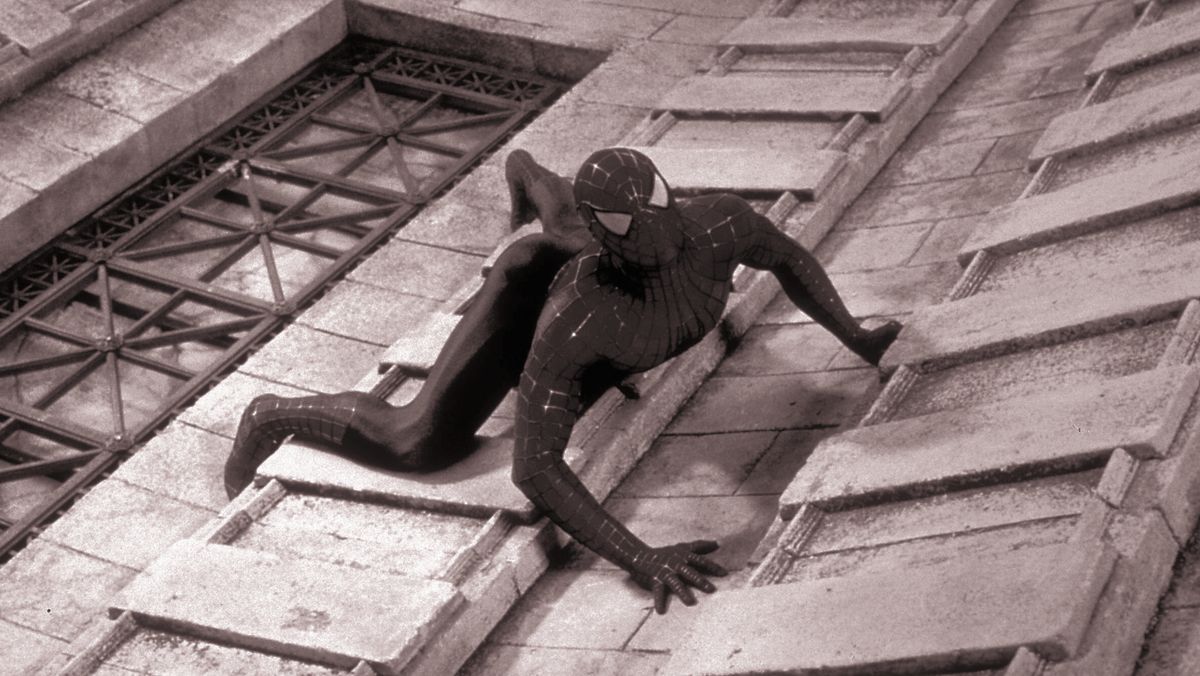
emboldened one, can declare a national emergency, seize Marvel characters and other linchpins of this country’s multitrillion-dollar intellectual property economy, and somehow end the litigation? It’s a fantasy. The day Trump tries to commandeer Spider-Man for his A.I. pals is the day the government is slapped with a Fifth Amendment takings claim. Because if America excels at anything, it isn’t espionage—it’s lawyering. |
Thanks, Eriq. I’ll see everyone on Thursday.
Matt |
|
|
Puck founding partner Matt Belloni takes you inside the business of Hollywood, using exclusive reporting and insight
to explain the backstories on everything from Marvel movies to the streaming wars. |
|
|
Unique and privileged insight into the private conversations taking place inside boardrooms and corner offices up and
down Wall Street, relayed by best-selling author, journalist, and former M&A senior banker William D. Cohan. |
|
|
Need help? Review our FAQ page or contact us for assistance. For brand partnerships, email ads@puck.news. You received this email because you signed up to receive emails from Puck, or as part of your Puck account associated with {{customer.email}}. To stop receiving this newsletter and/or manage all your email preferences, click here. |
Puck is published by Heat Media LLC. 107 Greenwich St, New York, NY 10006 |
|
|
|