Hello and welcome back to What I’m Hearing+, the funnest (and most dangerous) fireworks at the WIH
Fourth of July party.
Tonight, Julia Alexander is in for Eriq Gardner with a close look at the perils facing streamers—and Netflix in particular—hoping to take a page from YouTube’s growth playbook. As it turns out, not all shortform content is created equal.
Okay, all yours, Julia… |
|
|

| Julia Alexander
|
|
Tuesday Thoughts: Streaming Edition
|
- The Bravofication of
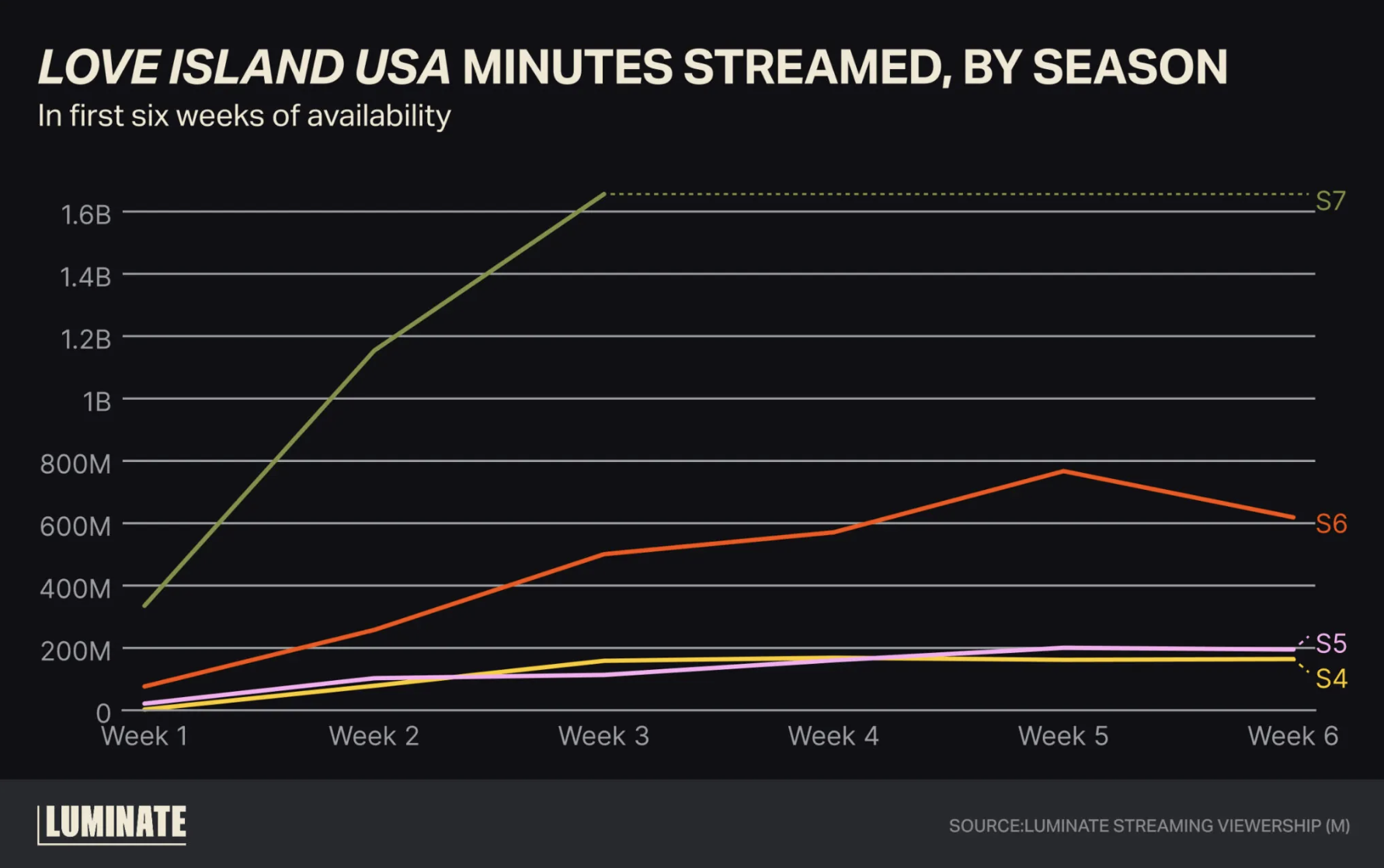
Peacock: The current season of Love Island USA is up to 1.6 billion minutes streamed on Peacock during its first three weeks—an all-time record for the streamer, which has had an unusual growth trajectory. Yes, Peacock has grown in nearly every quarter, but with 41 million subscribers, it lags behind most other major U.S. players. And while Peacock boss Matt Strauss has narrowed the platform’s losses to $215 million in Q1, compared to $639
million during the same period last year, it’s still not profitable. Outside of sports, where Peacock thrives between September and March, it’s been a long and fruitless trek in search of its equivalent to Paramount+’s multishow Taylor Sheridan-verse.
Still, reality and competition shows have been real growth drivers. Love Island is a certified hit, and The Traitors is an Emmy-winning breakout. This season of Love Island in particular has seen
interest more than double, according to Google Trends data, undoubtedly helped by viral clips on Instagram and TikTok. It’s no wonder that NBCU is keeping Bravo with Peacock while the rest of its cable networks spin out into Versant. Lower-cost, lower-calorie, highly bingeable entertainment content simply works on streaming. And Love Island, which airs about 50 hours of footage per season, is about as cheap and mindless as it gets.
|
- Amazon’s
new-old TV strategy: A couple of weeks ago in Culver City, Amazon executives made the case that the next era in streaming might be defined by reimagining the bundle for a fragmented world. Instead of bringing everything into one main platform and charging customers an exorbitant monthly fee (à la cable), simplify the payment process by making everything available à la carte. Of course, this would be a convenient reality for a streaming platform that’s highly capitalized
and tech savvy, but has struggled to create successful long-standing franchises. Indeed, Mike Hopkins & Co. have spent billions trying to find their own Mandalorian or Stranger Things, only to crank out pricey flops like Citadel and The Rings of Power. Amazon C.E.O. Andy Jassy is now reportedly asking Hopkins and the Prime Video team to explain the R.O.I. on their content investments, which could explain the
departure of Jen Salke, head of Amazon MGM Studios, in March.
Meanwhile, Prime Video executives are pointing to their Channels hub, where users can add services like HBO Max to their Prime Video subscriptions through a single interface, as a way forward. Additional analysis shows that four services within the Channels ecosystem—HBO Max, Paramount+, Apple TV+, and Crunchyroll—have gained 5.6 million more subscribers, on average, that they wouldn’t have gained otherwise,
according to Antenna data. I suspect we’ll see more of this strategy from bigger tech companies that want to be in the content game
without having to make content at scale. - Speaking of Prime Video…: Gaurav Gandhi, Amazon’s V.P. of Prime Video for the Middle East, North Africa, and the Asia-Pacific, recently provided some interesting insights into the company’s strategy for India, traditionally one of the most
challenging territories for streamers. Amazon operates two streaming services in the country, each targeting a different demo. Prime Video cultivates higher-income viewers (“subscription-ready, who have actually transitioned to streaming,” in Gandhi’s words), while Amazon’s MX Player markets itself to everyone else—namely, those still reliant on traditional TV, or who spend most of their time with mobile-first entertainment.
While there are more than 1 billion potential
customers in the region, the average revenue per user in India is much lower than in Western countries. But the market is ripe from an advertiser standpoint. By splitting its streaming audience in two, Prime can focus on generating premium subscription revenue, while MX Player can serve as much advertising as possible, including on shortform content that is especially popular on mobile. If MX Player gains market share in the country, I wouldn’t be surprised to see Netflix
experiment with different pricing and content offerings in the region as well. Maybe this is how we get a Netflix FAST tier?
|
|
|
As it approaches an audience ceiling, the leader in subscription
streaming is looking to nick a few elements of the free model to drive engagement—namely, mastering shortform, creator-made content. Easier said than done… |
|
|
Recently, Wells Fargo analyst Steven Cahall sent a provocative note to clients, arguing that
Netflix should consider poaching top YouTube creators. (He also followed it up with an appearance on The Town.) The proposal didn’t go so far as to suggest that Netflix should suddenly become a destination for user-generated content, only that it should work to expand what subscribers expect from the platform. After all, the more
dynamic content available, the longer that audiences will (theoretically) stick around. And Netflix, of course, has pushed into new territory in recent years—introducing more sports, shortform content, and even video games.
I don’t need to tell you that YouTube is eating Hollywood’s lunch. While Netflix, Disney+, Peacock, Prime Video, etcetera, have invested in producing movies and shows that could have been found on traditional TV, YouTube’s model focused on competing against
traditional, scripted content. C.E.O. Neal Mohan & Co. now operate the most powerful, personalized recommendation engine in the world—one that (more or less) seamlessly pairs audiences with their preferred content and creators. |
|
|
A MESSAGE FROM OUR SPONSOR |
This is Atlassian Williams Racing Two powerhouse teams are joining forces for one epic goal. Atlassian is thrilled to become the Official Title Partner and Official Technology Partner of Atlassian Williams Racing. This is a partnership for the ages. Formula 1 is defined by high-stakes teamwork and innovation – and both Atlassian and Williams Racing were founded on those same principles. For 20+ years, Atlassian has worked alongside high-performing teams to develop a System of Work that helps them work more effectively together. Now, in partnership with Williams and a global community of F1 fans, we’re turbo-charging teamwork on the race track. |
|
|
Viewers are also increasingly willing to spend more time with individual YouTube videos: Since 2012,
according to the platform’s own data, the number of uploaded videos longer than one hour has skyrocketed. The number of videos longer than 20 minutes uploaded each month jumped more than 500 percent between July 2022 and June 2024, according to Tubular Labs.
In fact, YouTube now accounts for more than 12 percent of TV viewing in the U.S., according to Nielsen, at a time when more than 44 percent of total TV viewing time is spent on streaming content. Netflix, on the other hand, has lost
some ground, while Max, Peacock, Paramount+, Disney+, Hulu, and Prime Video have essentially remained stagnant. Advertisers are aware: Tinuiti, a marketing firm, found that the share of YouTube’s total ad revenue derived from TV ads, specifically, has almost doubled, from 24 percent in the first quarter of 2024 to 43 percent in Q1 2025.
But deploying YouTube-style strategies, as
tantalizing as it seems, won’t necessarily move the needle for Netflix—or any other premium streamer. There are features unique to YouTube that will make its success hard to replicate. And there are several widely held misconceptions about how YouTube’s business actually works. Herewith, a close look at the strategies that Netflix co-C.E.O.s Ted Sarandos and Greg Peters should avoid, and some tactics that would likely work. |
I. YouTube
Creators Have Not Found Similar Success Elsewhere
|
Cahall argued that Netflix should strike exclusive deals with top creators, so that fans can’t watch their
new videos on YouTube—but is there any incentive for creators to move away from YouTube entirely? Even deals with Amazon and Warner Bros. Discovery didn’t stop some of YouTube’s top one-percenters from posting their videos across multiple channels. Hollywood may seem more stable, but for top creators, owning the relationship with their audience might be worth more than a nine-figure deal that potentially ends after one season.
Historically, anyway, when big YouTube creators have tried to
jump to other streamers or networks, it hasn’t really worked out that well. Lilly Singh, for example, hosted a late night show for NBC that was canceled after two seasons. David Dobrik’s travel show on Discovery+ lasted one season. Logan Paul and his brother Jake released a reality series called Paul American on HBO Max in March, but don’t worry if you’ve never heard of it—no one has. Even YouTube’s own
attempts to give its creators more traditional shows, as part of the short-lived YouTube Red back in 2016, didn’t generate significant interest (hence, “short-lived”). Turned out, fans weren’t willing to pay for premium content from creators when they were still posting free videos on their own channels.
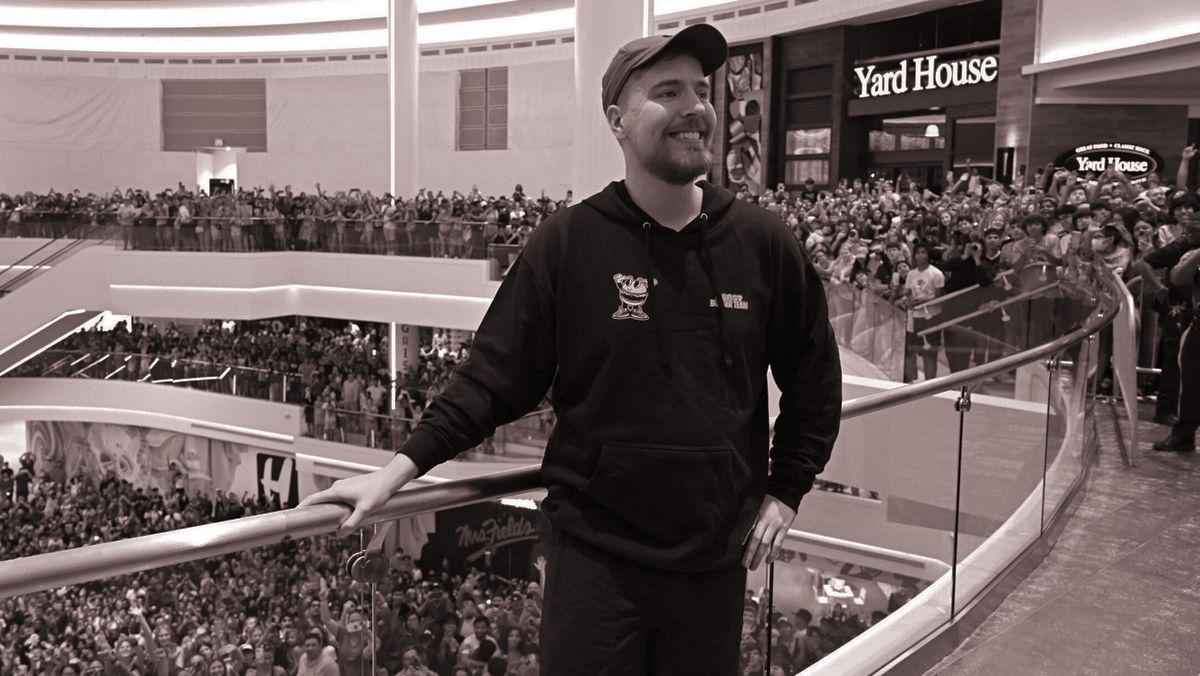
The best case study is probably MrBeast’s Beast Games, which Amazon spent $100 million to produce, and Netflix executives also coveted. So how does
Beast Games compare to other notable streaming titles released around the same time? Prime Video has 2.3x Max’s monthly engagement, but Beast Games still did slightly worse than Max’s The Pitt in terms of total hours viewed,
per analyst Entertainment Strategy Guy. It also underperformed Landman even though Paramount+ has less than half the overall engagement of
Prime Video. Sure, Landman is an expensive Taylor Sheridan production and comes with a built-in audience thanks to Yellowstone and 1923… but MrBeast has 400 million YouTube subscribers. And that’s the rub… fans seemed just as happy to watch their favorite YouTuber perform his massive stunts on YouTube, and for free. |
II. Netflix Can’t Afford YouTube’s
Scale
|
One important distinction between YouTube (and also Spotify, for the record) and the other streamers is that
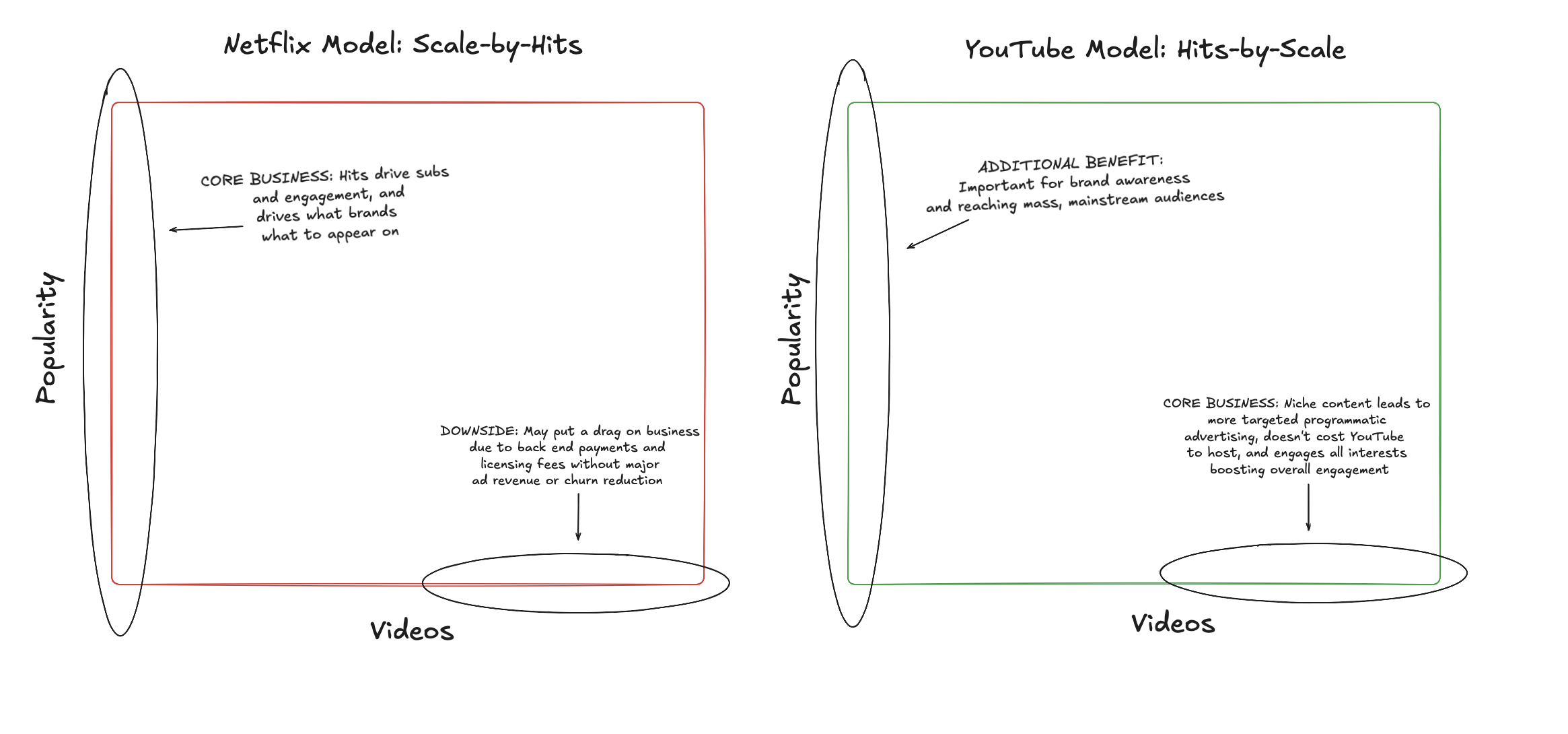
the former is in the business of quantity, while the latter are in the business of hits. Netflix, after all, promoted Bela Bajaria to chief content officer because the company wanted more global hits to drive subscriptions. Major live events like WWE Raw attract live, locked-in viewers that advertisers will pay to target. YouTube, on the other hand, doesn’t necessarily need “hits”—at least, in the sense of one-off, massively popular
shows with dedicated audiences. Instead, its creators flood the zone with content from all over the world, connecting audiences to whatever niche topic they’re interested in. |
|
|
A MESSAGE FROM OUR SPONSOR |
This is Atlassian Williams Racing Two powerhouse teams are joining forces for one epic goal. Atlassian is thrilled to become the Official Title Partner and Official Technology Partner of Atlassian Williams Racing. This is a partnership for the ages. Formula 1 is defined by high-stakes teamwork and innovation – and both Atlassian and Williams Racing were founded on those same principles. For 20+ years, Atlassian has worked alongside high-performing teams to develop a System of Work that helps them work more effectively together. Now, in partnership with Williams and a global community of F1 fans, we’re turbo-charging teamwork on the race track. |
|
|
Of course, plenty of creators have massive followings, but the vast majority have much smaller
audiences. The key difference is that YouTube has a flexible cost model that benefits the company when creators succeed and doesn’t financially punish it when they don’t. Setting aside its forthcoming live NFL game, the marginal cost of each piece of content is essentially zero. Everything is upside. If a show doesn’t perform well on Netflix, Bajaria & Co. still have to pay for it. |
One of Cahall’s more persuasive points concerned the relative unit economics of the two services. Netflix
spends an average of about $81 per 1,000 hours on content, he calculated. But because YouTube content tends to be much cheaper to produce, Netflix could reduce their outlay to more like $61 per 1,000 hours if they were to strike some exclusive content deals with YouTube creators. But there is one issue here: Netflix functions as a scale-by-hits play (more hits equals more engagement and less churn) while YouTube operates on a hits-by-scale model. In this framework, more content
creates more opportunities for people to find videos, and more advertising dollars spent on the platform. And it’s very hard to see how that strategy would play out on Netflix. |
III. Netflix
Should Embrace Shortform Content… But Not in the Way You Might Think
|
In recent years, social video content from TikTok, Instagram Reels, and even YouTube Shorts has diverted
viewer attention from premium streamers. A Hub Research report found that, in 2023, nearly 60 percent of people between 18 and 34 spent less time with longer-form videos, prioritizing social video content instead. Indeed, almost every entertainment executive I’ve spoken with acknowledges the challenge of competing with shortform-first platforms, but no one knows how to reclaim that attention share.
And yet, perhaps the best strategy isn’t to directly compete with the likes of TikTok, but
to find a way to hook audiences and redirect them to full series and films. Netflix, for instance, is experimenting with a vertical, scrollable feed that serves clips from different shows. The germ of the idea was possibly formed in 2023, when TikTok helped Suits generate more than 53 billion minutes of viewing in the U.S. Shortform might have been the discovery vehicle, but the end result was longform viewing. |
IV. YouTube Is Becoming TV
|
It’s hard to reinvent television when, as analyst Doug Shapiro notes, total
time spent with media hasn’t moved over the past five years. At Netflix, only truly outside-the-box ideas can make a big difference. After all, you do eventually run out of people and hours in the day. Ad dollars are also finite, so every platform is engaged in a pure, zero-sum battle to hold the most user attention at any one time. It’s here that Netflix, and everyone else, is losing out to YouTube, TikTok, and Instagram.
Tubi, meanwhile, is licensing hundreds of old YouTube videos.
Instead of pursuing exclusive content from top YouTube creators, like other streamers, Tubi C.E.O. Anjali Sud is betting that her service can increase time spent on the platform by literally offering a collection of videos from famous YouTubers for audiences already on Tubi.
Sarandos and Peters know they’re not going to create a meaningful user-generated content business, but you can understand why they’re experimenting with shows from popular YouTube
creators like Ms. Rachel, whose content translates well from YouTube to Netflix. Nearly 40 percent of YouTube users watch full-length films and TV shows on the service, per Ampere Analysis. Nearly 60 percent of internet users rely on YouTube daily, and 73 percent watch it weekly, with premium content sitting alongside user-generated videos. Meanwhile, Google is training its generative A.I. models on those billions of hours of footage, giving creators access to better technology to produce
better-looking videos faster. In industry parlance, YouTube is replacing TV faster than TV can figure out YouTube. |
Thanks, Julia. I’ll be back on Thursday.
Matt |
|
|
The ultimate fashion industry bible, offering incisive reportage on all aspects of the business and its biggest players.
Anchored by preeminent fashion journalist Lauren Sherman, Line Sheet also features veteran reporter Rachel Strugatz, who delivers unparalleled intel on what’s happening in the beauty industry, and Sarah Shapiro, a longtime retail strategist who writes about e-commerce, brick-and-mortar, D.T.C., and more. |
|
|
Finally, a media podcast about what’s actually happening in the media—not the oversanitized,
legal-and-standards-approved version you read online. Join Dylan Byers, Puck’s veteran media reporter, as he sits down with TV personalities, moguls, pundits, and industry executives for raw, honest, sometimes salacious conversations about the business of media and its biggest egos. New episodes publish every Tuesday and Friday. |
|
|
Need help? Review our FAQ page or contact us for assistance. For brand partnerships, email ads@puck.news. You received this email because you signed up to receive emails from Puck, or as part of your Puck account associated with {{customer.email}}. To stop receiving this newsletter and/or manage all your email preferences, click here. |
Puck is published by Heat Media LLC. 107 Greenwich St, New York, NY 10006 |
|
|
|