|
Welcome back to What I’m Hearing+, a special Wednesday edition! We’re testing out a new, heightened tier of Puck membership we call Inner Circle, which is above and beyond my usual WIH drivel. Inner Circle members will eventually get this Wednesday email from Puck’s streaming video and data expert, Julia Alexander, all to themselves, but for the next few weeks, we’re sending it to everyone in the WIH community. Enjoy!
Tonight, Julia looks at the pullback in international ambitions at many of the biggest streamers, as well as the rise of “microdramas” and the potential opportunities for Netflix now that the “Apple tax” is threatened.
Now, here’s Julia…
|
Sony’s Not-So-Niche Victory…
|
|
17 million. That’s how many paid customers Sony’s Crunchyroll streaming service has globally, according to the company. The niche-ish anime streamer surpassed 15 million customers back in August, which means it’s grown nearly 14 percent in less than a year. And Sony projects revenue will continue to climb.
It’s a nice little success story for Sony, which acquired Crunchyroll from a subsidiary of WarnerMedia back in 2021 during the Jason Kilar era. Anime has become a focal point for Sony: new C.E.O. Hiroki Totoki said this week that he expects the compound annual growth rate for the anime streaming market to be in “the high 10 percent range” by 2030.
|
Trend I’m Watching: The Rise of Microdramas
|
As the Gen Z employee on your team may have informed you, “microdramas”—full original series built from 60-to-90-second episodes—are having a moment. Some of the biggest Asian apps, like Dramabox and Shortmax, have seen year-over-year revenue explode, per an Omdia report. We’re talking annual growth well in excess of 1,000 percent. For instance, Dramabox’s app store revenue jumped from $8 million in 2023 to $217 million in 2024.
Microdramas are already a $5 billion business in China, but it’s still an incipient trend in the U.S. American media companies are starting to pay attention, however. TelevisaUnivision highlighted the addition of microdramas to its service during its upfront presentation on Tuesday. Fox’s Tubi talked up short-form video formats during the upfronts, too. Meanwhile, Netflix announced last week that it is testing short-form video as part of its vertical feed redesign for smartphones.
Will audiences stop scrolling on TikTok long enough to watch a different kind of short-form content on Netflix’s mobile app? Maybe, maybe not. If they do, it could be time to reevaluate the legacy of Quibi.
|
|
|
|
A MESSAGE FROM OUR SPONSOR
|
PARADISE is Hulu’s critically-acclaimed, addictive drama series starring Sterling K. Brown, Julianne Nicholson and James Marsden. Filled with nail-biting twists and turns, The Daily Beast calls Paradise “your next TV obsession,” and the New York Times says it’s "exhilarating in all the right ways.” PARADISE is for your Emmy consideration in all categories including Outstanding Drama Series. Visit FYC.HULU.com for more information.
|
|
|
- The upfront sports show: Congrats to every media exec who reminded advertisers at the upfronts this week that the only thing people really want is sports. Indeed, as streaming becomes the dominant medium, sports are the last vestige of recurring, bankable, live programming on television. And that matters as advertising becomes more foundational to streaming platforms. Some 71 percent of all new signups across the major streaming players these past two years were for ad-supported tiers,
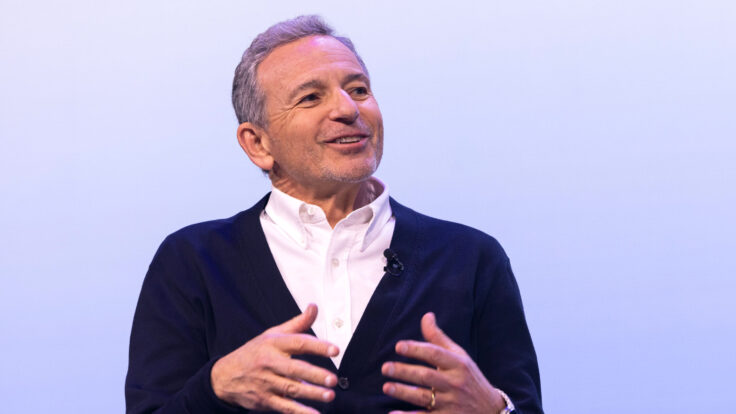
per Antenna.Live sports is also one of the few content sectors that the tech behemoths haven’t fully committed to… yet. Amazon is the most aggressive, and that’s because Prime Video is the largest ad-supported subscription platform in the country. As digital ad spend continues to outpace linear—IAB expects 58 percent of all TV ad spend in the U.S. to go to digital video this year, up from 51 percent in 2024—media executives need to lean into what the tech guys aren’t doing. And they know that. That’s why Disney’s Bob Iger wasn’t standing with Ryan Murphy at the upfronts this week; he was standing beside Patrick Mahomes and Saquon Barkley.
- Will Netflix monetize Apple?: A judge’s recent ruling that Apple can no longer charge its 15 percent to 30 percent fee on purchases made outside the App Store is already sparking changes across the streaming landscape. Spotify, for one, is updating its iOS app to direct premium subscribers to external links where they can purchase audiobooks and then integrate them into Spotify. Amazon is doing the same with its Kindle app: Following an update, users can now click a button to purchase e-books, which takes them to an external web browser. (Apple, which makes about 21 percent of its total revenue from services, is appealing the injunction.)Will Netflix follow suit? The streamer stopped letting customers sign up via the App Store in 2018, but forcing users outside the Apple ecosystem was a major point of friction—especially as the company’s gaming business continued to grow. (In-game purchases are the coin of the realm these days.) A Netflix rep declined to comment, but it wouldn’t surprise me to see an update soon. Disney, which also doesn’t allow new Disney+ subscribers via Apple, could optimize its retail strategy by adding a “Buy Now” button in the app. After all, as streaming apps become more interactive, monetizing games and shopping could become major revenue drivers—especially if Apple isn’t taking up to 30 percent off the top.
|
|
|
|
U.S.-based streamers, under pressure to grow revenue more than subs, are pivoting their international expansion strategies from “Everything everywhere all at once” to “Do these countries really matter?”
|
|
|
Among the many anxieties coursing through media C-suites right now, the challenges of international expansion in streaming is top of mind. Most other countries are more price sensitive than the U.S., and their broadband isn’t as reliable—and, obviously, they speak other languages, too. And then there are specific complexities. In parts of Greece, for example, 17 percent of people didn’t even use the internet in 2023, per a recent E.U. report. And while the vast majority of European households maintain about one streaming service (78 percent, per consulting firm Oliver Wyman), there is far less appetite for a second service than there is in the U.S.
Anyway, streamers typically have two options when approaching international markets: license their content to regional partners (as studios have done for years), or commit to launching services in almost every country possible—with regional-specific programming. Just five years ago, at the height of the streaming arms race, Disney’s plan under former C.E.O. Bob Chapek was growth at all costs. Chapek famously told analysts and investors in 2020 that he was aiming for 230 to 260 million streaming customers globally—a growth rate three times higher than analysts expected at the time.
But as the industry has matured, we now have strong data about the strategies that work best for individual regions. In the immortal words of Disney C.E.O. Bob Iger, not all markets are created equal, and the criteria for choosing when (or where) to license internationally comes down to value and tactical considerations: Do regional consumers have enough disposable income to support multiple streaming subscriptions? Is the audience largely mobile-first? What percentage of the population speaks English?
These days, however, engagement and profit have taken precedence over subscriber growth, which should offer clarity for Disney, among others. The company has launched in multiple territories but has still seen a steady decline in subscription growth in international markets. (It’s been trending down since the end of 2022—and it actually started losing customers at the beginning of 2024.) If the vast majority of subscribers are churning in low-revenue markets—like India, where revenue per user sat at less than a dollar—Disney shouldn’t continue to chase these customers at a loss. The company should instead focus on higher-intent customers, as it is in Spain and France, where Disney is exiting its relationship with Canal+ to focus on Disney+ as its own app.
|
|
|
|
A MESSAGE FROM OUR SPONSOR
|
PARADISE is Hulu’s critically-acclaimed, addictive drama series starring Sterling K. Brown, Julianne Nicholson and James Marsden. Filled with nail-biting twists and turns, The Daily Beast calls Paradise “your next TV obsession,” and the New York Times says it’s "exhilarating in all the right ways.” PARADISE is for your Emmy consideration in all categories including Outstanding Drama Series. Visit FYC.HULU.com for more information.
|
|
|
|
Max (soon to be rechristened HBO Max) and Paramount+ have also been focusing on high-growth markets with advertising potential. In Japan, Paramount+ is offered as a stand-alone. Max is available on its own in Spain, as another example. But in markets where there’s less upside to running an owned-and-operated platform, like Thailand, Paramount licenses to local operators, in that case Monomax—a local streamer with approximately 1.5 million subscribers, per financial filings. Paramount has pursued a similar strategy in Greece, Belgium, parts of Africa, and India. Max is working with Foxtel in Australia, Sky in the U.K., and Canal+ in France. In Turkey, one of the more interesting territories to watch following Disney’s decision to experiment with an opt-out approach to advertising, Warner Bros. Discovery acquired local streamer BluTV and is turning it into a version of Max that will preserve BluTV’s local content, and supplement it with WBD I.P. This approach is much more sophisticated than Chapek’s spray-and-pray method.
|
That said, it’s impossible to talk about international expansion and audience targeting without focusing on the only truly global player: YouTube. Streaming executives tend to belittle YouTube as a place to waste time, but time spent, no matter where it’s spent, is all that matters. And in international markets, YouTube is one of the few destinations for audiences who are mobile-first, cost-conscious, and consider creator content to be on par with, or even good enough to replace, more traditional media.
A handful of stark statistics underscore just how large the YouTube problem has become for streamers. In the U.K., YouTube consumption on TV sets grew by 32 percent between 2023 and 2024, according to Barb, the British equivalent of Nielsen. Meanwhile, Netflix plateaued at just under half a percent in the same period. These days, the vast majority of YouTube’s viewership comes from outside the U.S., the polar opposite of most major streamers. In the first quarter of this year, YouTube made nearly $9 billion in advertising revenue alone—nearly as much revenue as Netflix generated altogether.
Obviously, streamers will need to get much smarter about recognizing opportunities to compete against YouTube—and where it’s become futile. YouTube has more users in India than any other country in the world, almost 500 million, and users spend an average of 29 hours per month on the platform, according to Statista. The app got an early foothold in 2017 by launching YouTube Go, an Android app tailored specifically for use in emerging markets. But it also helps that India’s population is one of the youngest in the world, with a median age of 28, and that its mobile data rates are among the cheapest in the world. This enormous and highly engaged audience incentivizes creators (and advertisers) to build around YouTube before considering other options. Similar incentives have forced Netflix to reconsider its approach in India, where it now focuses on hyper-local content and mobile-first plans at heavily discounted prices.
The question for streamers is thus how to strike the right balance when considering an investment in local content—an issue both Warner Discovery C.E.O. David Zaslav and Iger have referenced on recent earnings calls. In markets where there is strong demand for regional content, like South Korea, heavier investment in acquiring local shows makes sense. More than 30 percent of Netflix viewership in 2024 came from non-English programming, with Korean, Japanese, and Spanish language titles being the most popular, per Owl & Co. But when you look at markets like India, it makes sense to take a step back.
While India is just one market—albeit a massive one, with more than 1.4 billion people—these new approaches are instructive. Disney pulled back on its HotStar investment, merging with Reliance in an $8.5 billion deal to help
shoulder some of the cost of distributing Disney+. Max, meanwhile, isn’t planning to launch in India right now because executives believe licensing its content is the best way to make money there. Paramount+, for its part, is licensing its offering via a JioHotstar subscription.
Five years ago, everyone had a plan to operate in India because Netflix and Prime Video were planting their flags there. Back then, everyone assumed that streaming had boundless potential, and subscriber growth was the only thing Wall Street cared about. Now we all know better.
|
|
Thanks, Julia. I’ll be back tomorrow night.
Matt
|
|
|
|
Puck founding partner Matt Belloni takes you inside the business of Hollywood, using exclusive reporting and insight to explain the backstories on everything from Marvel movies to the streaming wars.
|
|
|
|
A professional-grade rundown on the business of sports from John Ourand, the industry’s preeminent journalist, covering the leagues, players, agencies, media deals, and the egos fueling it all.
|
|
|
Need help? Review our FAQ page or contact us for assistance. For brand partnerships, email ads@puck.news.
You received this email because you signed up to receive emails from Puck, or as part of your Puck account associated with . To stop receiving this newsletter and/or manage all your email preferences, click here.
|
|
Puck is published by Heat Media LLC. 107 Greenwich St, New York, NY 10006
|
|
|
|