{{ 'now' | timezone: 'America/New_York' | date: '%b %d, %Y' }} |
|
|
Welcome back to What I’m Hearing+, fittingly coming to you from the Santa Monica Courthouse, where
I’ve just been relieved of my jury duty service without having to embarrass myself with a lame excuse that everyone in the courtroom knows is fake.
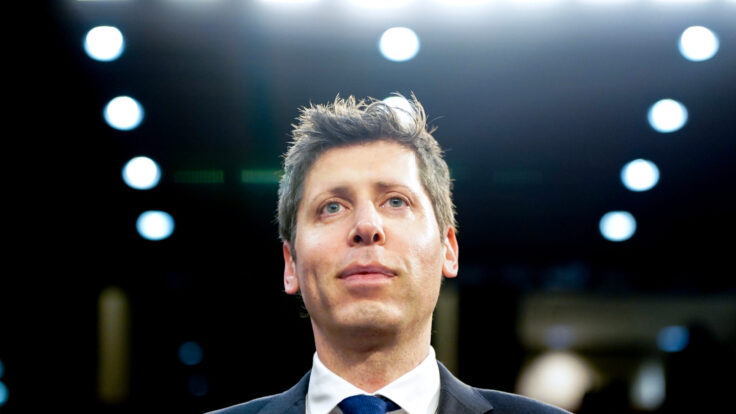
Speaking of fake, OpenAI’s new TikTok competitor with the already-infamous opt-out system for copyrighted videos launched today, and Eriq Gardner is here with a preview of the studios’ argument to fight it. Plus, Netflix again faces a trial over an allegedly defamatory ripped-from-the-headlines docudrama, and
this Inventing Anna case now features the unsealed testimony of Shonda Rhimes, Netflix’s Jinny Howe, and more.
All yours, Eriq… |
|
|
A MESSAGE FROM OUR SPONSOR |
Three-time Academy Award winner Daniel Day-Lewis returns to the big screen in Anemone,
directed by Ronan Day-Lewis. Also starring Sean Bean and Samantha Morton. Anemone explores the complex and profound ties that exist between brothers, fathers, and sons. Only in theaters October 3. |
|
|

| Eriq Gardner
|
|
- OpenAI vs. Hollywood: The
Whack-a-Mole problem: I have a few thoughts on the news that OpenAI is telling studios and talent agencies that they’ll need to affirmatively opt out if they don’t want their copyrighted material used in the company’s latest version of its Sora video generator. As Matt reported yesterday, Hollywood has been conspicuously quiet so far. But in a filing I obtained via a Freedom of Information Act request, the Motion Picture Association recently warned the Copyright Office that any
opt-out regime would be “unworkable.”
The problem, the MPA argued, is scale—its member studios manage vast libraries, often with thousands of individual works, and policing them would be, in their words, “insufficient and overly burdensome.” More to the point, the MPA noted that opt-outs don’t address the elephant in the room: pirated content used as training material. And there’s another catch. If an opt-out system were imposed, the MPA wants the mechanism to operate at the
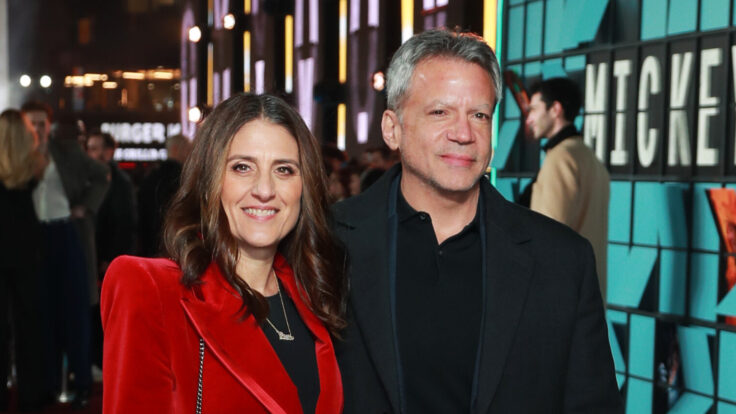
ownership level, not per individual title—something OpenAI doesn’t appear to be offering. In short: The MPA, which speaks for the Hollywood studios, thinks the opt-out model is a nonstarter, and yet OpenAI is pressing forward with it anyway. - Ovitz’s A.I. play: Michael Ovitz—yes, that Michael Ovitz, the CAA co-founder and Hollywood power broker of yore—is launching a company called Soundpatrol to detect A.I.-generated
copyright infringement. Why would a 78-year-old former mogul turned tech investor slash art collector step into the A.I. thunderdome? How can a fingerprinting tool identify copyright violations when the courts can’t even agree on what counts as fair use? And what’s the point, really, when OpenAI’s new version of Sora can apparently spit out a 10-second Minions short on command?
On a Zoom call, Ovitz told me he was sold on the tech after meeting his Soundpatrol co-founder,
Walter De Brouwer, through a mutual friend. He quickly landed on music as the strategic beachhead—it’s “low-hanging fruit,” as he put it—and knew he could get Universal Music Group C.E.O. Lucian Grainge on board. After dinner together, Ovitz pitched it. “The minute Lucian heard the idea, he said, ‘We’re in.’ He didn’t even ask me if it works.” Sony Music has also signed on as a partner.
So, does it work? Soundpatrol doesn’t match exact audio like
Shazam. Instead, it analyzes musical elements, such as melody, rhythm, lyrics, and vocals to assign something like a “confidence score” indicating possible derivation. It doesn’t technically say a song is infringing—it’s more like an early-warning system for rights-holders. Still, that’s potentially huge. As Ovitz put it, the majors have spent years playing defense. Now they can “finally go on offense.”
Will this open the floodgates to more licensing demands and “Blurred Lines”–style
lawsuits? Ovitz demurred. Nor was he especially forthcoming about whether Soundpatrol’s own A.I. model was trained on nonlicensed music. But he did reveal that a video product is coming next—one aimed at detecting deepfakes and other visual impersonations. “This is just the beginning,” he told me. - A renewed Spotify drama: Speaking of A.I. slop, remember last month when I
noted that Spotify was reviewing its artificial intelligence policies, shortly after an A.I.-generated rock band called The Velvet Sundown crossed 1 million plays? Well, that internal soul-searching just went semi-public. This week, the company acknowledged that vocal clones and audio spam degrade the user experience and siphon royalties from actual musicians. The streamer
now says it’ll crack down on replica vocals and junk content. We’ll see if that extends to its endless playlists of woozy, ambient sleep mush. (For what it’s worth, Spotify founder Daniel Ek just announced he’s stepping down as C.E.O. at the end of the year and “transitioning” up into an executive chairman role.)
Meanwhile, in a
quieter but arguably equally important development, on September 25, a federal judge authorized an amended lawsuit targeting how Spotify bundles audiobooks with its music subscriptions. Song publishers allege that Spotify is inflating the value of audiobook access (15 hours per month), thereby diminishing their own cut of the subscription pie. District Court Judge Analisa Torres originally tossed the suit, giving Spotify wide berth to structure its offerings. But after months of
back-and-forth, she’s now ruled that the updated allegations are plausible and deserve to proceed. This is very much a live case, and one that will play just as big a part in the tug-of-war over royalties as Spotify’s A.I. policies. - TikTok unblocked: It’s hard to imagine that Larry Ellison, Rupert
Murdoch, et al. would invest in TikTok, valuing the video-sharing company at $14 billion, only to watch an American court shut it all down. So it wasn’t surprising when the company quietly settled a multibillion-dollar code-theft case, allowing Trump’s pals to rest easy.
As I reported earlier this month, a Chinese company had filed an
I.P. lawsuit after ByteDance, TikTok’s parent, poached an employee named Xie Jing, who then allegedly brought with him proprietary code that made its way into TikTok’s algorithm. Lawyers were bracing for a trial and even a potential injunction against TikTok continuing to use the code. Instead, the parties agreed to a financial arrangement to keep these trade secrets from spilling into a courtroom. For how much? That’s not public, although it’s easy to imagine it wasn’t an
insignificant sum. - The Kanye-Tucker leak: Timothy Burke, the Tampa media consultant facing prosecution for allegedly intercepting and leaking unaired footage of Kanye West’s now-infamous 2022 Fox News interview with Tucker Carlson, just notched a major win against the federal government. Prosecutors had claimed his unauthorized access to an
obscure, unedited Fox News feed—during which the rap auteur voiced antisemitic conspiracy theories and other bizarre claims—was wiretapping. Burke’s lawyers countered that, by similar logic, anyone watching an unsecured Netflix stream could be charged with a felony. That argument couldn’t possibly work, could it?
Well, the judge bought it. In a striking
ruling that is likely to be celebrated by press-freedom advocates wary of Trump-era crackdowns, District Court Judge Kathryn Mizelle—a Trump appointee—tossed the wiretapping charges. She held that under the Wiretap Act, prosecutors must establish that the intercepted electronic communication was not “readily accessible to the general public.” In
Burke’s case, the so-called “hot stream” didn’t meet that bar.
That leaves the Justice Department with a choice: refile a superseding indictment, or go to trial next month on the remaining charges under the Computer Fraud and Abuse Act. If they go forward, the key battleground will be whether Burke’s alleged conduct was for “commercial advantage or private financial gain”—a necessary element to turn the C.F.A.A. violation into a felony. Burke insists it was journalism, plain and simple. If he
can convince a jury—or even just create enough doubt—he might walk.
|
|
|
And now, for a few more upcoming trials you might not have heard about… |
|
|
The streamer’s decision not to secure the life rights for one of the key
players in the fake heiress saga could prove costly. Plus, news and notes on a $10 million ‘Housewives’ jingle battle and Disney’s next day in court. |
|
|
As far as genres go, Netflix has long known that the docudrama can be a dangerous, rickety thrill ride. Hits
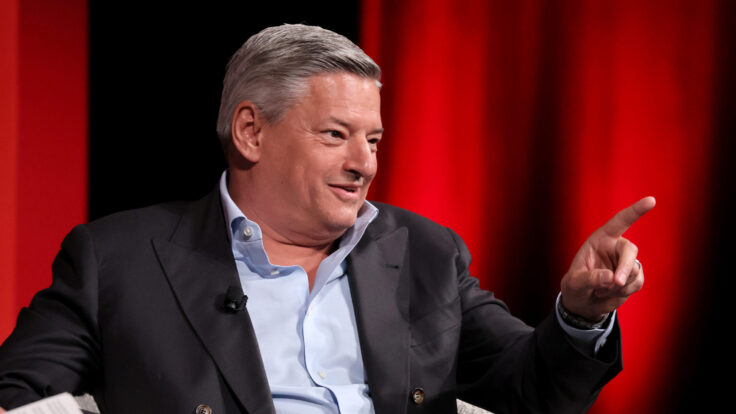
like Monster, Narcos, and The Crown generate subscriptions and cultural cachet, but taking creative liberties with real lives can invite defamation claims. And, as executives are keenly aware, each suit breeds more litigation. Netflix’s Jinny Howe, recently promoted to oversee scripted programming in the U.S. and Canada, insisted in a deposition earlier this year, “We believe it’s very important when you are taking on a docudrama that is portraying
real people that we’re not acting in a way that is deliberately irresponsible or, you know, portraying them negatively. Facts do matter.”
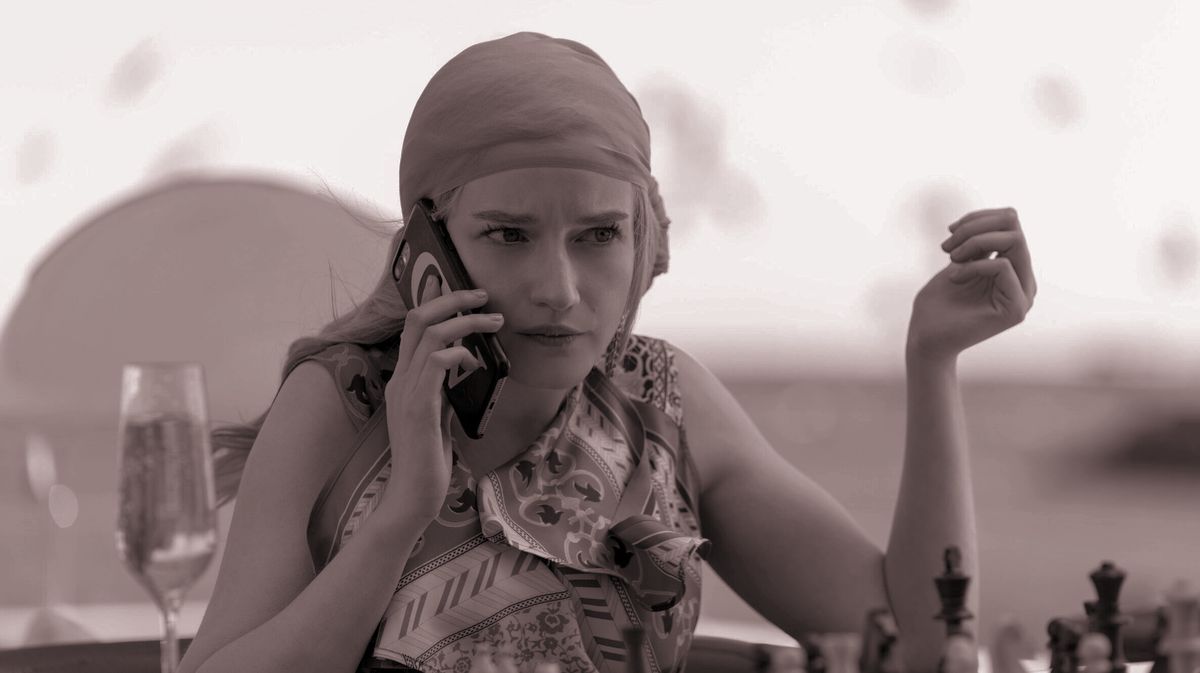
Howe’s testimony was quietly unsealed this week in the defamation suit over Inventing Anna, Shonda Rhimes’s champagne-bubbled depiction of Anna “Delvey” Sorokin, the faux German heiress who worked Manhattan’s social circuit like a long con before landing in prison for attempted grand larceny. (Sorokin was
released in 2021.) The case is striking on account of how aggressively Netflix and Shondaland tried to inoculate themselves—and where they left a gap. The company optioned Jessica Pressler’s original New York magazine exposé, hired a Harvard Ph.D. to re-report the story, and locked down “life rights” from almost every major character: Sorokin, her criminal lawyer, even the duped socialites. The glaring omission? Rachel DeLoache Williams, the former
Vanity Fair staffer who was famously stuck footing the bill for a $62,000 Moroccan vacation and whose humiliation before foreign officials—and later, colleagues and friends—was prime fodder for the show. |
|
|
A MESSAGE FROM OUR SPONSOR |
Three-time Academy Award winner Daniel Day-Lewis returns to the big screen in Anemone,
directed by Ronan Day-Lewis. Also starring Sean Bean and Samantha Morton. Anemone explores the complex and profound ties that exist between brothers, fathers, and sons. Only in theaters October 3. |
|
|
Why didn’t Netflix secure Williams’s cooperation? Naturally, she’d already sold her own story to HBO, which
briefly had Lena Dunham circling to adapt it. Asked in her deposition about the docudrama “arms race” and the decision not to fact-check with Williams, Howe shrugged: “The way that this traditionally works is we do not engage parties that are in exclusive deals with a competitor.”
That shrug could be costly. Williams is suing Netflix for at least $15 million, alleging Inventing Anna fabricated details that, according to her psychological experts, retraumatized
her and so harmed her reputation that it will cost her a fortune to repair the damage. Her summary-judgment brief argues that the show’s writers, who had access to her testimony from Sorokin’s criminal trial and the Harvard researcher’s notes, knew that Condé Nast never disciplined her for that Moroccan credit-card fiasco. “Deliberate fabrication of a material falsehood is actual malice on steroids,” her lawyer Alexander Rufus-Isaacs contended, adding that the choice to
“villainize” her as Sorokin’s freeloading frenemy warranted punitive damages.
Netflix, naturally, sees things differently. The streamer insists its executives believed the series portrayed Williams as “sympathetic and relatable”—not, as Williams claims, “greedy, snobbish, disloyal, dishonest, cowardly, manipulative and opportunistic.” Rhimes even testified, “We actually took pains to remove some of Rachel’s actual actions … because we didn’t want to portray Rachel in a way that was
completely unflattering.” Netflix’s lawyers added that Inventing Anna was merely one telling of the Sorokin saga, and that Williams has had every opportunity to tell her own. (Williams developed her original VF article into a book, My Friend Anna: The True Story of a Fake Heiress.) Howe was blunter in an email to colleagues: “If this is the most traumatic thing that Rachel Williams has ever experienced in her life, I’m a little confused why she continues to milk the
cow and not let this go.”
Delaware District Court Judge Colm Connolly will decide whether the case reaches a jury, but a clue came last week when he scheduled a five-day trial to start January 26. If it goes forward, it will be the first time Netflix has faced a jury over a libel claim. The company barely dodged a courtroom last year thanks to a last-minute settlement of the When They See Us libel case. Netflix has beaten other lawsuits (Making a Murderer, Panama Papers), quietly paid to resolve others (The Queen’s Gambit, also brought by Rufus-Isaacs), and is still trying to dismiss that $170 million defamation suit over Baby Reindeer. Inventing Anna may add another footnote to the evolving case law governing fact-based fiction. |
There are grifters like Anna Sorokin, who take and take until the music stops, and then there are others who
write the theme music behind the dramatics. In the latter camp sits Alan Lazar, a South Africa–born composer whose credits include Bravo’s Real Housewives franchise, and who now finds himself squaring off against Evolution Media, the Burbank reality TV factory behind some of those shows. His claim? That every single episode of Beverly Hills as well as some of its incarnations has been built atop a copyright infringement. Incredibly, he might have a
case.
Back in 2010, Evolution paid Lazar just $3,500 to compose the Real Housewives of Beverly Hills theme song. Then nothing. For more than a decade, Lazar quietly watched the series churn out 14 seasons of drama and diamond-flashing intros before finally asserting that Evolution never actually secured the proper rights.
The spark came in 2023, when Bravo apparently went digging for a contract (possibly in anticipation of commissioning a new orchestration) and discovered
there wasn’t one that expressly covered the theme. Evolution does have paperwork referencing Lazar’s cue music—the kitschy stingers and zany flourishes that punctuate every dinner-party meltdown—at $225 a pop, plus a writer’s share of performance royalties. But that contract never mentions the actual theme. Lazar argues Evolution had no right to license it to Bravo in the first place and, to make matters worse, hasn’t paid him mechanical royalties for streaming.
Now the mess has landed
before Judge Stephen Wilson, an 84-year-old Reagan appointee who admitted in court this week that he’s never seen a frame of Real Housewives. Still, the case is moving at breakneck speed, filed less than a year ago and already scheduled for trial on October 14.
A trial would get into the financials behind the show, as Lazar is seeking at least $10 million in damages, or a cut of what Evolution has been paid by Bravo. That trial date could slip,
of course. As with the Housewives themselves, check your local listings. |
Another trial set for October 14 is actor Rockmond Dunbar’s suit against Disney subsidiaries
ABC and 20th Century alleging they failed to accommodate his religion when he refused a Covid vaccine. I won’t belabor it—I previewed the case back in February—but it’s worth noting that Judge Dolly Gee just shot down Disney’s attempt to duck a trial. The company had asked her to revisit summary judgment, arguing that Dunbar’s belated
disclosure of synthetic testosterone use undercut his claim of a sincere religious objection to “unnatural substances.” Gee’s response: Save it for the jury.
Is this hugely consequential? Probably not. Still, the optics aren’t great for Disney, which is heading into court over firing an actor in the wake of the still-simmering Jimmy Kimmel blunder. And while the legal issues are narrow, expect plenty of noise from the political right about cancel culture, which could give
this otherwise modest case a much larger megaphone. |
Thanks, Eriq. Lots going on. I’ll see everyone on Thursday evening.
Matt |
|
|
Puck founding partner Matt Belloni takes you inside the business of Hollywood, using exclusive reporting and insight to explain
the backstories on everything from Marvel movies to the streaming wars. |
|
|
A professional-grade rundown on the business of sports from John Ourand, the industry’s preeminent journalist, covering the
leagues, players, agencies, media deals, and the egos fueling it all. |
|
|
Need help? Review our FAQ page or contact us for assistance. For brand partnerships, email ads@puck.news. You received this email because you signed up to receive emails from Puck, or as part of your Puck account associated with {{customer.email}}. To stop receiving this newsletter and/or manage all your email preferences, click here. |
Puck is published by Heat Media LLC. 107 Greenwich St, New York, NY 10006 |
|
|
|