Welcome back to What I’m Hearing+, your special Tuesday supplement to WIH. It’s extra
special this week, because I’m out on vacation, trying without luck to look cool in London, so I’m not around to screw up what Eriq Gardner writes with unnecessary edits.
Now on to the Eriq show…
Discussed in this issue: David Ellison, Jeff Vaughn, Joseph Jerome, Brian Beneker, Taylor Sheridan, Ted Sarandos, Sam Altman, Elon
Musk, Alex Spiro, Sy Damle, Lucian Grainge, Irving Azoff, Taylor Swift, and many more…
Not a Puck member yet? Just click here. Got a news tip or an idea for me? Just reply to this email, text me or message me on Signal at 310-804-3198.
Let’s begin… |
|
|

| Eriq Gardner
|
|
- Unfinished business at Paramount
Skydance: Behind the scenes of CBS News’s David Ellison–Bari Weiss reinvention, the company at large is still mired in staffing battles from the previous regime. To wit: On Friday, CBS filed a summary judgment brief in the $5 million discrimination case brought by Jeff Vaughn, the former KCAL anchor in Los Angeles who, backed by Stephen Miller’s America First Legal group, claims he was ousted in late 2023 for being a white
male. CBS points to “poor performance” as a legitimate, nondiscriminatory reason for Vaughn’s termination. But more notably, the company is also invoking the First Amendment, arguing it has a constitutional right to choose its anchors.
Given that Paramount is going through sweeping layoffs, don’t be surprised if we see a new round of discrimination cases, especially given how politics featured so heavily in the process of getting the Skydance deal cleared. Joseph Jerome,
a former production counsel on Entertainment Tonight, has just filed a complaint against the studio in which he, like Vaughn, claims to be a victim of D.E.I., fired for his age and race.
Paramount has settled other cases on the diversity front—the lawsuit brought by America First Legal on behalf of former SEAL Team writer Brian Beneker, for example—but Vaughn’s may be one they actually push to judgment. For Ellison, the irony of defending D.E.I. in court
may be beside the point; his broader goal is to protect his right to staff as he pleases. - Taylor Sheridan’s legal lasso: The Yellowstone creator’s jump from Paramount to NBCUniversal appears to be going smoothly, though as my partner Kim Masters reported last night, absolutely no one is
buying Paramount’s claim that they were fine with Sheridan leaving. Meanwhile, he’s still attached to a live-action Call of Duty adaptation for Paramount, as Matt reported, even through all the NBCU drama. But let this be a cautionary tale for anyone tempted to cross him: Sheridan may be busy, but he’s never too busy to
sue.
Take the ongoing legal brawl over a leaky roof at Sheridan’s $10 million Bosque Ranch in Parker County, Texas. According to court records, just after closing the deal, the ranch manager confided that the previous owner had instructed him to “keep [his] mouth shut” about a persistent leak above the coffee bar in the horse arena. That little drip turned into years of litigation (though it apparently hasn’t interfered with Sheridan occasionally leasing his ranch out as a location to
Paramount for $50,000 a week).
In April, a jury found the seller breached the contract, awarding Sheridan $233,900 for the cost of a new roof and another $449,068 in attorneys’ fees. An appeals court has since tossed the verdict and ordered a new trial, and now the Texas Supreme Court is getting involved. So while Sheridan continues cranking out scripts at a superhuman clip, he’s also proving he’s more than willing to spend a half-decade in court over a water stain.
|
|
|
As the technology quickly proliferates, studios are learning that it’s better to be safe than sorry, and guidance is coming faster than you can say “compliance.” But will it be enough? |
|
|
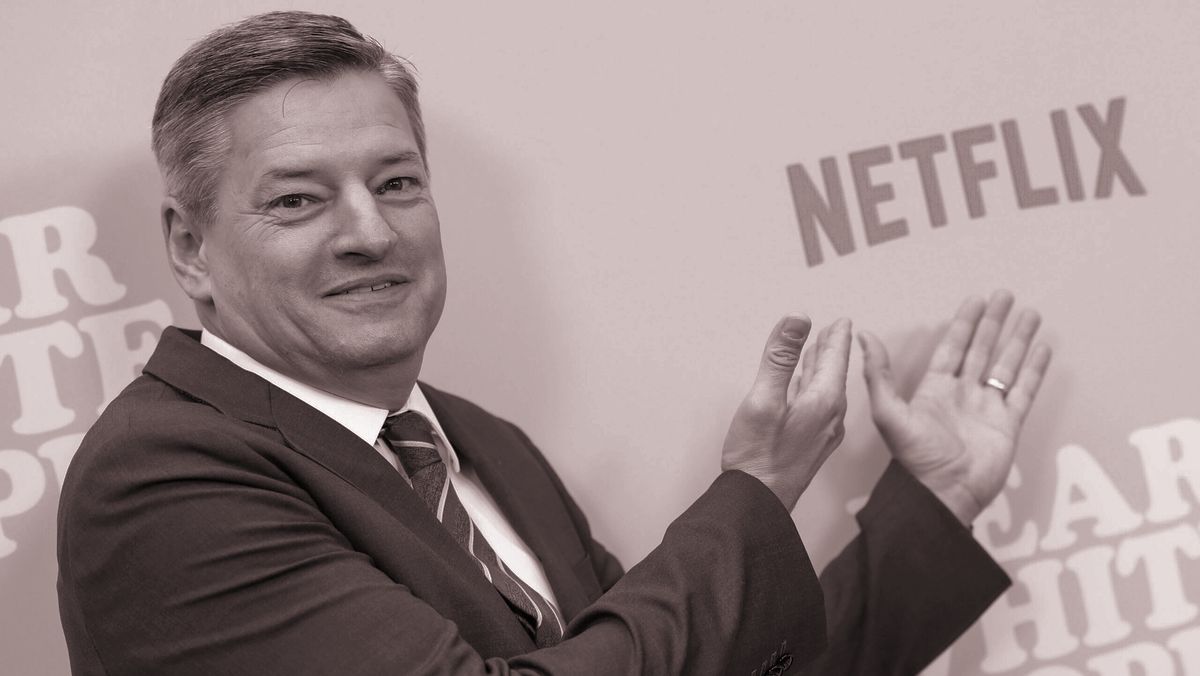
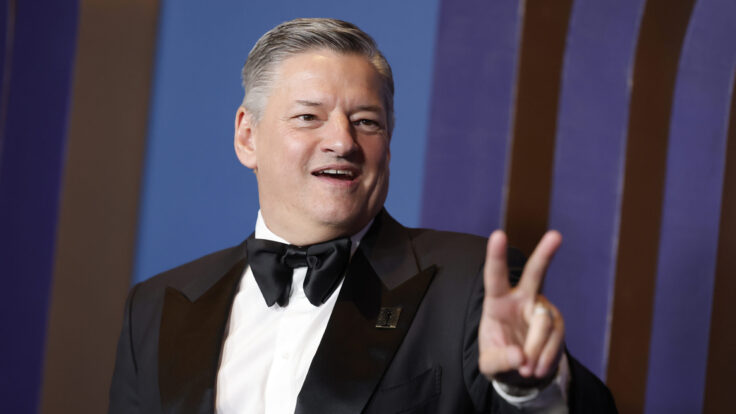
On a recent Netflix earnings call, Ted Sarandos proclaimed the company “all in” on
artificial intelligence. It sounded decisive—at least until you read the fine print. Per new guidelines circulated to its production partners, Netflix’s vision of the algorithmic future does not include populating prestige dramas with fabricated news broadcasts, dream-casting a second homicidal doll for a Squid Game sequel, or prompting A.I. to “create a character with Meryl Streep’s nose.” (Glad we got that cleared up.)
But a deeper look inside the
streamer’s dos‑and‑don’ts manual provides an early snapshot of the entertainment industry’s cautious march toward what it now calls “ethical A.I.” Lawyers and executives have been noodling through these protocols for years, of course, ever since GPT‑3 first rattled studio lunch tables with fears of automated writers rooms
and machine‑generated tentpoles. But this is Hollywood, where William Goldman’s axiom that nobody knows anything remains scripture. Hence the instinct to inch forward, clipboard in hand, careful not to spook either the A.I. tech lords or the unions. |
|
|
A MESSAGE FROM OUR SPONSOR |
WATCH GREAT SERIES ON MUBI Now
featuring new hand-picked series, from Joe Wright’s timely MUSSOLINI: SON OF THE CENTURY to Cooper Raiff’s HAL & HARPER, starring Mark Ruffalo. Get 60 days free |
|
|
Netflix is basically telling its vendors that, yes, generative A.I. is perfectly acceptable for brainstorming
and mock-ups, but don’t prompt it with copyrighted works or public figures, and certainly don’t go feeding entire scripts into Sam Altman’s digital maw. However, there will inevitably come a moment when something goes sideways, and at that point, the only meaningful question will be who built a compliance system sturdy enough to say they saw it coming and behaved like adults.
Put another way, A.I.’s age of innocence, when the phrase “we didn’t know” could at least buy you
some time in Hollywood, has come and very rapidly gone. Consider Disney’s nearly decade‑long legal struggle over the Mova facial capture system. After visual effects vendor Digital Domain 3.0 allegedly used the facial capture tech on major Disney projects, Rearden, a Silicon Valley firm, claimed Digital Domain 3.0 had stolen it from them. Disney’s exposure ballooned into a string of lawsuits, including one tied to Beauty and the Beast that actually went to trial. Six weeks ago, the
Ninth Circuit reversed a district court’s decision wiping a jury verdict, and held that Disney could be on the hook because it had the practical ability to supervise its vendor—in other words, the company could have performed due diligence on the core software. Two weeks ago, as I
reported, a judge applied the same logic in a case tied to the Avengers films.
As the big studios partner with companies pushing the tech envelope in ways that often end up in court, it’s only a matter of time before someone starts poking around and asking exactly how these tools are being supervised. Better to
get in front of the fire than pretend you can outrun it. |
Here’s the funny thing, though, about vicarious liability: Hollywood wants, and increasingly needs,
a more expansive view of responsibility for those standing close enough to the wrongdoing in order to nudge it, shape it, or stop it.
Take the Disney and Universal lawsuit against Midjourney, the A.I. image-generation company. The studios argue that even if the A.I. platform can’t be nailed for direct infringement over images its users generate, it should still be liable for failing to prevent the misconduct. After all, they note, Midjourney has shown it can exercise control—at
various points, the company has blocked users from conjuring certain protected characters. The fact that those guardrails later loosened, the studios contend, reflects a business decision to continue profiting from infringement.
Midjourney maintains that most of what its users generate is non-infringing, and even when familiar faces like Darth Vader or the Minions appear, the purpose is often lawful: parody, commentary, fair use. The burden, they argue, should fall on rights-holders to
identify specific violations before any action is taken. Besides, Midjourney’s attorneys add, Disney and Universal may “demagogue,” but they shouldn’t be allowed to “have it both ways” as many of their partners in the visual effects industry “have been utilizing Midjourney professionally and for [these studios’] benefit.”
The next chapter in this fight figures to be written at the Supreme Court. Oral arguments are set for December 1 in Cox v. Sony Music, following the
headline-making, billion‑dollar verdict against Cox in 2019 that the Fourth Circuit later partially unwound. The justices will decide whether internet service providers must yank the accounts of users repeatedly flagged for piracy. Cox contends that unless it actively induced piracy, it shouldn’t be held responsible for the bad acts of a few subscribers.
The content industry, unsurprisingly, disagrees. In an amicus brief filed on October 22, the Motion Picture Association
warned that Cox’s position is “destabilizing,” arguing that chasing down every individual infringer is impossible, and that the only way to mitigate harm is to incentivize internet companies to cooperate in the policing. In its own amicus brief, the Authors Guild goes further,
stressing that unlike the VCR makers of yore, modern internet companies have ongoing relationships with users and knowingly continue to serve those who are “substantially certain” to infringe. This, they contend, crosses the line. |
|
|
A MESSAGE FROM OUR SPONSOR |
WATCH GREAT CINEMA ON MUBI The
studio & streaming platform behind Oscar-winning THE SUBSTANCE. Discover new hand-picked films, from Gotham Awards-nominated LURKER to THE HISTORY OF SOUND, starring Paul Mescal and Josh O’Connor. Get 60 days
free |
|
|
Most A.I. players—OpenAI, Anthropic, Meta—are conspicuously sitting this one out. But Elon
Musk’s X Corp. has jumped in, telling the justices that the federal judge overseeing New York Times v. Microsoft/OpenAI erred earlier this year when he let contributory infringement claims survive. A.I. has a multitude of lawful uses, argue X’s attorneys, and liability shouldn’t attach simply because a platform
knows its technology might be misused. Without “proper guidance,” Musk & Co. warn, billion‑dollar verdicts could “wreak havoc” on the nascent A.I. ecosystem. |
Meanwhile, Universal Music Group is attempting one of the more audacious pivots of the generative A.I. era:
bowing out of its lawsuit against Udio, the buzzy A.I. song-generator startup, and signing on as a strategic partner instead. UMG had previously pursued the case against Udio in lockstep with Sony and Warner, and it was shaping up to be a barn burner, with the record giants accusing Udio of mass-scale copying of their sound recordings, while Udio, flanked by an all-star defense lineup (Alex Spiro, Sy Damle, et al.), fired back with the accusation that
the majors were using their I.P. to fortify their decades-old monopoly on the business of making and selling music.
Rather than stick around for the possibility of a multibillion-dollar judgment—or the full airing of that copyright misuse counterpunch—UMG decided to zag. The company inked a deal with Udio for a new “walled garden” subscription platform, giving Udio a license to train on its catalogue. Days later, UMG chairman and C.E.O. Lucian Grainge was on the company’s
earnings call, touting a sometime-in-2026 launch of an “ethically trained” A.I. music platform that would, he promised, “provide further revenue opportunities for artists and songwriters and UMG.”
That’s a nice story for investors, especially with UMG still eyeing a U.S. public listing and hunting for A.I.-adjacent revenue streams. But what is UMG getting in return? More to the point, how much of that is being shared with the artists?
Irving Azoff, Grainge’s peer
in the music industry pantheon, told me he wants answers. Will UMG be receiving equity, he asks, like it did with Spotify back in the day? Will there be new income streams? If so, how will that money be split? “There’s no excuse for there not to be transparency if they’re using artists’ catalogues,” Azoff said.
For now, Universal Music Group is signaling that participation will be optional. Recording artists like Taylor Swift, Ariana Grande, and
Sabrina Carpenter will reportedly have the choice to opt in to having their voice and likeness used to generate synthetic A.I. music—ethically, of course. But the fine print hasn’t been made public, and that matters because this deal will be a benchmark. As Sony and Warner push forward with their own lawsuits, this is the model they’ll be measured against. UMG declined my request for details. |
Thanks, Eriq. See you on Thursday.
Matt |
|
|
Puck founding partner Matt Belloni takes you inside the business of Hollywood, using exclusive reporting and insight to explain
the backstories on everything from Marvel movies to the streaming wars. |
|
|
The ultimate fashion industry bible, offering incisive reportage on all aspects of the business and its biggest players.
Anchored by preeminent fashion journalist Lauren Sherman, Line Sheet also features veteran reporter Rachel Strugatz, who delivers unparalleled intel on what’s happening in the beauty industry, and Sarah Shapiro, a longtime retail strategist who writes about e-commerce, brick-and-mortar, D.T.C., and more. |
|
|
Need help? Review our FAQ page or contact us for assistance. For brand partnerships, email ads@puck.news. You received this email because you signed up to receive emails from Puck, or as part of your Puck account associated with {{customer.email}}. To stop receiving this newsletter and/or manage all your email preferences, click here. |
Puck is published by Heat Media LLC. 107 Greenwich St., New York, NY 10006 |
|
|
|