|
Welcome back to What I’m Hearing+, the Miley Cyrus of WIH’s child stars turned pop singers. Eriq Gardner is back with a wild Elon Musk story you haven’t read yet, plus a Blake Lively victory lap, and a bold lawsuit over alleged on-set negligence that doesn’t involve Lively.
All yours, Eriq…
|
|
|
|
A MESSAGE FROM OUR SPONSOR
|
|
For your consideration: Sponsors include Max, presenting the HBO Original THE WHITE LOTUS. Taking place over one eventful week, Season 3 of The White Lotus follows the guests and employees of a luxury spa and wellness sanctuary in Thailand as they grapple with spirituality, secrets, self-discovery, revenge, and death while on their unique journey toward finding peace. Don't miss the series Vanity Fair is calling “SHARP & INTRIGUING”. Emmy-eligible for Outstanding Drama Series and all other categories. Now streaming on Max.
|
|
|
 |
Eriq Gardner |
|
- Kate Beckinsale’s boundary-breaking lawsuit: It’s rare to see a Hollywood actor sue over alleged abuse suffered during a film’s production—and yet there are two such cases playing out at the moment. Of course, there’s Blake Lively’s battle with Justin Baldoni, in which Lively scored a decisive victory yesterday (more below). But a few weeks before the Lively uproar in December, Kate Beckinsale quietly filed her own lawsuit in Los Angeles Superior Court against Anton Entertainment and producer John Zois.The suit accuses Zois of negligence, intentional infliction of emotional distress, and battery during the production of Canary Black, an Amazon MGM action-thriller directed by Taken’s Pierre Morel, in which Beckinsale plays a C.I.A. operative blackmailed by terrorists. (Anton produces mostly mid-budget genre films, Beckinsale’s stock in trade these days, and most recently raised $100 million from investors like BlackRock.) Beckinsale’s suit was specifically designed to fly under the radar: She filed as a “Jane Doe,” and vaguely referred to an on-set injury. But under the threat of sanctions, her legal team of Marty Singer and Brian Panish have submitted a more detailed complaint. And it’s quite something.
The 51-year-old actress, whose workout routine is legendary on social media, claims that she arrived on set in Croatia in 2022 to discover that the personal trainer, massage therapist, and gym equipment she’d been promised were nowhere to be found. She also alleges that she was pushed to do her own stunts after her body double broke an ankle and producers brought in an “unqualified” replacement—the stunt coordinator’s girlfriend. “If you’re trying to kill a person, you’re doing a great job,” Beckinsale’s agent, Shani Rosenzweig, emailed Zois.
Concerns about on-set safety were largely ignored, according to the complaint. During a scene in which a male actor throws Beckinsale against a wall, the actress suffered a complex meniscus tear in her left knee that required surgery and halted production for months. Filming resumed only after consultations with Beckinsale’s surgeon and her transactional lawyer, Bob Lange, who insisted that the actress not be asked to exceed agreed-upon physical limitations, and that the on-set physiotherapist be empowered to shut things down.
The list of those agreed-upon restrictions—no running, jumping, harness suspension, squatting, or kicking—was allegedly disregarded. “Production made little to no attempt to adhere to the list,” Beckinsale’s suit claims, and “acted intentionally… to put Ms. Beckinsale in unsafe situations, and coerce her while on camera to perform.” Beckinsale alleges she sustained additional injuries apart from the meniscus tear.
There have been negligence suits before—Twilight Zone, Rust—but no one I’ve talked to about this case can recall a star of Beckinsale’s stature bringing emotional distress and battery claims tied directly to on-set conduct. Anton and Zois have not responded to requests for comment and have yet to appear in the case, having only recently been served.
- Blake’s victory dance: Lively’s win against Baldoni yesterday was so overwhelming that I wonder if this case will ever make it to trial. I wasn’t surprised that Judge Lewis Liman tossed Baldoni’s very messy extortion and defamation claims against the actress and The New York Times. But I was startled by how thoroughly he did it, even ruling that amending the defamation claims would be futile. (Liman also wouldn’t advance Baldoni’s allegation that Lively and Ryan Reynolds compromised his relationship with WME, because the suit didn’t include details of his WME contract. He’ll get another shot there—along with a second attempt to show that Lively breached contract by making threats and seizing creative control of It Ends With Us.)The dismissal of Baldoni’s claims, but not Lively’s, drastically shifts the power dynamic in her favor. Bryan Freedman, Baldoni’s litigator, may feel he has no choice but to try to delay the March trial date by pursuing an interlocutory appeal. It’s a long shot. The Second Circuit is unlikely to weigh in—at least pre-trial—on the privilege rulings that protected Lively from having to defend her sexual harassment allegations, which she first conveyed in a complaint to California authorities, then through the press. In other words, Lively is suddenly playing with a stacked deck. Don’t be surprised if she uses that leverage to call the game early and push for a deal.
- Superman dodges a bullet: Attorney Marc Toberoff and the heirs of Superman co-creator Joe Shuster have struck out in their bid to block the international release of Warner Bros.’ upcoming James Gunn reboot. Last week, a New York state judge declined to issue an injunction that would have halted the film’s rollout in the U.K., Ireland, Australia, and Canada. Those, of course, are the territories where the Shuster estate claims that the rights to the Superman character have reverted to Shuster’s heirs. Judge Robert Reed made quick work of the request following a hearing last week, concluding that pausing a major studio release wasn’t a prudent move. The case, however, is still active.
- Artificial intelligence on trial: The first copyright trial over generative A.I.—Getty Images v. Stability AI—is officially underway, and while it’s undeniably a landmark, its immediate impact on the U.S. market may be limited. The case is playing out in the U.K., which means no jury, no fair use doctrine, and a jurisdictional wrinkle: Much of the argument will focus on whether the alleged copying even occurred in the U.K. at all.Still, with more than three dozen similar lawsuits piling up in American courts, this trial marks the first time a judge will dig into the factual record—what was scraped, how the models work, and what internal documents show about intent. Expect to see the findings resurface as U.S. courts begin their own deep dives later this year.
|
|
|
|
Buried deep within the 1,116-page reconciliation bill is a provision to auction off spectrum needed for 6G wireless, setting off a wave of anxiety among broadcasters as they prepare to compete in an auction with Elon Musk. Plus, the latest F.C.C. complication in the endless Paramount saga.
|
|
|
|
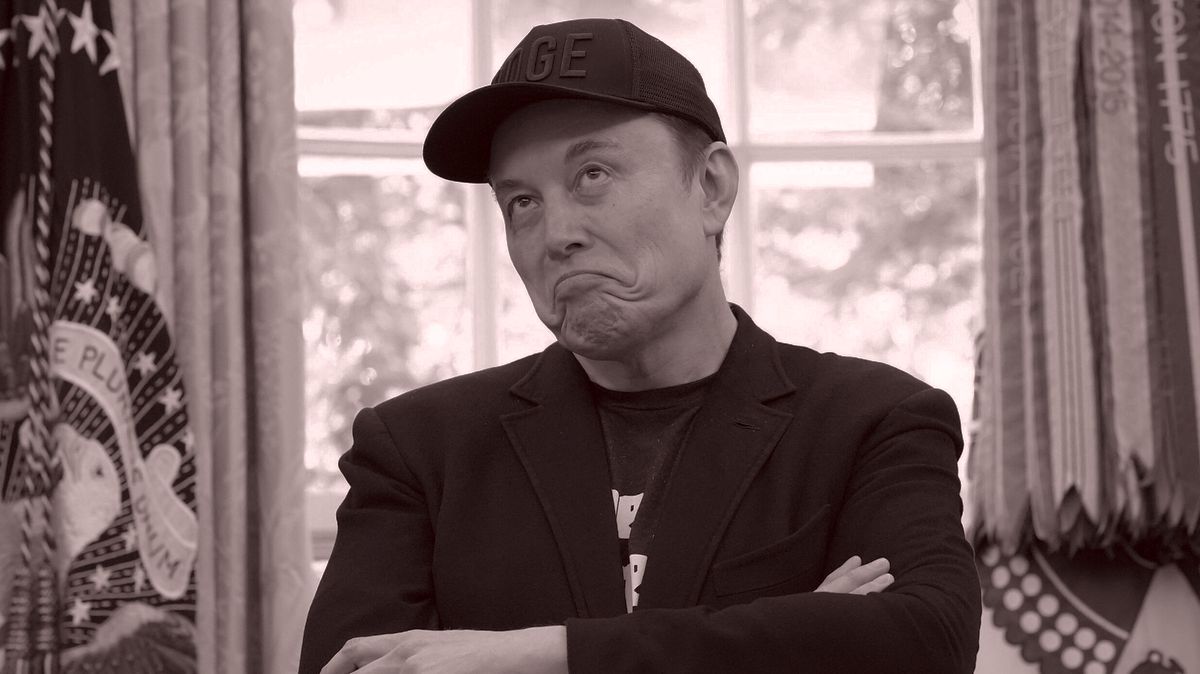
Donald Trump and Elon Musk might not be simpatico any longer, but Republicans did find common ground on at least one thing last week. A group of G.O.P. senators, led by Ted Cruz, cut a deal to restore the F.C.C.’s authority to auction off wireless spectrum in the latest budget reconciliation bill.
At first glance, this might seem unrelated to the operatic flame war between Trump and Musk. But the two storylines are on a collision course. Starlink, Musk’s satellite internet venture, has been openly salivating over the idea of acquiring more spectrum, which is crucial for wireless services, while Trump has been suggesting that maybe it’s time for Elon to stop feasting at the government trough.
For most people, spectrum policy is best left to technocrats and NAB panels. But it shouldn’t be. Just five years ago, the U.S. government raked in more than $100 billion by auctioning off spectrum licenses to telecoms like Verizon, AT&T, and T-Mobile eager to feed the 5G beast. Much of that came by ripping those frequencies from the TV industry, which was effectively forced to vacate long-held, mid-band real estate for the so-called “upper C-band.” The biggest casualty was Intelsat, the quiet backbone of American TV, which tumbled into bankruptcy after spending more than a half-century servicing big media companies. It’s now in the process of selling itself to SES of Luxembourg, pending regulatory signoff.
|
|
|
|
A MESSAGE FROM OUR SPONSOR
|
|
For your consideration: Max presents the HBO Original Mountainhead. From the creator of Succession, Mountainhead stars Steve Carell, Jason Schwartzman, Cory Michael Smith, and Ramy Youssef as four rival tech billionaires gather for their annual mountain retreat. But when one of their AI platforms sparks a global crisis, their boys’ weekend spirals into chaos. The future of humanity may be a game to them, but billions of lives are on the table. Don’t miss the TV movie Variety is calling “A MASTERCLASS IN SATIRE,’ Emmy-eligible for Outstanding Television Movie and all other categories. Now streaming on Max.
|
|
|
Now, the Trump administration is eyeing the upper C-band as the next auction item, and the TV refugees are getting strong hints that they should once again pack their bags. This predicament has put Disney, Warner Bros. Discovery, NBCUniversal, Fox, Paramount, and A+E in a state of unanimous distress. In a recent joint filing with the F.C.C., they said that retaining the C-band “is essential to the reliable distribution of programming” and warned that giving it up would undermine the architecture for live programming—sports and news, in particular.
The telecoms, naturally, are suggesting fiber and satellites as an alternative for transmitting video content nationwide. Intelsat, now playing the role of pragmatic divorcée, is eyeing a compromise—with compensation, of course. But make no mistake, the content companies are about to get steamrolled. The F.C.C. can’t auction the spectrum without congressional authority, but Trump’s desire to auction the C-band appears to be moving right ahead: Brendan Carr has requested that congressional authority, and Republicans have fallen in line after settling Department of Defense concerns. If there’s any remaining drama, it’s the internal jousting among spectrum suitors: telecoms on one side—represented by Ajit Pai, F.C.C. chairman during Trump’s first term—and Elon Musk on the other. ( Jeff Bezos and Amazon’s Project Kuiper, a Starlink rival, are lurking around, too.)
Musk’s angle is simple: Starlink needs more room to scale. That’s why SpaceX has been whispering sweet nothings into the Trump administration’s ear about achieving “American space dominance in the new global space race.” And that pitch actually had legs—at least until a few days ago, when Trump threatened to cancel all of Musk’s government contracts. That said, Carr has been Musk’s most reliable ally at the F.C.C., championing him during the Biden years, when Jessica Rosenworcel’s F.C.C. was accused of retaliating against Musk for his political views. Carr has faithfully carried water for Musk ever since.
Which brings us to today’s exceedingly awkward triangle. Carr, Musk, and Trump were once aligned in purpose and posture. But now, with Musk falling out of Trump’s good graces, Carr may find himself in a bind. Can a man who literally wears a Trump-face lapel pin remain on the same page as a billionaire who has been hurled out of Mar-a-Lago’s orbit? And does all this end with Sunday Night Football buffering as your
quarterback launches one deep?
|
Paramount’s Quorum Headache
|
Of course, Carr can’t do anything particularly meaningful at the moment—not since the abrupt resignation last Friday of Nathan Simington, which left the F.C.C. with just two members: Carr and Democrat Anna Gomez. Without a quorum, the F.C.C. is paralyzed on top-level matters until the Senate finally confirms Olivia Trusty, the Republican nominee who’s been waiting in the wings.
So what prompted Simington’s surprise exit? The ex-commissioner, who was appointed at the very end of Trump’s first term, gave no hint of his departure. During the weeks leading up to his resignation, in fact, he was pushing some eyebrow-raising proposals. One was a 30 percent cap on “reverse transmission fees” that local stations pay their national affiliates. Another was the classification of streamers as “multichannel video programming distributors,” a revival of an Obama-era idea that would subject platforms like Hulu and YouTube TV to more traditional oversight, including heightened scrutiny of their content relationships and merger activity. Had Simington stayed, he would’ve found himself in the majority for once, with a solid chance of enacting these proposals. ( Gavin Wax, his chief of staff, is rumored to be in pole position to replace him.)
Simington hasn’t publicly addressed his departure—and didn’t respond to my requests for comment—but I’m told there’s been mounting friction between him and Carr, particularly over the agency’s future in a second Trump administration. Simington, by one insider’s account, wasn’t especially eager to preside over a less independent, more Stephen Miller–adjacent F.C.C.
The question of independence, of course, looms largest right now in the matter of whether the F.C.C. will greenlight the transfer of CBS to Skydance. Most observers believe the agency won’t sign off until CBS settles Trump’s lawsuit over 60 Minutes. But now, without a quorum, another complication has entered the frame. Speaking at a media investor symposium on Friday, former commissioner Rob McDowell floated the view that the transaction could still be approved as a routine “bureau action,” sidestepping the commission itself. Perhaps, but I’d argue a Trump settlement with Shari Redstone doesn’t guarantee F.C.C. approval—it merely buys Skydance a second round of negotiations. That’s when Carr is likely to push for conditions that align with Trump’s cultural agenda: anti-D.E.I. language, perhaps, or other ideological riders. And that might require a quorum.
Soon, Republicans may come to view Trusty’s confirmation as a more urgent priority. With a three-seat advantage in the Senate, Republicans don’t need any Democratic votes—but the margin is tight enough that individual G.O.P. senators could start leveraging the moment for their own asks. Then again, with Musk now persona non grata, and no urgent favors to grant, Trump may be perfectly content letting the F.C.C. slip into torpor. A neutered agency, after all, is easier to control.
|
|
Thanks, Eriq. I’ll see everyone on Thursday.
Matt
|
|
|
|
Puck founding partner Matt Belloni takes you inside the business of Hollywood, using exclusive reporting and insight to explain the backstories on everything from Marvel movies to the streaming wars.
|
|
|
|
A professional-grade rundown on the business of sports from John Ourand, the industry’s preeminent journalist, covering the leagues, players, agencies, media deals, and the egos fueling it all.
|
|
|
Need help? Review our FAQ page or contact us for assistance. For brand partnerships, email ads@puck.news.
You received this email because you signed up to receive emails from Puck, or as part of your Puck account associated with . To stop receiving this newsletter and/or manage all your email preferences, click here.
|
|
Puck is published by Heat Media LLC. 107 Greenwich St, New York, NY 10006
|
|
|
|