 |
|
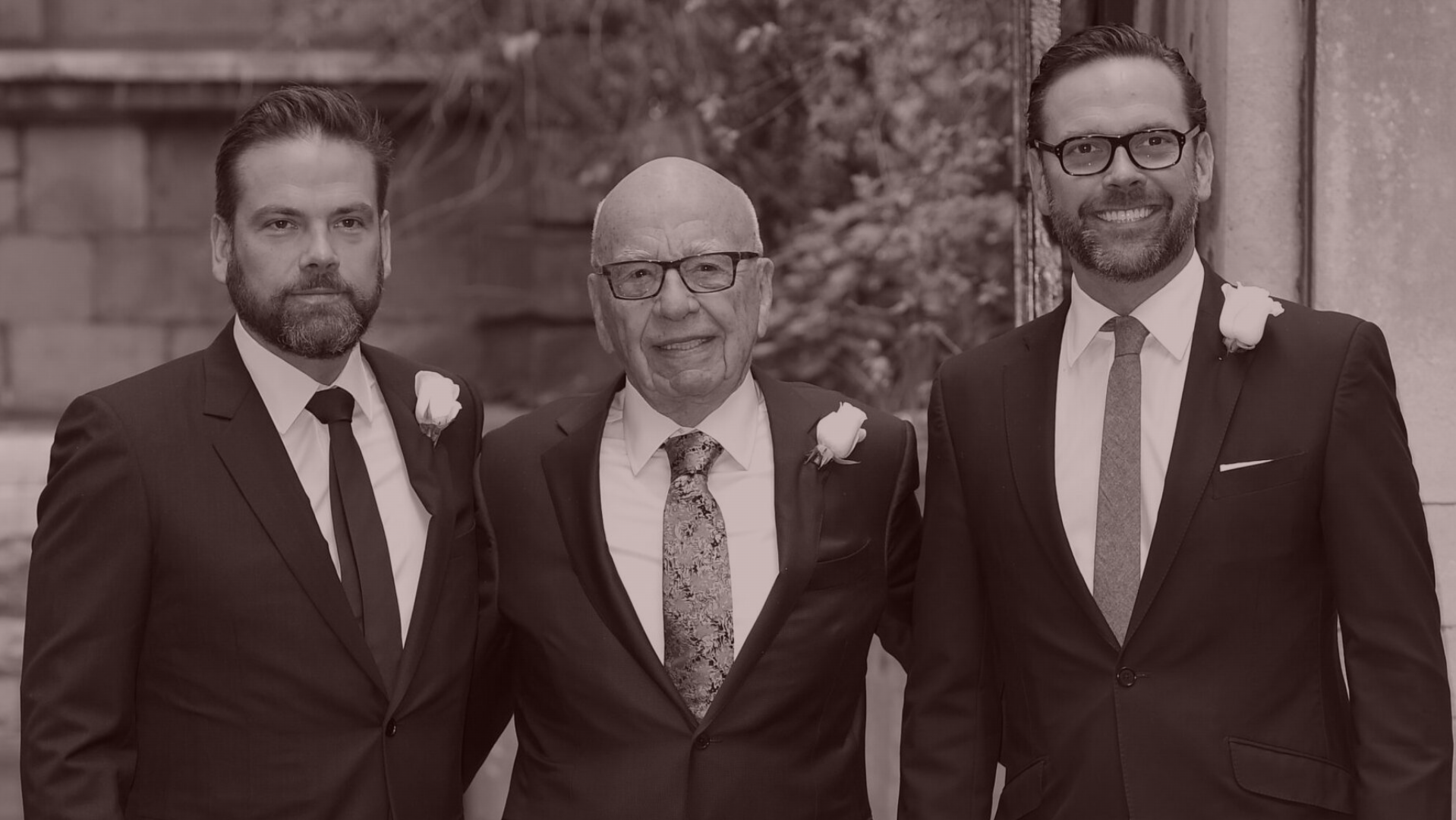
Hello and welcome back to What I’m Hearing+, a fine Tuesday evening Cabernet that pairs perfectly with What I’m Hearing. Speaking of wine, it’s been a few months since Bel Air’s most famous winemaker, Rupert Murdoch, married his fifth bride on the grounds of his Moraga vineyard. The nuptials were notably not attended by three of Rupert’s grown children, and now we know why: Murdoch, in full Logan Roy mode, is trying to change his irrevocable trust, stripping them of power to govern the family media empire once Rupert dies.
Today, Eriq Gardner looks at the Murdochs’ almost comically ironic effort to keep the media out of its upcoming trial, and the one man seeking to shine a light on a family that has shined so many lights on so many people, whether they wanted it or not…
But first, more from Eriq…
|
|
|
- The Trump music case that matters: Today in Atlanta, a federal judge delivered a small but important win to heirs of soul music legend Isaac Hayes who are objecting to Donald Trump’s use of his ’60s hit “Hold On, I’m Coming” at campaign events and July’s Republican National Convention. The lawsuit was filed two weeks ago and resembles recent grievances levied by artists including Jack White and ABBA over Trump playing their music without permission. But the Hayes case stands out because it may have a lasting impact on how politicians use music in campaigns.
Typically, if a musician sues a campaign (and most don’t), the case drags on and on and on, until a virtually inevitable post-election settlement is reached that offers little insight into the actual merits of the lawsuit. This time, however, the Hayes estate sought an emergency preliminary injunction, which forced a rapid decision on the likelihood of the estate’s success of pursuing copyright and Lanham Act claims. We rarely get that (although Trump is still facing one music suit from the 2020 cycle—over Eddy Grant’s “Electric Avenue”—with a summary judgment hearing later this week). This time around, U.S. District Court Judge Thomas Thrash Jr. ruled that Trump could no longer use the Hayes song without license. Still, it’ll be interesting to read his full analysis in a forthcoming written opinion.
You see, while musicians have often succeeded in browbeating politicians away from their songs—in 2016, Trump received blowback from artists and estates as varied as Aerosmith (“Dream On”), Adele (“Skyfall”), The Beatles (“Here Comes The Sun”), and Elton John (“Rocket Man”)—the legal intricacies have always remained nebulous. For instance, in this case, the R.N.C. contends it had a valid BMI license to play “Hold On, I’m Coming,” and that the notification from the Hayes estate came too late. And while BMI and ASCAP, spurred by songwriter outrage, have recently allowed members to exclude their hits from political use, the legal validity of political exclusions has not been tested in court. (Thrash apparently is not ordering the Trump campaign to remove website videos showing previous rallies where the song was played.)
Then, there’s the question of damages. The Hayes heirs argued “irreparable harm” due to an unwanted association, but Trump challenged how strongly the public connects a song to its songwriter. After all, “Hold On, I’m Coming” was actually performed by the soul legends Sam & Dave—and the Sam in question, Sam Moore, actually supports Trump and gave a declaration claiming the song is associated with him, not the guy with the writing credit. Moreover, when an Italian restaurant plays a song, do diners assume the songwriter is endorsing the risotto? Though, come to think of it, in this heated political climate, silence from rights holders may increasingly be interpreted as a tacit political endorsement. In any event, Hayes’ heirs got what they wanted today, and that’ll be something remembered.
- Yet another Shari wrinkle: As I previously reported, a Delaware judge has refused Rhode Island’s request to obtain Shari Redstone’s texts and emails as the state’s treasurer investigates a potential breach of fiduciary duties in her attempt to sell Paramount Global. (Rhode Island’s state employee pension fund holds a stake in Paramount.) Now that an appeal is underway, a closer look at the judge’s surprising basis for denying access…
Under Delaware law, a shareholder may inspect a corporation’s books and records if there is a credible basis to suspect wrongdoing. But what’s the definition of “credible”? In this case, Rhode Island relied heavily on reports from media organizations like The New York Times, The Wall Street Journal, and yes, Puck, which depicted Redstone as pushing Skydance to overpay for her NAI shares while potentially ignoring bids more advantageous to other shareholders. The problem, as Magistrate Judge Selena Molina saw it, was that the flurry of articles all cited anonymous sources, which the judge equated to reporting rumors and considered weaker than hearsay, and thus insufficient for establishing a credible suspicion of wrongdoing.
Rhode Island is now challenging this view, foregrounding the issues of journalistic integrity and the delicate nature of source anonymity. The state’s legal team argues that Molina erred in dismissing the journalists’ accounts of the deal’s intricacies, setting up a fascinating debate for a Delaware chancellor to resolve. (For the record, Puck stands by its sources!)
|
|
|
| In a scene that could be seamlessly dropped into an episode of Succession, on September 10, Rupert Murdoch and his feuding heirs are set to begin a grueling two-week courtroom saga with major implications for the future of the right-leaning media empire. A Reno judge will consider a petition to amend Rupert’s irrevocable trust, and the 93-year-old mogul plans to take the witness stand to argue that giving total control to Lachlan, his eldest (and most politically simpatico) boy, in fact benefits the entire clan. Meanwhile, his other children, James, Elisabeth, and Prudence, will argue that their father’s so-called “Project Harmony” undermines the trust’s commitment to balanced governance, where each sibling has an equal vote in the direction of the company that controls Fox News. But before this high-stakes legal drama begins, the judge must resolve a contentious preliminary dispute: Should the battle over a vast television empire be televised?
The Murdochs, whose outlets have often argued in court on behalf of media access to courtroom proceedings, would vastly prefer that their personal drama remain private. Just days ago, one of the parties—“Doe 9,” presumably a trustee—backed efforts to barricade the courtroom doors, following up on local Probate Commissioner Edmund Gorman’s move to not only seal the proceedings, but also scrub the local court’s public logs of all traces of this dispute. The rationale, as presented to Washoe County Judge David Hardy, is that allowing press access “will, with absolute certainty, … harm the Parties’ legislatively protected confidentiality rights.”
Soon after, Rupert and “Doe 2”—very likely Lachlan—promptly endorsed this view in their own filings, despite the irony that their media empire includes The Wall Street Journal and other ostensible organs of truth and champions of government transparency. And, it should be noted, other Murdoch media ventures have also been known to play fast and loose with privacy norms: Look no further than Page Six or the U.K. phone-hacking scandal.
But there’s yet another new wrinkle in this sordid saga: Alex Falconi, a local Nevada software engineer and self-styled muckraker, has petitioned Judge Hardy to put a camera in his courtroom. A decade ago, following an arduous custody dispute, Falconi grew curious about the rate of judicial error and began an initiative called Our Nevada Judges to provide information to the state’s voters. Falconi tracks noteworthy cases and the successes and failures of individual judges, and has been pushing for more courtroom access throughout the state.
Falconi has been surprisingly successful in this endeavor. In February, he won a major victory when he convinced the Nevada Supreme Court that a local rule requiring closed proceedings in family law cases violated the First Amendment. Falconi is leveraging that precedent in arguing that the Murdoch trust trial must be recorded and made public.
The Murdochs’ counterargument against press access, submitted by attorneys at Solomon Dwiggins, is downright plutocratic: They note that the Nevada Supreme Court’s February decision concerned automatic closure, but left open the possibility that certain cases could warrant sealing. They argue there’s no constitutional right that grants public access to trust proceedings specifically. The contention stems from an originalist view on how the rich bequeath their assets.
Unlike divorce and child custody cases, whose traditions date back to English common law, trust proceedings were once overseen by the English Court of Chancery, a court of equity—inquisitorial rather than adversarial, no right of jury, and a revered tradition of secrecy. The Murdoch clan is telling the judge that providing access would undermine the very purpose of the proceedings—distributing assets outside the public eye—and, notably, they warn that if Nevada wants to “remain competitive with jurisdictions such as Tennessee, New Hampshire, Alaska, Delaware, and South Dakota, preserving the confidentiality of trust companies is essential.”
So will we be granted a bird’s eye view into Rupert’s courtroom argument for placing Lachlan securely at the helm of Fox? The decision rests with Judge Hardy, who, it bears mentioning, is an elected official—undoubtedly familiar with Falconi’s venture and the Murdochs’ substantial media assets. |
| More Murdoch Legal Questions |
|
| Meanwhile, over in Delaware, in a bona fide Court of Chancery, Rupert and Lachlan continue to grapple with the legal reverberations from the 2020 presidential election, when Fox News aired bogus conspiracy theories from Donald Trump, Rudy Giuliani, Sidney Powell, and others. Of course, this led to costly defamation claims, including a $787.5 million settlement with Dominion Voting Systems, a confidential agreement with Venezuelan businessman Majed Khalil, and an ongoing $2.7 billion lawsuit from Smartmatic. Given the financial hemorrhaging, Fox Corp. shareholders are demanding that the company’s current and former board members absorb all of these costs, and are pushing for a judicially mandated overhaul at Fox News.
This strife raises the provocative legal question of whether Fox’s board should have clamped down on its content after precedents like Hulk Hogan’s victory against Gawker, and the hundreds of millions of dollars that Alex Jones was ordered to pay for claiming the Sandy Hook Elementary School mass shooting was a hoax. The plaintiffs, led by attorney Joel Friedlander and including Oregon Attorney General Ellen Rosenblum, argue that the Murdoch-led board has neglected defamation risks for years, as evidenced by a costly settlement with Seth Rich’s family over a spurious story about the D.N.C. staffer’s murder. They claim board members have failed to exercise independence and breached fiduciary duties by not being more proactive when Trump began making noise about a stolen election.
Defending the board, prominent attorney William Savitt, from Wachtell, is seeking to dismiss the suit, emphasizing that the board received ongoing briefing regarding the Dominion and Smartmatic threats, and how this evinces a functioning oversight system. Central to the defense is the question of what legally constitutes a “red flag,” meaning some indicator of risk necessitating action. Savitt contends that the Rich settlement didn’t rise to this level due to the absence of any admission of wrongdoing and its immateriality to shareholders. Regarding the enormous costs of the Dominion and Smartmatic claims, Savitt argues there was insufficient forewarning to anticipate such liabilities. As a dismissal motion puts it, “As a matter of law, those broadcasts, and any action that followed, cannot be ‘red flags’ for the risk of corporate liability arising from those very same broadcasts.”
The shareholders responded this past week, though their arguments remain under seal until tomorrow. That said, this legal dialogue obviously raises the question of Fox’s oversight and accountability as the 2024 election approaches. Given the history, any similar unfounded claims of election fraud by Trump, repeated on television, could hardly be viewed as unforeseeable, potentially paving an easier path for future plaintiffs asserting actual malice or ignored red flags.
I reached out to both Fox Corp. and Fox News to ask about strategies or changes implemented since the last election cycle. Neither would speak on the record. However, besides recent 10-Ks that include newfound mention of the defamation trainings given to Fox employees, it’s worth noting that tonight, Fox News is airing a town hall with Trump hosted by Sean Hannity. Interestingly, the event is not being broadcast live. |
|
|
| That’s it for today. I’ll be back on Thursday with more What I’m Hearing…
Matt |
|
|
|
| FOUR STORIES WE’RE TALKING ABOUT |
|
|
|
|
|
 |
|
|
|
Need help? Review our FAQs
page or contact
us for assistance. For brand partnerships, email ads@puck.news.
|
|
You received this email because you signed up to receive emails from Puck, or as part of your Puck account associated with . To stop receiving this newsletter and/or manage all your email preferences, click here.
|
|
Puck is published by Heat Media LLC. 227 W 17th St New York, NY 10011.
|
|
|
|