Hello and welcome back to What I’m Hearing+, currently—actually, I haven’t checked
today’s docket—not being sued by Donald Trump. Speaking of the president and litigation, Eriq Gardner is back today with an intricate look at the angles and leverage points in Trump’s lawsuit against The Wall Street Journal and Rupert Murdoch over the now-famous Jeffrey Epstein “doodle”
article. (This is the kind of informed and researched analysis you’re only getting with Puck, so
sign up here if this email was forwarded to you! And email Eriq@puck.news with any feedback or tips.)
All yours, Eriq… |
|
|

| Eriq Gardner
|
|
-
Disney’s seminal Mickey Mouse battle: It’s been more than a year since Steamboat Willie—the animated short that launched Mickey Mouse nearly a century ago—entered the public domain. After an initial flurry of think pieces (including mine), the discourse went quiet. But, of course, Disney hasn’t grown any less protective of its iconic
rodent.
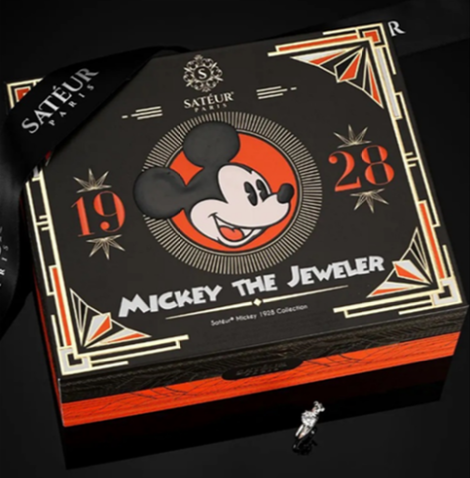
Case in point: The company just filed a lawsuit against Satéur, an online jewelry retailer selling Mickey-themed necklaces and rings. Disney isn’t making a copyright claim—instead, the company is asserting trademark infringement, arguing that the use of Mickey’s likeness on the jewelry will confuse consumers into thinking the products are official Disney
merch. That matters: Unlike copyrights, trademarks don’t expire so long as they are actively in use, and companies are increasingly relying on them as a legal backstop to maintain control over their characters, or properties, that have otherwise fallen into the public domain.
|
-
What makes this case interesting is that Satéur’s packaging references “1928”—the year Steamboat Willie premiered—suggesting that the retailer is trying to lean into the character’s public domain status, rather than be seen as riding Disney’s coattails. Will consumers see this as a Disney product, or a savvy nod to the now-free version of Mickey? Hard to say. But given that Disney has tapped Kelly Klaus of Munger, Tolles—the veteran who’s handled some of its biggest I.P.
fights—this could be a test case for how strongly Disney can maintain its grip on the world’s most famous mouse.
|
-
Judge sides with Penthouse in Woodward vs. Trump: Yes, the headline is that a judge has dismissed Donald Trump’s nearly $50 million lawsuit over Bob Woodward’s The Trump Tapes, the legendary journalist’s audiobook, which featured the president’s own recorded responses to Woodward’s questions. (Trump, of course, claimed ownership in his contributions to the conversations and wanted to control and profit off their use.) There’s a rich history of
entertainment figures sparring over authorship—producers battling directors, actresses suing filmmakers, screenwriters litigating over who inspired whom.
While outlining key principles—such as the requirement for mutual intent when creating a joint work, and the significance of who’s actually controlling the recording device—the judge name-checked Jerry Falwell’s old fight with Penthouse, in which the reverend tried (and failed) to claim a copyright
interest in an interview he gave the nudie magazine. Some readers may recall Falwell’s better-known case, when he claimed that a parody published by Hustler had caused him emotional distress. That battle went all the way to the Supreme Court, where the justices protected the parody. Read the full opinion in the Woodward case here. - Putting tech bros on the witness stand: On Wednesday, the White House is expected to unveil its long-awaited A.I. action plan, flanked by key tech-world advisors like David Sacks. Expect the usual talking points: America’s race with China, the strain on energy grids, and just maybe a nod to the copyright battles brewing over the training data feeding the machines.
Meanwhile, the entertainment industry, determined to fend off A.I.’s stealth raids
on its I.P., may be counting on the brash tech bros whispering in Trump’s ear to tilt juries in their favor when the blockbuster copyright trials land in court, as expected, over the next year. Indeed, I’m hearing that some of Silicon Valley’s power hitters may be called to testify, and while witness lists haven’t been finalized, I’ve been tracking who’s already caught a subpoena. One standout: Andreessen Horowitz (a16z), the powerhouse V.C. company, is being targeted by Warner, Sony, UMG, and
other record labels that are suing Udio, the A.I. music generator. They want to see every document from a16z’s due diligence, especially anything discussing copyright risk before the firm invested in the startup. Their theory? That the documents will show a “see no evil” approach to scraping music, consistent with a16z’s loud support for preemption, broad fair use, and the Trump administration’s light-touch approach to A.I. regulation.
So far, a16z is resisting. A federal judge in Oakland
is now set to determine whether the Udio files need to be turned over.
|
|
|
And now for the main event… |
|
|
The president’s attorneys could seize on the mogul’s advanced age for expedited
examination of his dealing with ‘Wall Street Journal’ executives. For their part, the defendants might welcome discovery—especially if it involves Epstein-related D.O.J. files. |
|
|
Donald Trump’s latest legal tantrum—his $10 billion defamation
suit against The Wall Street Journal, for its piece about a Jeffrey Epstein birthday card that the president swears he never wrote—may end up backfiring, triggering the exposure that Trump has spent years trying to avoid. As defamation suits go, this one isn’t particularly strong. If it gets past early hurdles, however, it could lead to sustained, sworn scrutiny of his relationship with the convicted sex offender who traveled in the same Upper East Side and Palm Beach
circles.
The alleged note—equal parts crude and juvenile—wished Epstein “another wonderful secret” and featured a sketch of a naked woman. Trump has called it a fabrication, but he’s been conspicuously vague about what exactly in the article defamed him. The suggestion that he and Epstein were once on friendly terms? That’s well-trodden territory, supported by photos, quotes, and years of media coverage. The scribbled birthday sentiment? Trump has insisted that it’s bogus, but he
hasn’t credibly proven so, or demonstrated that the newspaper knew it was a phony. If his argument is that the piece falsely implies criminal complicity, he hasn’t connected the dots.
Lawyers for Rupert Murdoch, who owns the Journal via his News Corp, will pounce on all of it: the ambiguities, the absence of defamatory sting, the lack of “actual malice,” and, perhaps most glaringly under Florida law, Trump’s failure to provide the required five-day
notice before filing suit. All this will be reviewed by U.S. District Court Judge Darrin Gayles, who was appointed by Barack Obama in 2014. This time around, there’s no Aileen Cannon, the Trump appointee who helped him skate the Jack Smith charges. Still, Florida courts have been receptive to Trump-adjacent libel claims. Take his suit against ABC News over George Stephanopoulos’s on-air
assertion that Trump had been found liable for raping writer E. Jean Carroll. That survived a motion to dismiss, and ABC owner Disney then settled for $16 million. Or consider the president’s libel case against members of the Pulitzer board for rewarding Russia election interference reporting. That case is still ongoing, to the puzzlement of many, and has received a rubber stamp of approval from a Florida appeals court.
Then there’s Laura Loomer’s
bizarre, but still active, lawsuit against Bill Maher for joking on HBO that she slept with Trump—a smear she alleges cost her a job in the administration. Maher’s lawyers have argued that no reasonable viewer would interpret the segment as factual. But the judge, noting that the studio audience groaned, instead of laughed, let it proceed. The litigation has since devolved into sideshow antics, including taunts of public depositions and allegations that Loomer
is using discovery as a fundraising tool.
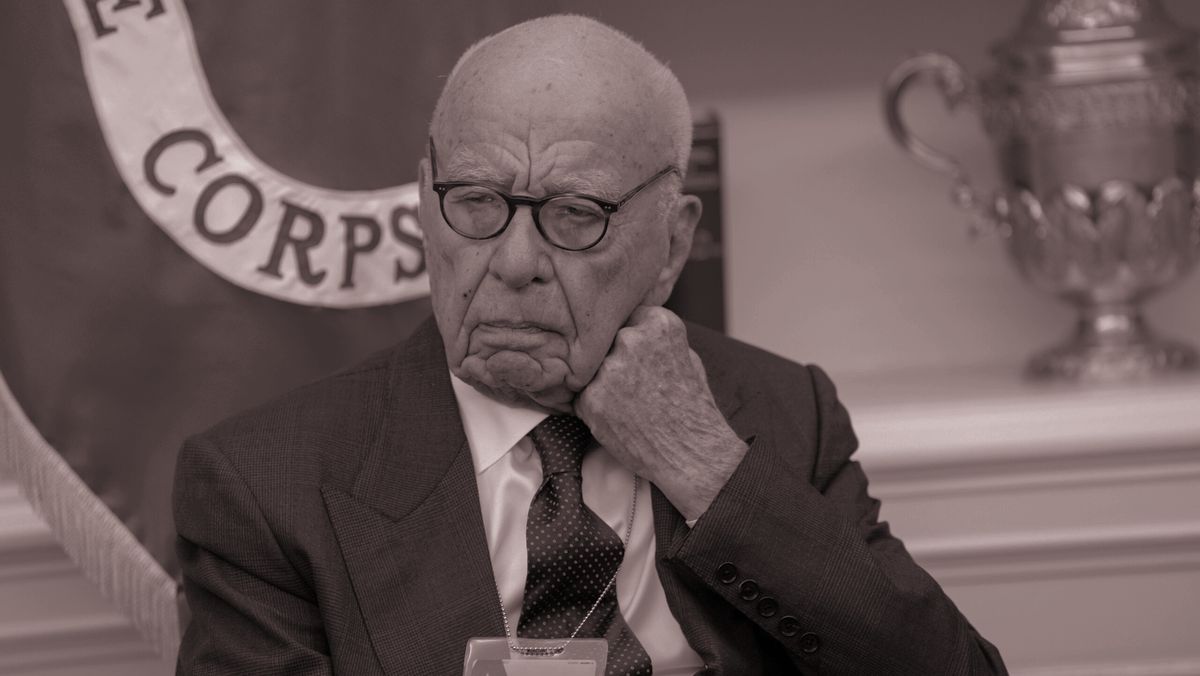
Whether or not Trump’s case against the Journal ends up following a similar trajectory, he’s already expressing a wish to depose Murdoch. The president’s legal team could seize on the mogul’s advanced age, 94, to press for an expedited examination of his dealings with WSJ editors and executives. For their part, the defendants might welcome discovery, especially if it involves Epstein-related D.O.J. files, or puts Trump under oath
about his history with the late sex offender.
Remember, much of what the public knows about Epstein emerged from a court case—specifically, Epstein accuser Virginia Giuffre’s defamation lawsuit against Ghislaine Maxwell in 2015. Journalists, led by the Miami Herald’s Julie K. Brown, fought to unseal those records, resulting in a media firestorm and renewed federal attention. While Giuffre’s defamation case was
settled, the spotlight ultimately led to the criminal sex trafficking charges against Epstein and Maxwell. (Maxwell is serving 20 years in federal prison; Epstein died by suicide before he was tried.) |
The
Apprentice–Era Precedent
|
One wrinkle in Trump’s suit against the Journal is whether the publication can invoke
Florida’s anti-SLAPP statute, which is designed to shield free speech by dispatching flimsy lawsuits early and, ideally, sending the loser home with the legal bill. Had Trump filed his suit against the Journal in California, for example, the state’s strong anti-SLAPP protections would have kicked in immediately, allowing the newspaper to seek a swift exit and fee recovery. Florida is murkier.
If it strikes you as odd that federal courts handle lawsuits differently depending on
geography, you’re not alone. There’s a Trumpian backstory here. A little more than a decade ago, while burnishing his Apprentice persona and suing anything that moved, Trump fought allegations that Trump University was a scam. In a bid to change the narrative, he filed a defamation suit against a disgruntled student. The claim was tossed, and the Ninth Circuit affirmed. But a concurring
opinion from Alex Kozinski, then the Ninth Circuit’s chief judge, left a mark. Kozinski fumed that California’s anti-SLAPP statute had carved an “ugly gash” through the orderly sequence of discovery, summary judgment, and trial envisioned by the federal rules. He couldn’t persuade his colleagues to banish state anti-SLAPP laws from federal courts
entirely, but he did plant the seeds of skepticism among the Federalist Society faithful.
In the years that followed, conservative judges around the country increasingly declared federal courts an anti-anti-SLAPP zone, curbing the reach of states’ free-speech statutes in federal litigation.
These days, Trump remains entangled in more lawsuits than a class-action lawyer’s Christmas list. Among them is a defamation case he’s defending, stemming from his remarks
about the so-called Central Park Five during his debate last September with Kamala Harris, who’d reminded viewers that Trump had taken out a full-page newspaper ad calling for the execution of the Black and Latino teenagers for allegedly raping and nearly killing a jogger. In the debate, Trump falsely claimed that the men had pleaded guilty, and “ultimately killed a person.” The five men, who were fully exonerated in 2002, filed a defamation lawsuit against Trump
after the debate. In that case, Trump’s lawyers are now arguing for dismissal, saying the president was merely evoking his mindset from the time he’d bought the newspaper ads, and that any misstatements during the debate fell under the forgiving umbrella of “substantial truth,” because the teens initially confessed, albeit under duress.
The problem for Trump here is that federal courts don’t let judges wade into factual disputes at the motion-to-dismiss stage. And so, in April, U.S.
District Judge Wendy Beetlestone ruled she couldn’t address the “substantial truth” defense, and let the plaintiffs amend their complaint to beef up the defamation claims.
Trump then invoked Pennsylvania’s anti-SLAPP law—the presidential debate took place in Philadelphia—hoping it might get the judge to toss the case. No luck. A few weeks ago, Beetlestone ruled that Pennsylvania’s anti-SLAPP statute “collides” with federal procedural rules, tipping her hat to Kozinski’s
old concurrence in the Trump University case. Trump has launched an appeal.
The irony is rich. Trump now finds himself championing anti-SLAPP protections in federal court—a maneuver that, if successful, could make it easier to fend off the kind of libel suit he’s so fond of filing. It’s a development that First Amendment advocates and media lawyers will quietly relish as the dispute makes its way to the Third Circuit Court of Appeals—and perhaps even back with amicus briefs.
Of
course, Trump’s newfound love affair with anti-SLAPP statutes is purely transactional. He’ll invoke federal rules one day, state procedures the next—whichever tool happens to be most useful. A month ago, he tried, unsuccessfully, to withdraw his lawsuit against The Des Moines Register and pollster Ann Selzer a day before Iowa’s new anti-SLAPP law took effect. And one has to wonder whether his lawsuit against CBS over that 60 Minutes edit of the Harris
interview would have seen daylight if Texas federal courts were more welcoming of the state’s particularly aggressive anti-SLAPP regime, and Trump was potentially on the hook for Shari Redstone’s legal tab.
Still, irony aside, it’s probably a good thing that Trump is defending the notion that judges should be able to wield state anti-SLAPP laws in federal court to toss defamation claims when appropriate. Insiders have long speculated that the Supreme Court has
been waiting for the right case to resolve the messy circuit split over anti-SLAPP’s place in federal court. Will it be the Central Park Five case? Or the WSJ suit over the Epstein birthday letter? Stranger things have made it onto the docket. |
Thanks, Eriq. Super interesting. I’ll see everyone on Thursday evening.
Matt |
|
|
Puck founding partner Matt Belloni takes you inside the business of Hollywood, using exclusive reporting and insight
to explain the backstories on everything from Marvel movies to the streaming wars. |
|
|
Unique and privileged insight into the private conversations taking place inside boardrooms and corner offices up and
down Wall Street, relayed by best-selling author, journalist, and former M&A senior banker William D. Cohan. |
|
|
Need help? Review our FAQ page or contact us for assistance. For brand partnerships, email ads@puck.news. You received this email because you signed up to receive emails from Puck, or as part of your Puck account associated with {{customer.email}}. To stop receiving this newsletter and/or manage all your email preferences, click here. |
Puck is published by Heat Media LLC. 107 Greenwich St, New York, NY 10006 |
|
|
|