Welcome back to What I’m Hearing+, winner of the coveted WIH Audience Award. I’m still in Toronto
for the festival (Canada: still great), and Eriq Gardner is back tonight with analysis of the surprising Murdoch family settlement, the latest salvo in Hollywood’s A.I. legal war (from Warner Discovery, no less!), and a surprising case that puts TikTok on the defensive yet again. All yours, Eriq… |
|
|
A MESSAGE FROM OUR SPONSOR |
Discover Pecan at Starbucks Last year, Starbucks introduced the flavor of pecan to the fall menu – warm and comforting flavor that pairs perfectly with espresso – and it quickly became a fan favorite. This fall, Starbucks launched the new Pecan Oatmilk Cortado, which combines three shots Starbucks Blonde Espresso with notes of pecan, rich brown butter and holiday baking spices and steamed oatmilk, it is then sprinkled with a pecan crunch topping and served hot in an
8-ounce cup.
Explore Pecan at Starbucks
|
|
|

| Eriq Gardner
|
|
- A Trump wrinkle in the Murdoch
deal: Ever since Monday’s surprise reveal that Murdoch siblings Prue, Liz, and James would each receive $1.1 billion and that a new trust would be created solely for the eldest boy, Lachlan, I’ve been hearing split opinions about whether an F.C.C. blessing would be required. “Absolutely,” said Preston Padden, the former Fox and Disney executive who has spent recent years trying to kill Fox’s
station licenses. “Fox has 29 stations. Rupert has legal control today. After this deal, Lachlan will.” Andrew Schwartzman, the veteran telecom lawyer now at the Benton Institute, was less sure: “Maybe, but probably not. Without seeing the trust documents, no one can do much more than [guess].”
So it depends heavily on how the trusts are structured. But history suggests that sometimes, a reshuffle is enough to trigger review. Shari
Redstone’s control of CBS was indirect—via her Class A shares in National Amusements—but Trump’s F.C.C. obviously took a long, hard look when she sold to Skydance. F.C.C. chair Brendan Carr, who once dismissed challenges to Fox licenses and is ideologically aligned with the company, might’ve turned a blind eye in the past. But that was before Trump sued Rupert Murdoch over The Wall Street Journal’s Epstein birthday letter
story. In fact, just as news of the Murdoch trust deal was circulating, that same Trump-Epstein story was resurfacing—with the White House crying “defamation!”
Could an F.C.C. review become leverage for Murdoch to settle with Trump, just as Shari was nudged into forking over $16 million? Or could it be Democrats—still lacking subpoena power—who start sniffing around the Murdoch trust, especially as they weigh whether to probe the Trump–Redstone connection in the next Congress? The dynasty
drama is far from over. This afternoon, for what it’s worth, a Fox Corp spokesperson confirmed to me that the company won’t seek F.C.C. approval for the deal. - In other Murdoch news…: Judge Aileen Cannon’s recent ruling to swiftly toss Newsmax’s antitrust suit against Fox—before Fox had even been served, much less filed a motion to dismiss—was curious, to say the least. Newsmax’s lawsuit accused Fox of pressuring cable distributors into
signing deals that block right-leaning competitors like Newsmax from getting carriage. Judge Cannon called the suit a “shotgun pleading,” implying the complaint was shoddily drawn up and would be a waste of the court’s time. Yes, this is the same judge who famously slow-walked the classified documents case against Trump, effectively ensuring it wouldn’t go to trial before the 2024 election.
Newsmax is being represented by Kellogg Hansen—hardly a fringe firm, and notably the same legal
team that beat Disney, Fox, and Warner Bros. Discovery in last year’s sports-streaming injunction fight. Of course, Newsmax will replead. We’ll see how Cannon responds. - A Hollywood legal blind item: This week, a law professor forwarded me an intriguing lawsuit, filed pseudonymously as “Doe Company” against “Roe Company.” The complaint involves a once-promising production outfit, founded by two Hollywood veterans, both now deceased, backed by a
first-look deal with a major studio. According to the complaint, one founder left behind a filmmaker son, who assumed control of the company. The other founder’s heirs aren’t thrilled, and are suing over an operating agreement and alleged mismanagement. The professor was aghast at the anonymity of it all, writing, “Can’t see what legitimate basis they have for filing it as Doe Company v. Roe Company.”
So I did what any modern journalist might do: I asked ChatGPT to analyze the
complaint, identify clues, cross-reference public records, and hazard a guess. It responded that the feud “very likely” stemmed from the former partnership between Ivan Reitman and Tom Pollock, who together founded the Montecito Picture Company in 1998. Reitman, of course, is the legendary Ghostbusters director who died in 2022, and is the father of filmmaker Jason Reitman. Pollock, who died in 2020, was a powerful entertainment lawyer
who’d been chairman of Universal Pictures, where he oversaw hits like Jurassic Park, Field of Dreams, and Schindler’s List before forming Montecito with Reitman.
The dates, structure, and registered corporate details all seem to fit. Are Pollock’s heirs going after the Ghostbusters franchise and other Montecito assets? Possibly. I haven’t confirmed it. The filing attorney ignored my queries, and reps for Jason Reitman didn’t respond. - Who owns your name?: Last week, a born-again Bible scholar named Thomas Richards sued Walking Dead creator Robert Kirkman for creating a homicidal character with the same name. The plaintiff alleges that Kirkman likely knew of his religious mission, and deliberately named the character after him, impinging his efforts to spread the good word. Richards’s wife, Lisa,
wrote on his website that her husband gets “frequent Google alert emails about a fictional psychopathic killer who shares his exact name.”
The case is a tough sell. A few years back, married real estate brokers Scott and Melinda Tamkin sued CBS after an episode of CSI featured a character named “Scott”—a hard-drinking, BDSM enthusiast reeling
from the housing crash—who becomes a suspect in the kinky sex murder of a character named, yep, “Melinda.” It turns out the Tamkins had previously sold a house to a CSI writer, only to see the sale canceled after an inspection revealed the property would require work. A trial judge actually greenlit the Tamkins’ case against CBS, but a California appeals court overturned
it, ruling that writers needed to be given creative freedom and opining that no reasonable viewer would conflate the fictional couple with the real ones.
Will Richards fare better against the Walking Dead franchise? Probably not in California, where courts have drawn a firm line around fictional depictions. But Richards filed his case in Virginia, a jurisdiction that doesn’t see many Hollywood-adjacent free speech fights—aside, of course, from the circus that was Johnny
Depp v. Amber Heard.
|
|
|
And now on to the main event… |
|
|
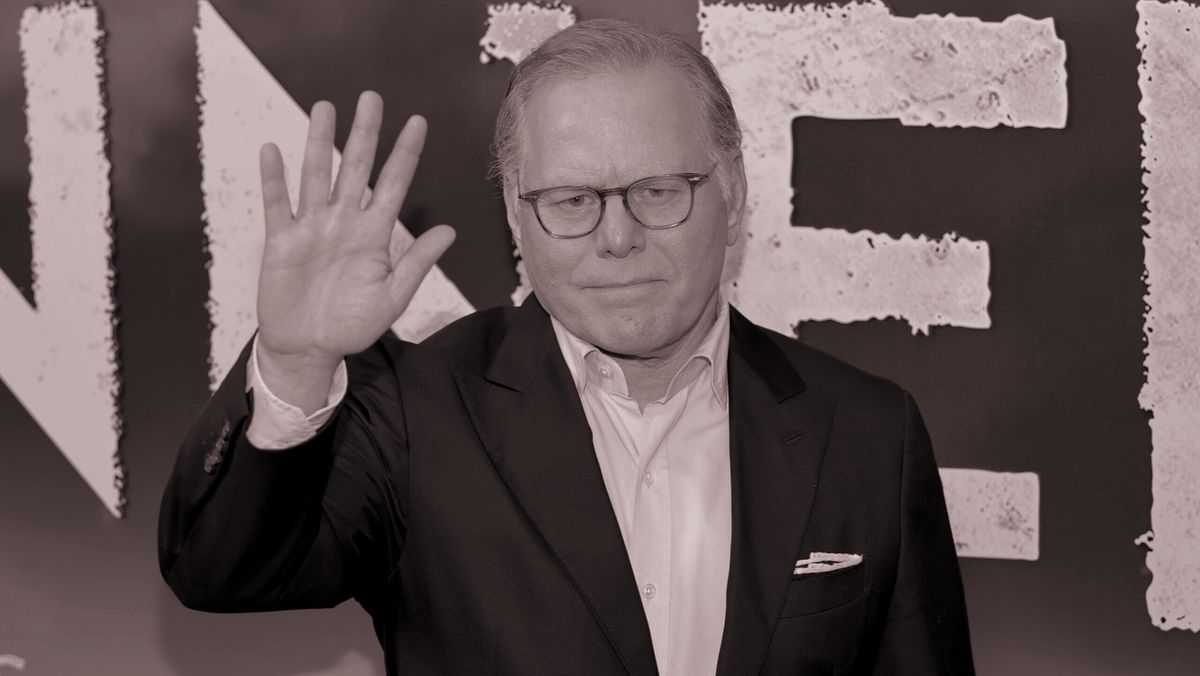
News and notes on a trio of pivotal copyright suits: David Zaslav’s
belated broadside against Midjourney, Anthropic’s $1.5 billion payout, and a bizarrely underappreciated TikTok suit playing out in San Francisco. |
|
|
A few months back, I gave Warner Bros. Discovery a proper
thwacking for not joining Disney and NBCUniversal’s lawsuit against Midjourney, the A.I. image generator responsible for spitting out near-exact replicas of characters like Darth Vader and Homer Simpson. C.E.O. David Zaslav, I suggested, had too many plates spinning to worry about artificial intelligence. Now, the cavalry has belatedly crested the
hill—Bugs Bunny, Batman, and Rick and Morty in tow—waving a complaint of their own.
Technically, WBD’s copyright infringement suit against Midjourney, filed last week in California, is a separate action. Practically, though, it’s the same marionette show, with Jenner & Block using an identical copyright playbook, which has already been stamped “related” to Judge John Kronstadt. Odds are, the cases get consolidated, and the litigation proceeds as though WBD hadn’t shown up
late, mumbling about costs and priorities.
Still, Zaslav’s tardy arrival spotlights a few under-the-radar developments. Disney and Universal portrayed Midjourney as a “copyright free-rider and a bottomless pit of plagiarism,” threatening an entire industry. The WBD suit, however, casts Midjourney more specifically as a direct competitor. The complaint flagged the recent arrival of “Midjourney TV,” a 24/7 YouTube channel that the complaint says promotes, advertises, and streams
the startup’s videos. Midjourney has insisted that it’s just a “tool.” WBD’s retort: It looks a lot like a rival studio—with a distribution platform thrown in. |
|
|
A MESSAGE FROM OUR SPONSOR |
Discover Pecan at Starbucks Last year, Starbucks introduced the flavor of pecan to the fall menu – warm and comforting flavor that pairs perfectly with espresso – and it quickly became a fan favorite. This fall, Starbucks launched the new Pecan Oatmilk Cortado, which combines three shots Starbucks Blonde Espresso with notes of pecan, rich brown butter and holiday baking spices and steamed oatmilk, it is then sprinkled with a pecan crunch topping and served hot in an
8-ounce cup.
Explore Pecan at Starbucks
|
|
|
That framing matters. In Disney’s case, Midjourney answered with the standard catechism: Its model
“synthesizes” images from statistical patterns, not from a stash of stolen files, and is guided by user instruction. (The defendant is surely inviting the judge to apply the legal analysis that saved the Sony Betamax VCR back in 1984, when the Supreme Court ruled that Sony’s new technology was capable of “substantial non-infringing uses.”) Jenner & Block, led by David Singer, has responded to Midjourney’s attempt to pass the buck to users by hammering reproduction at every turn:
training, output, distribution.
So, yes, the parties will spar over whether Midjourney is merely a “tool”— the studios see it more like a video store stocked with a lot of pirated videos. They’ll argue over the significance of a system that can spit out genuinely transformative content alongside images of superheroes who look a lot like Superman or Batman. Midjourney will lean on fair use, shifting blame in some instances to the user as the real copyright culprit. The
question will then become: Is this direct infringement or at most secondary? It’s the kind of doctrinal trench warfare that could distinguish this fight from the other A.I. lawsuits now flooding the courts.
The most intriguing piece of WBD’s complaint isn’t actually the parade of pictured superheroes. It’s fresh evidence that Midjourney knows exactly what it’s doing. Upon the arrival of the Disney case, Midjourney quickly began rejecting prompts to “animate” certain characters. But now?
According to WBD, Midjourney has reversed course, bragging to users about “fewer blocked jobs.” To Warner, that’s not innovation—it’s practically a signed confession. Stick a pin here, because this could be the thread that unravels the defense. |
The other big headline on the A.I. legal front, of course, was Anthropic’s eye-popping
agreement to pay $1.5 billion to settle a class action brought by authors who claimed the company used pirated copies of their books to train its models. The number floored me, and just about everyone I know around the industry. Yes, Anthropic was staring down a jury trial with the specter of statutory damages of up to $150,000 per infringed work. But even among the smart set who anticipated a record-setting check, few imagined a sum so large that the expected interest alone—$126 million, to be
accrued before disbursement—topped most copyright settlements.
Yet, in many ways, $1.5 billion is a bargain. Early chatter suggested the class might include millions of works. Judge William Alsup ruled that Anthropic could train its models on copyrighted books, but nevertheless found liability in the creation of its initial “pirated” library. What exactly was in that library? In the end, the class criteria appeared to capture about 500,000 works, so Anthropic would be
paying about $3,000 a book. (That’s not a given: On Monday, Alsup said he won’t approve the settlement until the two parties explain how every potential claimant will be notified, to avoid future lawsuits and ensure authors don’t “get the shaft.”)
Compare that to what Anthropic could have faced at trial. The statutory maximum was $150,000 per work, but most willful-infringement cases land in the $30,000 to $50,000 range. Anthropic, of course, had been angling for a much lower
payout, claiming “innocent infringement.” But let’s say a jury had pegged it at $100,000 per work, applying the criteria that resulted in music publishers’ billion-dollar judgment against Cox Communications in 2019, before an appeals court overturned it. That would have exposed Anthropic to a theoretical $50 billion verdict—one that the company surely would’ve appealed. Even with Anthropic’s $183 billion valuation, that could have been existential. (The Cox case, for what it’s worth, is
now before the Supreme Court.)
While $3,000 a pop is a relative bargain, the success of the class action suit will undoubtedly embolden plaintiff lawyers to keep swinging at A.I. outfits. Susman Godfrey, which led the case, carved out a tidy 25 percent of the pot for itself, and is no doubt running the math on what this precedent could mean elsewhere. Another Susman Godfrey client, The New York Times Co., is currently suing OpenAI over millions of news articles. (This is
not investment advice, but the Times’s entire market cap is less than $10 billion. You do the math.)
I suspect Anthropic was driven to settle, in part, to avoid another headline-grabbing “A.I. destroyed our industry” narrative. Susman Godfrey knows its leverage—they’ve just gone digging in a separate class action against Nvidia for more pirate treasure.
But this settlement won’t buy Anthropic any lasting peace. It only covers conduct through August 25,
2025, and excludes any liability from infringing outputs. Those claims will be harder—especially in front of judges like Alsup, who’ve shown real sympathy to fair use. But given the company’s willingness to pay through the nose, it’s hard to imagine ambitious lawyers not taking another shot at a deep pocket with a demonstrated appetite for making problems disappear. |
Finally, I want to nod to a California federal ruling last week that sets the stage for a multibillion-dollar
copyright and trade secrets trial against TikTok. Oddly, it’s not getting much attention. Back in 2017, Xie Jing, an employee of Beijing Meishe Network Technology, a Chinese company that had developed a mobile video-editing app, allegedly walked off with code before joining TikTok’s parent company, ByteDance, according to court papers filed by Meishe. That proprietary code, Meishe is claiming, became the engine inside TikTok.
On September 2, Judge Susan
Illston rejected TikTok’s ownership challenge and left it to a jury to decide whether the source code at issue is protectable expression or just non-protectable generic ideas. (Here’s the full ruling.) In a companion order, Illston weighed in on experts, including Dr. Jonathan Putnam, who crunched some numbers on what Meishe
alleges are TikTok’s ill-gotten gains. His math: $6.37 per monthly user, attributable to what was stolen, amounting to $1.08 billion in U.S. revenue, and $1.34 billion abroad—figures a jury will now be allowed to hear.
The trial, set for October 27 in San Francisco, should provide a rare peek under the hood of TikTok, whose general counsel is former Warner Bros. top lawyer John Rogovin. Not only are the financial stakes enormous, but the plaintiff wants an injunction
barring TikTok from continuing to rely on its code and trade secrets. Wouldn’t it be ironic if TikTok survived national security broadsides, privacy scandals, a unanimous Congress, and even the Supreme Court—only to be brought down by an intellectual property dispute? |
Thanks, Eriq. Great stuff. I’ll see everyone on Thursday.
Matt |
|
|
Puck founding partner Matt Belloni takes you inside the business of Hollywood, using exclusive reporting and insight to explain
the backstories on everything from Marvel movies to the streaming wars. |
|
|
A professional-grade rundown on the business of sports from John Ourand, the industry’s preeminent journalist, covering the
leagues, players, agencies, media deals, and the egos fueling it all. |
|
|
Need help? Review our FAQ page or contact us for assistance. For brand partnerships, email ads@puck.news. You received this email because you signed up to receive emails from Puck, or as part of your Puck account associated with {{customer.email}}. To stop receiving this newsletter and/or manage all your email preferences, click here. |
Puck is published by Heat Media LLC. 107 Greenwich St, New York, NY 10006 |
|
|
|