{{ 'now' | timezone: 'America/New_York' | date: '%b %d, %Y' }} |
|
|
|
Welcome back to What I’m Hearing+. Oscar ratings just came in, and
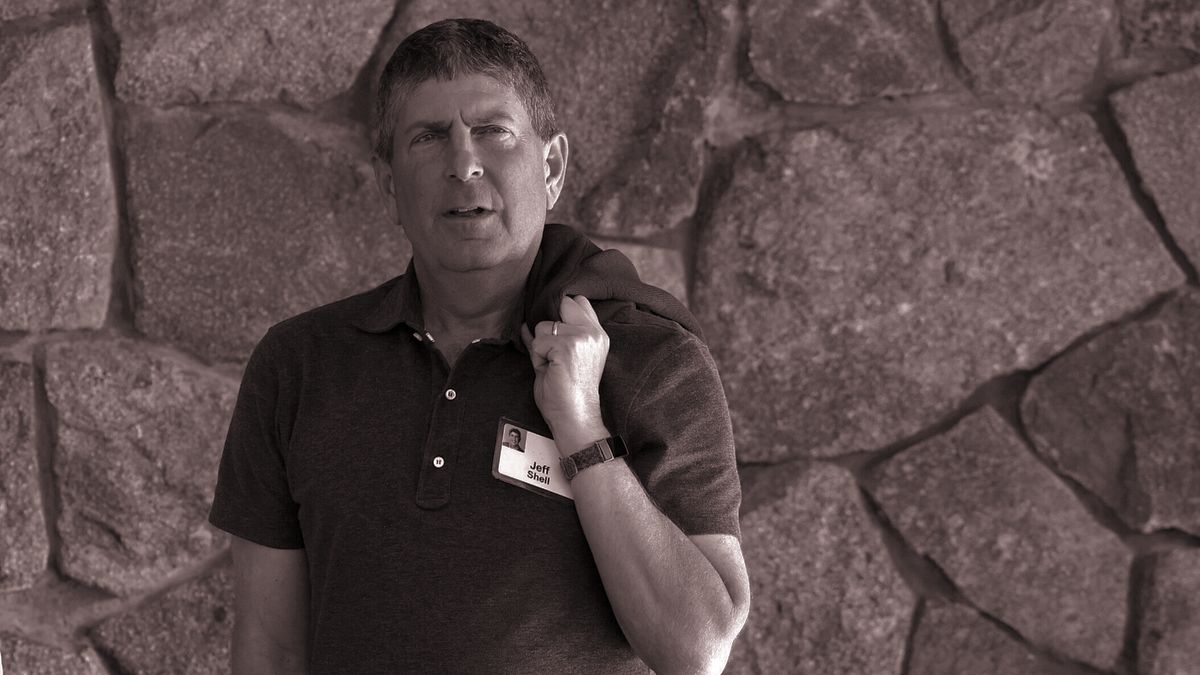
they’re… not great. Just 17.86 million total viewers on ABC and Hulu, down from 19.7 million last year, per Nielsen. And that’s with the Big Data panel boost. (Still about double the Globes, though.) I’ll announce the winner of the annual ratings contest on Thursday, but today Eriq Gardner is here with his take on the “silly” (his word) legal saga involving Paramount president Jeff Shell and that Vegas gambler.
All yours, Eriq. And if you’ve got a tip for
him, email Eriq@puck.news.
Not a Puck member yet? Never too late. Just click here.
Mentioned in this issue: Jeff Shell, David Zaslav, Julia Angwin, Ari Emanuel, Jay Penske, Shohei Ohtani, R.J. Cipriani,
Anthony Pellicano, Peter Romer-Friedman, Charlie Hellman, David Ellison, MrBeast, and more…
Let’s begin…
|
|
|
|

| Eriq Gardner
|
|
- Two A.I. lawsuits with
legs: Not a week goes by without a new lawsuit from the creative community targeting A.I. But two new filings caught my eye as potentially going somewhere. The first is a putative class action led by The Markup editor Julia Angwin and attorney Peter Romer-Friedman against Grammarly and its new “Expert Review” feature, which purports to give users feedback on their writing from well-known journalists and authors. The
complaint objects to the unlicensed use of those writers’ names, but the more noteworthy angle may be how the conduct is framed: less as a straightforward right-of-publicity claim, and more as a kind of identity simulation or impersonation. According to the suit, Grammarly isn’t merely invoking a name; it’s attributing speech to real writers and presenting A.I.-generated
feedback as though it were coming from them. The alleged harm isn’t just reputational—it’s the loss of control over one’s professional voice and the forced association with an A.I. “expert.”
The second case involves Gracenote Media Services, a division of Nielsen, which is going after OpenAI for allegedly training its models on millions of metadata descriptors—the informational tags used to categorize movies, television shows, and other media. Think of the way a show like
Netflix’s Love Is Blind might be tagged: an original concept set in the 2020s, unscripted, romantic, tense in tone, full of will-they-or-won’t-they dynamics. Gracenote, represented by Susman Godfrey, argues that those descriptors represent proprietary editorial work and that OpenAI has been ingesting them wholesale.
That argument pushes copyright law toward
one of its old fault lines. Back in the famous telephone directory case, Feist Publications, the Supreme Court rejected the “sweat of the brow” doctrine—which rewarded labor and compilation—and instead required at least a modicum of creativity in the selection and arrangement of facts to qualify for copyright protection. Gracenote, unsurprisingly, says its tagging system
clears that bar. Whether courts agree could help determine how far copyright extends into the increasingly valuable world of data tagging. - Sesame Street’s bad breakup: Sesame Workshop, the global nonprofit behind Sesame Street, has had it with SeaWorld, its exclusive theme park partner since 2013. Following several years of hand-to-hand combat in arbitration over royalties, the keeper of Elmo and Cookie Monster has sued in federal court in
Manhattan, alleging that SeaWorld’s repeated breaches of the licensing agreement—including recurring Sesame Land park closures and unapproved use of characters on social media—justify terminating the deal altogether.
Whenever a fraying licensing partnership turns into a dispute over brand harm, it’s worth paying attention. (See MrBeast’s battle
over his virtual burger venture.) This case is in the early innings, but the outlines of the conflict are visible. According to Sesame’s complaint, SeaWorld’s defense—that Sesame failed to adequately invest in its own brand after HBO Max declined to renew Sesame Street’s $30 million annual distribution deal—is absurd, given the new deal Sesame signed with Netflix last
May. The litigation is likely to turn on the classic contract question: Who breached first? - Spotify’s royalty reckoning: It’s not every day that a company tells you how much a legal defeat might cost, down to the dollar. But buried in a recent regulatory filing, Spotify estimates it will owe damages
of €358 million, or roughly $412 million, if Mechanical Licensing Collective persuades a court that Spotify has been underpaying songwriter royalties by allocating too much of its subscription bundle to audiobooks—$9.99 per sub, to be exact. And the damages figure doesn’t include penalties or interest. It’s just the royalty recalculation.
That’s a hefty tab for a lawsuit that Spotify’s global head of music, Charlie Hellman, described to Matt Belloni on
The Town last year as being essentially in the rearview mirror. Well, it’s not, and $400-plus million is more than enough incentive for contingency-fee
lawyers to keep pushing.
The case is in discovery, where Spotify is probing why the plaintiff chose to single it out. After all, Spotify isn’t the only company experimenting with bundled audio offerings. Anyone else looking at a potential nine-figure legal tab?
|
|
|
|
Now, on to the main event… |
|
|
|
Strip away the theatrics, and R.J. Cipriani’s headline-making battle against
Paramount president Jeff Shell may be the silliest Hollywood lawsuit filed this year. But that doesn’t mean the story is going away—or that Shell doesn’t have a bigger problem on his hands. |
|
|
|
One person’s whistleblower is another’s corporate terrorist. That’s a maxim I keep in mind while
covering the endless workplace dramas that pass across my desk. And that may apply to R.J. Cipriani, the professional gambler and occasional film producer, who’s dutifully been labeled a “whistleblower” in early coverage of the $150 million lawsuit he filed on March 9 against Paramount president Jeff Shell. The hook is irresistible: Cipriani claims that Shell shared nonpublic info about Paramount with him, including details of the company’s takeover of Warner
Bros. Discovery. Cue a mini media frenzy.
Yes, Cipriani’s past as a casino-industry informant and his colorful allegations about the internal affairs of the David Ellison–era Paramount regime are the kind of catnip that reporters live for. But strip away the theatrics, and the case may be the silliest lawsuit filed in Hollywood this year. The litigation itself, however, may actually be incidental to Cipriani’s real aims.
If you want the backstory on how Cipriani
met Shell, the Los Angeles Times has that covered. Shell, for his part, has fired back with a cross-complaint accusing Cipriani of
orchestrating a familiar “shakedown”: Cozy up to a high-profile target, manufacture the illusion of proximity, claim credit for favors and influence, and then deliver a massive financial demand with the threat of public exposure. I hardly needed to read that filing, though. What caught my eye—and frankly made me laugh—was the core premise of Cipriani’s case: What exactly does he think entitles him to $150 million?
According to his
complaint, Cipriani spent about 18 months providing Shell with “extensive, sophisticated communications and media management services.” The résumé is really something. Cipriani says he warned Shell about stories that might be brewing, suggested ways to redirect coverage, and—his specialty—worked to influence journalists.
Sometimes, apparently, Shell took the advice.
Cipriani proudly notes that Shell met with Jay Penske at his suggestion, though a studio president getting to know the owner of Variety, The Hollywood Reporter, and half the trade press ecosystem isn’t exactly high-level fixer stuff. Other times, Shell ignored him—like when Cipriani urged Paramount to secure “exclusive rights” to the Shohei Ohtani gambling saga. (Reality check: There are no exclusive rights to a criminal
investigation.)
Does Cipriani identify the oral contract that supposedly governed his relationship with Shell—the scope of services, the fee structure, the basic terms? He does not. (Shell, in his own filing, says he never requested services.) Does Cipriani take credit for remarkable feats? You bet—chief among them a Hollywood Reporter article about a South Park feud that Cipriani claims he helped engineer, an act which, he suggests, saved Paramount $1.5
billion. How exactly a trade story produced that ten-figure economic miracle is not entirely clear. The complaint, alas, doesn’t bother to explain.
Setting aside those issues—as well as alleged “fraud,” which seems to boil down to Shell declining to use his industry contacts to help Cipriani adapt a Spanish-language Roku show—you arrive at the core allegation that’s driving the news. Cipriani claims that last July, Shell told him that Paramount was pursuing rights to air UFC matches on
CBS—one month before Paramount indeed announced its $7.7 billion, seven-year deal with UFC for U.S. media rights. Cipriani now categorizes this (alleged) conversation with Shell as violating securities law, because Shell allegedly disclosed “material nonpublic information”—notably, while the Ellisons were prowling the M&A landscape under the watchful eye of regulators and Congress. (Shell denied it.)
From there, the narrative takes a familiar turn. Cipriani casts himself as a
whistleblower, claiming he did what any honest citizen would do, and dutifully marched into the S.E.C. with his WhatsApp messages. Having done so, he claims he now deserves compensation for the resulting emotional distress and “substantial medical expenses,” because the UFC “leak” exposed him to potential regulatory scrutiny. The small complication, of course, is that Cipriani is the one who went to the regulators in the first place. |
More fundamentally, Cipriani’s case runs into a basic legal snag. His own complaint portrays him as
a kind of freelance crisis manager for Shell. If that’s true, it’s difficult to see how Regulation FD enters the picture at all. That S.E.C. rule is meant to prevent public-company executives from disclosing material information to analysts, hedge funds, or traders—not to someone acting as a contractor. (Indeed, many top executives of publicly traded companies confide in outside consultants to help with everything from business to communications strategy.) Even then, the complaint doesn’t
explain why a conversation about Paramount negotiating for UFC rights would qualify as a market-moving disclosure, rather than industry gossip later dressed up for litigation.
And gossip, frankly, seems to be the point. With stray asides about Shell trash-talking Warner Bros. Discovery chief David Zaslav and a bizarre claim that Ari Emanuel responded to Cipriani’s outreach by having notorious private investigator Anthony Pellicano call
him, it’s easy to suspect that press coverage may have been the real goal of this filing.
Which leads to the obvious question: Why did everyone take Cipriani’s claims seriously? And if Shell’s real sin is associating himself with this fellow, why not just say that? To be fair, even loose contact with someone like Cipriani—particularly if it involved sharing business chatter—would be the sort of judgment lapse that boards tend to frown upon. But that’s a far cry from the sweeping legal
theory Cipriani is advancing.
On the media side, the explanation is straightforward. Paramount is currently a bottomless ocean of scandal bait, and reporters understandably chase anything that hints at intrigue. (According to Shell’s cross-complaint, Cipriani circulated drafts of his lawsuit to reporters, leading Variety to publish before the suit was publicly available.) Add the usual cocktail: legal naivete, herd instinct, and the hesitation to stick your neck out with a
contrarian take. (There may also be a dash of intimidation. I’ve heard scuttlebutt that Cipriani can be persistent with reporters.)
All of that is understandable. But what about Paramount’s reaction? Initially, the company wasn’t a defendant. But instead of quietly telling reporters, even on background, that Cipriani’s lawsuit was a nothingburger, Paramount elevated the stakes by tapping Gibson Dunn to lead an investigation. And declining comment. Cue Cipriani, who (perhaps in a strategic
mistake) amended his complaint today to name Paramount directly. This time, the company has responded in a statement calling the suit “frivolous” and declaring its intent to defend the case vigorously. (Nevertheless, I hear, the Gibson Dunn team is scheduled to meet with Cipriani tomorrow.)
Why the initial pause by Paramount? Sure, you could read that as a company dutifully respecting the process. But when a corporation passes up an easy opportunity to swat down a flimsy lawsuit against
its own president, it doesn’t scream confidence.
Whatever the merits of Cipriani’s claims, the episode underscores that Shell may have a bigger problem on his hands. My colleague Dylan Byers has reported on Ellison’s misgivings about Shell, who stepped down from NBCUniversal after a harassment claim was made by a CNBC anchor, and that he may not
be long for the company. If that’s the case, Paramount’s earlier restraint starts to make sense. Keeping its powder dry against Cipriani could have allowed the company to weaponize his allegations as grounds to fire Shell for cause. But now that Paramount itself is in the crosshairs—and responding publicly—that route may be closed off.
In other words, Cipriani may have overplayed his hand. By dragging Paramount into the case, he’s forced the company to drop the polite fiction and call the
lawsuit what it thinks it is. That’s rarely how a savvy operator runs a shakedown. Still, Hollywood tends to regenerate this type faster than it rejects it. For every Cipriani whose story starts to unravel, there’s another waiting in the wings, convinced that the next complaint will land better. |
Thanks, Eriq. I’ll be back on Thursday.
Matt |
|
|
|
Puck founding partner Matt Belloni takes you inside the business of Hollywood, using exclusive reporting and insight
to explain the backstories on everything from Marvel movies to the streaming wars. |
|
|
|
Unique and privileged insight into the private conversations taking place inside boardrooms and corner offices up and
down Wall Street, relayed by best-selling author, journalist, and former M&A senior banker William D. Cohan. |
|
|
|
Need help? Review our FAQ page or contact us for assistance. For brand partnerships, email ads@puck.news. You received this email because you signed up to receive emails from Puck, or as part of your Puck account associated with {{customer.email}}. To stop receiving this newsletter and/or manage all your email preferences, click here. |
Puck is published by Heat Media LLC. 107 Greenwich St., New York, NY 10006 |
|
|
|
|