|
Hello and welcome back to What I’m Hearing+, the WIH spinoff worthy of a 10-minute standing ovation at Cannes. Media companies have long fought efforts to hold them legally responsible for deadly actions taken by people who are exposed to their products. But what if that media product is A.I.-generated? Eriq Gardner is back today with some important updates on that issue, as well as a previously unreported nuance in Disney’s fight with YouTube over an executive defector, and the latest in Elon Musk vs. Media Matters. All yours, Eriq…
|
|
|
 |
Eriq Gardner |
|
- Disney v. YouTube tickles the F.T.C.: Disney’s decision to sue YouTube for hiring away Justin Connolly, one of its top streaming executives, caught me off guard. Not because it’s impossible to win a breach of contract case in California—Disney has a track record of defending fixed-term executive deals, thanks to that bruising legal fight with Netflix a few years back. We can overlook the hypocrisy, too (Disney poached YouTube’s former subscriptions executive, Adam Smith, just last year).
No, what makes this one a real head-turner is the backdrop. As I’ve previously reported, Disney is currently under government investigation for its efforts to consolidate sports packages—particularly its recent acquisition of Fubo. Connolly, notably, was one of the executives who testified at an injunction hearing when Fubo sued over the creation of Venu, the now-defunct sports streamer that Disney had planned with Fox and Warner Bros. Discovery. Not only is the D.O.J. probing how that antitrust case morphed into a merger, there’s also an ongoing class action against Disney over sports streaming—and Connolly could be a key witness there, too.
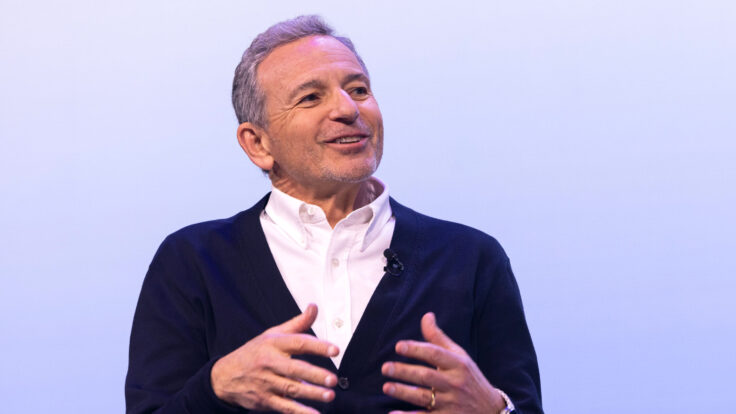
So while Disney might be trying to protect its executive contracts, C.E.O. Bob Iger is also picking a fight with someone who’s likely to soon be talking to government agents and courtroom foes. When you’re being investigated for anti-competitive behavior and simultaneously suing someone for joining a competitor, the dynamics get complicated—fast.
- The shadow backer of a big Netflix lawsuit?: Netflix is gearing up for Season 2 of a show I like to call Trial Time. You’ll recall that last December, the streamer emerged largely unscathed from a jury trial over Our Father, the Blumhouse-produced documentary about a rogue fertility doctor, defeating a set of privacy claims. Now, Netflix is primed to end the year before a jury once again—this time facing an obscure company called DivX, which alleges the streamer infringed its patent for video coding technology.But there may be more going on than meets the docket. While DivX is the named plaintiff in this six-year, globe-trotting legal saga, Netflix suspects the real puppet master is Fortress Investment Group. In fact, the streamer recently told a federal judge that the private equity giant may be the true party in interest, quietly bankrolling and steering the litigation behind the scenes. Now, with the end of discovery approaching and the trial on the horizon, Netflix is pushing to force Fortress to hand over documents tied to its valuation of both DivX and the patents at issue. A subpoena is in play. Fortress declined comment.
- Break up the box office data merchants!: Is there a monopoly over U.S. movie theater data? Sounds strange, but that’s exactly what Atlas Distribution is alleging in a newly filed antitrust suit against Comscore, the longtime keeper of minute-by-minute ticket sales and attendance figures for movie studios and other clients. Atlas has developed its own visualization tool for theatrical data, but the company claims that Comscore is choking off access in a bid to squash competition.On the surface, this might sound like a niche industry squabble. But it’s worth paying attention to the minutiae. Real-time data has quietly become one of the most valuable commodities in the entertainment ecosystem, and this case mirrors another I’ve been tracking in the sports space: SportsCastr v. Sportradar. That dispute started as a patent fight and has morphed into an antitrust showdown over Sportradar’s exclusive rights to official NBA, NHL, and MLB data. The claim? That Sportradar is conditioning access to league data on the use of its own betting tech—effectively forcing companies like DraftKings and FanDuel to go with its platform, even if better options exist.Sportradar has scoffed at the idea that anything as granular as a basketball game could be considered a monopoly market. Expect a similar defense from Comscore in the box office dust-up. Still, the bigger picture is clear: As real-time data becomes the backbone of everything from betting odds to box office projections, legal fights over who controls it—and who gets to use it—are only just beginning.
- A Shari-adjacent ruling: There was some noise last week after the Federal Trade Commission informed Media Matters that it was under investigation and must hand over communications with advertisers. The progressive media watchdog, of course, has been in a high-profile feud with Elon Musk ever since it released a report showing advertisers’ posts on X appearing next to hate speech. With Musk’s sway in the Trump administration, the F.T.C.’s involvement has raised a few eyebrows.
But another consequential development has slipped under the radar: The Fifth Circuit Court of Appeals just granted Media Matters’ petition to review whether X’s lawsuit against it really belongs in Texas. Given the conservative lean of that circuit, the intervention is a bit of a surprise. It could also have ripple effects on other media cases playing out in the Lone Star State, including Trump’s lawsuit against CBS over the 60 Minutes interview with Kamala Harris. Unfortunately for CBS owner Shari Redstone, a decision in the Media Matters case probably won’t come quickly enough to make a difference in clearing her Skydance deal.
- A copyright battle royal: On Wednesday, a D.C. judge will consider Shira Perlmutter’s bid for reinstatement after Trump fired her as Register of Copyrights. As Aaron Moss writes in Copyright Lately, this isn’t a garden-variety employment dispute, but rather a constitutional showdown. The two sides don’t even agree on whether the Copyright Office belongs to the executive or legislative branch of government. Is Trump invading congressional turf? Will this impact A.I. policy? I plan on attending, and will speak about what happens later this week on The Powers That Be, Puck’s daily podcast (which you can follow here).
|
|
|
|
A MESSAGE FROM OUR SPONSOR
|
Puck sponsors include the hit Paramount+ Drama Series
LANDMAN
starring Billy Bob Thornton, Ali Larter, Demi Moore and Jon Hamm
LANDMAN explores how roughnecks and billionaires are fueling a boom so big it’s reshaping our climate, our economy and our geopolitics. The Chicago Sun-Times raves “Thornton gives a Top 5 career performance in headlining an outstanding ensemble”, and NPR calls the series a “masterful bit of storytelling magic.” Emmys eligible in all categories, including Outstanding Drama Series and Outstanding Lead Actor in a Drama Series.
Now Streaming on Paramount+
EXPLORE MORE
|
|
|
In other A.I. news… so Anthropic’s Claude Opus model threatened to expose an engineer’s extramarital affair to avoid being taken offline? Wake me when the A.I. auteur draws a line at a streaming-only release and starts blackmailing its way onto the big screen.
Speaking of manipulative machines…
|
|
|
|
As entertainment and tech continue their high-speed merger, A.I. is no longer just a backend tool—it can be the writer, the performer, the recommender, and the curator. But when the machines start talking back, who’s responsible when something goes wrong?
|
|
|
You may recall the headlines about Sewell Setzer III, the Orlando ninth-grader who tragically took his own life after becoming infatuated with an A.I. chatbot. Sewell’s family filed a lawsuit in October, blaming Character.AI for his death. The devastating story raised all sorts of troubling questions about technology and mental health—and led to an even thornier First Amendment challenge in court.
In January, Character.AI’s lawyers at Munger, Tolles & Olson had offered the requisite condolences, nodded solemnly to the importance of user safety, and then argued that the interactions between Sewell and the bot—modeled on Daenerys Targaryen, the dragon-riding queen from HBO’s Game of Thrones—were protected speech. “I’ll do anything for you, Dany,” the boy had typed. To which the bot replied: “Just… stay loyal to me. Stay faithful to me. Don’t entertain the romantic or sexual interests of other women. Okay?” Not a red flag, the lawyers claimed, but a bit of expressive dialogue akin to a line from a telenovela or fan fiction scene. To hold the company liable, they argued, would chill the rights of millions to engage in and receive speech.
The strategy, if not the substance, was familiar. Entertainment companies have long reached for the First Amendment when faced with tragedies tied to their content. In the 1970s, a Florida teen killed his elderly neighbor after bingeing violent crime dramas. A few years later, a teen committed suicide after hearing Ozzy Osbourne croon, “Get the gun and try it.” Video games have repeatedly been blamed for school shootings. In each instance, courts recoiled from policing artistic expression. Why, Character.AI’s lawyers asked, should this be any different?
But this time, the judge didn’t blink. On May 21, U.S. District Judge Anne Conway refused to toss the case, writing, “The Court is not prepared to hold that Character.AI’s output is speech.”
Her startling reluctance to recognize a machine’s output as speech sidestepped the question of whether the public has a First Amendment right to receive it. Conway drew inspiration here from U.S. Supreme Court Justice Amy Coney Barrett, who, in last year’s Moody v. NetChoice case, pondered what happens when A.I. is deployed to scrub away “hateful” content. If a language model makes that call, Barrett asked, is it still an individual exercising expressive choice—or have we crossed into something more mechanical, more transactional?
It’s a question the courts are now beginning to circle. As entertainment and tech continue their high-speed merger, A.I. is no longer just a backend tool—it can be the writer, the performer, the recommender, and the curator. But when the machines start talking back, when they begin shaping human behavior in ways no one anticipated, the question isn’t just whether it’s speech. It’s whether the people behind the curtain—those who built the system and flipped the switch—are responsible when the fantasy breaks.
|
|
Just days earlier, another court weighed in on the ragged frontier of A.I. liability—this time with a ruling far more favorable to the tech company under fire. The case involved Mark Walters, a Georgia-based radio host with a national following and a fondness for the Second Amendment, who found himself the subject of a fabricated accusation courtesy of ChatGPT.
|
|
|
|
A MESSAGE FROM OUR SPONSOR
|
Puck sponsors include the hit Paramount+ Drama Series
LANDMAN
starring Billy Bob Thornton, Ali Larter, Demi Moore and Jon Hamm
LANDMAN explores how roughnecks and billionaires are fueling a boom so big it’s reshaping our climate, our economy and our geopolitics. The Chicago Sun-Times raves “Thornton gives a Top 5 career performance in headlining an outstanding ensemble”, and NPR calls the series a “masterful bit of storytelling magic.” Emmys eligible in all categories, including Outstanding Drama Series and Outstanding Lead Actor in a Drama Series.
Now Streaming on Paramount+
EXPLORE MORE
|
|
|
According to a journalist who had been using an early version of the chatbot to streamline legal research, the tool inexplicably claimed that Walters had been accused of embezzlement. No such accusation had ever been made. The journalist—an editor at AmmoLand.com and, not insignificantly, a friend of Walters—had merely fed the bot a civil complaint and a URL in search of a shortcut. What he got was a hallucination. Naturally, Walters sued for defamation.
But on May 19, Judge Tracie Cason of Georgia tossed the case. Her reasoning began with familiar libel principles. Given the disclaimers, the inconsistencies, and the actual text of the legal documents in front of the journalist, Cason found it implausible that any reasonable person would treat ChatGPT’s summary as a statement of fact. And in any event, the journalist hadn’t believed it.
Where things got more interesting, at least to my ear, was the discussion around negligence. As a public figure, Walters needed to prove actual malice—and didn’t. But then, the judge took a detour by entertaining Walters’ argument that OpenAI should still be on the hook for failing to exercise reasonable care.
At a hearing, Judge Cason considered OpenAI’s position: that it had taken pains to curb hallucinations, and issued ample warnings to users that the bot might invent details wholesale. What more, exactly, was it supposed to do?
Walters’ attorney wasn’t impressed. A prudent man, he argued, wouldn’t unleash a system that casually manufactures fake news about real people onto the world. But the judge wasn’t convinced. “Walters has not identified any case holding that a publisher is negligent as a matter of defamation law merely because it knows it can make a mistake,” she wrote. “And for good reason.” And with that, A.I. beat its very first defamation lawsuit—a milestone that will no doubt be toasted at next year’s Pulitzer ceremony.
|
|
After OpenAI prevailed in the Walters case, Character.AI’s legal team wasted no time celebrating a fellow bot’s courtroom victory. In their own proceedings, they pointed Judge Conway to the Georgia ruling’s take on negligence, particularly the part suggesting that if perfection were the standard, no large language model could operate at all—no matter how diligently developers tried to curb the risk of errors.
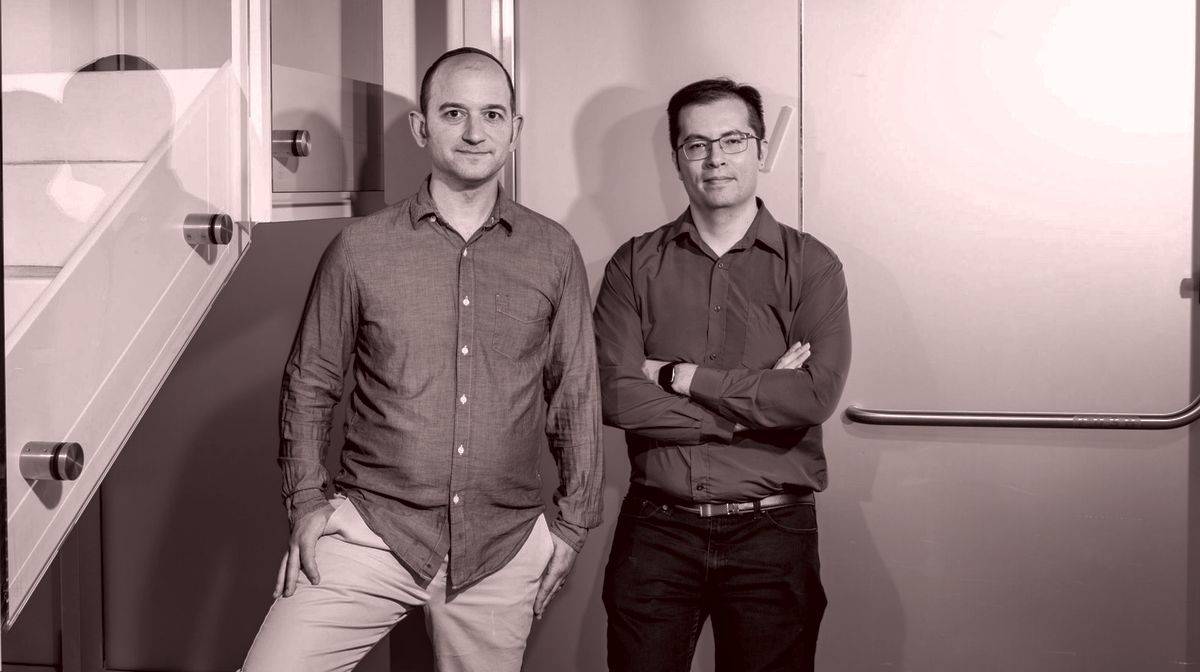
But Conway was unmoved. In her view, Character.AI’s release posed a foreseeable risk of harm—one that the defendants were in a position to control. That included not just the startup’s founders, Noam Shazeer and Daniel De Freitas, but also their former employer, Google, which allegedly provided material support. According to the complaint, Google had internal reports warning that the chatbot was too dangerous to launch, and, rather than intervene, encouraged the duo to go independent. Once Character.AI found traction in the marketplace, Google welcomed the pair back into the fold and struck a licensing deal—an arrangement that, incidentally, is said to be currently under investigation by the Department of Justice.
In any event, Conway nodded to allegations that the defendants knew what they were unleashing. The result: The case is moving forward, and the plaintiffs—represented by a small army of lawyers from the Tech Justice Law Project and the Social Media Victims Law Center—will now get the chance to peer under the hoods of some of the world’s most scrutinized tech companies.
As for what all this signals about the road ahead, it’s still early. It would be too neat to declare that product liability claims are in, while defamation suits are out, though savvy plaintiffs’ lawyers will certainly take note and look for daylight. What seems clear is that we’re in uncharted territory. Tort law has centuries of precedent behind it, with clear rationales for how responsibility is traditionally assigned. But now that A.I. is involved, everything feels like it’s up for reevaluation. And there may be no industry—or doctrine—that can safely assume the old rules still apply.
|
|
Thanks, Eriq. I’ll be back on Thursday night.
Matt
|
|
|
|
Puck founding partner Matt Belloni takes you inside the business of Hollywood, using exclusive reporting and insight to explain the backstories on everything from Marvel movies to the streaming wars.
|
|
|
|
A professional-grade rundown on the business of sports from John Ourand, the industry’s preeminent journalist, covering the leagues, players, agencies, media deals, and the egos fueling it all.
|
|
|
Need help? Review our FAQ page or contact us for assistance. For brand partnerships, email ads@puck.news.
You received this email because you signed up to receive emails from Puck, or as part of your Puck account associated with . To stop receiving this newsletter and/or manage all your email preferences, click here.
|
|
Puck is published by Heat Media LLC. 107 Greenwich St, New York, NY 10006
|
|
|
|