|
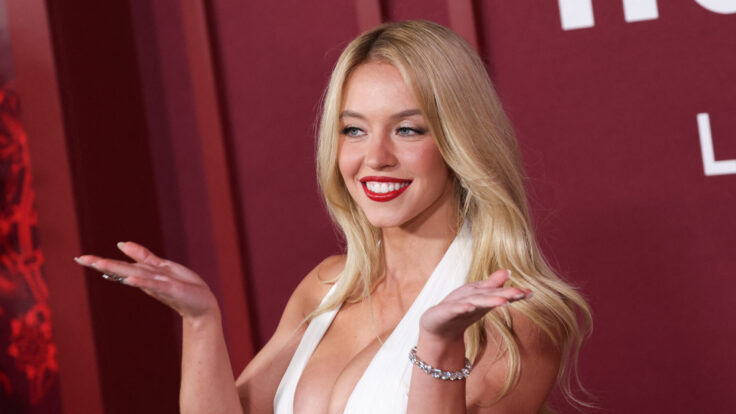
Hello and welcome back to What I’m Hearing+, the Sydney Sweeney attached to star in WIH’s Michael Bay movie. I was en route to Miami this morning when 60 Minutes chief Bill Owens dropped his resignation letter, which adds yet another dramatic twist to the ongoing Paramount-Skydance sale drama. Eriq Gardner is here today with a related analysis of how F.C.C. chair Brendan Carr is approaching that hot-potato deal—and why he won’t even meet with wannabe Paramount mogul David Ellison. But first, some big Disney news from Eriq…
|
|
|
|
A MESSAGE FROM OUR SPONSOR
|
HBO Original comedy series, The Rehearsal, follows one man’s journey to reduce the uncertainties of everyday life. With a construction crew, a legion of actors, and seemingly unlimited resources, Nathan Fielder helps ordinary people prepare for life’s biggest moments. In Season 2, Fielder puts his resources toward an issue that affects us all. Watch new episodes of The Rehearsal on Sundays at 10:30 p.m., exclusively on Max.
WATCH NOW
|
|
|
 |
Eriq Gardner |
|
- A D.O.J. vs. Disney scoop: I’ve learned that the Department of Justice has launched a formal investigation into Disney’s acquisition of a controlling stake in Fubo, the sports-oriented streaming service. Disney and Fubo are already responding to information requests, and bracing for a potential challenge from the Trump administration over the deal, which was announced in January.The investigation itself shouldn’t be surprising. After all, the transaction effectively ended antitrust litigation between two rivals. If you recall, Disney had planned to launch Venu—a sports streaming joint venture with Warner Bros. Discovery and Fox—until Fubo sued and secured an injunction. That litigation vanished when Disney bought its stake in Fubo in January and incorporated it into Disney’s Hulu + Live TV business. That didn’t sit well with Senator Elizabeth Warren, who urged the D.O.J. to take a closer look at the deal.Of course, any government attempt to unwind the Disney-Fubo deal would play out against the backdrop of President Trump’s war on major media companies—which could present complications of its own. If this does make its way into a courtroom, expect questions from defense lawyers about political interference, and comparisons to Trump’s hands-on involvement in the proposed PGA Tour–LIV Golf merger, another antitrust case between rivals that was conveniently resolved. Disney declined to comment.
- A twist in Warner Bros.’ Superman showdown: In the seemingly never-ending battle over who owns the rights to Superman, Warner Bros. is going on the offensive, making what might be an unprecedented appearance in probate court to attack the estate of Joe Shuster, co-creator of the DC Comics hero, who died in 1992. You’ll recall that Shuster’s heirs, represented by longtime Warners nemesis Marc Toberoff, are seeking a declaration that Superman rights have reverted to the estate in many foreign territories, including the U.K., Canada, and Australia. The timing dovetails with the July release of Warners’ high-stakes, James Gunn–directed Superman reboot. The studio, as I predicted earlier this year, is pushing back hard, arguing that the New York court lacks jurisdiction, that Toberoff could have filed much sooner but didn’t (undermining claims of ”imminent harm”), and that WB will ultimately prevail on the merits (more on those another day).Meanwhile, Warners is quietly and aggressively litigating a probate case that has lingered for 22 years, dating back to when Toberoff first represented Mark Peary, Shuster’s nephew and now the estate’s executor. The studio argues that the estate has failed to inventory and appraise assets, and has kept these proceedings open under the guise of vague ambitions like a TV series about Shuster’s life. They add, however, that the estate has never once raised the topic of foreign reversion rights until now. Warners alleges the true goal of dragging out the probate case is to interfere with its Superman rights and “shake down a settlement.” The company is asking the probate court to wind down the estate’s administration, hinting at further action to remove Toberoff and Peary altogether.In court, Toberoff responded that he’s never heard of a case in which a corporation tried to interfere in probate administration to undermine federal litigation—and that Warner Bros. shouldn’t be the first.
- What’s a ‘Top Gun’ E.P. credit worth?: The breach-of-contract trial between Bradley Fischer and the company that ousted him, New Republic Pictures, is currently underway in a Beverly Hills courtroom, with as much as $20 million at stake and potentially a very revealing discussion about Mission: Impossible and Top Gun profit participation. But so far, the gallery is mostly empty. You’re more likely to run into a couple getting married than a reporter.Fischer, the former president of New Republic, contends he’s owed millions for films he would have been attached to as an executive producer had he not been terminated. New Republic was once owned by Russian oligarch Dmitry Rybolovlev, a detail that became problematic for Paramount—New Republic’s slate partner—around the time of Russia’s full-scale invasion of Ukraine. Rybolovlev decided to pull out of Hollywood, but not before Fischer had been fired. However, Los Angeles Superior Court Judge Edward Moreton has ruled that the motives for Fischer’s firing aren’t particularly relevant to his breach-of-contract claims.Fischer did catch a break last week when Moreton reconsidered a tentative ruling that would have excluded evidence of lost profits from post-termination projects. Fischer faces more hurdles, though. His legal team is still working to convince the judge to let jurors hear testimony about what a Mission: Impossible E.P. credit is worth, among other opinions. The trial is expected to last four to six weeks.
- The lucrative fallout of the 2020 election: The Dominion v. Newsmax trial I wrote about last week, in which the voting systems company is seeking $1.6 billion from Newsmax after famously disgorging $787 million from Fox News, has been postponed by Delaware Superior Court Judge Eric Davis. One correction: I’d previously reported that Davis had ruled on summary judgment that statements made by Newsmax were defamatory.
Instead, he concluded that while they were untruthful, he left the issue of “actual malice” to be decided by the jury.
|
|
|
|
And now for this week’s main item…
|
|
|
|
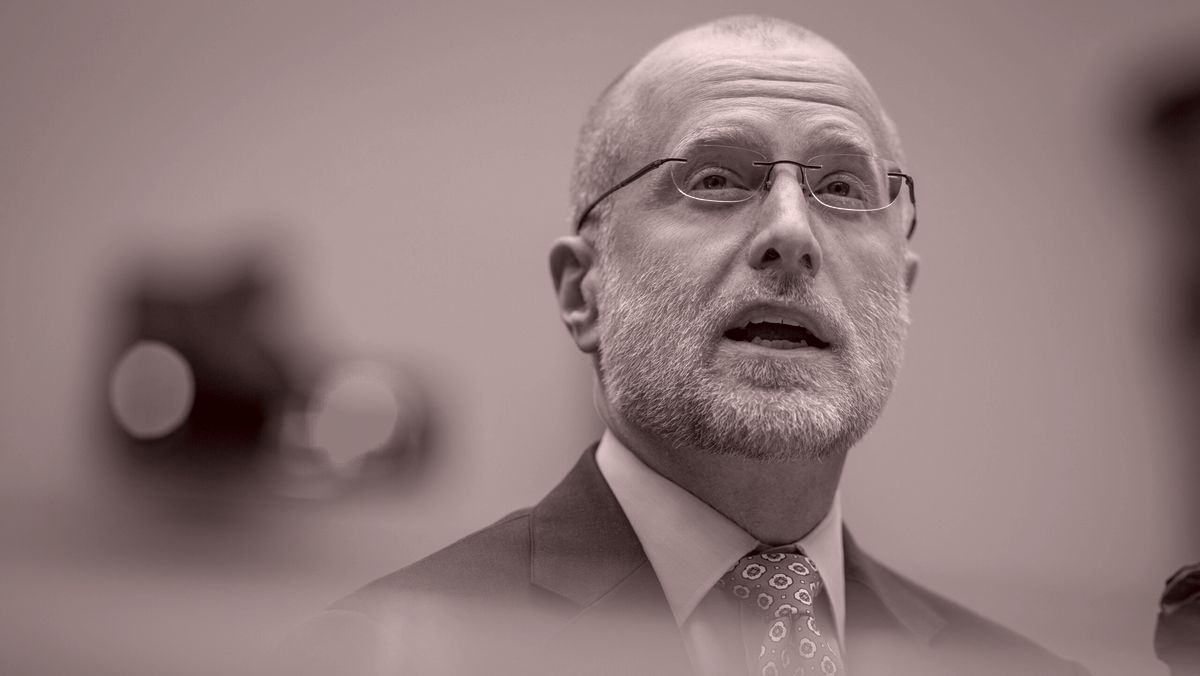
F.C.C. attack dog Brendan Carr not only regulates the media, he’s proving to be a vociferous media personality, himself. So why won’t he take calls from the would-be mogul who wants to own Paramount?
|
|
|
Ever since Donald Trump made Brendan Carr chairman of the Federal Communications Commission three months ago, the Republican media cop has rarely missed an opportunity to generate news—posting bite-size provocations on X and making himself available for just-sardonic-enough interviews. In short, he’s a regulator who treats the media not only as a sector to oversee, but also as a foil.
But if you really want to understand Carr, look at his appointment book. Or rather, look at who’s conspicuously absent from it. Despite repeated attempts by Skydance’s David Ellison to sit down with Carr and walk through the finer points of his company’s proposed $8 billion Paramount takeover, Carr has declined to meet with his team. No explanation. Just radio silence. (Carr did not respond to a request for comment.)
That’s somewhat perplexing given Carr’s fixation on the Skydance-Paramount deal. He’s been on the record calling for “deep dive briefings” into the merger. He’s taken meetings with the Teamsters, the Center for American Rights, and the Latino-owned cable TV network Fuse—all entities opposed to the deal for different reasons. His staff has even indulged Project Rise Partners, the alternative bidder that Skydance has dismissed, not unfairly, as an Edgar Bronfman Jr.–connected sideshow. But when it comes to the presumptive next owner of Paramount—the person best positioned to address questions about CBS News’s alleged editorial slant, or China-based Tencent’s stake in Skydance—Carr has been unusually uncommunicative.
It’s not like they don’t have any friends in common. Carr has personal ties to Skydance’s legal team, especially Latham’s Matthew Brill, a former top F.C.C. staffer. And Trump is friendly with both David’s father, Larry Ellison, who is backing the bid for Paramount, and Shari Redstone, who is selling it. People close to Skydance assumed those connections would pay dividends when Trump won and Carr’s ascendancy seemed inevitable. Instead, Carr seems to be ghosting them. When Ari Emanuel invited David to sit ringside at a recent UFC event, a few seats over from Trump, speculation swirled that he was hoping to engineer some kind of détente. Instead, a few hours later, Trump savaged CBS on social media, calling attention to his $20 billion lawsuit against 60 Minutes—a suit that Redstone appears eager to settle. ( 60 Minutes executive producer Bill Owens announced today that he was stepping down in an apparent act of defiance.)
Maybe the Carr cold shoulder means nothing—or maybe it’s part of a familiar playbook. In 2023, the F.C.C. slow-rolled Standard General’s $8.6 billion bid for local TV station giant Tegna; Democrats had raised red flags over Apollo Global’s involvement, and then-F.C.C. chair Jessica Rosenworcel avoided taking meetings. Standard General begged to meet with Rosenworcel, offered pledges on diversity and local news, and even made the rounds with G.O.P. commissioners—including Carr—but never got the meeting that mattered. The deal was, eventually, scrapped.
Carr is a smart lawyer. He knows that voting to block the Skydance deal could trigger a legal war that Ellison would probably win. But slow-walking it to death? That could get the job done without the legal exposure—and, of course, keep Carr in the spotlight. If that is indeed the plan, you can see why he’s avoiding old friends. That’s a meeting nobody wants to take.
|
|
It’s not just Carr’s newfound slipperiness that has his former allies murmuring—it’s the transformation of the man himself. Once a self-styled regulatory minimalist, Carr has reemerged as a veritable culture warrior, repositioning the F.C.C. not as a neutral arbiter, but as an ideological weapon.
The contradictions are plentiful. Carr denounces what he calls the “censorship cartel”—a reference to the Biden-era pressure campaigns on social media platforms during the height of the Covid pandemic—while simultaneously jawboning Comcast over MSNBC’s coverage of the high-profile deportation of Kilmar Abrego Garcia. He has cheered the appellate courts’ dismantling of net neutrality, railing against government meddling in the internet—only to pivot to demanding that YouTube TV answer for its supposed discrimination against religious content. The man who once seemed allergic to bureaucracy is now gleefully stalling media mergers and firing off letters to entertainment giants questioning their vestigial diversity initiatives.
|
|
|
|
A MESSAGE FROM OUR SPONSOR
|
HBO Original comedy series, The Rehearsal, follows one man’s journey to reduce the uncertainties of everyday life. With a construction crew, a legion of actors, and seemingly unlimited resources, Nathan Fielder helps ordinary people prepare for life’s biggest moments. In Season 2, Fielder puts his resources toward an issue that affects us all. Watch new episodes of The Rehearsal on Sundays at 10:30 p.m., exclusively on Max.
WATCH NOW
|
|
|
The conventional wisdom is that Carr’s flair for media theatrics—his social media posts, his interviews, the cable news cameos—are part of a broader career play. Perhaps it’s no coincidence that Carr’s wife, Machalagh Carr, recently assumed the top policy post at Palantir, Peter Thiel’s data-mining operation, a detail that hasn’t gone unnoticed on the D.C. cocktail circuit. Lately, though, I’ve heard speculation that Carr has undergone a genuine ideological conversion—in a manner akin to J.D. Vance—and that the golden lapel pin he’s taken to wearing, depicting Trump’s face, is less performance art and more personal conviction.
For his part, Carr insists he hasn’t changed. He sees himself as a principled actor in a shifting landscape. Yes, he once said that newsroom editorial choices should be beyond the reach of any government official. And yes, it’s hard to square that sentiment with his current crusades. But when pressed, Carr has shrugged off contradictions. He’s not escalating, he told Semafor’s Ben Smith in late February—he’s merely reciprocating. The previous administration “weaponized” bureaucracy against its foes. He’s just following precedent.
|
|
For the first three months of Carr’s chairmanship, he’s helmed an evenly divided F.C.C.—two Republicans, two Democrats, and not much room to maneuver. But that gridlock is about to break. Olivia Trusty, Trump’s pick for the vacant Republican seat, is poised for confirmation, giving Carr the majority he’s coveted. Plus, with Trump’s recent executive orders aimed at exerting more control over independent agencies, Carr’s runway is about to get a lot longer. The F.C.C.’s caretaker-in-chief will soon become its architect, and he’ll be free to set the agenda himself.
So where will Carr go first? He’s dropped hints about a potential review of the “public interest” standard—long the bedrock of broadcast licensing and a loaded phrase in any media regulatory debate. That promises to be a bruising, politically charged proceeding, one likely to define Carr’s approach to media oversight. There’s also spectrum—the expansion and auctioning of airwaves—which might sound like telecom inside baseball, but Elon Musk and Jeff Bezos have vested interests in the regulation of satellite technology and the sharing of orbital space, both of which have national security implications, too.
Then, of course, there’s the issue that could reshape the media business: ownership rules. From a limit on how many U.S. households a local TV station can reach, to restrictions on broadcasters controlling more than one station in a market, many of these strictures have been on the books for decades. They’re also periodically reviewed and the focus of endless court challenges. With the rise of streaming alternatives and a Republican administration eager to eliminate “bureaucratic red tape,” many rules may finally fall by the wayside. The National Association of Broadcasters is already licking its chops at the potential demise of ownership caps, while Sinclair and Nexstar are hoping to expand their footprints.
Finally, don’t overlook those messy, behind-the-scenes negotiations over what channels make it onto cable, satellite, and streaming v.M.V.P.D.s like YouTube TV and Fubo. Carr has made his presence known in carriage disputes, notably inserting himself into the recent dustups involving the YES Network and Chicago Sports Network. He’s been working the phones, listening to lawyers, and paying attention to allegations that Comcast has been negotiating in “bad faith”—most recently, from the Chicago White Sox and Bulls owner Jerry Reinsdorf, whom he just met with a few days ago.
So Carr isn’t dodging everyone. But anyone looking to see what’s ahead better pay attention to that appointment book.
|
|
Thanks, Eriq. See everyone on Thursday.
Matt
|
|
|
|
Puck founding partner Matt Belloni takes you inside the business of Hollywood, using exclusive reporting and insight to explain the backstories on everything from Marvel movies to the streaming wars.
|
|
|
|
A professional-grade rundown on the business of sports from John Ourand, the industry’s preeminent journalist, covering the leagues, players, agencies, media deals, and the egos fueling it all.
|
|
|
Need help? Review our FAQ page or contact us for assistance. For brand partnerships, email ads@puck.news.
You received this email because you signed up to receive emails from Puck, or as part of your Puck account associated with . To stop receiving this newsletter and/or manage all your email preferences, click here.
|
|
Puck is published by Heat Media LLC. 107 Greenwich St, New York, NY 10006
|
|
|
|