Welcome back to another very special episode of What I’m Hearing+. This data-and-analytics focused supplement by Julia Alexander will soon be available only to members of Puck’s Inner Circle tier (click here to upgrade), but today’s is here for regular subscribers, as a treat.
Tonight, Julia explains Disney’s deal for Cocomelon. The kiddie animation may be schlocky and the music very un-Disney, but it’s a chance to build customer relationships with preschoolers, steal engagement away from Netflix, and take advantage of the fact that parents still feel kinda icky parking the kids in front of YouTube.
Okay, take it away Julia…
|
|
|
 |
Julia Alexander |
|
Netflix’s share of S.V.O.D. subscription activity in South Korea is now double its local and global competitors. Netflix maintains about 31 percent of the South Korean streaming market, per new research from Omdia, followed by local streamers Tving (16 percent), Coupang Play (13 percent), and Wavve (11 percent). In fifth place is YouTube Premium, which accounts for 10 percent of the South Korean market.
South Korea is one of Netflix’s core international markets and, as subscriptions peter out in the U.S., securing a strong lead in other regions is a key part of the streamer’s masterplan for global dominance. In its last earnings call, Netflix executives specifically highlighted their international production focus, announcing that they’ll now produce content in more than 50 countries. (Good luck to the accountants if they have to calculate that tariff bill…) With more than two-thirds of Netflix’s audience outside of the U.S., competitors will be closely tracking where they make the biggest inroads.
|
- Tim-on-Tim video game violence: You’ve got to admire the gall of Tim Cook. Amid his ongoing row with Epic Games over Apple’s alleged predatory App Store practices, Bloomberg recently reported that Apple plans to debut a new gaming app—a replacement for the little-used Game Center that will incorporate new social features and serve as more of a hub for all things gaming on Apple devices. The move is hardly surprising: Apple has been moving aggressively into services for years, levering its hardware and operating system to take a pass-through cut of podcasts, music, and streaming. But while the iPhone is one of the most-used gaming devices in the world, Apple has never been seen as a premier gaming platform—even if it tried with Apple Arcade. Meanwhile, video games are more popular, and more lucrative, than ever. According to Midia Research, worldwide gaming revenue will increase around 4.6 percent this year to surpass $235 billion.Naturally, Apple wants a bigger piece of the market. One considerable challenge, however, will be convincing developers that the company is sympathetic to their needs—especially after the battle with Epic C.E.O. Tim Sweeney over Fortnite, which finally returned to the App Store last week after a five-year absence (and a judge’s admonition). Expect to hear more about this leading up to Apple’s annual Worldwide Developers Conference, which kicks off June 9.
- Amazon’s syndication play: Amazon is trying to make some extra cash by syndicating some of its most popular—or at least most expensive—shows for the first time. The Rings of Power, the series based on The Lord of the Rings whose first season cost a reported $500 million, will soon be available to license as the company’s distribution team experiments with using off-platform discovery to drive future on-platform engagement.In the past, Amazon has seen “neutral to positive” effects from licensing—very little cannibalization has resulted from titles being available off-platform, and engagement on Prime Video has increased, as Amazon MGM distribution chief Chris Ottinger recently told Variety. Syndication is an inevitable step, especially for a player of this size: Rings of Power and Citadel (also up for grabs) are extremely expensive titles that aren’t going to make Amazon more money just sitting on a shelf. The real question is who will pay top dollar for Citadel, in particular, which famously didn’t perform for Amazon when it first debuted.
|
|
|
|
And now, on to the main event…
|
|
|
|
It’s not clear that outbidding Netflix for a schlocky YouTube show will fix Disney’s engagement woes—but maybe that’s not the point.
|
|
|
|
In many ways, Cocomelon is quintessentially anti-Disney. The studio behind so many animated visual marvels—from Snow White to Frozen to both versions of The Lion King—has long been associated with quality above all else. Cocomelon, meanwhile, has been lambasted for its shlocky C.G.I. animation that some have likened to A.I. slop. No less an august source than the New York Post has urged parents to keep their kids away from it.
Perhaps that’s why so many industry insiders were taken aback when Disney outbid Netflix for global streaming rights to the series beginning in 2027—the same year that a Cocomelon feature film is set to be released. Netflix execs were said to have wanted the franchise to remain on its platform, but didn’t want to pay substantially more. Maybe they shouldn’t have been surprised by Disney’s interest, especially since Cocomelon is owned by Candle Media, which is run by former Disney execs Kevin Mayer and Tom Staggs.
|
|
|
|
A MESSAGE FROM OUR SPONSOR
|
|
|
|
Anyway, everyone I’ve talked to in recent days has an opinion on the move, including a couple of (other) former Disney executives who argued against it. (Disclosure: I recently worked for Disney, but was not involved in content acquisition.) For my part, though, I keep coming back to an offhand comment uttered by Bob Chapek during his brief tenure as C.E.O.: “If there’s an opportunity that we’re working on right now, it’s sort of our preschool area.”
Theoretically, Disney should be the go-to platform for kids of all ages. So the company’s second-tier position in the preschool market has become a source of existential dread internally. Instead, Netflix and YouTube have cemented their status as the premier platforms for a younger generation. According to survey data from Precise.TV, while Netflix edged out Disney+ as the preferred subscription platform in the U.S. for kids ages 2-12, YouTube was by far the most sought-out platform overall, with some 83 percent of that cohort saying they preferred it.
Kids’ content is crucial for these platforms because it’s sticky—it yields repeat viewing, and produces high engagement and retention. Along with Bluey, Mickey Mouse Clubhouse, and a couple of other big titles, Disney hopes Cocomelon will help it gain a larger share of the preschool market in the U.S. But will it be enough to ever reclaim its old turf?
|
|
Cocomelon’s trajectory from YouTube side project to global streaming success is as unique as it is modern. Creator Jay Jeon started uploading videos to his YouTube channel in 2006, which officially became “Cocomelon” in 2018. By then, the channel was already one of the most popular globally. But it wasn’t until 2020, when Netflix picked up licensing rights to the show, that the rest of the industry really took notice (and first started ringing alarm bells about YouTube challenging Disney).
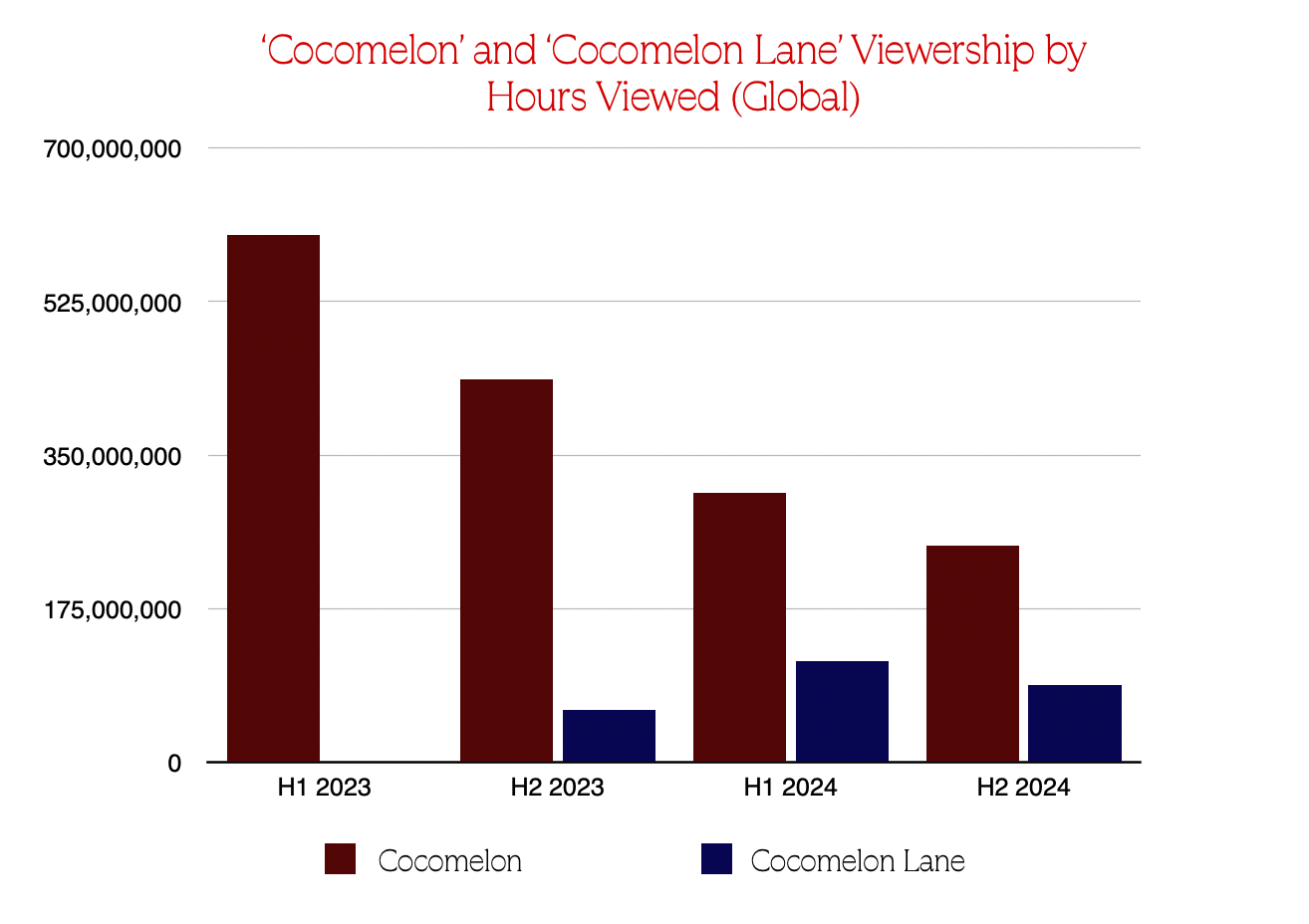
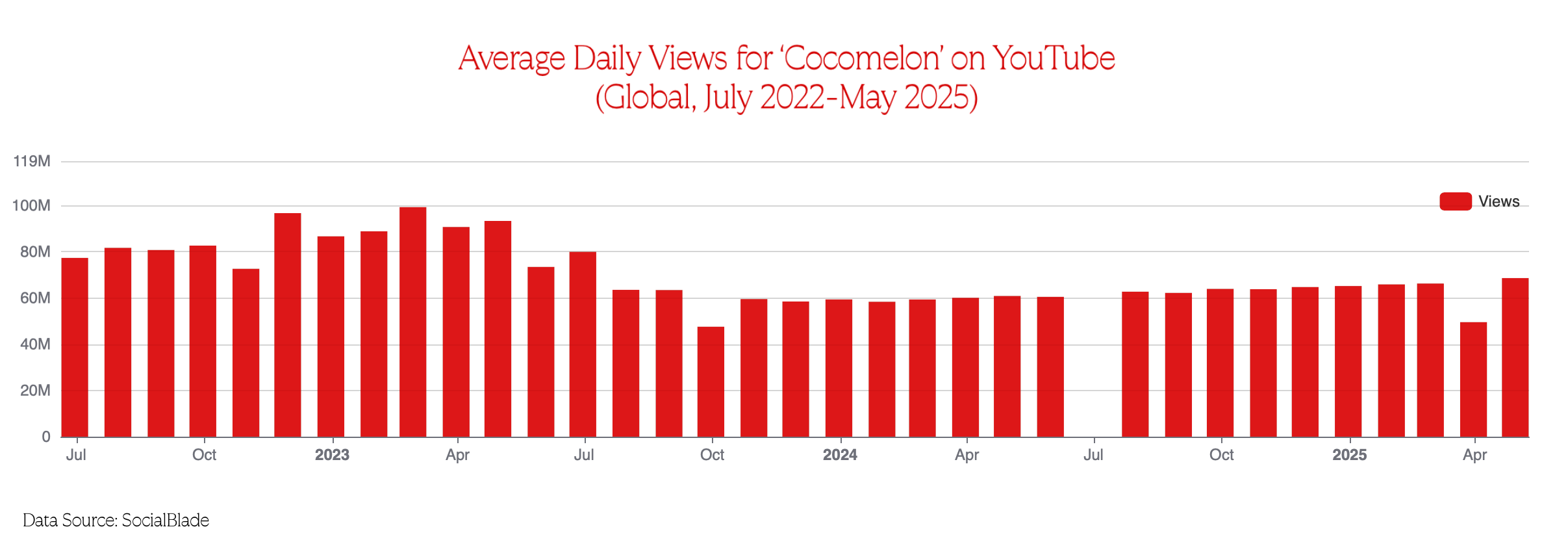
Five years later, Netflix is pushing the narrative that it no longer needs Cocomelon—pointing, for instance, to the show’s 60 percent drop in viewership between 2023 and 2024. Still, the series notched more than half a billion hours viewed in 2024. Cocomelon Lane, a spinoff, also fared well.
|
|
Whether or not this narrative is just sour grapes, Netflix doesn’t necessarily need more engagement across its platform. Yes, more engagement means more advertising revenue, but Netflix doesn’t show advertising on kids profiles. Instead, Netflix needs to attract different kinds of attention, whether that’s via games, podcasts, or live events that create better advertising opportunities, like the Jake Paul–Mike Tyson fight or the Women’s World’s Cup or the NFL on Christmas.
|
|
|
|
A MESSAGE FROM OUR SPONSOR
|
|
|
|
Over the past several years, Netflix executives have consistently touted their continued investments in children’s entertainment. But the company doesn’t need to throw more money at an audience that is already pretty well-served. Netflix already spent $1 billion on the Roald Dahl library (although nothing of value has come out of the deal thus far). And since signing her exclusive deal with the streamer, Ms. Rachel, one of YouTube’s most prolific children’s creators, has repeatedly appeared on lists of Netflix’s most viewed content. The recent Sesame Street deal, meanwhile, is just as much a play for access to the brand’s gaming rights (an area Netflix’s Greg Peters recently reiterated that the company is “in to win”) as much as the iconic branding. Simply put, that Cocomelon money can be put to better use in other content categories.
|
|
Disney, on the other hand, needs to increase overall engagement—and part of that effort involves doubling down on what it does best. Even though audiences know where to find their favorite Disney princess, superhero, or Jedi, engagement remains relatively stagnant in the U.S. Even after combining Hulu and Disney+’s monthly reporting to present one unified streaming number, Disney still hovers around a 5 percent share of all content viewed on TVs in the U.S., per Nielsen’s monthly Gauge Report.
Compare that to the consistent improvement of YouTube, which now sits north of 12 percent, up by 2.4 percentage points year over year. Netflix, while also relatively stagnant in the past year, is ahead of Hulu and Disney+ combined. Perhaps most importantly, Netflix has a far, far larger share of engagement globally than Disney+, helped by its substantially larger subscriber base and local content strategy.
Can Cocomelon fix Disney’s engagement problem? Well, some of Disney+’s most popular content already engages the preschool audience: Moana, for
example, crossed 1 billion hours viewed last year. Cocomelon might provide a boost, but the bigger advantage for Disney is offering a YouTube-first show on a safer platform. More than 60 percent of parents watch YouTube content with their kids because they don’t trust the platform, per Common Sense Media Group’s 2025 census. But Disney+ remains the most trusted streaming service for kids, even after the integration of Hulu’s more adult-leaning content library.
|
|
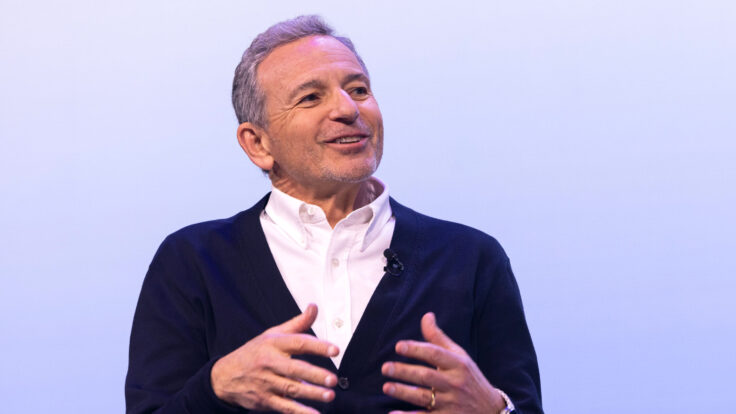
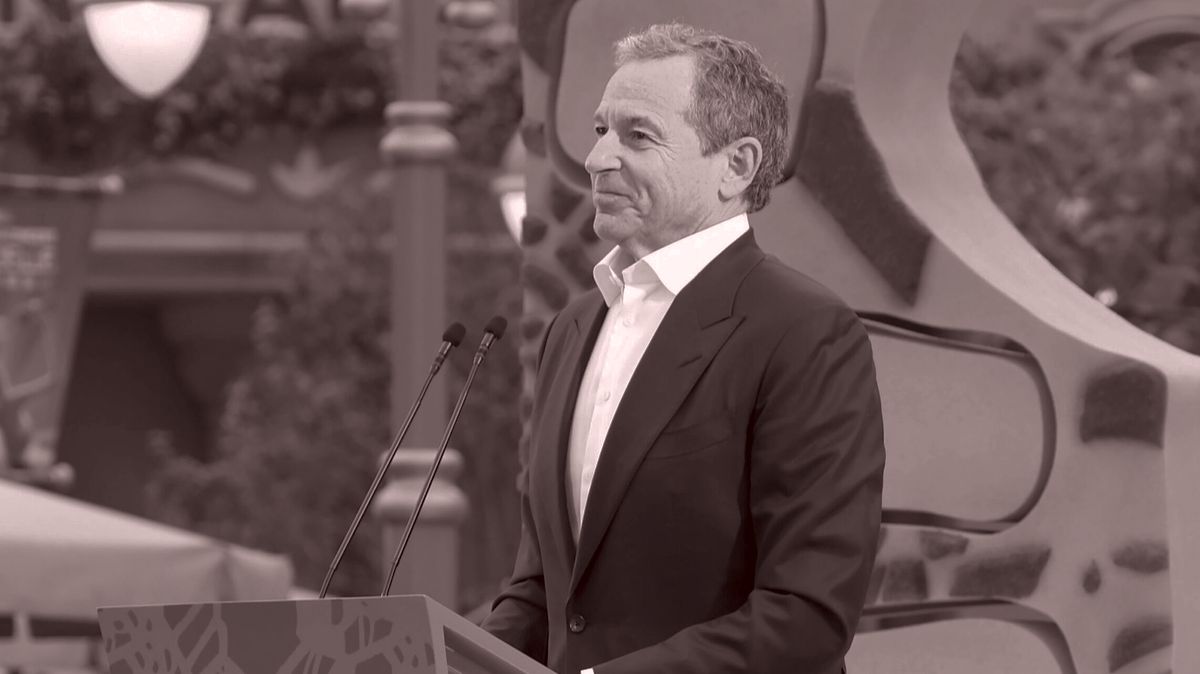
With Cocomelon, Disney can effectively own the preschool audience in the subscription streaming market, and create a generational chain link, building brand loyalty at an early age, and keeping kids engaged as their interests change. Cocomelon gives way to Frozen, then Captain America, then Star Wars, and then sports or more-adult content on Hulu. In other words, Cocomelon is a short-term bet on a long-term relationship. If Disney can drive even a middling percentage of the attention Cocomelon receives on YouTube back to Disney+, C.E.O. Bob Iger might be able to relax a bit more when he finally passes the reins.
|
|
Thanks, Julia. I’ll be back tomorrow night.
Matt
|
|
|
|
Puck founding partner Matt Belloni takes you inside the business of Hollywood, using exclusive reporting and insight to explain the backstories on everything from Marvel movies to the streaming wars.
|
|
|
|
A professional-grade rundown on the business of sports from John Ourand, the industry’s preeminent journalist, covering the leagues, players, agencies, media deals, and the egos fueling it all.
|
|
|
Need help? Review our FAQ page or contact us for assistance. For brand partnerships, email ads@puck.news.
You received this email because you signed up to receive emails from Puck, or as part of your Puck account associated with . To stop receiving this newsletter and/or manage all your email preferences, click here.
|
|
Puck is published by Heat Media LLC. 107 Greenwich St, New York, NY 10006
|
|
|
|


_01JW9KEWCPENYYNFQXK6VNJG68.jpg "RuPaul's Drag Race - MTV")
_01JW9KEWP44C4V1QA49204D77W.jpg "RuPaul's Drag Race - MTV")