 |
|
Welcome back to another edition of What I’m Hearing+, a weekly column looking at the ins and outs of the streaming industry through the data that often tells a different story than what executives would like you to believe. Today I’m sitting down with my colleague Dylan Byers to discuss everything happening at the biggest companies behind the streaming services.
But first…
|
|
|
| 1. Prime Video’s NFL touchdown: Amazon doesn’t really need more wins. It’s already one of the wealthiest companies in the world, with its eye on taking over as many industries as possible, all in the name of more Prime memberships. One of those industries is television, and a key performance indicator is Thursday Night Football. An internal memo from Jay Marine, Amazon’s global head of sports, called Amazon’s first solo Thursday broadcast a “resounding success,” exceeding all expectations. Amazon’s team told advertisers to expect about 12.5 million, so when Marine is calling it a resounding success exceeding their expectations, people are expecting results to beat that figure.
More crucially, Marine said TNF led to more Prime signups in a three-hour window than Prime Day itself—a true testament to the power of the NFL. This is important: as I’ve written before, Prime Video needs to differentiate itself to audiences outside the core Prime shopper to grow meaningfully. This disclosure tells me there are plenty of people in the U.S. at the top of Amazon’s marketing funnel, just waiting for an enticement to move from awareness to subscription. It is poetic that the carrot, at least in the U.S., was a battle between Patrick Mahomes and Justin Herbert. The real test of Amazon’s initial NFL success will be in those Nielsen numbers coming this week. Boasting internally is one thing; validating viewership is another.
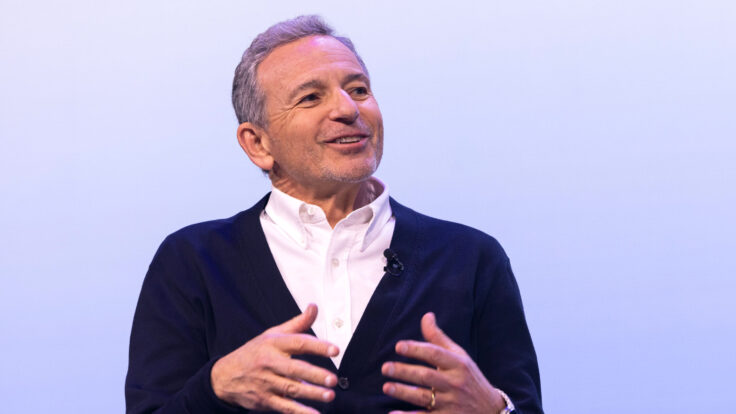
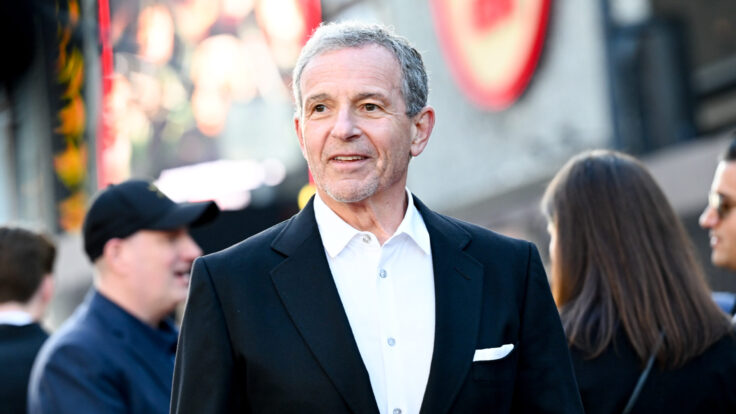
2. Zaz’s rent-an-I.P. strategy: A couple of weeks ago at Kara Swisher’s final Code conference, former Disney C.E.O Bob Iger noted that Disney+ stood out from other streaming competitors because of its historic collection of I.P. He also noted that licensing films to Netflix in the early days of streaming was like “selling nuclear weapons technology to a developing country, and they were now using it against us.” (Iger has used a variation of this line before on the conference circuit.)
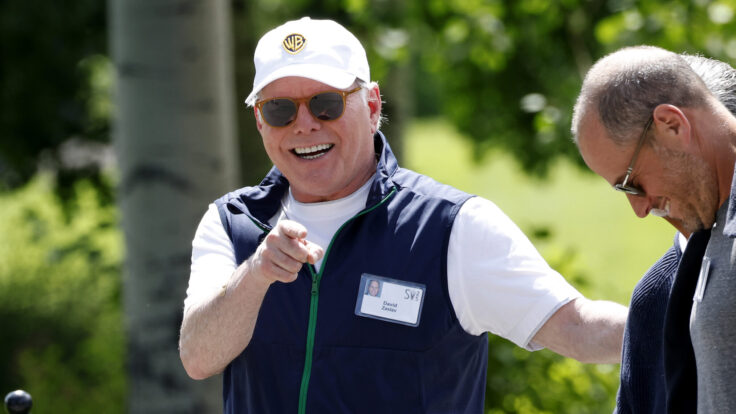
Those two thoughts stuck out to me as I was considering Warner Bros. Discovery’s plan to license its own top I.P., including Batman (J.J. Abrams and The Batman director Matt Reeves’ animated series) and Lord of the Rings, in the name of profit. Sure, WBD probably has too much content, and too much debt, especially with its new (and reduced) $12 billion EBITDA guidance for 2023. I get it. But in the long run, does making titles like Batman available elsewhere detract from the power of exclusivity on HBO Max? Disney licenses its Star Wars and Marvel characters, but mostly to video game publishers, where a new gateway to those franchises is created. I’m very keen to see what remains exclusive to HBO Max versus what gets licensed. For what it’s worth, I re-watched all of the Lord of the Rings movies on Max before The Rings of Power hit Prime Video. Rolling the dice on non-exclusive rights to major franchises is still a major risk, but when you’re cash strapped, licensing that abundance of intellectual property may start to feel like a quick solution to a painful problem.
3. Dancing with the Stars shifts tempo: One of the reasons I love data so, so much is because it can reveal large pivots in human behavior, which in turn suggests where the culture may be headed. Consider Disney moving Dancing with the Stars from its longtime ABC home to Disney+. That spotlights Disney+ as the future not just for kids and millennials, but for the older demo, too. It’s live on Disney+ and available as a video-on-demand option after the episode ends.
DWTS may not have the cultural cachet it once did, but it still produces shared moments of entertainment. Does that change on Disney+, and how does the move impact this type of content in the future? Does it further marginalize appointment TV or, like Thursday Night Football, does it lead to a significant number of Disney+ signups? I’ll come back to those questions in the weeks ahead. |
 |
| CNN+ Reveries & Zaz’s I.P. Strategy |
| A frank conversation on the hottest topics in streaming: Warner Bros. Discovery’s war chest, CNN’s future, Wall Street’s demands, and the future of ESPN. |
|
|
|
| Julia Alexander: Hey Dylan, thanks so much for sitting down with me. I’ve wanted to talk to you for some time—for many reasons!—but one being that I’m obsessed with all the twists and turns happening inside CNN. Of course I read your recent piece on Chris Licht’s decision to revamp CNN mornings with a new program anchored by one of the network’s top stars, Don Lemon, and rising talents Poppy Harlow and Kaitlan Collins. As you noted, a morning show is hardly revolutionary, but in your opinion, does this have the potential to reach the audience that CNN+ was also trying to reach? That oh-so-coveted 18-34 spot? What’s the end goal here?
Dylan Byers: It’s a pleasure to be talking to you, Julia. To get right to it: No, there is almost no chance of a morning TV show drawing a young audience—not in meaningful numbers, anyway. But that’s not the play here. The play is to create a thinking person’s alternative to the morning fluff found on broadcast, which is effectively what Licht helped create at MSNBC, with Morning Joe, and CBS, with CBS This Morning. Licht talks a big game about this show being a “game changing,” “mass appeal” play—something that will go toe-to-toe with Today and Good Morning America—but the real ambition here is more modest: make mornings on CNN relevant and respectable again, and maybe boost the ad revenue in the process.
I’m not at all trying to be dismissive of Licht’s ambitions. Mornings are his bread and butter, after all, and I do believe he can create a compelling show that at least makes CNN competitive with Morning Joe again—no small victory! Licht’s got a very talented producer in Ryan Kadro, his former CBS deputy, and Don, Poppy and Kaitlan are probably the best three folks from CNN’s available talent pool to fill out the seats. And by the way: Don, love him or not, is an incredibly charming and charismatic TV personality who hasn’t really had a chance to let his true self shine through in primetime. He was going to try to do that with his CNN+ talk show. Now he’ll try here. And if he can bring his real personality, it should make for some fun and interesting television.
Julia: One former high ranking CNN personality once told me they believed CNN+ wasn’t just a way to get in with the younger crowd, but also to give anchors the opportunity to flex their strengths and stretch their wings. CNN is a network built on news and talent, and keeping that talent in a competitive, always-poaching environment takes money and creativity. Does this feel like a move to keep Lemon & Co. happy and paid? Or is it more a move for Licht?
Dylan: The raison d’etre of CNN+ was to position CNN for a post-linear, direct-to-consumer world where the brand could function as a subscriber-supported, stand-alone business—not dissimilar from The New York Times, in fact. Whether CNN+ would have succeeded, had it been given any runway whatsoever, is an open question. Certainly you could argue that the programming slate left a lot to be desired. But at least they were trying to get ahead of the inevitable shift from linear to digital. Unfortunately for CNN, it’s no longer really seen as its own business, as it was back in the Time Warner days. It’s now really more of an asset in the Warner Bros. Discovery portfolio.
The fact that CNN+ created additional opportunities for talent may have helped Jeff Zucker grease some contract negotiations, but it was hardly the reason for CNN+’s existence. In fact, it was actually symptomatic of a very big problem: namely, that CNN couldn’t put its core product onto the streaming service because of its obligations to affiliates. So, yes, it may have stroked Jake Tapper’s ego to give him his own book club, and I’m sure Don was looking forward to his talk show, but those programs were only going to exist as filler until the day came that CNN could move the linear product onto streaming. CNN+ was a life raft for the day that the linear ship sank. Those shows were just keeping the raft inflated. And either way, WBD chief David Zaslav wasn’t interested in incentivizing CNN+’s growth while managing the linear decline. Instead, he and C.F.O. Gunnar Wiedenfels seem focused on the latter, or perhaps more generously, right-sizing the business to the modern demand threshold. |
|
|
| Julia: I want to zoom out and look at Warner Bros. Discovery as part of the larger picture. You’ve covered the company tremendously, and one of the questions I always get from people—a little unfairly, if you ask me—is who’s best situated to win three, five, 10 years from now. I’m not going to ask you that because neither of us has a crystal ball—and, also, it’s an unknowable question on many levels—but I do want to get your opinion on Warner Bros. Discovery’s standing now. It’s one of the more prominent cable companies trying to exist as both a cable company and a streaming company. Is the current strategy enough to compete with the likes of Disney? Or is it going to require some more drastic moves to keep up?
Dylan: Zaz has incredible I.P. at his disposal. Arguably the best entertainment I.P. outside of children and young adult content, which of course is a title that goes to Disney. I think this is one of the reasons people were so bullish on WBD’s prospects during the run-up to the merger. Obviously, Wall Street has grown a lot more pessimistic in recent months as Zaz endeavors to cut costs. One unfortunate reality for Zaz & Co. right now is they’re being judged entirely by what they’re destroying—synergies, lay-offs, scuttled projects, etc.—and we won’t have a really clear view of what this company looks like or how efficiently it’s being run until they’re done with that process. We will continue to cover the struggle closely, of course, and pull no punches, but it’s probably best to reserve judgment on whether they’ll succeed or fail for at least another year, when their promises to Wall Street will come due. As for the 10-year timeline? 10 years from now I’m pretty sure WBD will be merged or acquired by someone else.
But I’d be very interested to know what you make of HBO Max right now, and especially how you think the combined HBO Max-Discovery+ will fare.
Julia: My general feeling is that the opportunities outweigh the risks, but the risks are still plentiful. The answer to competing in streaming five years ago, when the question was really how to compete with Netflix, used to be “more, more, more.” Adding Discovery content to HBO Max certainly helps usher in different audience groups and appeal to wider taste clusters on paper, but whether that works in practice is much more challenging to predict. Simply having more can become overwhelming, overcrowded, and overly difficult to navigate very quickly.
I’ve written about this before, but if the act of discovering content is impacted—and especially if discovery is impacted due to those feelings of being overwhelmed and overcrowded—then engagement suffers. Customers still come in for a new HBO show, or for a new DC movie, but they may not stay as long per session or open the app as often. If that happens, the perceived value of the subscription fades and churn risk greatly increases. Now, that said, we’ve seen HBO Max benefit from having churn-reducing content already, and unscripted programming from the unscripted king should theoretically help. But I worry that HBO Max won’t be able to define itself in five years time the way that Disney+ can. It’s similar to the issue Netflix is running into. HBO spent decades earning the trust of viewers based on brand identity alone. If that goes away, it’s much harder to get back. |
|
|
| Julia: One of the bigger storylines we’ve seen play out over the last few months, and will continue to see much more of as the third quarter earnings season approaches, is the Street’s pivot from total subscriber numbers being the key metric of success to actual revenue. It’s no longer just okay that companies have willing customers paying for their content; shareholders, investors, and analysts want to know that streaming is driving significant revenue. For Netflix, that means actual profit. For other companies, like Disney and Warner Bros. Discovery, it means that everything is still on target when it comes to hitting streaming profitability goals. What do you make of the shift? How will this affect executives’ approach to their current strategies, or will it at all?
Dylan: The Street should have been judging these services on revenue from the get go, in my humble opinion. I’m hardly alone here, but I’ve long been one of the people shouting “ARPU” every time a D.T.C. executive touts subscriber growth. Disney’s record subscriber growth doesn’t mean quite as much once you know that one-third of the subs are paying in rupees at a fraction of the price for Indian Premier League cricket, which a Paramount group just outbid them on. At the same time, Netflix having more subs than Disney doesn’t mean as much if Reed Hastings and Ted Sarandos can’t create a flywheel to milk subscribers for theme park tickets and merchandise sales. And, of course, let’s not forget about the constant threat of churn.
Anyway, I think the Street’s focus on revenue effectively forces the entire industry to mature a little bit, and to be a little less speculative. That means a lot less stupid money is going to be thrown at the wall—I think—which may mean less junk. Conversely, there may be a few great pilots floating around out there that won’t see the light of day because the execs managing the P&Ls won’t want to tolerate the risk. Of course, anything that’s guaranteed to drive big audiences—the big blockbuster franchises and tentpoles—will continue to thrive. Superheroes never die, for better or for worse.
Julia: Disney is a key player in this space. You’ve covered ESPN extensively and what may happen with the product. One of the key questions that I have is what happens with ESPN+. Does it become a standalone ESPN product that Disney C.E.O. Bob Chapek & Co. keep hinting at? Does it disappear when the standalone ESPN streaming offering is announced? It’s seen impressive subscriber growth over the last two years—in large part due to the bundle—and seen key performance spikes thanks to events like UFC title fights, but it also feels the least necessary. What do you think might happen to ESPN+?
Dylan: As with CNN, the “+” here stands for “life raft.” Every media company needs to have the infrastructure in place to shift their core content offering to streaming. That day is still a long way away, given ESPN’s long-term commitment to the leagues. But in the meantime, ESPN can offer a lot of added value on ESPN+ by broadcasting games and live events that would never have a home on linear: soccer, UFC, etc. That’s an advantage in sports that you don’t really have in news.
Chapek seriously considered spinning off ESPN back in the early days of his tenure, tempted by the idea of cutting the linear albatross and going all in on Disney+. Then the Netflix correction happened, which changed people’s thinking about the total addressable market for streaming, and shifted Wall Street’s focus from sub growth to revenue, as we’ve discussed. All of a sudden, it didn’t seem like a smart idea to give up the highly lucrative live sports business. And so I think ESPN will remain part of the Disney portfolio, and ESPN+ will remain as a stand-alone service that can also be bundled with Disney+ and Hulu. Barring another correction that upends conventional wisdom about how this business works, I think it’s here for a while. Which, as a subscriber and soccer fan, I’m quite happy about. |
|
|
|
| FOUR STORIES WE'RE TALKING ABOUT |
 |
|
 |
| The Veritas Equation |
| A new lawsuit seeks to establish the journalistic legitimacy of the controversial media outfit. |
| ERIQ GARDNER |
|
 |
| The Oscars Makeover |
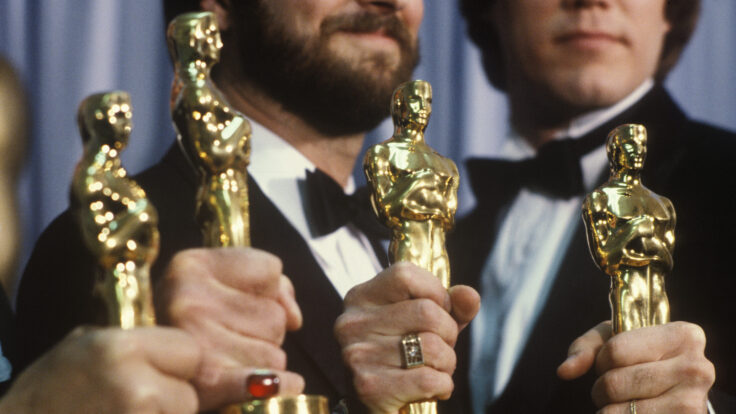
| Can C.E.O. Bill Kramer and president Janet Yang save the Academy from itself? |
| MATTHEW BELLONI |
|
 |
| Recession Bull Market |
| Bill and Peter discuss inflation, deflation, headwinds, and fears coursing through Wall Street. |
| PETER HAMBY & WILLIAM D. COHAN |
|
|
|

|
|
|
| You received this message because you signed up to receive emails from Puck
Was this email forwarded to you?
Sign up for Puck here
Sent to
Unsubscribe
Interested in exploring our newsletter offerings?
Manage your preferences
Puck is published by Heat Media LLC
227 W 17th St
New York, NY 10011
For support, just reply to this e-mail
For brand partnerships, email ads@puck.news |
|
|